

Who Writes Digital-Asset Rules Now
With the CLARITY Act stalled, regulators hold the pen, and what that means for DeFi developers, self-custody and stablecoin yield
November 4, 2026
·
7 min read



The briefing serious investors read first.
Free analysis before markets open. Start thinking in decades, not days.
Join 45,000+ readers · No spam · Unsubscribe anytime · No card needed
Today’s Big Picture
In September, we wrote that if the CLARITY Act failed its Senate vote, it would likely sit on the shelf until after the midterms.
It failed, 49 to 50. And now it’s after the midterms.
Overnight, the Associated Press called both the House and the Senate for Democrats. The Senate count stood at 54 to 44, with Alaska and Mississippi still uncalled.
That changes who runs Congress in January. It doesn’t change who votes between now and then: the same 100 senators who deadlocked in September.
For at least the next year, the rules for digital assets will come from regulators, not Congress.
Markets took the night in stride. Bitcoin fell to a six-week low near $75,700, then climbed back above $78,000 by morning. Gold rose about 2% to $4,021.
Below, The DeFi Doctor on what that means for anyone earning yield in DeFi.
The Next Great Wealth Transfer Starts With a Government Problem.
A $40 trillion debt and a $1 trillion interest bill leave Washington one real option: fuel the AI build-out, and the asset class underneath it. When that much money moves, it moves wealth with it.
Tan Gera, CFA, walks through the whole picture in a free briefing: the asset, the setup, and a 3-phase system inspired by BlackRock that a complete beginner can follow.
Stay to the end and the ABN Wealth System Guide is yours, free.
Disclosure: Educational content only. This briefing is not financial, investment, legal, or tax advice, and nothing in it is a recommendation to buy or sell any asset. Forecasts are the presenter’s opinions, not guarantees. All investing carries risk, including possible loss of principal. Do your own research.
Signal vs. Noise
The Industry’s Biggest Bet Lost

- The noise: digital-asset money now decides elections.
- The signal: its largest single bet didn’t pay off. Fairshake, the industry’s main super PAC, was spending about $55 million to defeat Sherrod Brown in Ohio’s Senate race, according to Semafor. Brown won.
In the House, Rep. Bryan Steil, who leads the subcommittee on digital assets, lost his seat. Across both parties, digital-asset groups spent about $176 million on this election through Oct. 20, per Reuters.
For beginners: campaign money buys ads, not votes in Congress. The bill still needs 60 senators, and the money didn’t add any.

Featured Contributor
Today’s guest is The DeFi Doctor, the head of education at Decentralized Masters and the owner and author of Beat Banks, a twice-weekly briefing on where real yield opportunities exist in decentralized finance. Nothing here is a recommendation.
Congress Handed Off the Pen. Here’s Who Writes DeFi’s Rules Now.
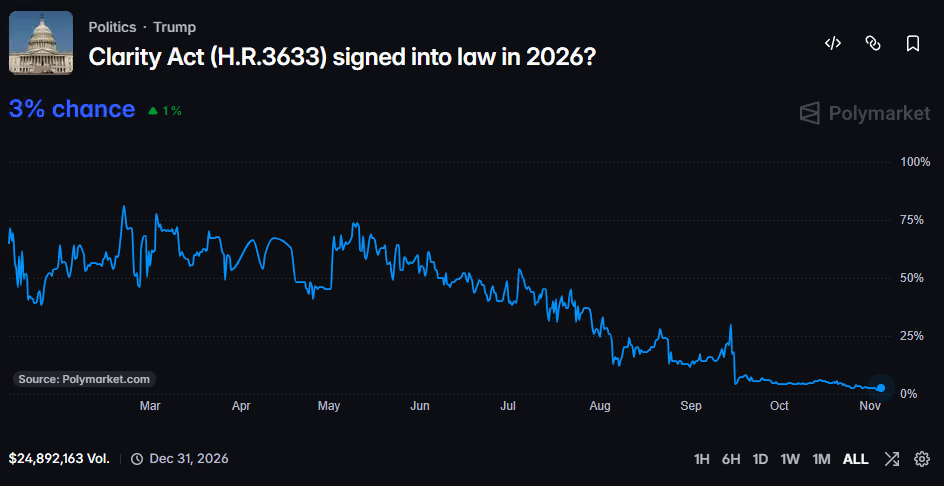
On Sept. 15, the CLARITY Act got 49 votes in the Senate. It needed 60.
The bill would have written the first full federal rulebook for digital assets: who regulates what, which tokens count as securities, and what protections DeFi users and developers get.
After the vote, the bill’s lead sponsor, Sen. Cynthia Lummis, said: “I think we’re done. It’s over.” Sen. Thom Tillis disagreed: “This is not the end for the Clarity Act.” Seven Democratic senators who worked on the text called it “a setback, but not the end.”
Last night’s results settle that argument. Here’s how.
Same senators, new clock
Tillis did one clever thing in September. He switched his vote to no at the last second, which let him file a motion to reconsider. That keeps the bill alive for a rerun vote.
But the rerun would happen in the lame duck, the weeks before the new Congress starts on Jan. 3. Senators who lost last night or are retiring keep voting until then. So the Senate that would vote again is the same one that split 49 to 50.
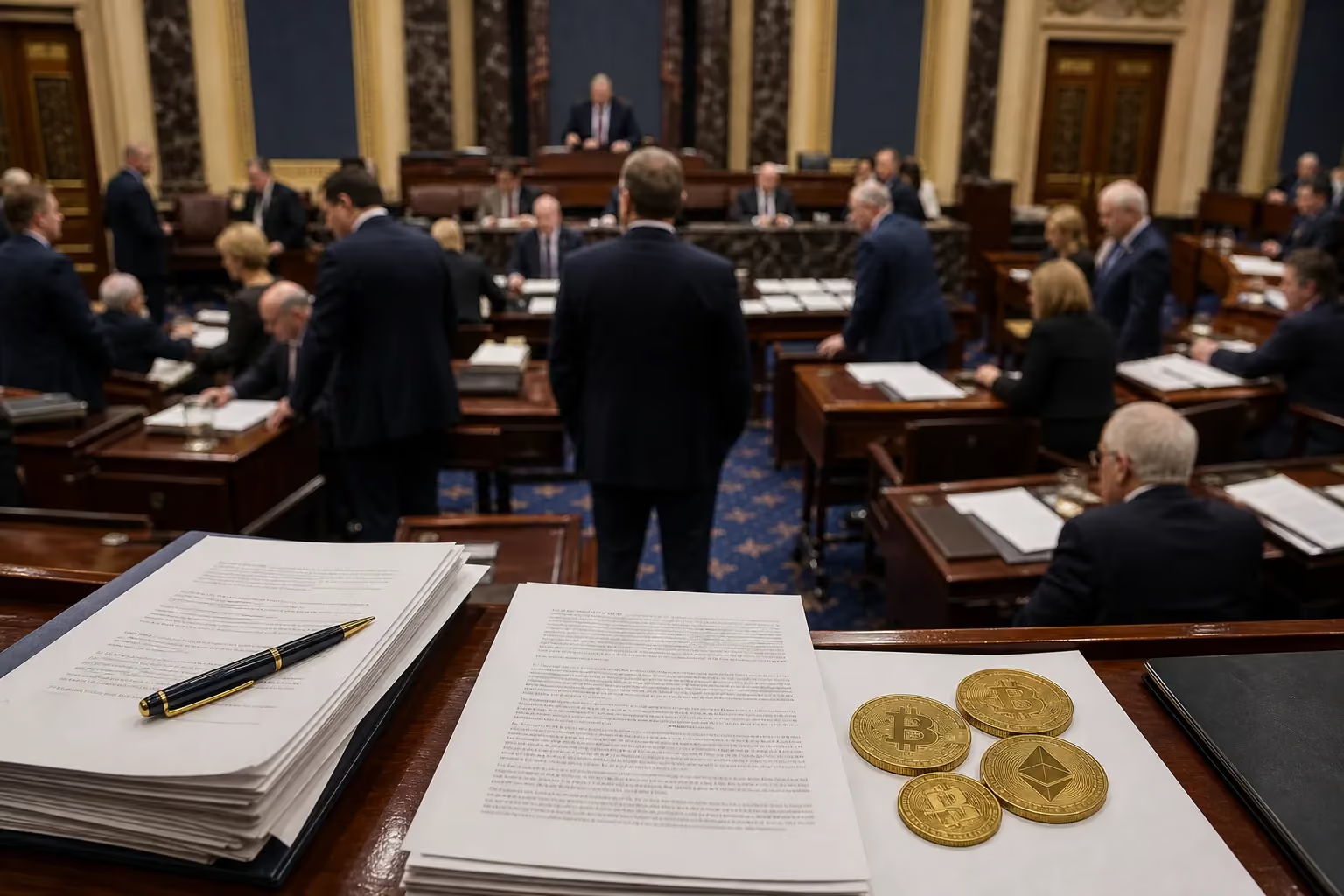
The math hasn’t moved. If Tillis switches back to yes, that’s 50. The bill would still need 10 more, and Congress returns Monday to a Dec. 11 government funding deadline that comes first.
If nothing passes by Jan. 3, the bill dies, and the motion with it.
January starts from zero
In the new Congress, any version of the bill starts over in both chambers.
Several senators who voted yes in September won’t be back, and the committees that write these bills change hands. Sen. Elizabeth Warren, who has opposed the bill, is expected to lead the Senate Banking Committee. Rep. Maxine Waters, who led House opposition to it in 2025, is expected to lead House Financial Services.
TD Cowen analyst Jaret Seiberg put it plainly in his Election Day note: “we do not expect the Clarity Act to pass over the next two years.”
So the regulators hold the pen
The day after the September vote, both market regulators said they’d keep going without Congress. Paul Atkins, who runs the SEC: “With or without legislation, we will act decisively within the SEC’s statutory authority.” The CFTC said it would use “our existing statutory authorities.”
As we wrote then, a failed bill removes clarity without removing oversight.
Here’s the difference that matters, in my old line of work. A law is like surgery: slow to schedule and hard to reverse. An agency rule is more like a prescription: written faster, and the next doctor can change it.
What that means for DeFi
The CLARITY Act would have written three things into law that matter to anyone earning yield:
- Developer protection: people who write DeFi software, but never touch your money, couldn’t be treated as money transmitters
- Self-custody: a legal right to hold your own coins in your own wallet
- A line on stablecoin rewards: which kinds of yield on digital dollars are allowed, and which aren’t
Without the bill, the first two rest on how today’s regulators choose to act. In September, the CFTC told software developers who connect users to its regulated markets that it won’t take action against them. That helps. A future administration can also take it back.
The third has a hard date. The stablecoin law Congress did pass, the GENIUS Act, takes effect Jan. 18. It bans issuers such as Circle from paying you just for holding their coins. Yield from lending or from trading fees is paid by borrowers and traders, so the ban doesn’t cover it. Rewards in between will be judged one case at a time.

How I’m handling it
When I look at a pool now, I ask one extra question: does this yield depend on a rule a regulator could rewrite next year?
Yield paid by borrowers and traders has the steadiest footing. Yield that depends on a regulator’s current stance gets a closer look. I walk through that question, pool by pool, every week in Beat Banks.
The rules will still get written. For now, they’ll be written by people who can rewrite them.
- The DeFi Doctor
Author, Beat Banks
Your Savings Account Pays 0.38%. Tuesday’s Calmest Pools Paid 5% to 6%.
You just read why DeFi’s rules will be written one case at a time. The DeFi Doctor follows those cases, and the pools they touch, twice a week.
Here’s what this week’s issue of Beat Banks found, as of Nov. 3:
- Low risk: a pool of two forms of ETH paying about 5%, and a pool of two dollar stablecoins paying about 6%. That’s about 16 cents a day on every $1,000.
- Medium risk: a pool pairing a gold-backed token with dollars, paying about 64% from trading fees while gold stays in range.
Every pool comes with a risk scorecard, where the yield comes from and what it means in dollars a day. Tuesday’s issue lays out six pools across three risk levels. Thursday’s explains what’s moving and why.
Higher yields come with bigger risks, and Doc spells those out too.
Yields are as of Nov. 3, 2026, change daily and are not guaranteed. Decentralized finance carries risks, including smart-contract failures, stablecoin depegs and the loss of principal. Nothing here is a recommendation.
Final Thought
Elections change who writes the laws.
This one also decided, for now, that the laws for digital assets won’t be written this year.
That leaves the regulators. They move faster than Congress, and a future administration can reverse what they do.
If you hold digital assets or earn yield in DeFi, it’s worth knowing which of your positions depend on a rule that could change.
The next checkpoints: Monday, when the Senate returns, and Jan. 3, when the bill expires.
Tomorrow, Tan Gera on the Bank of England’s decision. Friday, the October jobs report.
See you tomorrow.
Editor in Chief | Future Finance
The Institutions Are In. The Edge Is In What They Buy Next.
By the time a pension fund files a disclosure, the easy money has already been made.
The real edge is spotting where serious capital is heading before the paperwork catches up to it.
That’s the whole job of Gems Uncovered, our research on early, asymmetric plays before they reach the mainstream.
Follow the smart money early, not after it’s on the front page.
Disclaimer: This content is not financial advice, it is for informational purposes only. All investments involve inherent risk. Any financial decisions you make are solely your responsibility.
The briefing serious investors read first.
Free analysis before markets open. Start thinking in decades, not days.
Join 45,000+ readers · No spam · Unsubscribe anytime · No card needed
Disclaimer: This content is not financial advice, it is for informational purposes only. All investments involve inherent risk. Any financial decisions you make are solely your responsibility.
Latest


Editor's Picks



Become a sharper capital allocator in 5 minutes a day.
Institutional-grade research on where the smartest capital is positioning, across AI, energy, biotech, robotics, and digital assets. Distilled into a daily read you finish before your coffee does.
Join 45,000+ readers · No spam · Unsubscribe anytime · No card needed