

4 things on the ballot impact your money
Four places your money is on the ballot tonight, none with a candidate’s name, and what each outcome changes
November 3, 2026
·
6 min read



The briefing serious investors read first.
Free analysis before markets open. Start thinking in decades, not days.
Join 45,000+ readers · No spam · Unsubscribe anytime · No card needed
Today’s Big Picture
Tonight’s headlines will be names: who won, who lost and which races are still too close to call.
The parts that reach your money sit a layer down. Who runs the committees that write digital-asset rules. Who negotiates the next government funding deal. Who confirms the people who run the Fed.
Prediction markets lean one way going in. As of Monday afternoon, traders priced Democrats at about 74% to win both chambers.
Stocks head into the vote on a three-day losing streak. The S&P 500 closed Monday at 7,541, its lowest close since July and about 3.6% below its October record.
Overnight, Australia raised rates to their highest level since 2008, its fifth hike this year.
The vote decides who holds the gavels. The gavels decide what happens to your money.
Below, I walk through the four places your money is on today’s ballot, and what each outcome changes.
America Owes $40 Trillion. The Way Out Runs Through One Asset.
The U.S. now spends more than $1 trillion a year just on interest, and that bill reaches your savings before it reaches anything else.
Tan Gera, CFA, spent his Wall Street years studying moments exactly like this one. In a free briefing, he breaks down the AI-linked asset class the government has little choice but to fuel, and the 3-phase system he built around it, inspired by how firms like BlackRock position for shifts this size.
You don’t need to have invested outside a 401(k). You need to see what’s coming before the money moves.
Watch Tan’s free briefing here… →
Disclosure: Educational content only. This briefing is not financial, investment, legal, or tax advice, and nothing in it is a recommendation to buy or sell any asset. Forecasts are the presenter’s opinions, not guarantees. All investing carries risk, including possible loss of principal. Do your own research.
Signal vs. Noise
What the Odds Say Going In
- The noise: “It’s too close to call.”
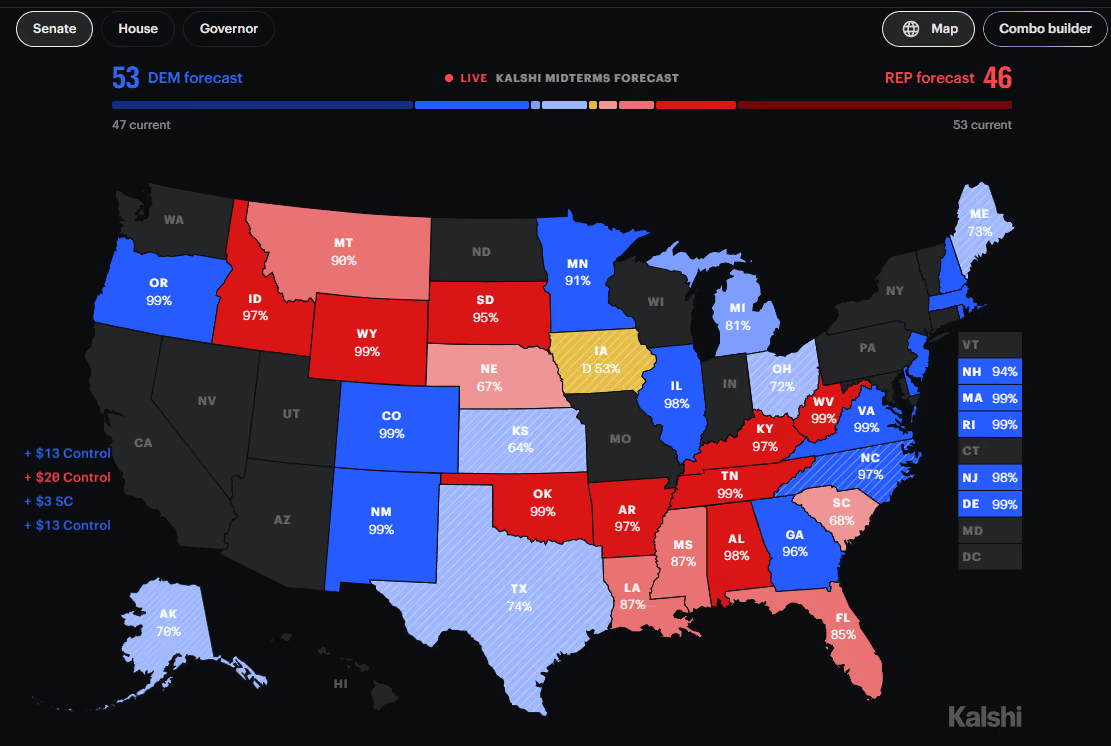
- The signal: traders don’t think so. As of Monday afternoon on Kalshi, a regulated prediction market:
- Democrats win both chambers: about 74%
- Democrats win the House, Republicans keep the Senate: about 21%
- Republicans keep both chambers: about 6%
Democrats’ Senate odds rose about 11 points in a month on Kalshi, from roughly 63% on Oct. 2. Polymarket had them at 73% Monday.
For beginners: expect these numbers to swing tonight as votes come in. Early counts often lean one way and then shift, and races in Maine and Alaska use ranked-choice counting that can take days.
The Digital-Asset Market Cable News Keeps Quoting
- The noise: “Polymarket says…”
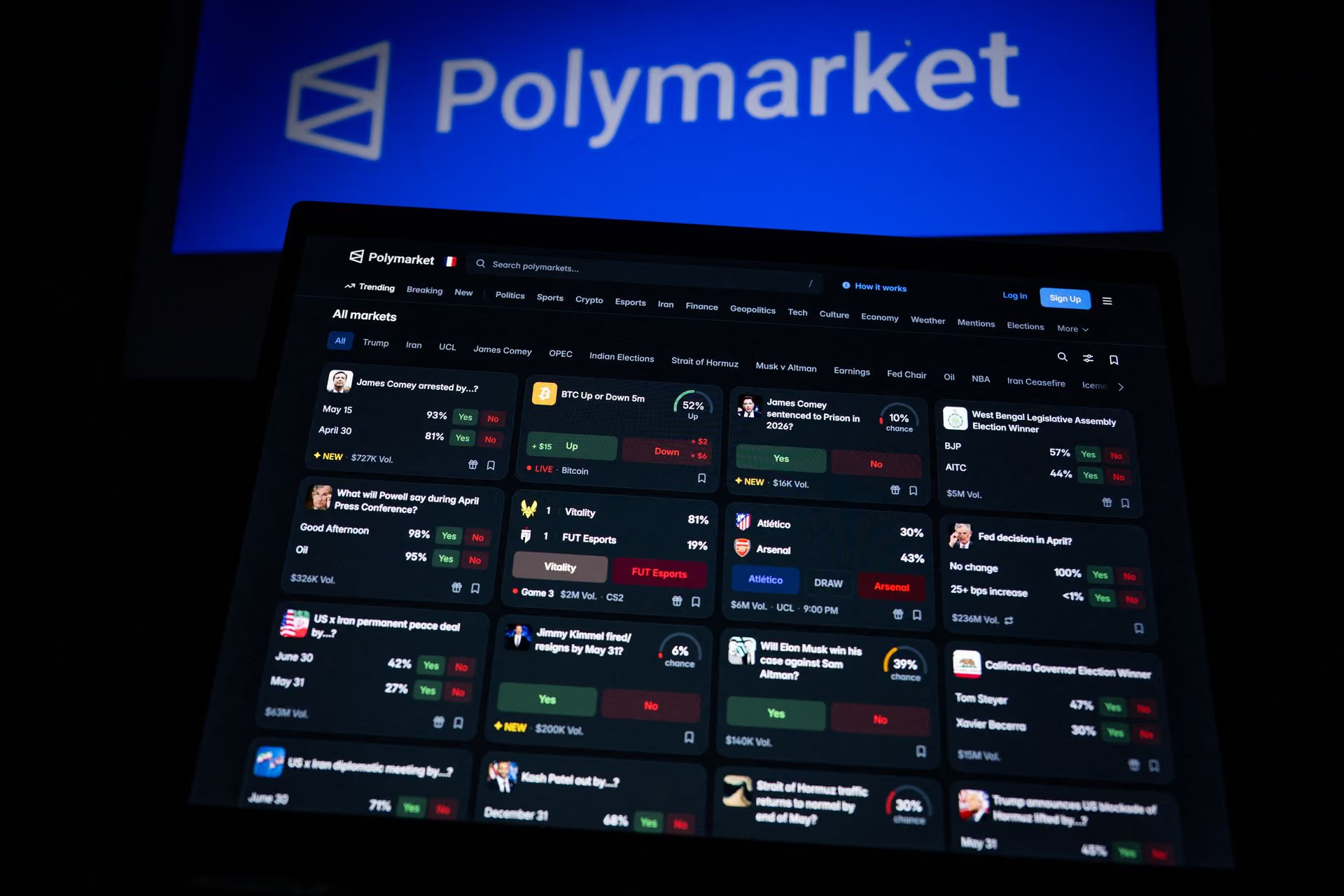
- The signal: what Polymarket is. Founded in 2020 by Shayne Coplan, it lets people trade contracts on real-world outcomes. Each contract pays $1 if the outcome happens and nothing if it doesn’t, so a 74-cent price reads as roughly a 74% chance.
Its global version runs on the Polygon blockchain, and traders use USDC, a digital dollar. U.S. regulators fined it $1.4 million in 2022 and it shut out American users. It returned last year, after buying a licensed U.S. exchange for $112 million.
Its 2024 presidential market traded about $3.6 billion. Since then, X and Dow Jones, which publishes The Wall Street Journal, have signed partnerships with it, while CNN and CNBC partner with its regulated rival, Kalshi.
It has critics. A Columbia University working paper estimated that nearly 25% of its trading may be wash trading, where the same trader buys and sells to inflate volume. New York’s attorney general sued its U.S. arm in September.
For beginners: a prediction-market price shows where traders are putting their money. A 74% favorite still loses about 1 time in 4.
Apple Beat. The Index Fell Anyway.
- The noise: Apple’s record quarter.
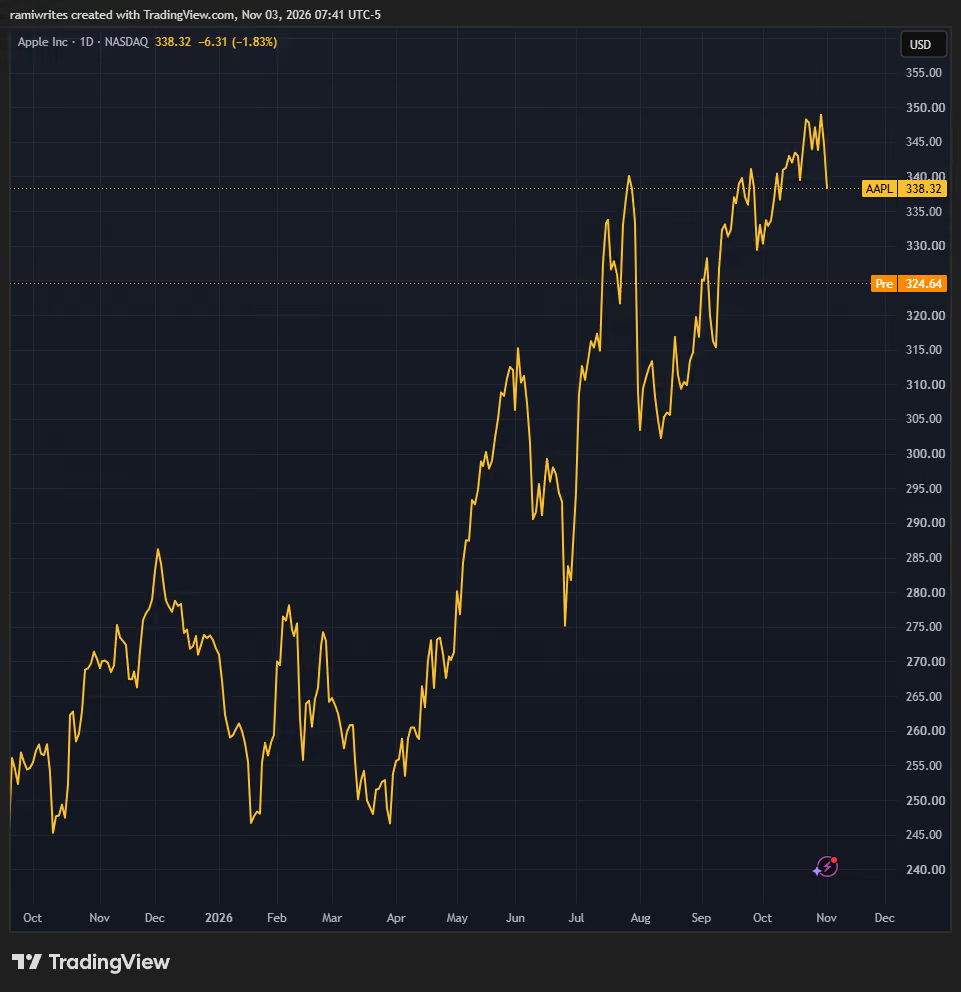
- The signal: Apple’s revenue of $114.5 billion and iPhone sales up 17% beat estimates, and the stock barely moved after hours. The S&P 500 had already fallen 0.5% Monday, its third straight loss, as tech selling continued.
Bitcoin closed near $76,700, its lowest since mid-September. Oil fell 6.5% on hopes for U.S.–Iran diplomacy. And Australia’s rate hike overnight adds one more central bank to this year’s list of hikers.
For beginners: when a strong earnings report fails to lift a stock, it usually means the good news was already priced in.
Featured Lead

Today’s Featured Lead comes from me, Rami Al-Sabeq, Editor in Chief of Future Finance. I’ve written about digital assets and markets since 2020, and I oversee every newsletter at Decentralized Masters, including Gems Uncovered, Beat Banks and The Macro Letter.
Nothing below takes a political side, and nothing here is a recommendation.
What’s on Today’s Ballot for Your Money
Tonight, the headlines will be about who won.
For your money, the better question is who holds the gavel.
In Congress, committee chairs decide which bills get a hearing, which nominees get a vote and which agencies get questioned. Control of a chamber means control of its committees.
Two things don’t change, whatever happens.
The president keeps the veto through January 2029, and most bills still need 60 votes to move through the Senate. No outcome tonight rewrites the rules overnight.
So here’s what does change, in the four places your money is on the ballot.
1. Digital-asset rules
The CLARITY Act would set the first full federal rules for digital-asset markets, splitting oversight between the SEC and the CFTC.
It passed the House 294–134 in July 2025.
In September, it fell short in the Senate, 49–50, well short of the 60 votes needed to move forward.
A senator kept the door open with a motion to reconsider, so it could get another vote after the election. If it doesn’t pass before this Congress ends in early January, it has to start over.
The Senate result decides who chairs the Banking Committee, which handles these bills. Under a Republican Senate, Tim Scott keeps the gavel. He created the committee’s first digital-asset subcommittee last year. Under a Democratic Senate, it would likely go to Elizabeth Warren, its top Democrat, who “has led opposition to the CLARITY Act,” in the words of TD Cowen analyst Jaret Seiberg.
Digital-asset groups spent about $176 million on this election through Oct. 20, backing candidates in both parties, according to Reuters. Either way, regulators can keep writing rules under the laws already on the books.
2. Spending and the debt limit
Government funding runs out on Dec. 11. That deadline belongs to the current Congress, so it lands before any new members take their seats.
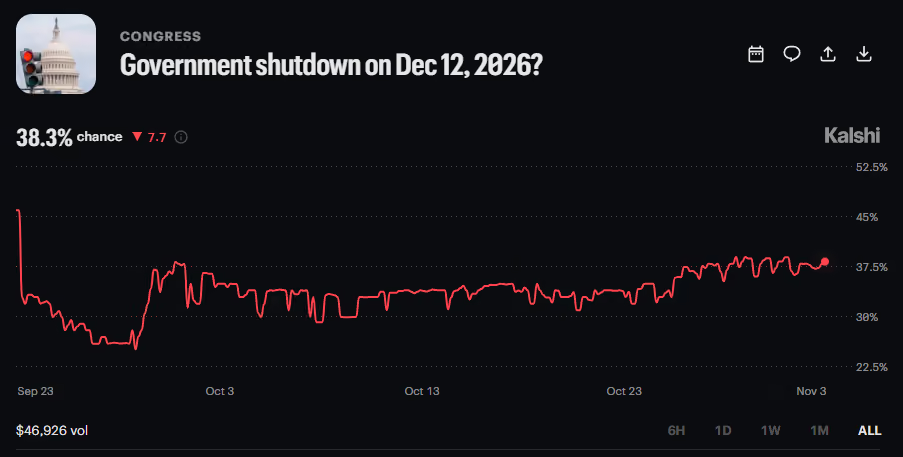
The bigger one comes next year.
The U.S. can borrow up to $41.1 trillion, and it had about $773 billion of room left in late October.
The Congressional Budget Office expects Treasury to hit that limit sometime in 2027.
Here the outcome matters mechanically.
If one party controls the White House and both chambers, it can use a budget process that needs only a simple majority in the Senate. If control is divided, raising the limit takes a deal between the parties, and those negotiations have produced some of the market’s rougher weeks in the past.
3. Tariffs
This is the area tonight changes the least.
In February, the Supreme Court ruled 6–3 that the emergency-powers law behind many of last year’s tariffs doesn’t allow tariffs at all.
The administration replaced them, first with a temporary 10% surcharge and, since July, with tariffs of 10% to 12.5% on imports from 60 economies under a different trade law.
The average U.S. tariff rate now sits around 11%, according to Global Trade Alert.
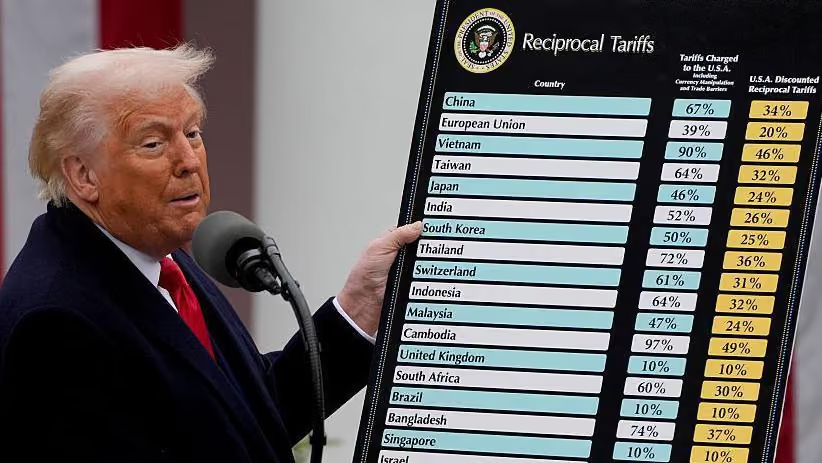
Most of that authority sits with the president. Congress can hold hearings, attach limits to spending bills or pass new trade laws, but any bill to curb tariffs would face a veto.
4. Pressure on the Fed
The Senate Banking Committee also handles every Fed nomination. A committee run by the president’s party keeps the current path for nominees. One run by the other party can slow them down.
The fight over the Fed’s independence is already in court. In June, the Supreme Court let Governor Lisa Cook stay in her seat while her case continues. She has since dissented in favor of a rate hike.
Meanwhile, the Fed decides again on Dec. 9, with a hike priced at roughly 3 in 4. Tonight’s vote doesn’t change that date.
What tonight decides, and what it doesn’t
- If Democrats win both chambers: they hold the Senate committee gavels, and the debt limit needs a deal with the White House.
- If Congress splits: the Senate keeps its current leadership, and every spending deal needs both parties.
- If Republicans keep both chambers: the simple-majority budget path stays open, and the CLARITY Act could be tried again, still needing 60 votes.
In every case, the funding deadline, the debt limit and the Fed’s December decision arrive on schedule.
Tonight decides who holds the gavels. The deadlines show up no matter who does.
The first Senate calls could come after 7 p.m. ET, but some races may take days to count. Tomorrow, we’ll walk through the results and what they mean for the CLARITY Act.
Tonight Is About Winners. Tomorrow Morning Is About the Bond Market.
At 8:30 a.m. ET tomorrow, Treasury announces how much it plans to borrow, and what happens to the bigger bond buybacks it started in September. Few headlines will mention it. The 10-year yield, near 4.9%, will.
The Macro Letter is where Tan Gera, Decentralized Masters’ co-founder and a CFA charterholder, follows announcements like that one twice a week, from Treasury and the Fed to oil, gold and digital assets.
Every issue gives you:
- The story beneath the headline: one thread per issue, in plain English, with every term explained the first time it comes up
- His own levels: the prices where he’d add to or trim his own portfolio, written down before the market gets there
- A scorecard: his past calls, checked in the open, misses included
Whoever wins tonight, the deadlines that move money are already on the calendar. Tan is tracking every one.
Positions described are Tan’s own portfolio, shared for transparency, and are not a recommendation to buy or sell any asset. Past performance is not indicative of future results.
Final Thought
Election nights reward patience.
The first numbers on your screen will come from whichever places count fastest, and the story can change by morning. Some races won’t be called for days.
That’s how counting works, and it isn’t a sign anything has gone wrong.
None of that has to change a plan you made before the polls opened.
- Tomorrow: the results, and what they mean for the CLARITY Act.
- Thursday: the Bank of England, priced for a hike.
- Friday: the October jobs report.
We’ll take them one day at a time.
See you tomorrow.
Editor in Chief | Future Finance
One Subscription. The Entire Gems Uncovered Research Library.
You just read why the surface of the news rarely tells the whole story.
Gems Uncovered is built on that same principle. It’s our weekly research briefing on early-stage assets and native market access, the opportunities that build real wealth before they ever reach a mainstream exchange.
One level beneath the headlines is where the edge lives.
Disclaimer: This content is not financial advice, it is for informational purposes only. All investments involve inherent risk. Any financial decisions you make are solely your responsibility.
The briefing serious investors read first.
Free analysis before markets open. Start thinking in decades, not days.
Join 45,000+ readers · No spam · Unsubscribe anytime · No card needed
Disclaimer: This content is not financial advice, it is for informational purposes only. All investments involve inherent risk. Any financial decisions you make are solely your responsibility.
Latest



Editor's Picks

Become a sharper capital allocator in 5 minutes a day.
Institutional-grade research on where the smartest capital is positioning, across AI, energy, biotech, robotics, and digital assets. Distilled into a daily read you finish before your coffee does.
Join 45,000+ readers · No spam · Unsubscribe anytime · No card needed