

The world’s cheapest money is running out
Why Tokyo reaches your stocks and Bitcoin →
October 30, 2026
·
11 Min Read




The briefing serious investors read first.
Free analysis before markets open. Start thinking in decades, not days.
Join 45,000+ readers · No spam · Unsubscribe anytime · No card needed
Before we begin: this report is for education, not financial advice. Nothing here is a recommendation to buy or sell any stock, company, or asset, and we make no price predictions. Investing carries risk, including loss. Please read the full disclaimer at the end.
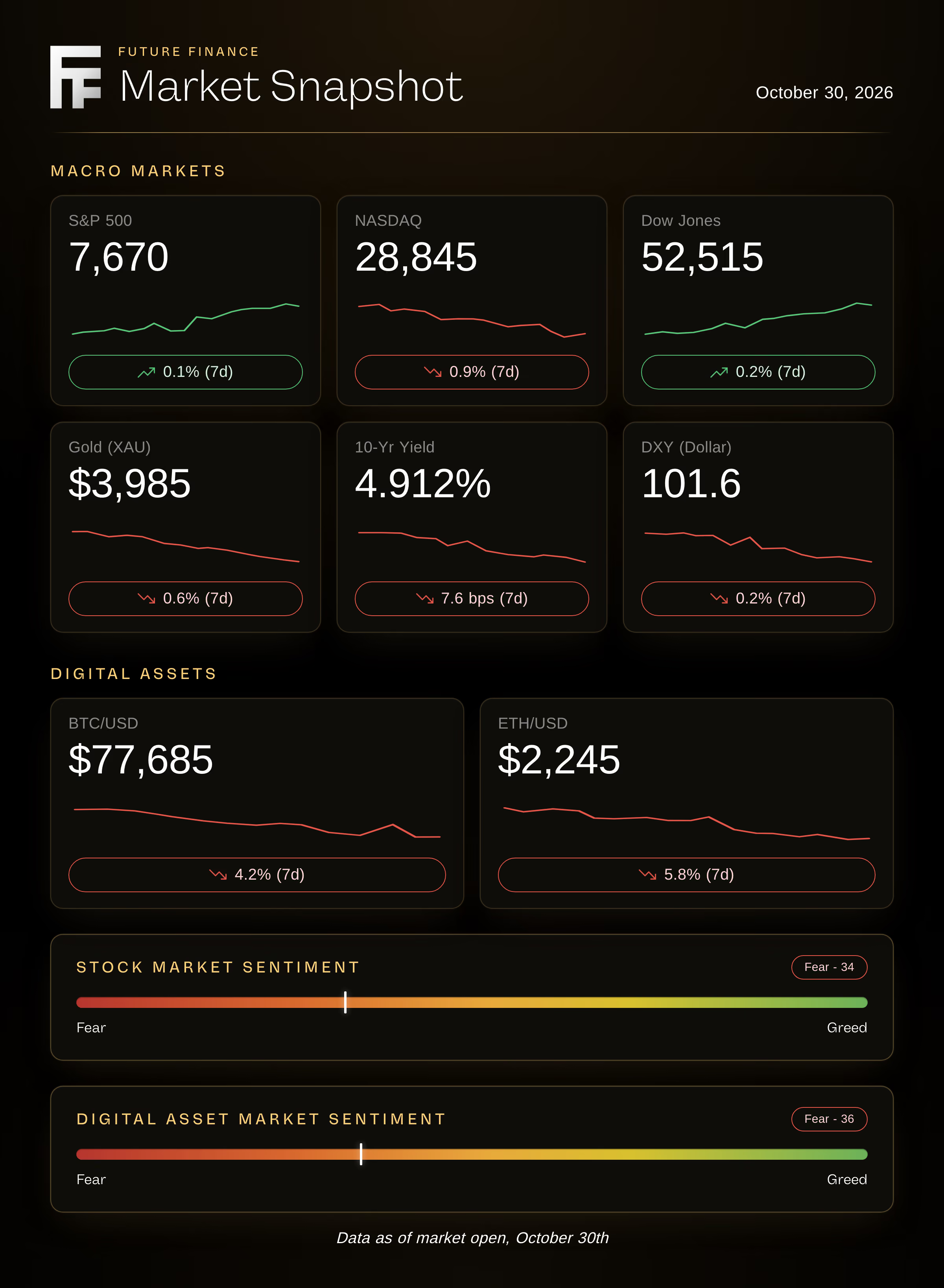
Today’s Big Picture
For most of the past 30 years, the cheapest money on Earth came from Japan.
You could borrow yen for close to nothing and use it to buy almost anything else: U.S. Treasuries, tech stocks, Bitcoin.
Overnight, the Bank of Japan said the reason for all that cheap money is gone. It held its rate at 1.25%, up from below zero in early 2024.
But for the first time since it set its goal in 2013, it said underlying inflation has reached 2%. Traders already had a December hike priced at roughly 4 in 5.
Japan doesn’t keep its savings at home, either. It’s the largest foreign owner of U.S. government debt, with more than $1 trillion of Treasuries.
When the world’s cheapest lender starts charging more, everyone who borrowed from it has to settle up.
Digital assets had a rough night of their own. Hackers took about $6.3 billion from Binance, the largest theft on record.
Below, Tan Gera on why a decision made in Tokyo while America slept reaches your portfolio.
Paid Advertisement
Most Americans Are Making One Enormous Currency Bet
Most Americans earn, save, spend and invest almost entirely in U.S. dollars. They may not think of that as a currency strategy, but it is.
When so much of an investor’s financial life is tied to a single currency, the question becomes whether diversification should extend beyond the assets in a portfolio to the currencies behind them.
Battle Bank gives clients direct access to foreign currencies through Currency Deposit Accounts and Currency CDs, offering another way to diversify and build a more global financial strategy.
For investors accustomed to looking beyond a single stock, sector or asset class, looking beyond a single currency may be worth considering too.
Discover Foreign Currency Opportunities →
Disclosure: Battle Bank is a paid partner of Future Finance. We may receive compensation from Battle Bank if you click on our links and open an account or use certain banking products. This compensation comes at no additional cost to you.
FDIC insurance protects the deposit if the bank fails. It does not protect against changes in exchange rates or declines in the value of the currency held.
Signal vs. Noise
$6.3 Billion Gone in About 20 Minutes
- The noise: the biggest theft in digital-asset history.
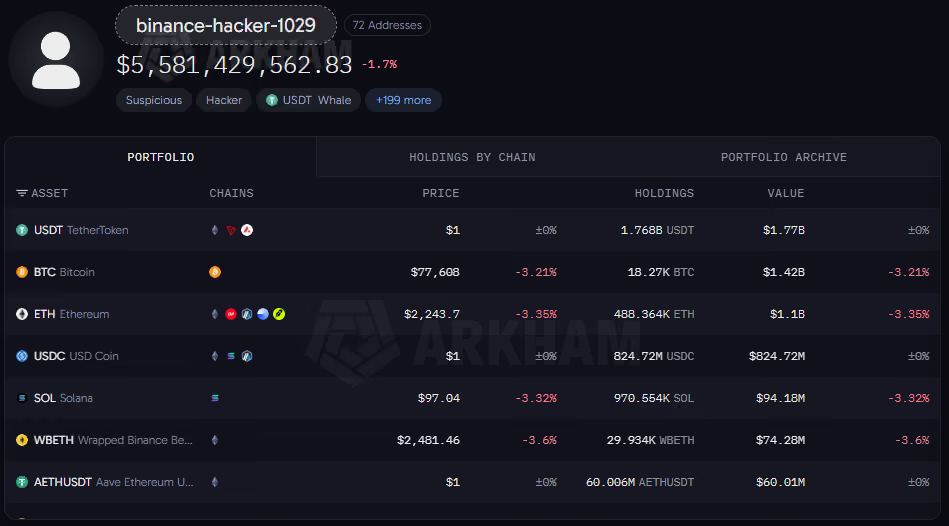
- The signal: who pays, and what’s still out there. Starting around 4 p.m. ET Thursday, hackers moved about $6.3 billion out of Binance, the world’s largest digital-asset exchange. That’s about four times the $1.5 billion taken from Bybit in February 2025.
Blockchain analysts at TRM Labs blame North Korea’s “TraderTraitor” hackers, “with high confidence.”
Binance paused withdrawals and says it will cover the losses from its emergency fund and its own money. Its founder posted: “User funds are safe.” Tether and Circle, the two biggest stablecoin issuers, froze more than $2 billion of the stolen digital dollars.
Bitcoin fell about 5% to below $77,000, ether about 6% and Binance’s own token about 8%. The hackers still hold about $2.4 billion in Bitcoin and ether that nobody can freeze, so any sale lands on the market.
It’s not Binance’s first big payout. A year ago, it paid $283 million to traders after the October 2025 crash.
For beginners: coins on an exchange are held by the exchange. That’s convenient, and it’s also why one breach can freeze everyone’s withdrawals at once.
Japan Isn’t the Only One Raising Rates
- The noise: the Fed held this week.
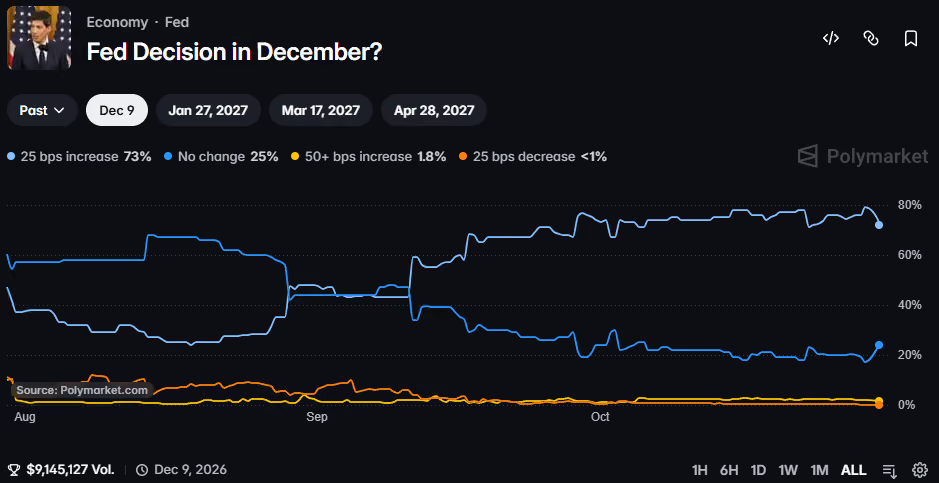
- The signal: most of the world is raising rates. Canada hiked Wednesday, its first increase since 2023. Australia has hiked four times this year and decides again Tuesday. The Bank of England is priced at about 95% to hike Thursday.
The European Central Bank paused after two hikes this year, and futures put a December Fed hike at about 78%.
The common thread is oil. Brent crude settled at $114.88 Thursday, pushed up by the war with Iran.
For beginners: when central banks everywhere raise rates at the same time, borrowing gets more expensive everywhere at once, and there are fewer places for money to go where it stays cheap.
Amazon’s Cloud Is Speeding Up. So Is the Bill.
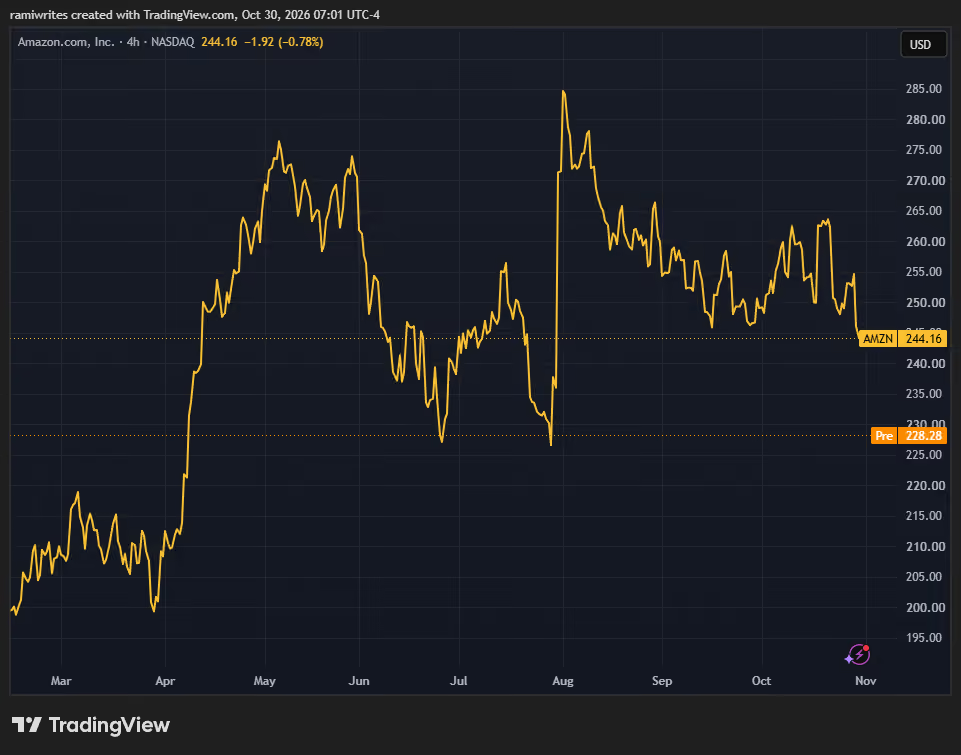
- The noise: Amazon missed estimates for revenue and earnings.
- The signal: Amazon Web Services grew 39%, its fastest in nearly five years. But Amazon spent $75.9 billion on its build-out last quarter while its operations brought in $42.4 billion of cash. The stock fell about 6% after hours.
Alphabet fell 12.6% Thursday, its worst day ever, after its free cash flow turned negative.
Yet the typical stock rose. The equal-weighted S&P 500 gained 1.2% while the regular index slipped 0.3%. Apple reports Monday.
For beginners: the S&P 500 gives its biggest companies the most weight. When a few giants fall and most stocks rise, the index can look weak while the average stock is doing fine.

Featured Contributor
Today’s guest is Tan Gera, co-founder of Decentralized Masters and a CFA charterholder. He writes The Macro Letter, where he publishes his own buy and sell levels before markets reach them. Everything below describes his own portfolio. Nothing in this section is a recommendation.
The World’s Cheapest Money Is Getting More Expensive
On July 31, 2024, the Bank of Japan raised its rate to 0.25%.
That’s a quarter of one percent. Most Americans never saw the headline.
Five days later, Japan’s Nikkei fell 12.4% in a single day, its worst since 1987. Bitcoin went from about $62,000 to under $50,000. Wall Street’s fear gauge, the VIX, spiked as high as 65 during the day.
So when the Bank of Japan speaks, I listen. Last night, it said something it hadn’t said since it set its 2% goal in 2013.

What Japan said
It held its rate at 1.25%. One of its nine policymakers wanted a hike to 1.5%.
It also said underlying inflation has finally reached its 2% target. Governor Kazuo Ueda put it plainly: “With underlying inflation having reached 2%, it’s undesirable for inflation to rise significantly.”
For 30 years, Japan’s problem was prices that wouldn’t rise. Now its worry is prices rising too fast, and a central bank with that worry raises rates.
Japan’s rate was below zero in early 2024. Six increases later, it’s at 1.25%. Ueda says the bank will weigh another one at every meeting, “including at our next meeting.” That’s Dec. 17–18, and traders had already priced a hike there at roughly 4 in 5.
Why a small number in Tokyo moves the world
Think of Japan as the world’s cheapest pawnshop.
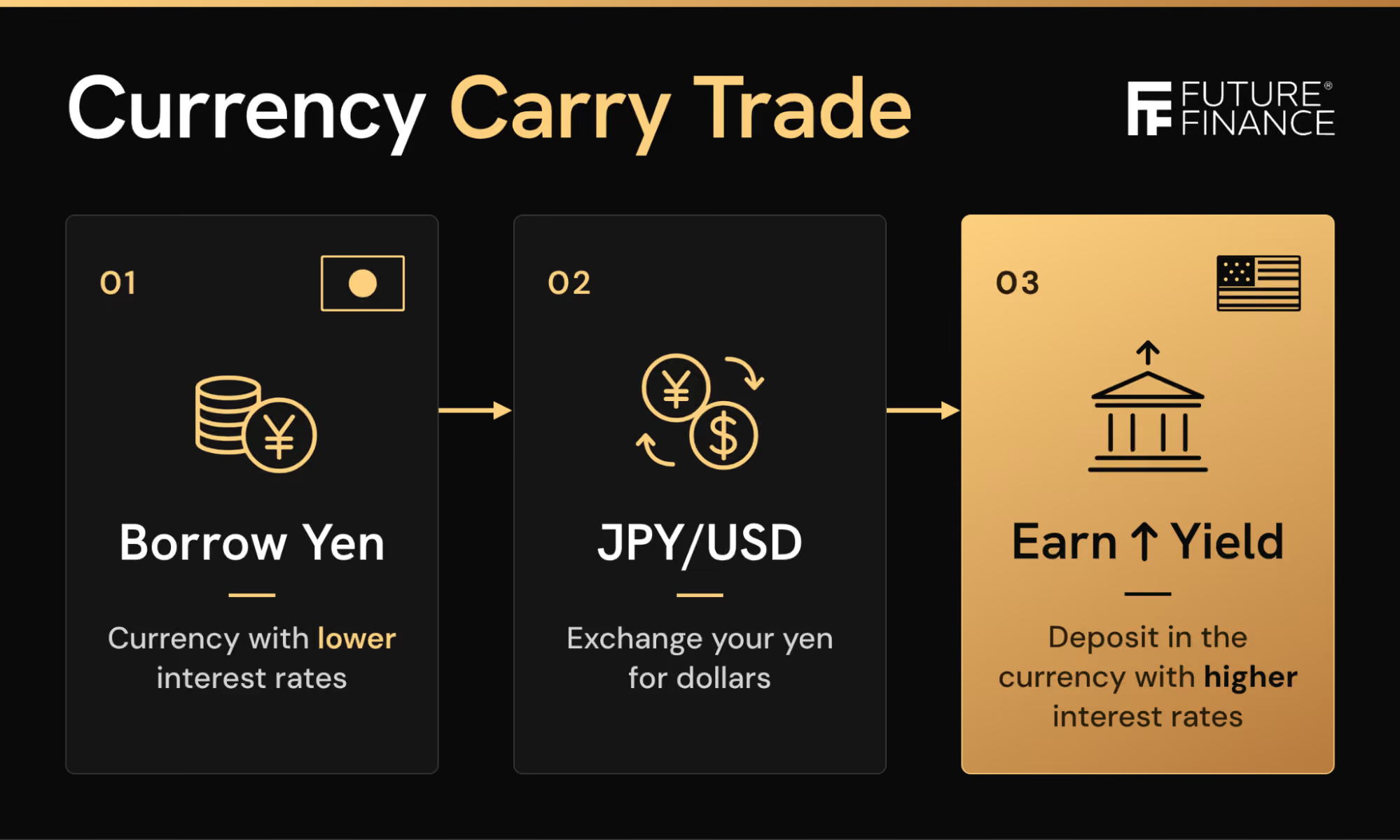
For years, you could borrow yen there for almost nothing, swap it into dollars and buy something that paid more: Treasuries, U.S. stocks, Bitcoin. Traders call it the carry trade.
Nobody knows exactly how big it is. The Bank for International Settlements put a rough middle estimate at about $250 billion going into August 2024, and said that number was probably low.
When Japan raises its fee, those borrowers have to pay it back, and they sell whatever is easiest to sell. That’s what happened in August 2024.
Japan’s own savers matter even more. Japan is the largest foreign owner of U.S. government debt, with $1.07 trillion of Treasuries as of August. That’s down four months in a row, from $1.21 trillion in April.
For decades, Japanese insurers and pension funds bought Treasuries because bonds at home paid almost nothing. Today, Japan’s 30-year bond pays about 3.8%, and it touched a record 4.235% earlier this month.
When you can earn close to 4% at home with no currency risk, you need less of America’s debt. And America needs buyers. The 10-year Treasury yield closed at 4.98% Thursday, a day after topping 5%.
The two numbers I’m watching
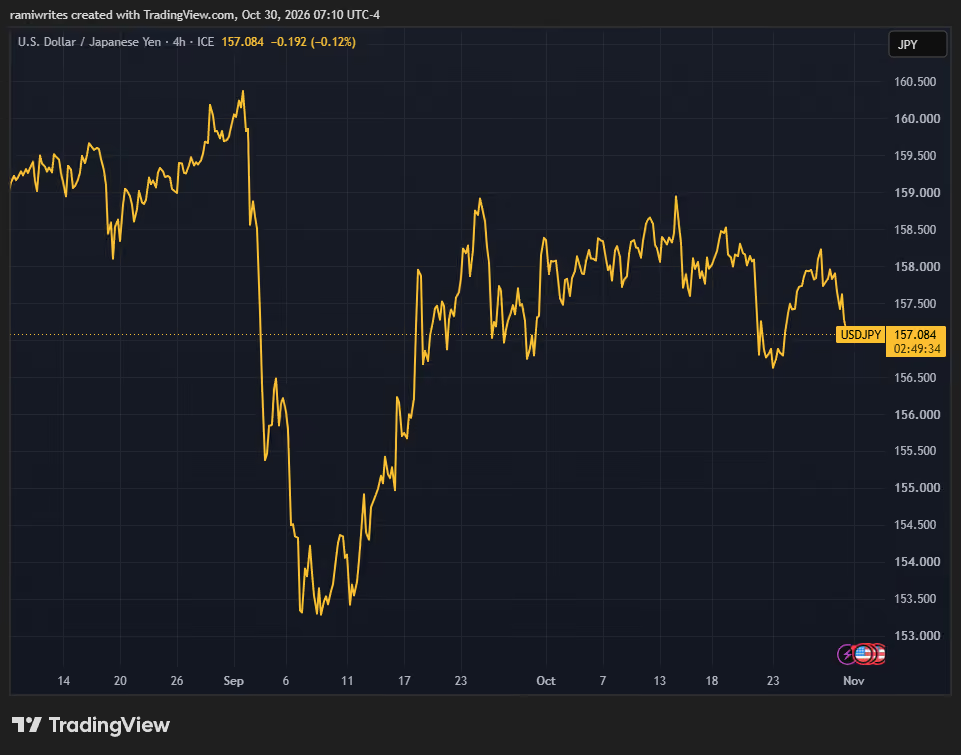
The first is the yen. A dollar buys about 157.5 yen right now. In July, the yen got so weak, past 163 to the dollar, that the U.S. and Japan bought yen together for the first time since 1998.
A slow, steady yen is fine. A sudden jump in the yen would tell me borrowers are rushing to pay back what they owe, and that’s when everything bought with cheap yen tends to get sold together.
The second is Japan’s 30-year bond against that 4.235% record. A new high would give more Japanese money a reason to stay home.
What I’m doing about it
Nothing new, because my plan already covers it.
I can’t predict the day the carry trade unwinds. Nobody could in August 2024 either. What I can do is decide in advance where I’d buy if it happens.
My next S&P 500 order is at 7,450, about 3.5% below Thursday’s close, with more below it down to 6,400. On Bitcoin, it’s $72,000, about 6% below where it traded after the Binance news. On gold, I bought at $4,000 last week, and my next sells sit at $4,720 and $5,000.
If Tokyo sets off a selloff, those orders are where I’d be buying. If it doesn’t, my weekly Bitcoin buy keeps running through Dec. 31 and I leave the rest alone.
Both the Fed and the Bank of Japan decide again before Christmas. I’ll be tracking both in The Macro Letter, along with every level above.
A quarter-point in Tokyo once knocked Bitcoin down about 20% in a week. I’d rather have my orders placed before the next one.
- Tan Gera
Co-founder, Decentralized Masters | The Macro Letter
Positions described are Tan’s own portfolio, shared for transparency, and are not a recommendation to buy or sell any asset. Past performance is not indicative of future results.
You Just Read Why Tokyo Matters. Tan Tracks What Comes Next, Twice a Week.

Most investors slept through last night’s decision in Japan. Tan just showed you how it reaches your stocks, your bonds and your Bitcoin.
He does that twice a week in The Macro Letter, his own newsletter. Each issue follows one story across rates, currencies, oil, stocks, gold and digital assets, in plain English, with every term explained the first time it comes up.
Here’s what you get that most market commentary doesn’t give you:
- His own levels, in advance: the exact prices where he’d add to or trim his own portfolio, written down before the market gets there
- His calls, graded: past calls checked in the open, misses included
- The connections: how a move in Tokyo, Washington or the oil market reaches the money you have invested
The Fed decides Dec. 9. The Bank of Japan decides Dec. 17–18. The Macro Letter is where Tan will walk through both, and every level he’s watching in between.
Positions described are Tan’s own portfolio, shared for transparency, and are not a recommendation to buy or sell any asset. Past performance is not indicative of future results.
Final Thought
October ends tomorrow.
It brought a Fed hold, 3.4% growth, the largest digital-asset theft on record and a central bank in Tokyo that says its long fight with low inflation is over.
Next week is busier.
- Australia decides Tuesday, the same day America votes.
- Treasury sets out its borrowing plans Wednesday.
- The Bank of England decides Thursday, and the October jobs report is due Friday.
Any one of those could move markets fast. Decide where you’d act before the week starts, and you won’t have to decide in a hurry.
See you tomorrow.
Editor in Chief | Future Finance
Gems Flagged Magma Finance at 14 Cents. It’s Near 38 Cents Today.

Gems Uncovered is the weekly research newsletter from Decentralized Masters. Every week, our research team picks the digital assets it thinks the market is underpricing and sends subscribers the full case for each one.
Subscribers get that research on the day coverage starts. They read the case for Magma Finance (MAGMA) on March 27, when it traded near 14 cents. It’s up 166% since.
A few more picks since Gems covered them:
- Derive (DRV): up 147% since July 17
- Pump.fun (PUMP): up 72% since Aug. 7
- Venice (VVV): up 55% since Aug. 21
- NEAR Protocol (NEAR): up 38% since Sept. 18
That’s the value of reading the research on day one: you see the case while the price is still where Gems found it.
Here’s what a subscription includes:
- New picks every week, each with the research behind it
- Market commentary on what’s moving digital assets and why
- Updates on past picks, plus monthly performance reports that show every pick, winners and losers
- The full research library of past coverage
Not every pick works out, and the reports show those too.
See what Gems is covering now →
Returns run from each asset’s price on the day Gems Uncovered covered it to CoinGecko prices on Oct. 30, 2026, before fees and taxes. These are selected results: of the 86 assets Gems covered from January through September 2026, 17 were above their coverage price on Oct. 30. Past performance doesn’t guarantee future results. Nothing here is a recommendation.
Disclaimer: This content is not financial advice, it is for informational purposes only. All investments involve inherent risk. Any financial decisions you make are solely your responsibility.
Latest



Editor's Picks

Become a sharper capital allocator in 5 minutes a day.
Institutional-grade research on where the smartest capital is positioning, across AI, energy, biotech, robotics, and digital assets. Distilled into a daily read you finish before your coffee does.
Join 45,000+ readers · No spam · Unsubscribe anytime · No card needed