

Anthropic just filed to go public.
We read all 300 pages so you don’t have to →
October 27, 2026
·
12 Min Read



The briefing serious investors read first.
Free analysis before markets open. Start thinking in decades, not days.
Join 45,000+ readers · No spam · Unsubscribe anytime · No card needed
Today’s Big Picture
Anthropic spent Monday telling the world how much money it needs.
Starting tomorrow, the world tells Anthropic, and everyone else, what that money costs.
Inside about 72 hours, four central banks, a GDP report, the Fed’s favorite inflation gauge and three of the biggest tech companies on earth all report:
- Wednesday: the Bank of Canada at 9:45 a.m. ET, the Fed at 2 p.m., then Microsoft and Alphabet after the close.
- Thursday: the European Central Bank, Q3 GDP and September PCE inflation at 8:30 a.m., then Amazon after the close.
- By Friday: the Bank of Japan.
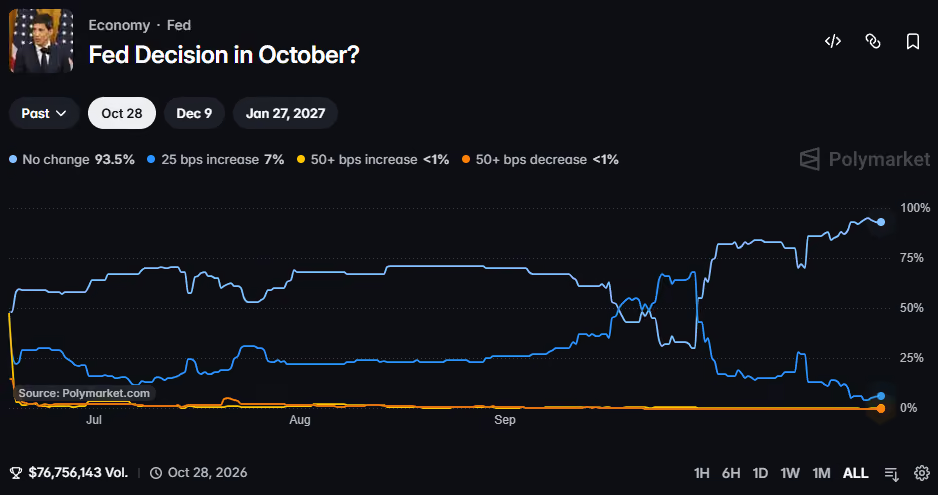
The Fed is expected to hold, with odds near 90%. December is the live question, where a hike is still priced at roughly 4 in 5.
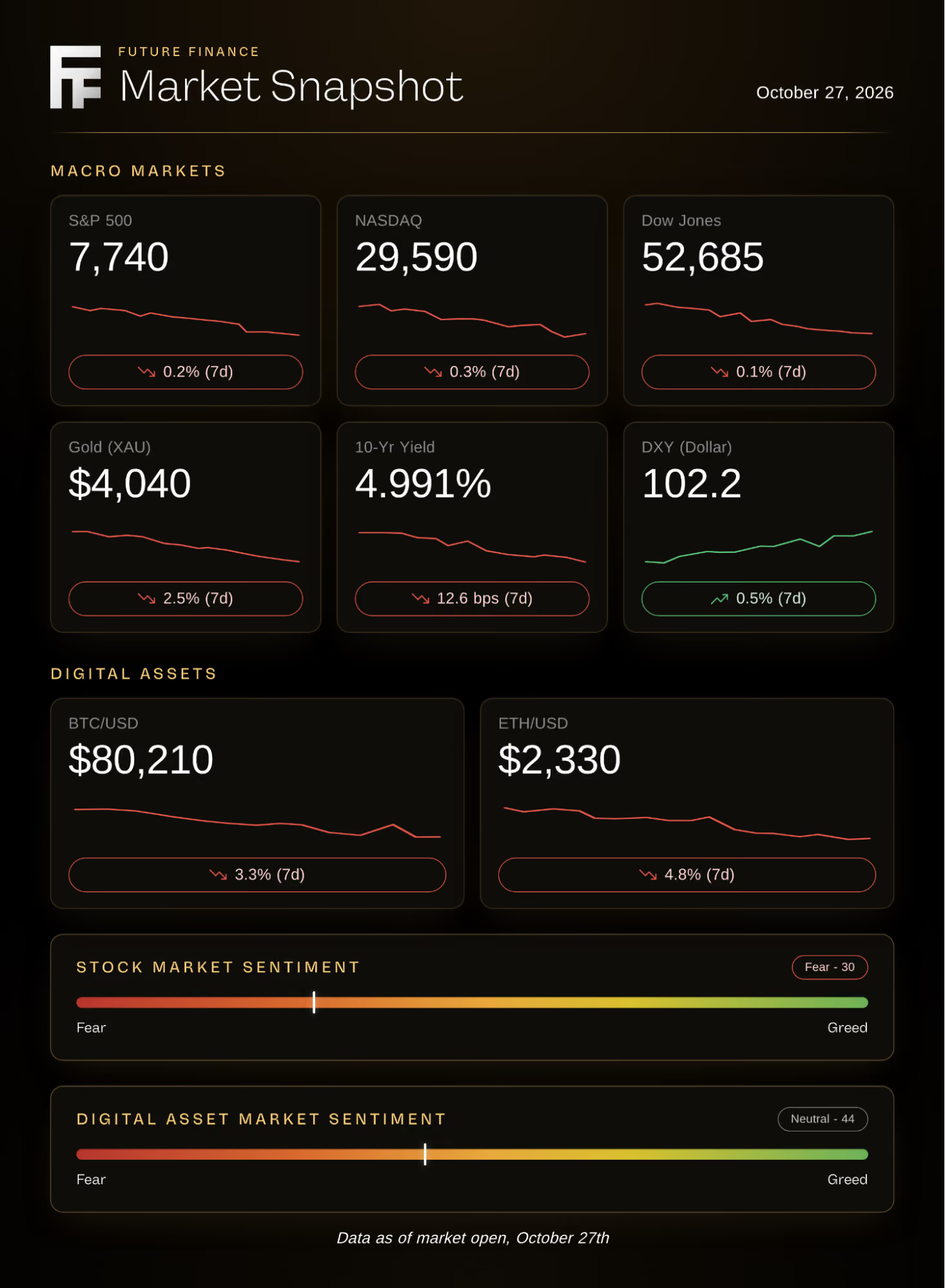
Stocks liked the filing. The S&P 500 rose 0.7% Monday and chip stocks jumped nearly 3%, while the 10-year yield slipped to about 4.99%, down from 5.35% earlier this month, its highest since 2002.
This week sets the price of money for an industry that just showed us how much of it it needs.
Below, Maxwell Nee reads the document he was waiting for.
What The “Midterm Freeze” Could Mean For Your Money…
Most of Wall Street will spend tomorrow on the Fed. Tan Gera, CFA, is focused on a date one week later.
On Nov. 4, the morning after the midterms, Treasury announces how much it plans to borrow next quarter, with the 10-year yield already sitting near 5%.
Tan has a name for the risk he sees building around that announcement: the “November 4th Freeze.” Tomorrow, on a free live briefing, he’ll break it down step by step and show what he’s doing with his own savings before Nov. 4.
Disclosure: Educational content only. This briefing is not financial, investment, legal, or tax advice, and nothing in it is a recommendation to buy or sell any asset. Forecasts are the presenter’s opinions, not guarantees. All investing carries risk, including possible loss of principal. Do your own research.
Signal vs. Noise
The Fed Holds Tomorrow. The Words Matter More.
- The noise: Fed decision day.
- The signal: a hold is priced at about 90%, so the decision itself shouldn’t move much. What moves markets is whether Kevin Warsh, who runs the Fed, keeps a December hike on the table.
Thursday may matter more. September PCE, the Fed’s preferred inflation measure, is expected at 3.6% to 3.7%, with core at 3.1%. A hot number makes December easier to justify.
A month ago, traders gave an October hike close to even odds. Weak hiring numbers in early October changed that, and December became the meeting to watch.
For beginners: when an outcome is nearly certain, the surprise lives in the words around it. Watch the statement’s wording and the press conference at 2:30 p.m.
Canada May Hike Before the Fed Even Speaks
- The noise: the Bank of Canada is a sideshow.
- The signal: markets put the odds of a hike at about 77%, from 2.25%, and economists are split: 19 of 34 in a Reuters poll expect one.
If it moves, Canada joins a list that already includes the Fed in September, Japan, which raised to 1.25%, and Australia, which raised to 4.60%. Energy costs are pushing central banks the same way at the same time.
For beginners: when many countries raise rates at once, borrowing gets more expensive everywhere. That’s one reason U.S. yields don’t fall just because the Fed pauses.
Read Microsoft’s Spending, Then Its Profit
- The noise: Big Tech beats earnings estimates, again.
- The signal: Microsoft’s capital spending, expected near $46.6 billion for the quarter, against $19.4 billion a year ago.
Microsoft, Alphabet and Amazon are Anthropic’s landlords. By press tallies of its filing, its commitments include at least $114.5 billion with Google, at least $110 billion with Amazon and $44.9 billion with Microsoft. Their spending is the other side of Anthropic’s bill.
Microsoft and Alphabet report tomorrow evening and Amazon on Thursday, so by Friday we’ll know what all three plan to spend next.
We saw last week what happens when that spending outruns cash: Meta’s free cash flow turned negative.
For beginners: capital spending is money a company puts into buildings, chips and equipment. When it grows faster than the cash coming in, the company is betting on demand that hasn’t arrived yet.

Featured Contributor
Today’s guest is Maxwell Nee, Chairman and Founder of Family Office Insider and a co-lead of Inflection Club, a private investment club for its members. Two weeks ago he read the leaked draft of Anthropic’s prospectus. Nothing in this section is an offer, a solicitation, or a recommendation.
The Leak Was Right. The Two Numbers You Need Are Still Blank.
Two weeks ago, I wrote about 261 pages I wasn’t allowed to read.
They were the confidential draft of Anthropic’s prospectus, the document every pre-IPO pitch in my inbox left out. Reuters had a copy. The rest of us had growth charts.
On Monday morning, Anthropic filed the real thing. It runs past 300 pages. I read it.
The short version: the leak was right, the business is healthier than the draft showed, and the two numbers an ordinary investor needs most are still blank.
What the leak got right
Every 2025 figure I quoted from the draft checks out in the public filing.
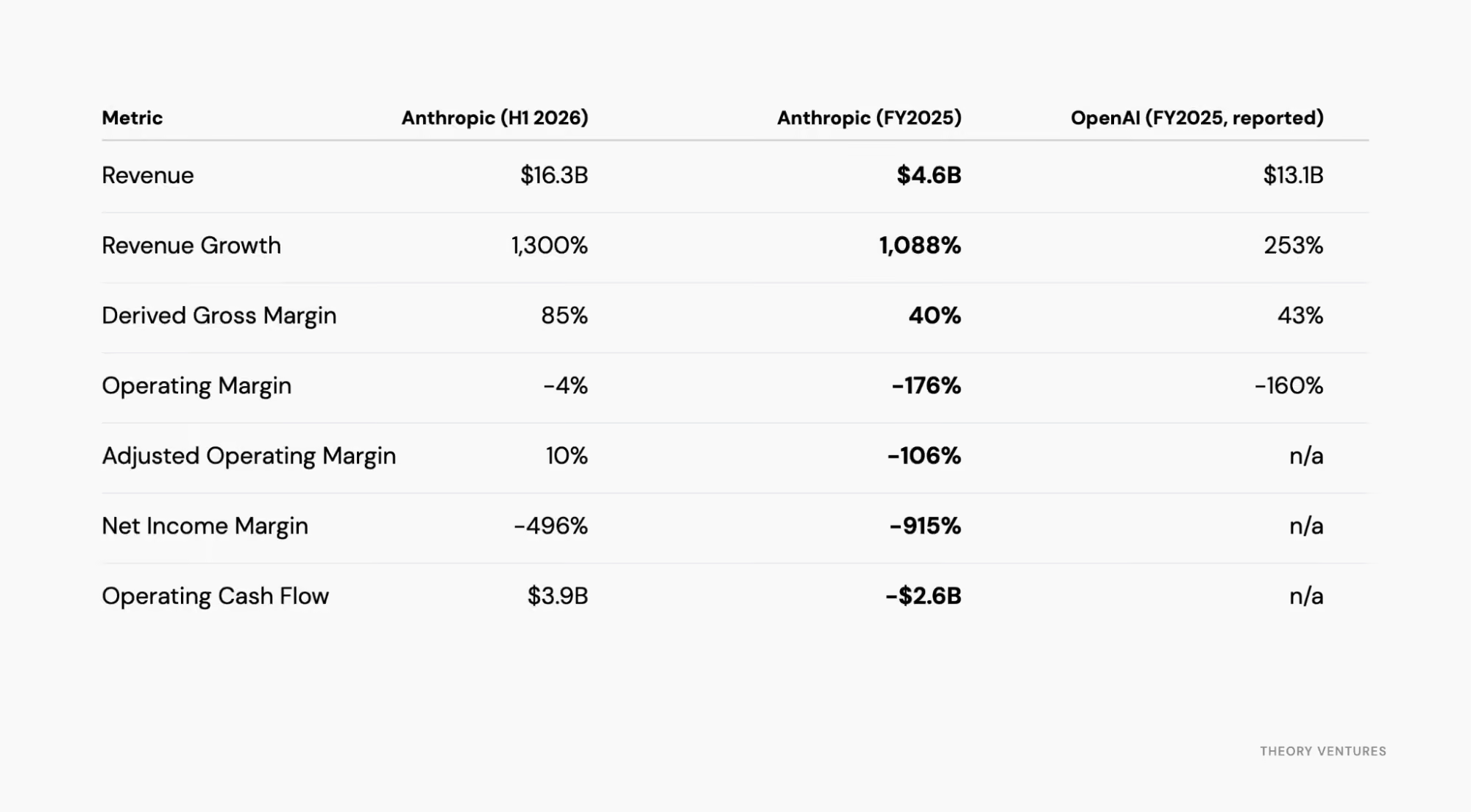
- Revenue: $4.59 billion
- Operating loss: $8.06 billion
- Net loss: $41.97 billion, about $34.3 billion of it an accounting charge
The vote checks out too. One share, held by the seven co-founders, carries 50.1% of the voting power on most matters. A trust elects a majority of the board.
The filing is blunt about what that means. The structure “may effectively eliminate the ability of holders of our Class A common stock to influence important decisions.” Class A is the stock the public would buy.
What’s new is big
The draft stopped at 2025. The S-1 runs through June 30, 2026.
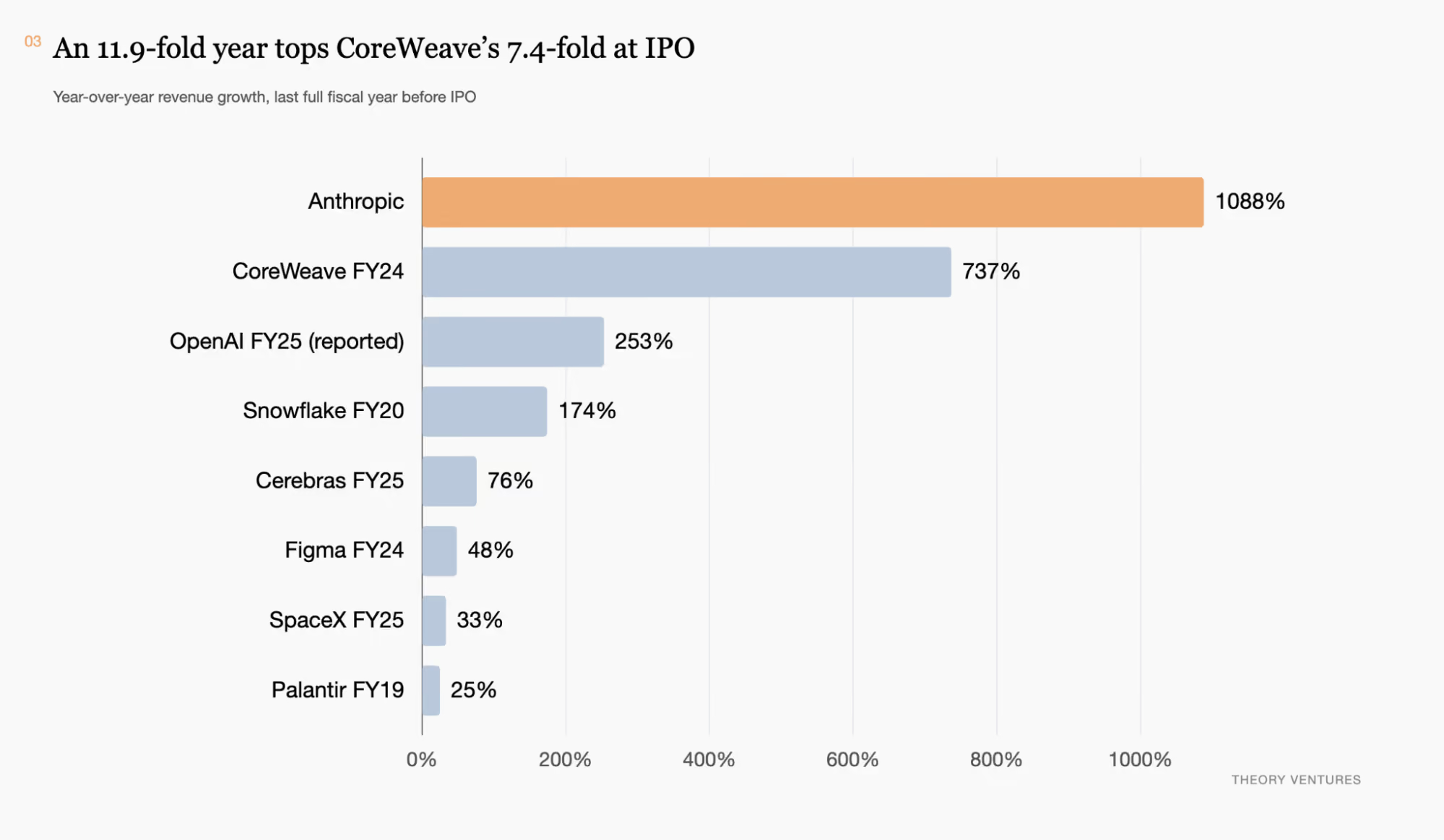
Revenue in the first half of this year was $16.3 billion, against $1.2 billion in the same half of 2025. The second quarter alone brought in about $11.6 billion.
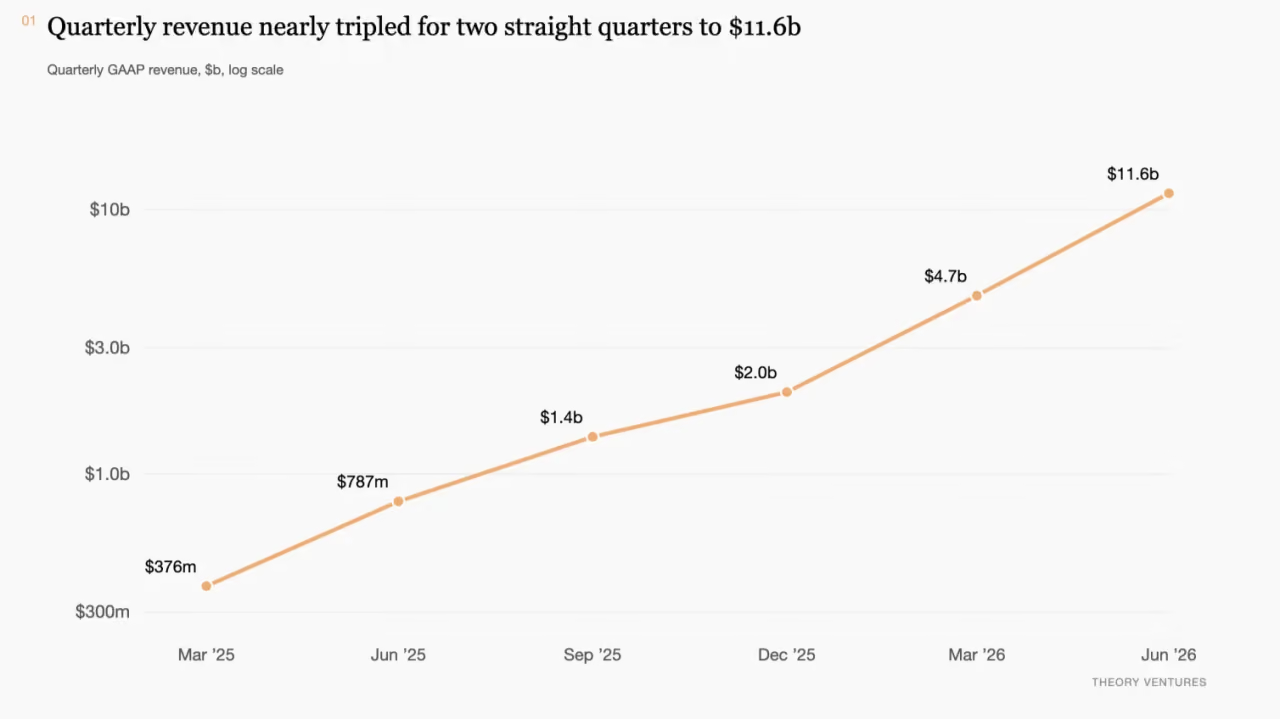
In that quarter, Anthropic made money on its operations for the first time it has disclosed: $974 million of operating income.
Cash from operations swung to a positive $3.9 billion for the half, from a negative $1.5 billion a year earlier, per Fortune. And at the end of June it held $112.4 billion in cash plus $19.3 billion in short-term investments, most of it from May’s $65 billion funding round.
Then comes the line that will make the headlines: a net loss of $80.7 billion for the half.
About $72.4 billion of it is a non-cash charge. Anthropic raised money through convertible notes, which turn into shares later. As the company’s value climbed, those notes became worth more, and the accounting rules book that rise as a loss.
The giant number is on paper. The operating line is where you see the business.
The bill with no total
Two weeks ago I quoted $518 billion in computing commitments from the draft. I can’t confirm that number anymore, because the public filing leaves the total blank.
The sentence reads, word for word, “aggregate committed spend of more than $ ,” with a space where the number should be.
The deals are listed one at a time instead. By press tallies of the filing, they include at least $114.5 billion with Google, at least $110 billion with Amazon and $44.9 billion with Microsoft, plus large deals with SpaceX, chip leases tied to Broadcom and smaller cloud providers. Most of the spending lands between 2031 and 2045.
Reporters adding it all up have landed anywhere from about $417 billion to $750 billion, depending on what they count.
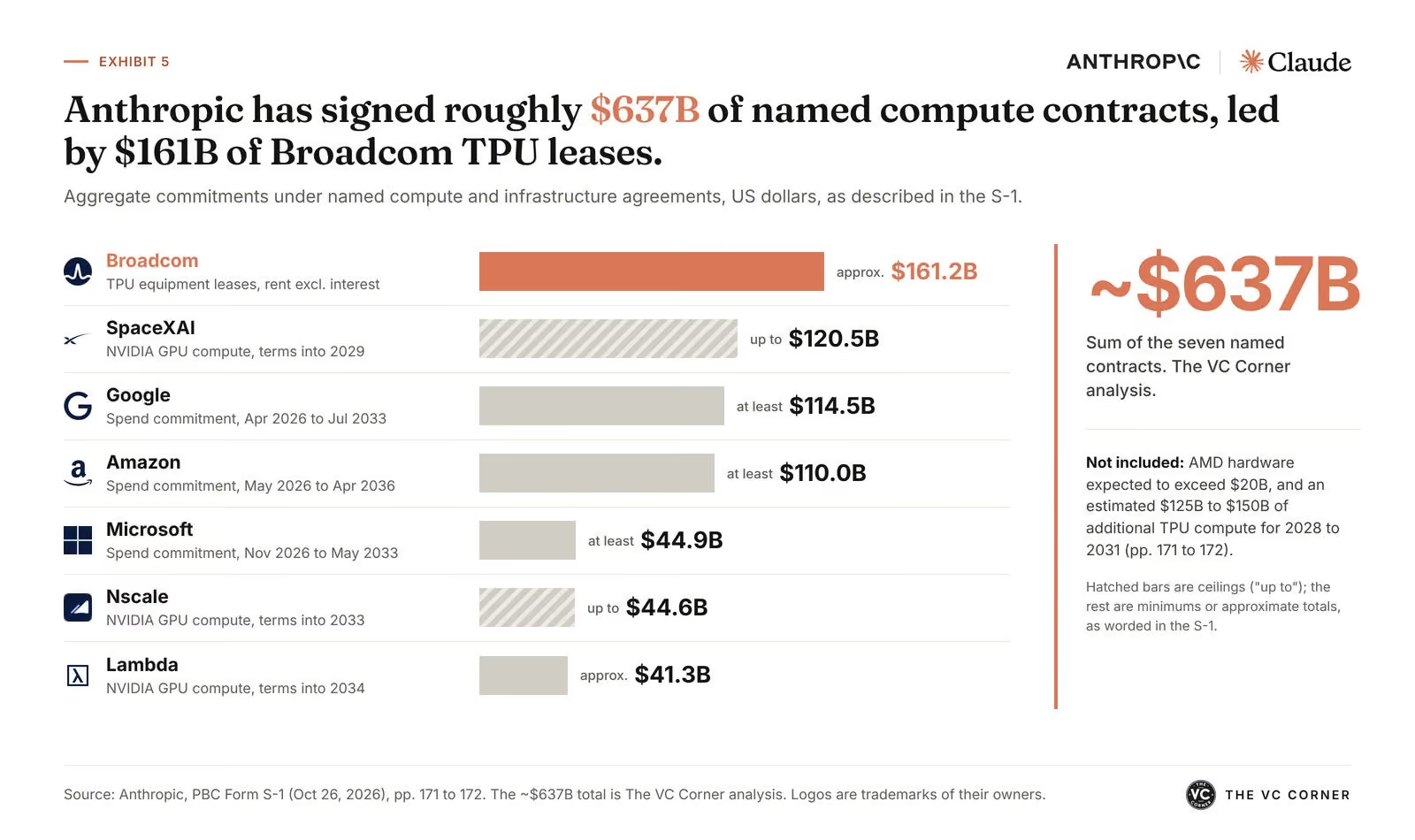
The same cloud companies are also its landlords, its investors and the storefront for about 48% of its first-half revenue. The filing says that setup “could give rise to conflicts of interest.”
And my favorite line in the whole document: “In the past, we have significantly underestimated our compute requirements.”
A company that has underestimated its biggest cost before is asking you to trust its estimate of that cost for the next 20 years.
Who gets to buy
Pre-IPO pitches never mention this, and the filing doesn’t answer it yet.
There’s no price range, no share count and no offering size. Anthropic says those “have not yet been determined.”
Press readings of the filing found no shares set aside for individual investors so far. SpaceX reserved up to 30% of its IPO for retail buyers.
Insiders, meanwhile, get their exits in stages. According to CNBC’s reading of the filing, some can sell from the first day of trading, with more windows opening over the following 11 weeks.
The Wall Street Journal reports the listing could come as soon as the week of Nov. 16, at a valuation of $1.5 trillion to $2 trillion. May’s private round valued the company at $965 billion.
An update on SpaceX
Two weeks ago I used SpaceX as the case for patience. It had dropped from $225.64 to $108.37, below its $135 offering price.
It closed Monday at $146.90, back above its IPO price and still about 35% under that peak.
Anyone who waited until July paid less than the IPO price. Anyone who bought in the first week is still down about a third. The price you pay decides the outcome, and right now nobody can tell you Anthropic’s.
How I’d read it
In fairness to the company, fast growth, a first operating profit, positive cash flow and $131 billion in the bank is a far stronger hand than the draft showed. By one analysis of the filing, computing costs fell from about twice revenue a year ago to about 55% of it.
Against that: paper losses that dwarf revenue, a bill with no total, revenue that depends on customers who can cut their usage quickly, and shareholders with very little say.
My reading order hasn’t changed. Risk factors first, and there are about 94 pages of them. Then the commitments. Then the vote. The growth chart last.
The leak told us what the company owes. The filing tells us who’s in charge. The two numbers that matter most to you, the price and how many shares you can get, haven’t been written yet.
When they are, I’ll read those too.
- Maxwell Nee
Chairman and Founder, Family Office Insider | Co-lead, Inflection Club
The Next “Can’t Miss” Document Lands Nov. 4
Maxwell’s rule above works for governments too: read the document before you trust the headline.
On Nov. 4, the morning after the midterms, Treasury publishes how much it plans to borrow next quarter. Its expanded bond buybacks are set to expire the same day.
Tan Gera, CFA, has a name for the risk he sees building around that announcement: the “November 4th Freeze.” Tomorrow, on a free live briefing, he’ll walk through it step by step and show what he’s doing with his own savings before Nov. 4.
Stay to the end and you’ll get The Freeze-Proof Report, with the three assets Tan holds in his own portfolio ahead of Nov. 4.
Disclosure: Educational content only. This briefing is not financial, investment, legal, or tax advice, and nothing in it is a recommendation to buy or sell any asset. Forecasts are the presenter’s opinions, not guarantees. All investing carries risk, including possible loss of principal. Do your own research.
Final Thought
Anthropic’s filing has two blanks you can’t fill in yourself: the price, and the total of what it owes.
This week has a few of its own.
- Whether the Fed keeps December on the table.
- Whether Thursday’s inflation number makes that easier or harder.
- Whether the companies renting AI its computing power keep spending at this pace.
By Friday, most of those will be filled in. Anthropic’s will take a few more weeks, and the blanks are the part worth waiting for.
See you tomorrow.
Editor in Chief | Future Finance
Every Level. Every Move. Written Down Before It Happens.
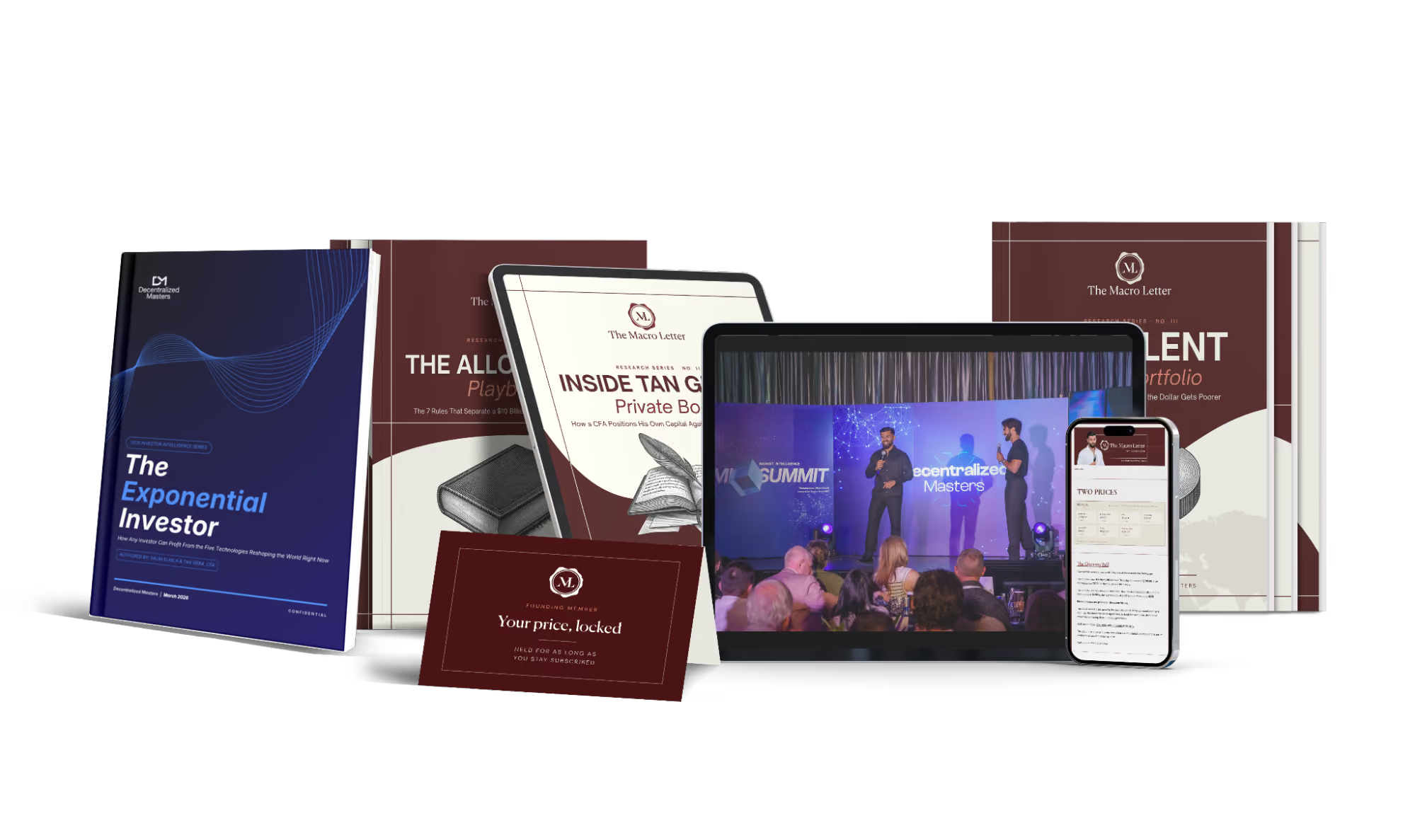
Tan Gera, DM’s co-founder and a CFA, writes The Macro Letter for investors who would rather have a plan than a prediction.
Twice a week, he lays out what he’s watching across rates, oil, stocks and digital assets, the levels where he’d add or trim in his own portfolio, and how his past calls played out, misses included.
With the Fed deciding tomorrow and the 10-year yield sitting right around 5%, it’s a good week to have your levels written down.
Positions described are Tan’s own portfolio, shared for transparency, and are not a recommendation to buy or sell any asset. Past performance is not indicative of future results.
Disclaimer: This content is not financial advice, it is for informational purposes only. All investments involve inherent risk. Any financial decisions you make are solely your responsibility.
Latest


Editor's Picks

Become a sharper capital allocator in 5 minutes a day.
Institutional-grade research on where the smartest capital is positioning, across AI, energy, biotech, robotics, and digital assets. Distilled into a daily read you finish before your coffee does.
Join 45,000+ readers · No spam · Unsubscribe anytime · No card needed