

A crash moved the Fed bet. Today tests it
Why today’s jobs report is the first real test of Thursday’s Fed bet, and the one number Tan Gera reads first
November 6, 2026
·
7 min read



The briefing serious investors read first.
Free analysis before markets open. Start thinking in decades, not days.
Join 45,000+ readers · No spam · Unsubscribe anytime · No card needed
Today’s Big Picture
On Thursday, Nvidia gave back its whole year in a single day.
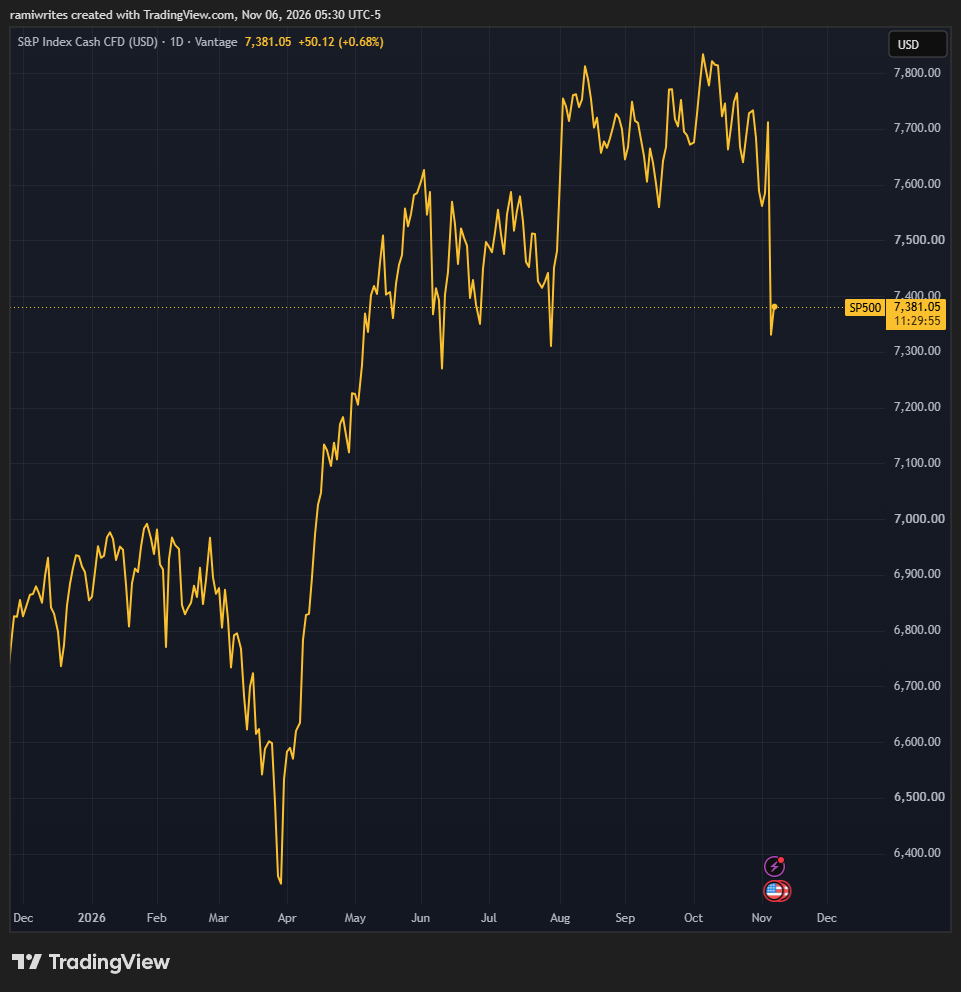
It fell 9.3%, erasing its 2026 gains. The S&P 500 had its worst day since April 2025, down 4.4%, and the Nasdaq closed in a correction, more than 10% below its October record.
By this morning, Japan’s Nikkei was in a bear market, and South Korea had paused trading for 20 minutes.
Reports blamed weak chip earnings and new worries about rules for data centers.
In the middle of it, traders changed their minds about the Fed. The odds of a December rate hike fell from about 83% on Wednesday to about 70% on Thursday, according to CME FedWatch.
No new data told them to. That same morning, jobless claims came in at 189,000, matching the fewest since 1969.
A stock crash moved the Fed bet. Today’s jobs report is the first real data to test it.
It’s also the biggest test yet of one of our Sept. 30 calls: at least one more hike by Dec. 9, which we put at about 85%.
Below, Tan Gera on the one number he’ll read first today, and what his orders did Thursday.
"This Is Going To Be One For The Record Books."
Doug Casey believes the years ahead could prove more dangerous than the 1930s, the 1940s, and even the 1860s.
But he draws a distinction: just because society experiences turmoil doesn't mean your personal life has to.
He and former Reagan budget director David Stockman explain how to keep America's crisis from becoming your crisis.
Disclosure: International Man is a paid partner of Future Finance. The forecasts, track record and claims above are the views of Doug Casey, David Stockman and International Man, and do not represent the view of Future Finance. As always, do your own diligence.
Signal vs. Noise
Two Numbers From Thursday That Got Lost in the Crash
- The noise: a 4% day for the S&P 500.
- The signal: two government reports out that same morning, which point in opposite directions for December.
Number one: 189,000. That’s how many people filed new claims for unemployment benefits last week, matching the fewest since 1969.
Almost nobody is getting laid off.
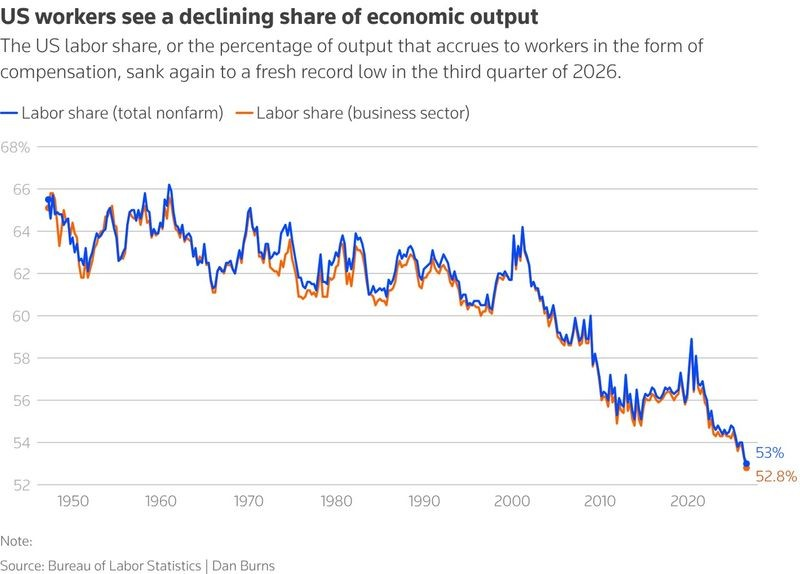
Number two: 53.0%. That’s workers’ share of what U.S. businesses produced last quarter, the lowest since the government started counting in 1947.
Productivity, the output from each hour of work, grew at a 3.6% annual pace. Labor costs for each unit of output fell. Companies are getting more out of every hour and paying out less of it in wages.
Put the two together, and jobs are safe while paychecks fall behind. In September, hourly pay rose 3.0% from a year earlier. Prices rose 3.7%.
That’s the Fed’s whole December argument in two numbers. Hawks, the officials who want higher rates, point to the first. Doves, who want to wait, point to the second.
For beginners: the Fed worries most when rising pay pushes prices higher. The second number says pay is lagging prices.
Today’s jobs report adds a third number to the argument.
Featured Contributor

Today’s guest is Tan Gera, co-founder of Decentralized Masters and a CFA charterholder. He writes The Macro Letter, where he publishes his own buy and sell levels before markets reach them. Everything below describes his own portfolio. Nothing in this section is a recommendation.
Thursday’s Crash Moved the Fed Bet. Today, the Data Gets a Say.
Here’s how Thursday went.
At 8:30 a.m., the government said jobless claims had fallen to 189,000, tied for the lowest since 1969.
That same morning, Beth Hammack, who runs the Cleveland Fed, said rates need to go higher: “I expect that monetary policy will need to move to a restrictive stance to bring inflation back to 2% in a timely manner.”
Then stocks had their worst day since April 2025.
By the afternoon, traders had cut the odds of a December hike from about 83% to about 70%.
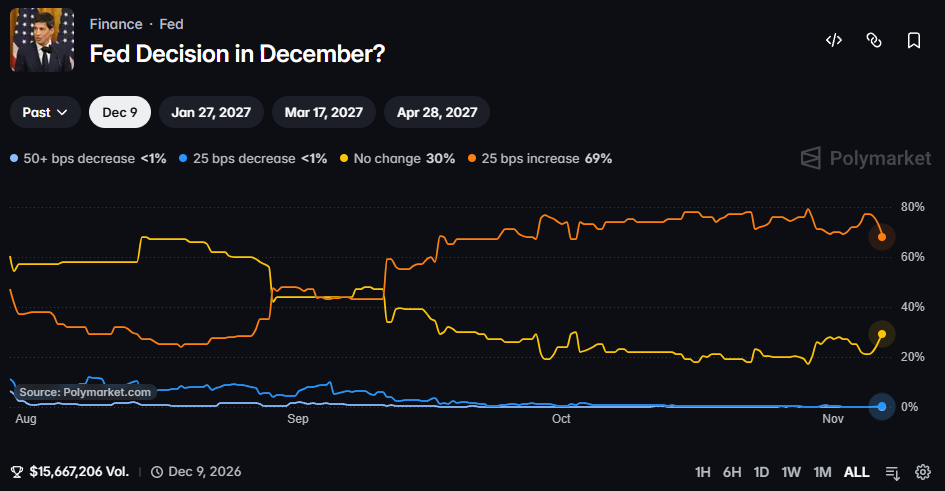
Read that sequence again. The job market looked strong, a Fed official asked for higher rates, and the market bet on fewer hikes anyway.
What moved that bet was the stock market.
Why the Fed may not follow
When stocks fall hard, traders often bet the Fed will go easy to stop the bleeding. Sometimes it does.
Sometimes it doesn’t. In December 2018, the S&P 500 was in the middle of a 20% slide, and the Fed raised rates anyway. It waited until January to change course.
Kevin Warsh, who runs the Fed today, has told us how he thinks. On Oct. 28, he said fighting inflation “is not about some fixed individual date on a calendar. Same way it’s not about some isolated data point.”
He’s watching a run of data. Today is the next piece of it.
The one number I’ll read first
Most people will look at the payroll number. I’ll look at the unemployment rate.
Here’s why. Fewer people are joining the workforce than a few years ago, so the economy doesn’t need many new jobs to keep unemployment steady. RSM says 95,000 new jobs would be nearly three times what’s needed to keep the job market stable.
Economists expect about 59,000 to 65,000 jobs and unemployment at 4.2%. So a small payroll number can still describe a tight job market. The unemployment rate tells you which kind of small it is.
How I’ll read it
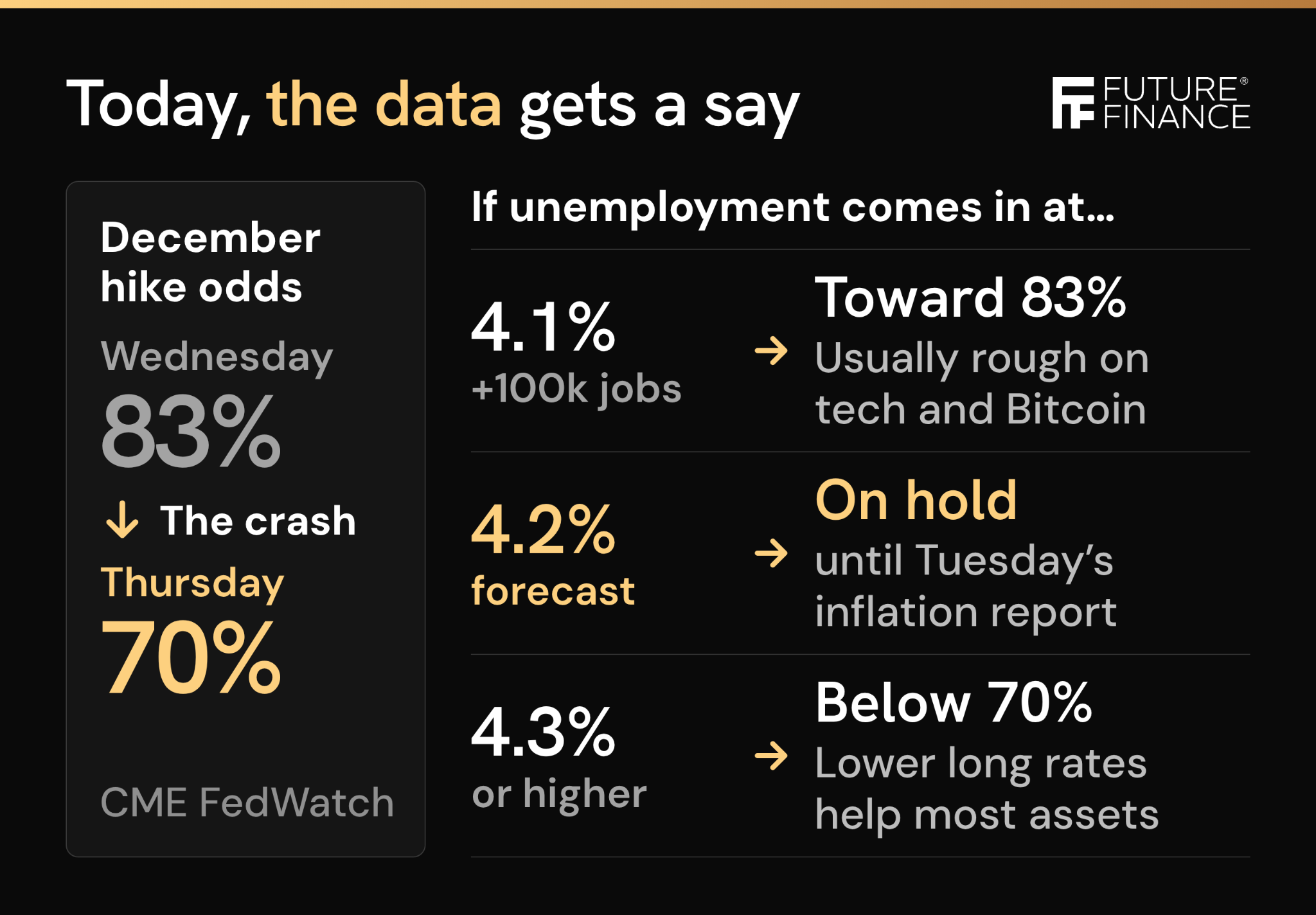
If unemployment drops to 4.1% and payrolls top 100,000: Thursday’s bet loses its excuse. I’d expect hike odds to climb back toward Wednesday’s level and bond yields to rise. That’s usually rough on tech stocks and Bitcoin for a few days.
Adam Schickling at Vanguard put it plainly: “If you get 100k-plus and a 4.1% unemployment rate, I would expect some market reaction.”
If unemployment rises to 4.3% or higher: Thursday’s bet finally gets the data it was missing. Hike odds likely fall further and long-term yields come down. Lower long rates help almost everything I own.
Anything in between: the Fed waits for Tuesday’s inflation report, and so do I.
What my orders did on Thursday
The S&P 500 closed at 7,353 on Thursday, below my next buy price of 7,450. So that order filled.
I didn’t watch it happen or decide anything. I set that price weeks ago, on a calm day.
My next Bitcoin order is at $72,000, about 5% below where it trades this morning, and my weekly buy keeps running. Gold sits about 1% above the $4,000 where I last bought, and my sells stay at $4,720 and $5,000.
None of those prices move because of today’s report.
On Monday, the day before October’s inflation report, I’ll walk through both reports in The Macro Letter, with every level above.
Stocks changed the market’s mind on Thursday. Only the data can change the Fed’s.
- Tan Gera
Co-founder, Decentralized Masters | The Macro Letter
Positions described are Tan’s own portfolio, shared for transparency, and are not a recommendation to buy or sell any asset. Past performance is not indicative of future results.

Jobs Today. Inflation Tuesday. Tan Writes Monday, Right Between Them.
Today’s jobs report and Tuesday’s inflation report are the last two big numbers before the Fed decides on Dec. 9.
On Monday afternoon, between the two, Tan Gera will lay out how he reads both, and the exact prices where his own orders sit.
The Macro Letter is Tan’s twice-weekly newsletter. He co-founded Decentralized Masters, holds the CFA charter and writes every issue around one story, in plain English.
Every issue gives you:
- His orders, in advance: the prices where he’d buy or sell, published before the market gets there
- The why: how a jobs report or a bond sale reaches your stocks, gold and Bitcoin
- A scorecard: his past calls, graded in public, misses included
Every S&P 500 buy price that’s filled for him this fall was in the letter before the market got there. On a day like Thursday, that’s the point.
Positions described are Tan’s own portfolio, shared for transparency, and are not a recommendation to buy or sell any asset. Past performance is not indicative of future results.
Final Thought
This week brought an election, rate hikes in Australia and Britain, and the worst day for U.S. stocks since April 2025.
Next week brings answers.
- Monday: Congress returns, with government funding due Dec. 11.
- Tuesday: October’s inflation report, at 8:30 a.m. ET.
- Thursday: the Treasury sells $25 billion of 30-year bonds.
Thursday was a reminder of why it helps to know where you’d buy before a day like that, so you don’t have to decide in the middle of one.
Tomorrow, the week in review. See you then.
Editor in Chief | Future Finance
The Public’s Buying The Robot. The Smart Money’s Buying The Power Cord.
Every investor can name the big AI companies. Far fewer are looking at what makes them run.
The largest gains in a build-out like this often come from the layer underneath the story, the power and the infrastructure most people ignore.
Finding those overlooked plays before the crowd is the whole job of Gems Uncovered.
The crowd buys the headline. The edge is in what powers it.
Disclaimer: This content is not financial advice, it is for informational purposes only. All investments involve inherent risk. Any financial decisions you make are solely your responsibility.
The briefing serious investors read first.
Free analysis before markets open. Start thinking in decades, not days.
Join 45,000+ readers · No spam · Unsubscribe anytime · No card needed
Disclaimer: This content is not financial advice, it is for informational purposes only. All investments involve inherent risk. Any financial decisions you make are solely your responsibility.
Latest


Editor's Picks

Become a sharper capital allocator in 5 minutes a day.
Institutional-grade research on where the smartest capital is positioning, across AI, energy, biotech, robotics, and digital assets. Distilled into a daily read you finish before your coffee does.
Join 45,000+ readers · No spam · Unsubscribe anytime · No card needed