

Congress has 6 weeks. One vote moves markets
Tan Gera ranks the lame-duck list, from the debt limit to the Dec. 11 funding deadline, by what each means for your money
November 5, 2026
·
8 min read



The briefing serious investors read first.
Free analysis before markets open. Start thinking in decades, not days.
Join 45,000+ readers · No spam · Unsubscribe anytime · No card needed
Today’s Big Picture
Canada raised interest rates on Oct. 28. Australia raised them on Tuesday.
That same week, the Fed and the Bank of Japan both held, and every official who voted against holding wanted a hike.
This morning at 7 a.m. Eastern, the Bank of England joined them, raising its key rate to 4%, its first increase since 2023.
Around the world, borrowing money is getting more expensive.
Washington’s next six weeks are about a different question: how much cash the U.S. financial system will have to work with next year.
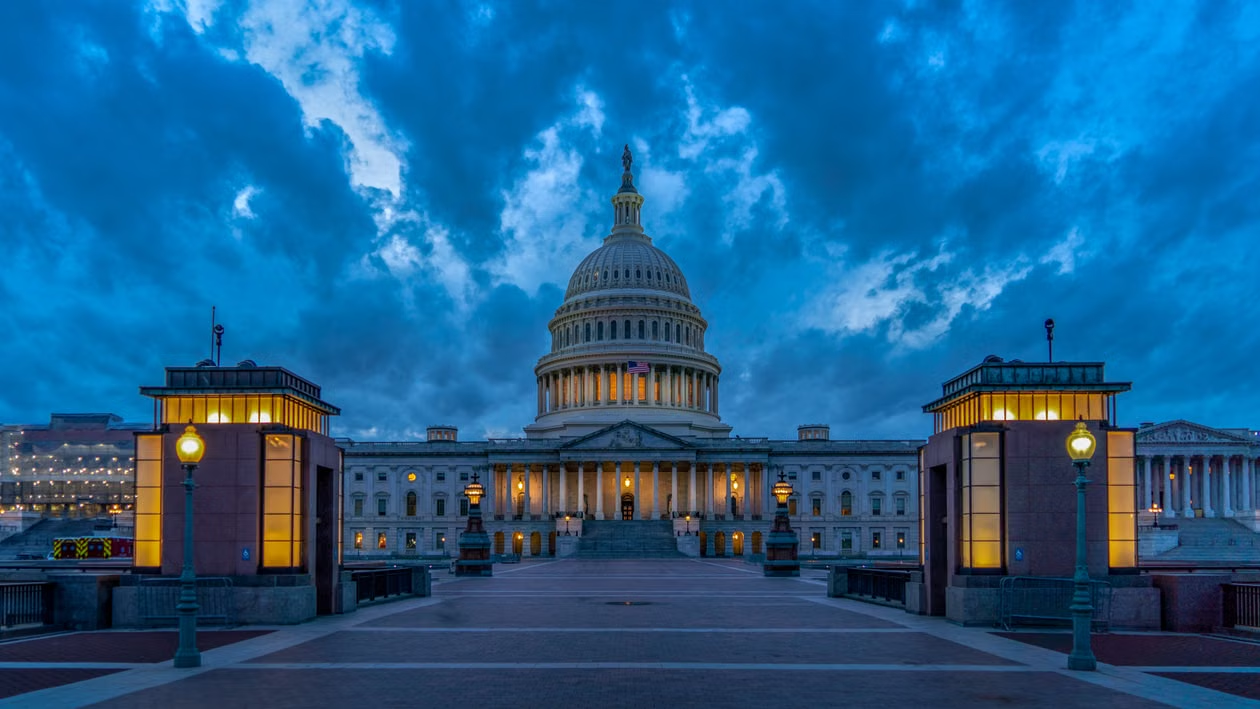
Congress comes back Monday with about six working weeks before the holidays. Government funding runs out on Dec. 11, and the new Congress is sworn in on Jan. 3.
And the debt limit, the cap on how much the government can borrow, is close enough that this Congress may raise it before it leaves.
Of everything still on Congress’s list, the debt limit has the most power to move markets next year.
Markets rallied after the results. The Dow rose 3% on Wednesday, its best day since April 2025, and Bitcoin is back above $80,000 after a six-week low near $75,700 on election night.
Below, Tan Gera ranks what’s left on Congress’s list by what it means for your money, starting with the government’s checking account.
The Treasury Values Its Gold At $42.22 An Ounce.
Government debt is approaching $40 trillion. Washington spends roughly $2 trillion more each year than it takes in. There has not been a complete independent physical audit of Fort Knox for many decades.
Doug Casey warns that confidence can blow away like a pile of feathers in a hurricane.
See what he and David Stockman recommend →
Disclosure: International Man is a paid partner of Future Finance. The forecasts, track record and claims above are the views of Doug Casey, David Stockman and International Man, and do not represent the view of Future Finance. As always, do your own diligence.
Signal vs. Noise
Britain Raised Rates. Here’s What to Read Past the Headline.
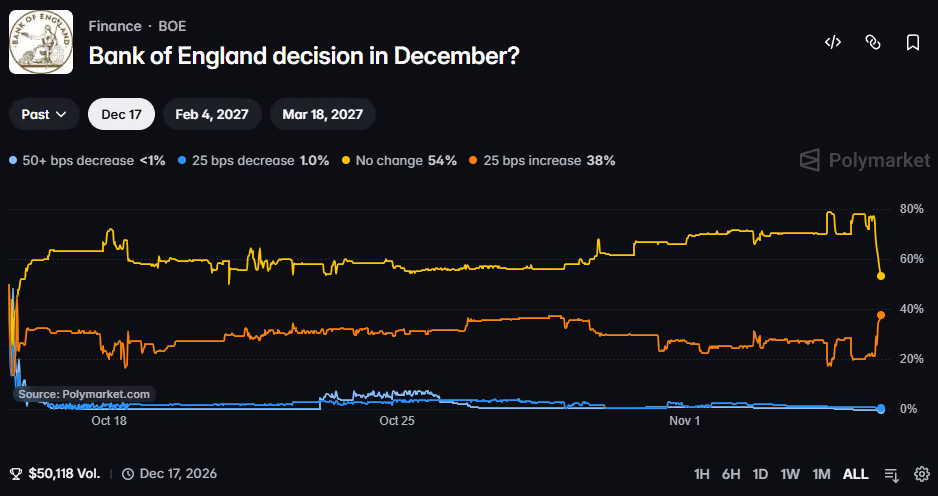
- The noise: the hike itself. A quarter-point increase was priced at more than 90% going into this morning.
- The signal: two things that came with it.
The vote. Economists polled by Reuters expected a 7–2 split, with two members voting to hold.
Instead, all nine voted to raise, and one of them wanted a half-point increase, to 4.25%. Nobody in the room wanted to wait.
Next year. Traders were pricing three to four more hikes in 2027, which would take the rate to between 4.75% and 5%.
Andrew Bailey, who runs the Bank, pushed back at his press conference: “Today’s increase shouldn’t be seen as the first in an inevitable long sequence of hikes.”
So the committee leaned harder than expected, and its governor leaned the other way. Over the next few days, watch which one British bond yields believe.
Why it reaches you: British government bonds, called gilts, are where a borrowing scare last spread around the world.
In September 2022, a surprise UK budget sent gilt yields soaring, forced pension funds to dump bonds and pushed the pound to a record low against the dollar. The Bank of England stepped in to buy bonds five days later.
This fall, Britain’s 30-year borrowing cost briefly topped 6% ahead of last week’s Budget.
Long-term interest rates travel. When they jump in one big bond market, they tend to pull others up with them, including the U.S. 10-year yield, now near 4.9%.
For beginners: higher long-term rates make borrowing more expensive for everyone, and they tend to weigh on assets whose value depends on the future, like growth stocks and Bitcoin.
Featured Contributor

Today’s guest is Tan Gera, co-founder of Decentralized Masters and a CFA charterholder. He writes The Macro Letter, where he publishes his own buy and sell levels before markets reach them. Everything below describes his own portfolio. Nothing in this section is a recommendation.
Congress Has Six Weeks Left. Here’s What It Can Still Pass, Ranked by What It Means for Your Money.
Congress comes back to work on Monday.
From there, it has 32 days until government funding runs out, and about six working weeks before the holidays. On Jan. 3, a new Congress is sworn in, and every bill that hasn’t become law starts over.
Washington calls this stretch the lame duck, because the outgoing Congress is still in charge.
Most people tune out after an election. I’m paying closer attention now than I did on Tuesday night, because two of the decisions on this list change how much cash moves through the financial system next year.
The account I’m watching
The Treasury keeps its cash in an account at the Federal Reserve. Think of it as the government’s checking account.
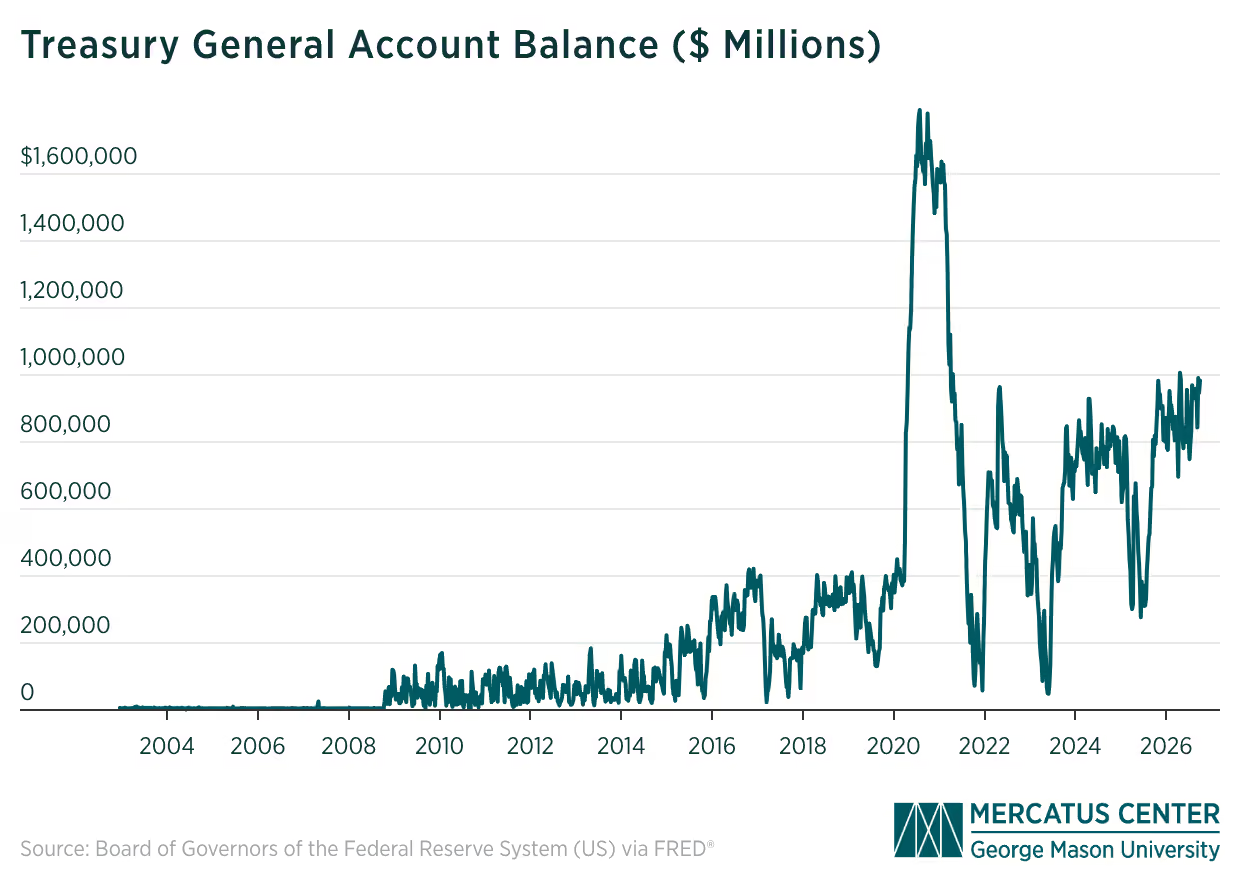
When that account grows, the money in it comes out of the banking system. When it shrinks, the money goes back in. More cash in the system tends to help everything from stocks to Bitcoin.
On Wednesday, the Treasury said the account could reach about $1 trillion in late November, and that it plans to end the year near $850 billion.
Two items on Congress’s list decide where that number goes next.
1. The debt limit
The government owes about $40.5 trillion. The law caps its borrowing at $41.1 trillion.
The Committee for a Responsible Federal Budget says the cap will likely be reached within six months. After that, the Treasury can buy roughly six to nine more months with accounting moves, according to the Bipartisan Policy Center.
So why does a 2027 problem matter this month? Because of who gets a say.
Until Jan. 3, one party holds the White House and both chambers, so it can raise the limit on its own through budget reconciliation, a process that needs only a simple majority in the Senate. Majority Leader John Thune has said an increase could come in the lame duck.
From Jan. 3, no party will hold all three. Raising the limit will take a deal between a Republican president and a Democratic Congress. In 2011, a fight like that ended with S&P taking away America’s top credit rating.
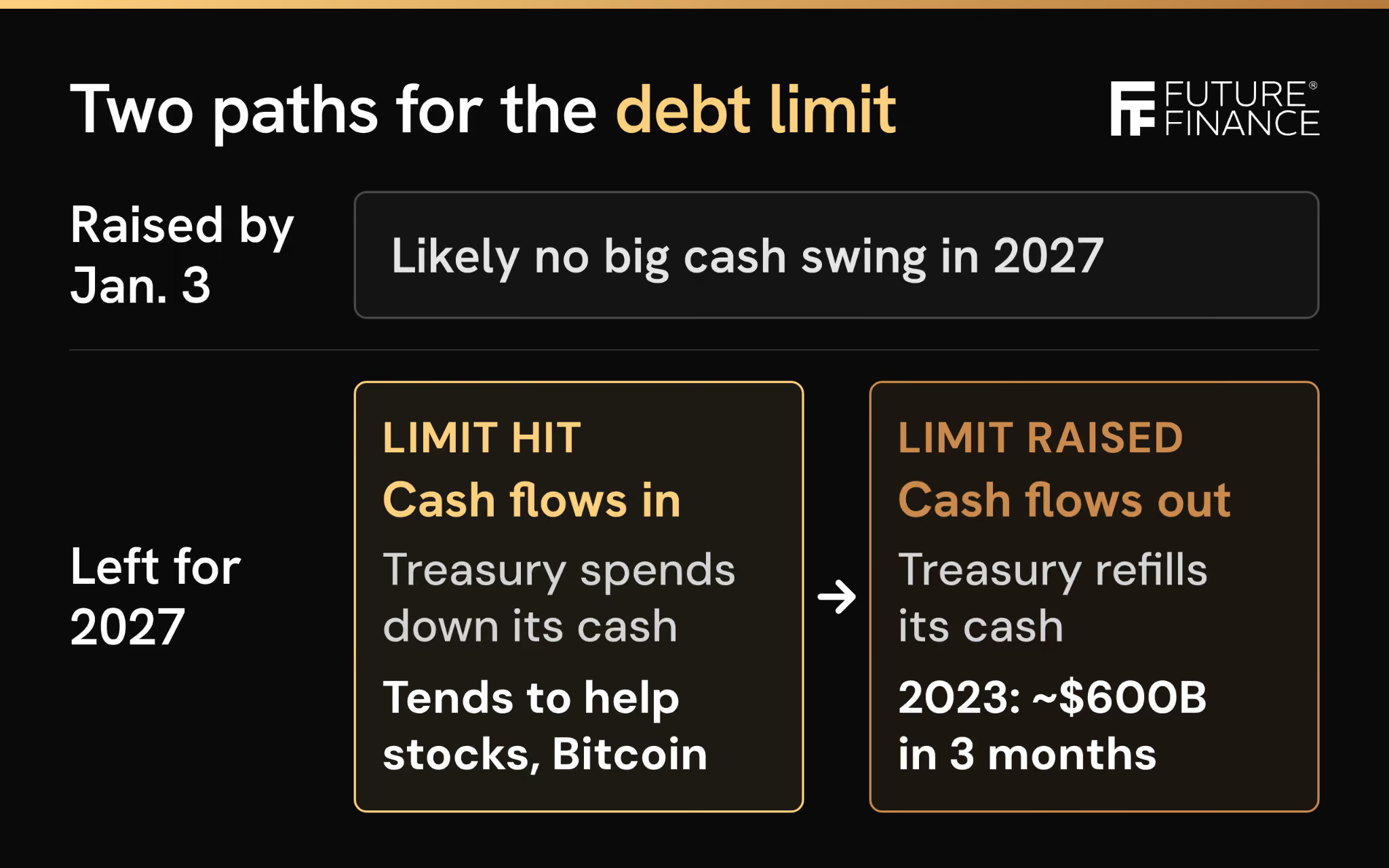
Here’s the part that matters for your money. Once the government hits the limit, the Treasury keeps paying its bills partly by spending down its account, and that cash flows back into the system.
Once the limit is raised, the Treasury sells short-term debt, called bills, to refill the account, and the cash flows back out.
In 2023, after Congress settled the limit in June, the Treasury refilled its account by about $600 billion in three months.
If the limit goes up in the next six weeks, that swing probably doesn’t happen next year.
If it doesn’t go up, I expect one, and its timing will depend on a negotiation.
2. Government funding, Dec. 11
This is the only hard deadline on the list.
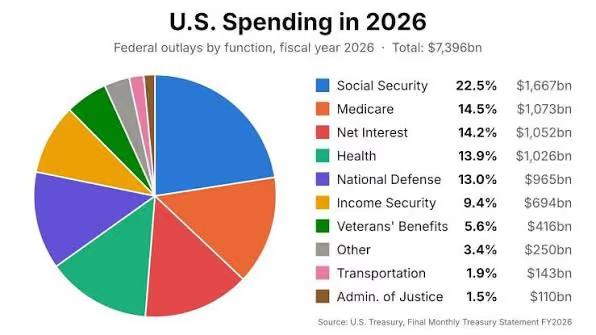
Congress can pass full-year spending bills, or another short-term extension, called a continuing resolution, that pushes the deadline into the new Congress. The biggest fight is over defense, where the administration has asked for a record $1.5 trillion.
If neither passes, the government shuts down on Saturday, Dec. 12.
Last fall’s shutdown lasted 43 days, the longest on record, and delayed the jobs and inflation reports the Fed uses to set rates.
It also hits the account I’m watching. During a shutdown, taxes keep coming in while some payments stop, so the Treasury’s cash tends to pile up, and that cash leaves the system.

3. The defense bill
Congress has passed its yearly defense policy bill, the NDAA, every year for more than six decades. Sen. Mike Rounds said before Election Day that he expects this year’s to come together after it.
On its own, it barely moves markets. It matters because must-pass bills can carry other bills with them, and some digital-asset supporters have floated attaching the CLARITY Act to it.
4. The CLARITY Act
That’s the digital-asset bill that failed a key Senate vote 49 to 50 in September. It still needs 60 votes, and on Kalshi, a prediction market, traders put its odds of becoming law this year at about 6%.
My plan never assumed it would pass. Nothing in my digital assets depends on it.
The rest
Health-care programs that expire Dec. 31 and a farm bill are also on the list. Most of that would likely ride along with the Dec. 11 spending bill.
What I’m doing
None of this changes my orders. I set them weeks ago, and they don’t move on headlines.
- Bitcoin: my next order is at $72,000, about 10% below where it trades, and my weekly buy keeps running through Dec. 31.
- S&P 500: two of my eight prices have filled, at 7,755 and 7,620. My next buy is 7,450, about 3% below Wednesday’s close.
- Gold: about 3% above the $4,000 where I last bought. My sells stay at $4,720 and $5,000.
- Stablecoins: about 13% of my digital assets, most of it sitting in orders.
What I’m watching is the debt limit itself. If it rides along with the Dec. 11 bill, I stop planning for a cash swing in 2027. If it doesn’t, I’ll be checking the Treasury’s account every week next year.
Before then, my next test is the Treasury’s 30-year bond sale on Nov. 12. It’s the first read on how much buyers want long-term U.S. debt after the election.
I’ll be tracking each of these dates in The Macro Letter, along with every level above. If any of them change, that’s where I’ll put it.
I’ll learn more about next year’s cash on Dec. 11 than I did on Tuesday night.
- Tan Gera
Co-founder, Decentralized Masters | The Macro Letter
Positions described are Tan’s own portfolio, shared for transparency, and are not a recommendation to buy or sell any asset. Past performance is not indicative of future results.

On Monday, Tan Set Three Tests for the Treasury. By Wednesday Afternoon, He’d Graded Them.
Before this week’s borrowing announcement, Tan Gera wrote down three things to watch: the Treasury’s promise on auction sizes, the sizes themselves and its bond buybacks.
On Wednesday, he graded all three in public, including a call that hasn’t played out yet.
That’s The Macro Letter, Tan’s own newsletter. Tan co-founded Decentralized Masters and holds the CFA charter, and twice a week he follows one story across rates, currencies, oil, stocks, gold and digital assets, in plain English.
Every issue gives you:
- Tests set in advance: what he expects from the Fed, the Treasury or the market, written down before the news lands
- His own prices: where he’d add to or trim his own portfolio, published before the market gets there
- The grades: his past calls, checked in the open, misses included
His next issue lands Monday, the day Congress comes back. The debt limit, the Dec. 11 deadline and the Treasury’s cash account are all on his list.
Positions described are Tan’s own portfolio, shared for transparency, and are not a recommendation to buy or sell any asset. Past performance is not indicative of future results.
Final Thought
Three dates are on the calendar before the holidays.
- Nov. 12: the Treasury sells $25 billion of 30-year bonds.
- Dec. 9: the Fed makes its last decision of the year.
- Dec. 11: government funding runs out.
Each one could move markets for a day.
The debt limit, if it’s left for next year, could move them for months.
Tomorrow at 8:30 a.m. ET, the October jobs report comes out. Economists expect about 65,000 new jobs, and Tan Gera will be back to walk through what it means for your money.
See you tomorrow.
Editor in Chief | Future Finance
Paid Advertisement
Tilson: My Favorite New Retirement Stock?
For years, Whitney Tilson pointed his readers to Berkshire Hathaway. He now believes he may have found a better retirement stock for the years to come.
A company few have heard of, sitting at the epicenter of America's two most important industries. One of them is AI.
He is giving away the name and ticker free.
Disclosure: Stansberry Research is a paid partner of Future Finance. The forecasts, track record and claims above are those of Whitney Tilson's and Stansberry Research and not represent the views of Future Finance. As always, do your own diligence.
Disclaimer: This content is not financial advice, it is for informational purposes only. All investments involve inherent risk. Any financial decisions you make are solely your responsibility.
The briefing serious investors read first.
Free analysis before markets open. Start thinking in decades, not days.
Join 45,000+ readers · No spam · Unsubscribe anytime · No card needed
Disclaimer: This content is not financial advice, it is for informational purposes only. All investments involve inherent risk. Any financial decisions you make are solely your responsibility.
Latest


Editor's Picks



Become a sharper capital allocator in 5 minutes a day.
Institutional-grade research on where the smartest capital is positioning, across AI, energy, biotech, robotics, and digital assets. Distilled into a daily read you finish before your coffee does.
Join 45,000+ readers · No spam · Unsubscribe anytime · No card needed