

Most businesses hate uncertainty. One sells it…
Fed tomorrow, crypto vote today, oil above $100. Robert Rapier on the company whose product is your nervousness. →
September 15, 2026
·
8 Min Read



The briefing serious investors read first.
Free analysis before markets open. Start thinking in decades, not days.
Join 45,000+ readers · No spam · Unsubscribe anytime
Today’s Big Picture
Almost every single business wants a calm year.
One kind of business wants the opposite.
A futures exchange is a toll booth on nervousness: every time a farmer, an airline, a bank, or a trader needs to protect against a price moving, they pay a small fee to hedge, and the booth collects it.
Look at this week through that lens.
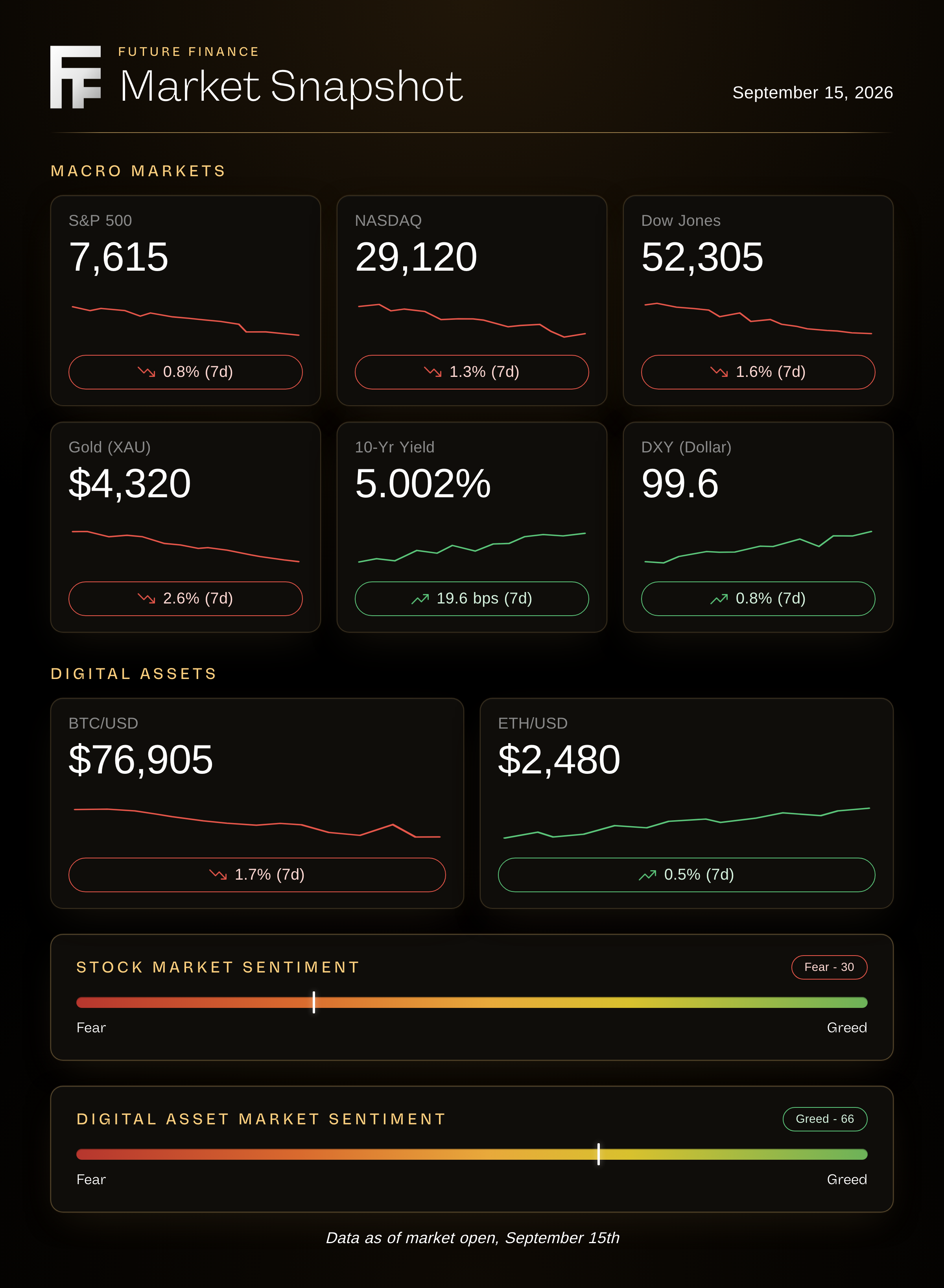
- The Fed decides tomorrow, with a hike priced near 87%.
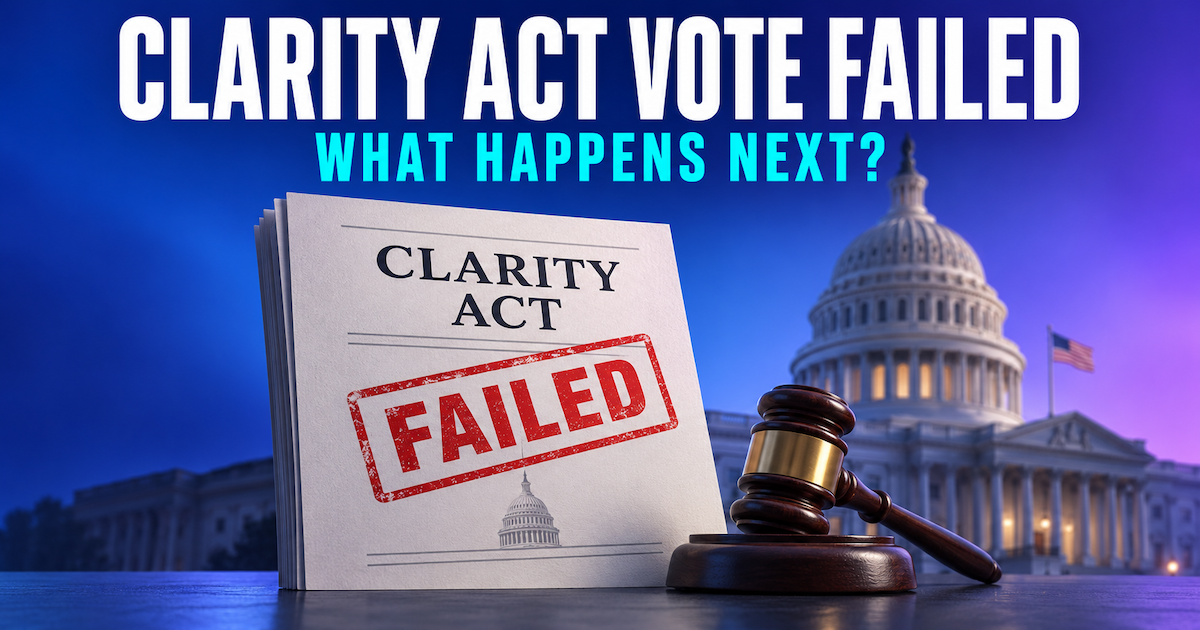
- The Senate votes on the crypto bill at 2:15 this afternoon.
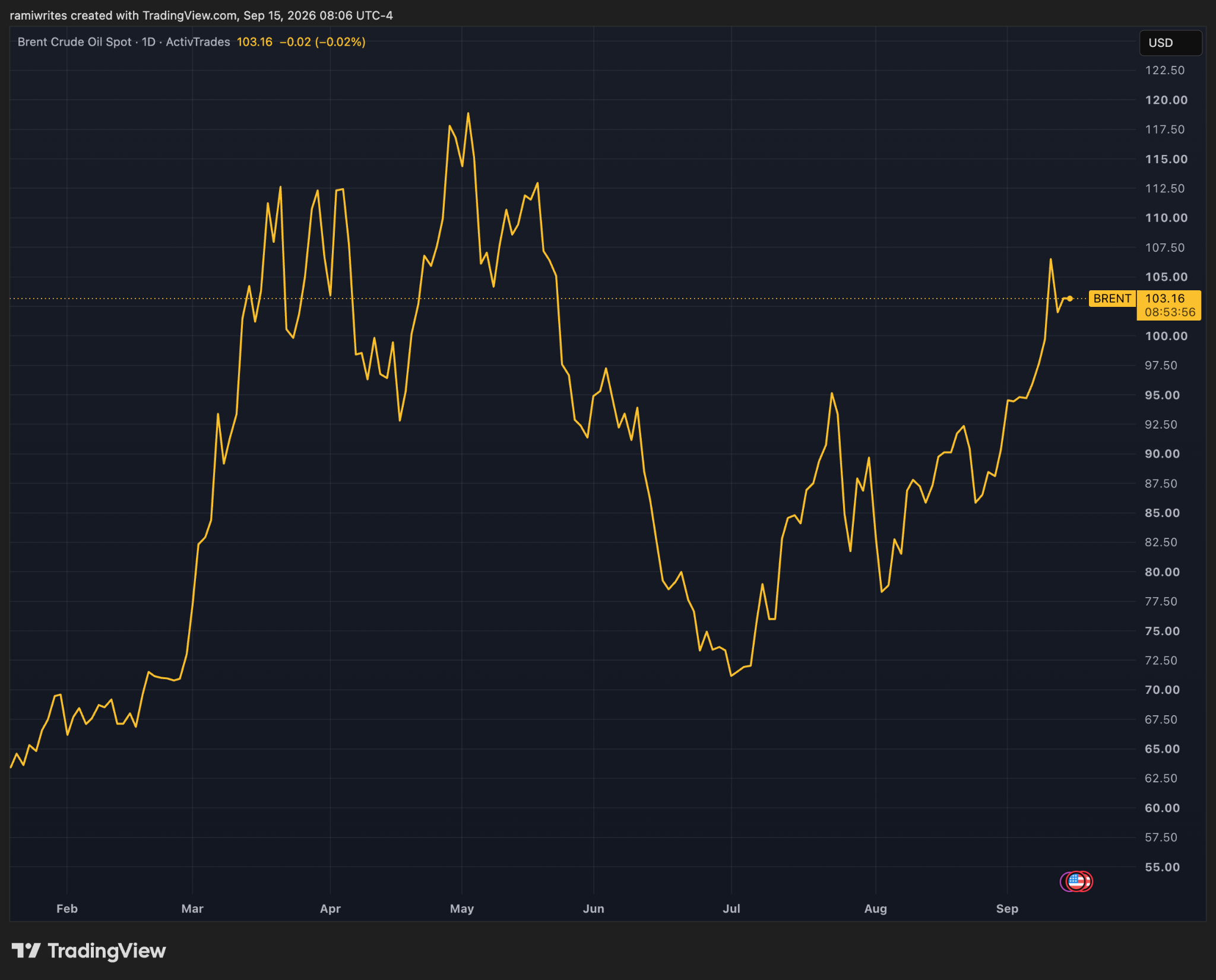
- Oil is above $100 with Saudi Arabia’s pipeline still shut.
Every one of those is a reason for someone to hedge.
And here’s the twist beginners miss.
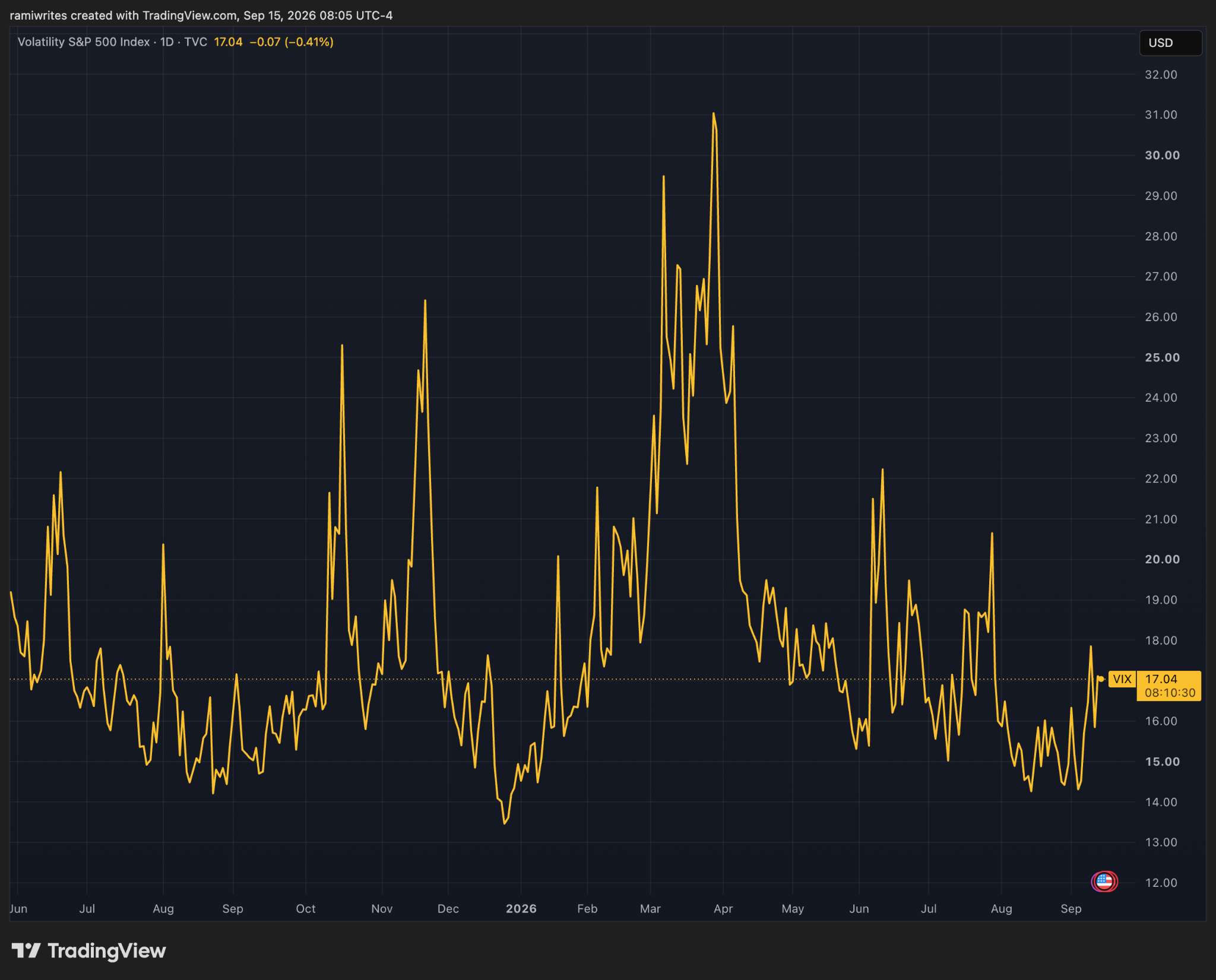
The stock market’s fear gauge, the VIX, sits near 16, which reads as calm. The bond market’s version sits near 82, and oil’s near 59.
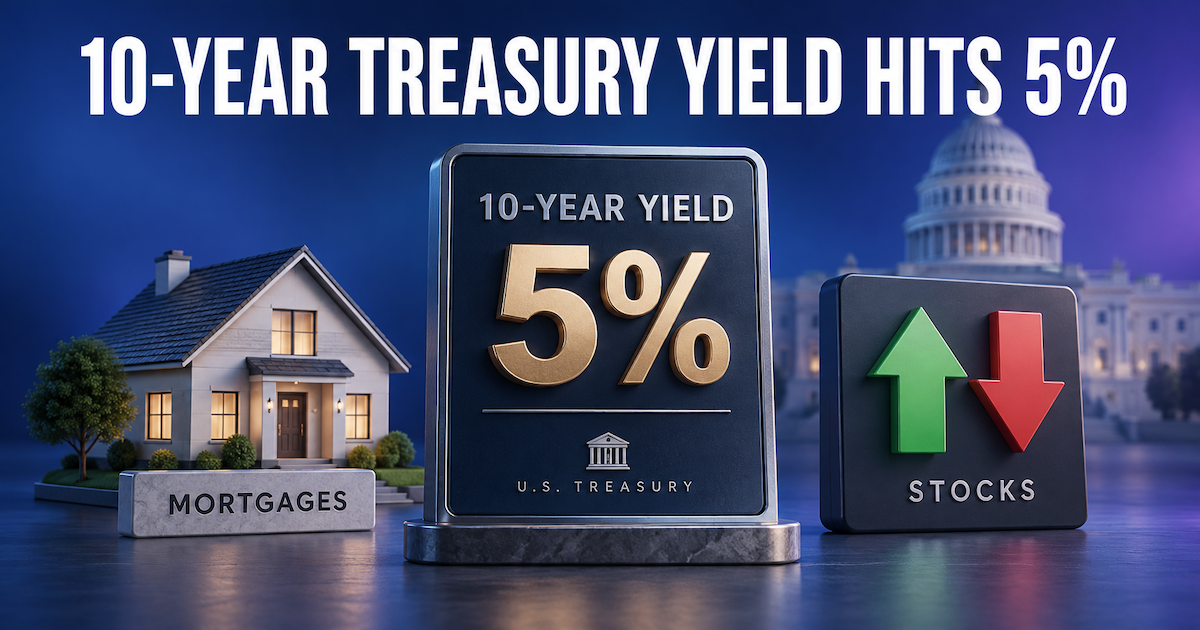
Uncertainty is concentrated in rates and oil right now, exactly where the biggest toll booths sit. The 10-year touched 5% yesterday, its highest since 2023, on a day the VIX barely moved.
Today’s guest, Robert Rapier, wrote about a delivery company last Tuesday. This week he’s on the toll booth itself. His piece is below, and it explains why the calendar above is somebody’s order book.
The $25 Trillion Problem Elon Just Filed a Fix For
Everyone's arguing about which AI company wins.
James Altucher thinks they're all watching the wrong thing. The real constraint on AI isn't the models, it's the infrastructure underneath them, and he says a recent FCC filing from Elon Musk lays out a fix for exactly that.
No announcement came with it. Altucher says that's the point: the biggest moves get filed quietly, not tweeted.
His free masterclass breaks down the filing, what it's really for, and the tickers it touches.
Disclosure: Paradigm Press is a paid partner of Future Finance. The forecasts and claims above are James Altucher's / Paradigm's, not Future Finance research or advice. As always, do your own diligence.
Signal vs. Noise
The Fear Gauge Says Calm. The Bond Market Disagrees.
- The noise: “The VIX is at 16. Investors aren’t worried.”
- The signal: the VIX measures expected swings in stocks and nothing else. The bond market’s equivalent, the MOVE index, sits near 82 after a summer of rising while the VIX fell. Oil’s volatility index is near 59, with crude options briefly pricing 68% annual swings last week.
That’s where the stress lives.
The 10-year Treasury yield touched 5.01% Monday, the highest since October 2023, six days after an auction at 4.83% drew the strongest demand in a decade.
For a beginner, the lesson is about where to look. The market that decides what money costs is the nervous one this month, and the stock market is trading on the assumption that the nervousness stays there.
Oil Held $100. The Peace Talks Didn’t Happen.
- The noise: “oil pared its gains Monday.”
- The signal: WTI still settled at $101.39 and Brent at $105.68. The meeting between Iran and the Gulf states in Oman was postponed, reportedly at Saudi request, with Bahrain refusing to attend at all. The East-West pipeline we covered yesterday stayed shut through the weekend [LINK: Sept 14 issue], and Reuters reported Saudi exportable inventory could run out within days.
Stocks slipped a second day: the S&P fell 0.48% to 7,619.98 and gold dropped 1.3% to $4,351.90 as hike odds climbed. AI stocks led the decline after Anthropic’s chief executive called for slowing development and OpenAI signaled its IPO may be delayed.
Bitcoin held near $78,000. The pattern from last week persists: the shock is real, the price response is measured, and the cost of money is doing the work.
A Vote at 2:15 Today, a Decision at 2:00 Tomorrow
- The noise: “The crypto bill vote is the big one.”
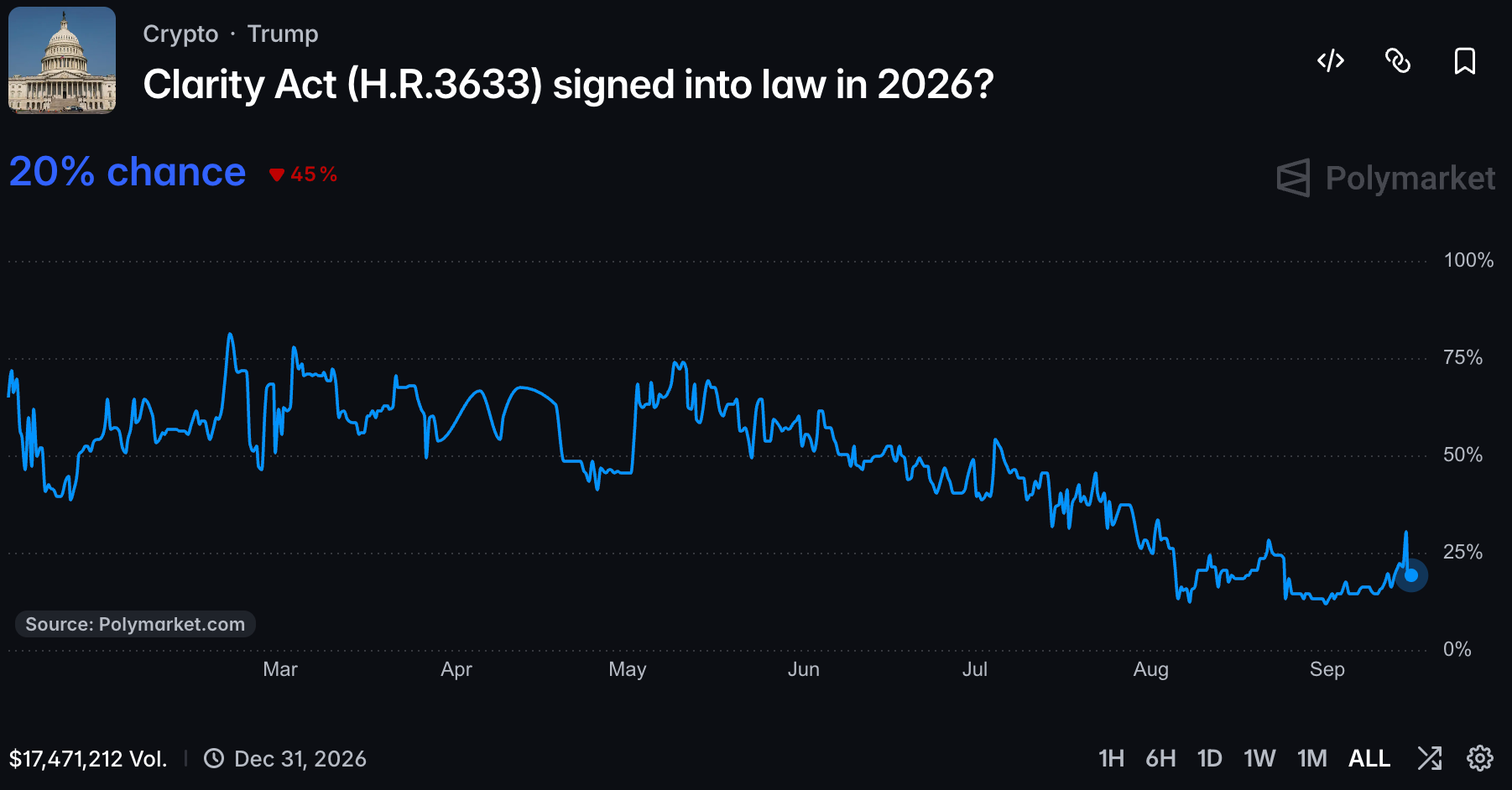
- The signal: it needs 60 votes, Republicans hold 53 with a few likely defections, and seven Democrats issued a joint statement calling the draft insufficient. The Treasury Secretary wrote an op-ed pushing it. Prediction markets put the odds of the bill becoming law this year near one-in-six.
A failed vote likely shelves it until after the midterms. Watch the margin: 58 says fixable, 52 says dead.
Tomorrow is the one that reaches your wallet. A quarter-point hike to 3.75% to 4.00%, the Fed’s first since 2023, is priced near 87%. It nudges mortgage, card, and auto rates higher and lifts what savings accounts and money funds pay.
Because the hike is expected, the reaction will hinge on the new dot plot and on how Chairman Warsh sounds at 2:30.
Tan wrote on Friday that his orders were placed in July and don’t read the Fed . Tomorrow is the test of that sentence.

Featured Contributor
Today’s guest is Robert Rapier of Investing Daily. Robert's work has appeared in Forbes, The Wall Street Journal, The Washington Post and the Christian Science Monitor. He has been a featured expert on 60 Minutes and The History Channel.
This Stock Gets Paid When Markets Get Nervous
Markets have had no shortage of things to worry about lately.
Oil prices have surged on renewed fighting with Iran, Treasury yields have been bouncing around as investors debate the Federal Reserve’s next move, and stocks have been responding sharply to every new economic report. Even gold, traditionally viewed as a safe haven, has seen large daily swings.
For many companies, that kind of uncertainty is a problem. But for CME Group (NSDQ: CME), it can be very good for business.
CME operates some of the world’s largest futures and options exchanges. Investors use its markets to hedge or speculate on interest rates, stock indexes, currencies, energy, agricultural commodities, metals, and cryptocurrencies. When uncertainty rises, companies and investors generally have a greater need to manage risk. That tends to translate into more trading volume for CME.
Volatility Is the Product
Most businesses want stability. CME is somewhat unusual because instability can actually increase demand for what it sells.
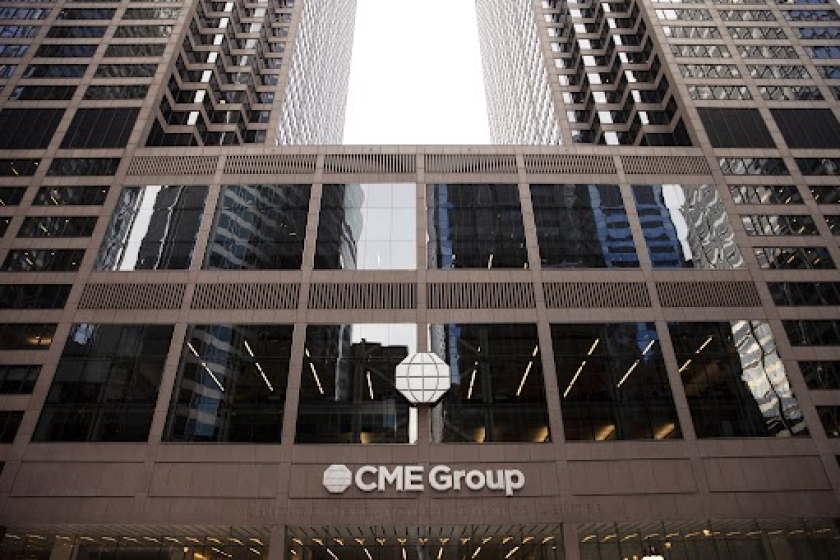
Take interest rates. The August employment report showed that the U.S. economy added 162,000 jobs, far more than economists expected. That immediately increased expectations that the Federal Reserve could raise interest rates at its September meeting. Treasury yields moved higher, and traders quickly adjusted their positions in futures and options tied to interest rates.
CME sits in the middle of that activity. Its interest-rate products include futures and options on Treasury securities and short-term interest rates, giving banks, asset managers, corporations, and traders a way to hedge changing borrowing costs and bond prices.
The same principle applies to energy. Crude oil has moved sharply as the conflict with Iran has disrupted global supply flows. Producers, refiners, airlines, and other companies exposed to energy prices can use CME’s contracts to reduce that risk. Oil traders, of course, are active there as well.
CME does not need to predict whether oil goes to $120 or falls back to $70. It benefits when participants have a reason to trade.
The Numbers Show It
That dynamic has been visible throughout 2026. CME reported second-quarter revenue of $1.7 billion and operating income of $1.1 billion. Adjusted earnings were $2.99 per share. Management described the first half of 2026 as the strongest in company history, with record first-half revenue, adjusted operating income, adjusted net income, and adjusted earnings per share.
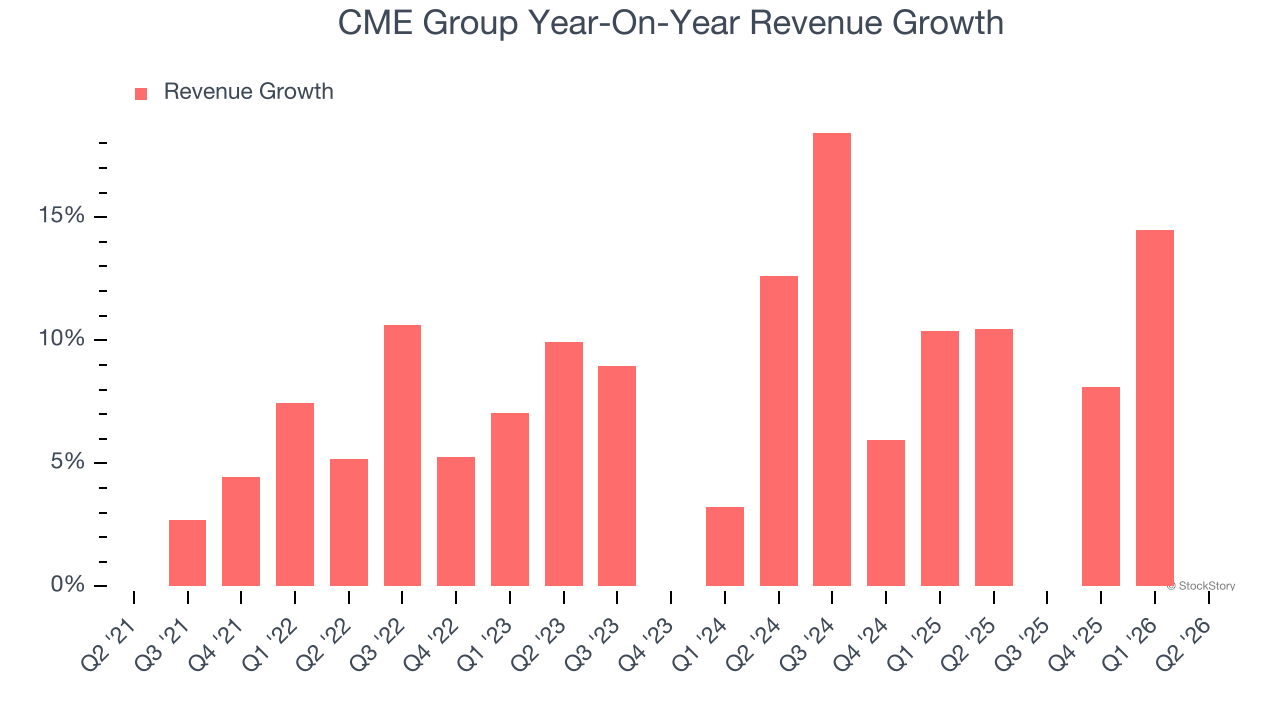
Trading activity has remained strong since then. In August, CME reported average daily volume of 29.7 million contracts, the second-highest August in company history and 6% above the year-ago level. Interest-rate contracts accounted for 16.7 million contracts per day, while metals volume increased 48% from the previous August. U.S. Treasury trading volume rose 15%.
That diversification is important. CME is not dependent on one particular market remaining volatile. If interest rates quiet down, energy or equities may become active. If crude oil stabilizes, currency or metals trading may pick up. The company benefits from providing the infrastructure investors use to manage risk across many different asset classes.
There Is Income Here Too
CME is also unusual among financial companies because of the way it returns capital to shareholders. The company currently pays a regular quarterly dividend of $1.30 per share. But it also distributes excess cash through an annual variable dividend. Earlier this year, CME declared a $6.15-per-share variable dividend based on its 2025 results. Combined with the regular quarterly payments, the company said its 2025 distributions represented a 4.2% yield based on the average share price during that year.
That variable component means the dividend can fluctuate, so investors should not treat the entire payout as guaranteed annual income. But it provides an additional way for shareholders to participate when CME generates excess cash.
Not Exactly a Bargain
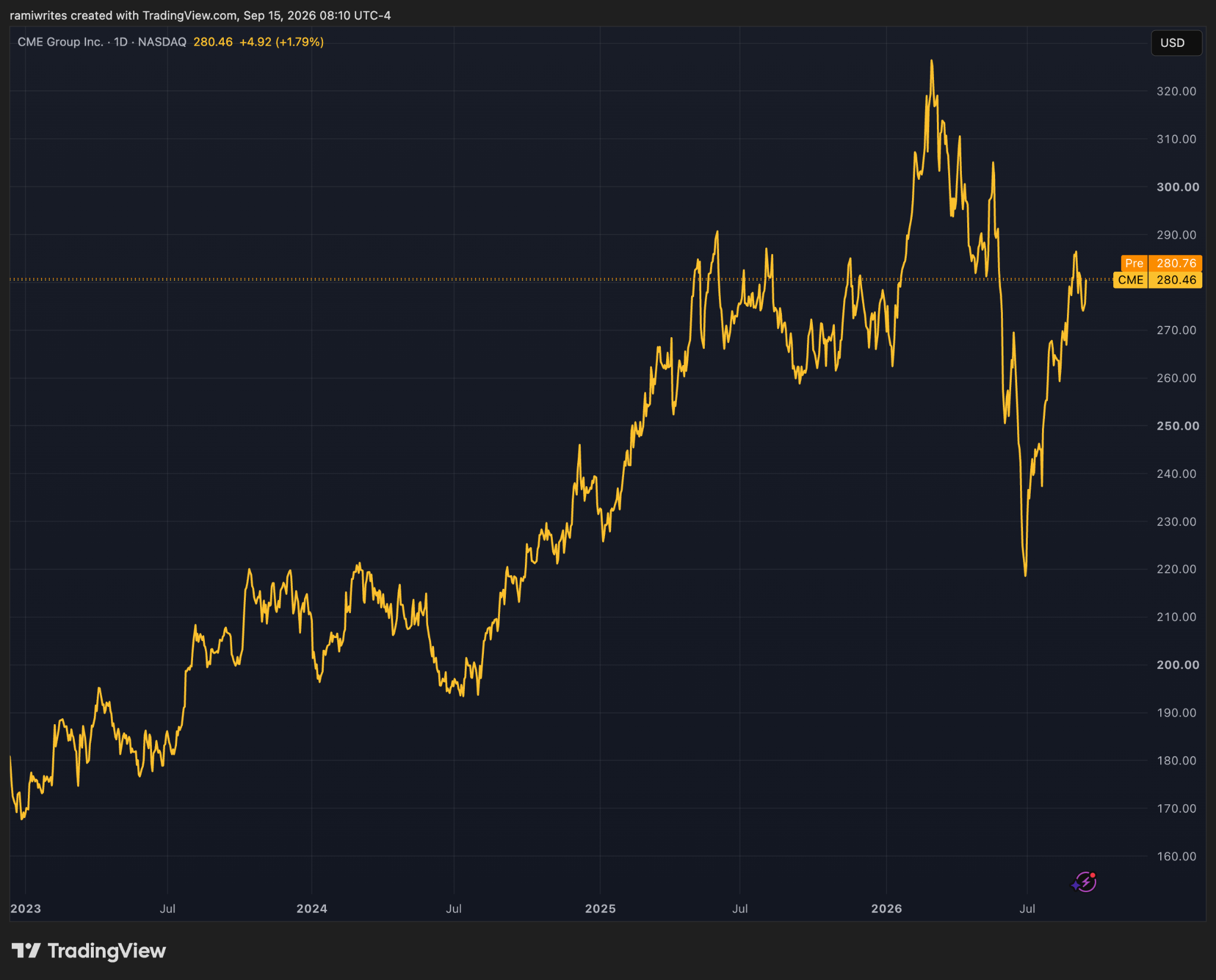
There is one reason I would not describe CME as a screaming bargain. At about $281 per share, the stock trades at roughly 24 times trailing earnings and about 23 times forward earnings. That is not cheap, particularly with analysts generally viewing the shares as fairly valued at current levels.
There is also an unusual risk to the thesis. If markets become unusually calm, trading volume can fall. Lower volatility across interest rates, equities, energy, and commodities would reduce some of the urgency that drives investors toward CME’s products.
But that is not the environment we have today.
We have an uncertain Federal Reserve decision approaching, elevated Treasury yields, an unresolved conflict affecting global oil supplies, volatile commodity markets, and equity indexes near record levels. Each new economic report seems capable of moving multiple markets at once.
For most companies, that creates headaches. For CME Group, it creates customers. That is why CME is one stock I would keep on my watch list as volatility remains elevated.
That was Robert Rapier.
The CME idea, a business that gets paid whichever way the market moves, has a bigger version Rapier's been tracking. Amazon and Alphabet just pushed their combined AI build budgets past $400 billion, and none of it earns a dollar until somebody delivers the power to run it.
That power comes from a short list of companies the Street wrote off years ago as "bond proxies," paid on regulated rates and long contracts, not on whether any single AI model turns a profit. He lays out which ones are waking up, and the exact tickers, in his letter Utility Forecaster. Full case here, free.
Discover the "Essential Service Stocks" Finally Waking Up →
The views above are Robert Rapier's own and reflect his opinion at the time of writing. They are not recommendations of Future Finance, and nothing here is investment advice. CME and any other securities mentioned are named for illustration, not as a suggestion to buy or sell. Always do your own research and consult a licensed professional before investing.
One Stock. Three Potential Trillion-Dollar Spinoffs.
In 2014, Marc Chaikin told his readers to put a big chunk of their retirement money into Nvidia. He says anyone who followed that recommendation is up more than 45,000% at this point.
He now believes he has found an even better retirement stock for the years ahead. The company is sitting on three fast-growing businesses, and each one could be spun off into a separate publicly traded company.
One ticker today could become three tickers tomorrow:
See Chaikin’s new #1 retirement pick here →
Disclosure: MarketWise is a paid partner of Future Finance. The forecasts, track record and claims above are the views of Marc Chaikin Chaikin Analysis and MarketWise, and do not represent the view of Future Finance.. As always, do your own diligence.
Final Thought
Read this week’s calendar again with Rapier’s lens on, and every headline becomes somebody else’s hedge.
The Fed decision is a bank locking in its borrowing cost. The oil shock is an airline buying fuel for next summer at today’s price. The crypto vote is a fund deciding what it can hold.
Each of them pays the toll, whichever way the price goes.
That’s a useful way to read nervous weeks. The noise is other people managing risk. Your job is to know which risk is yours.
The Fed decides at 2 p.m. tomorrow. I’ll have the decision, and what Warsh said after it, in Thursday’s issue. See you tomorrow.
Editor in Chief | Future Finance
A Member Put It Better Than We Could
This week, in the Decentralized Masters community, a member described The Macro Letter to the people who hadn’t read it yet. We’re running her words as she wrote them.
“It comes out twice weekly with Tan’s view and thoughts on the market, not just blockchains. It is so good. The best analysis and connecting of dots that I have read anywhere. He does not predict the future, but explains what we see and what it means, and gives scenarios. Then the ABN system teaches how to implement the plan given various scenarios: up, down, horizontal.”
- Diana F., DM member
Not predicting the direction is the point of this whole issue. It’s also how Tan writes twice a week.
See what Founding Members get →
Member testimonial. Individual experiences vary; nothing here is a promise of results.
Disclaimer: This content is not financial advice, it is for informational purposes only. All investments involve inherent risk. Any financial decisions you make are solely your responsibility.
Latest

Editor's Picks

Become a sharper capital allocator in 5 minutes a day.
Institutional-grade research on where the smartest capital is positioning, across AI, energy, biotech, robotics, and digital assets. Distilled into a daily read you finish before your coffee does.
Join 45,000+ readers · No spam · Unsubscribe anytime