

Hike odds went from 41% to 15% in two days…
Even after wholesale prices jumped the most since 2022. →
October 16, 2026
·
5 Min Read



The briefing serious investors read first.
Free analysis before markets open. Start thinking in decades, not days.
Join 45,000+ readers · No spam · Unsubscribe anytime · No card needed
Today’s Big Picture
Wholesale prices just posted their biggest monthly jump since March 2022. The Fed’s response, delivered from a stage in Bangkok at 11:30 p.m. Eastern, amounted to a shrug.
The producer price index rose 1.3% in September, more than double what economists expected, and 6.3% from a year ago. Strip out food and energy and it still rose 0.7%.
Then Kevin Warsh, who runs the Fed, took the stage at the IMF’s annual meetings. “I won’t prejudge what decision we will make at future meetings,” he said.
Traders heard a no for October. The odds of a hike on Oct. 28 fell to about 15%, from 41% at Wednesday’s peak. Bond yields fell too, with the 10-year dropping more than a tenth of a percentage point on Thursday.
Goldman Sachs now expects the Fed to wait until December. RSM’s Joseph Brusuelas does too, pointing to how close October’s meeting sits to the midterms: six days.
December is now the meeting that matters.
Below, Dylan Jovine on how T-Mobile’s unwanted airwaves became Elon Musk’s missing piece, and handed T-Mobile its worst day since 2013.

Paid Advertisement
The Man Who Runs the Fed Just Named the Economy’s Biggest Upside
Speaking in Bangkok this week, Kevin Warsh called AI “probably the most important thing that’s happening in the global economy on the upside.”
Washington has its own reasons to hope he’s right. With the national debt near $40 trillion, growth is one of the few ways out that doesn’t hurt.
In a free, one-hour live briefing, Tan Gera, CFA, co-founder of Decentralized Masters, walks through the AI-linked asset class he believes stands to benefit most, and the three-phase system behind how our members invest in it.
Stay to the end and you’ll get the written ABN Wealth System Guide, free.
There’s nothing to buy, and if you can’t make it live, you’ll get a replay.
Signal vs. Noise
Shoppers Spent More. Mostly on Gas.
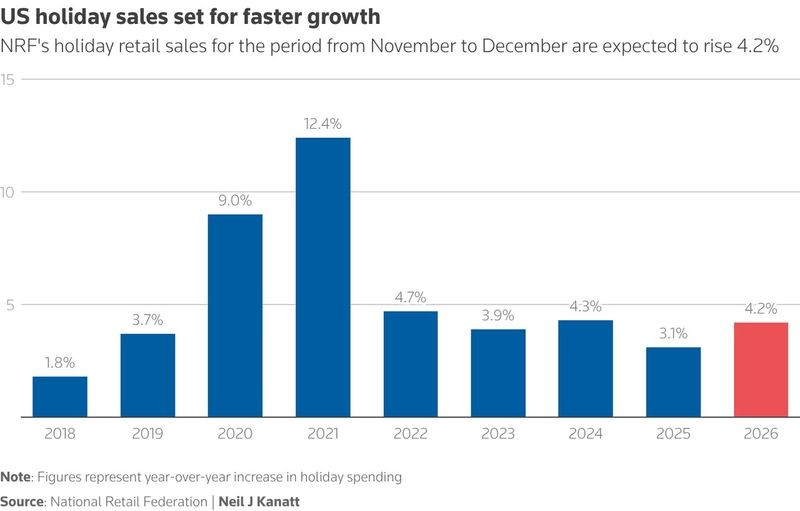
- The noise: retail sales jumped 0.8% in September, about double what forecasters expected.
- The signal: where the money went. Sales at gas stations rose 6.4%. Take gas out and sales rose just 0.2%.
The “control group,” the slice economists use to track everyday spending, rose 0.1%, short of the 0.3% expected.
Jobs aren’t the problem. First-time jobless claims stayed low at 199,000 last week, so people are still working. They’re just spending more of each paycheck at the pump.
“The large jump in headline retail sales in September was almost entirely due to rising gasoline prices,” said Michael Pearce of Oxford Economics.
For beginners: put that next to Thursday’s wholesale-price jump and you get prices rising faster while shoppers pull back. Economists call that mix stagflation, and it’s the hardest kind of economy for the Fed to steer.
TSMC Beat Its Own Forecast. The Stock Fell Anyway.
- The noise: TSMC’s record quarter. Revenue came in at $46.7 billion, above the company’s own forecast, and it guided next quarter as high as $54.3 billion.
- The signal: the stock fell anyway, and chip stocks dropped for a seventh straight session.
One reason: TSMC’s gross margin slipped 1.3 points to 66.4% as it pays to ramp up its newest chips and build plants overseas. When a stock is priced for perfection, a small dent shows.
Meanwhile, health care stocks closed at a record, up 2.3% on the day. Wednesday’s rotation out of tech kept going Thursday, and it lifted the Dow 1.1%.
For beginners: when a company beats and its stock still falls, the expectations were the problem. In AI right now, record profits are the price of admission.
Bitcoin Tested $80,000 and Bounced
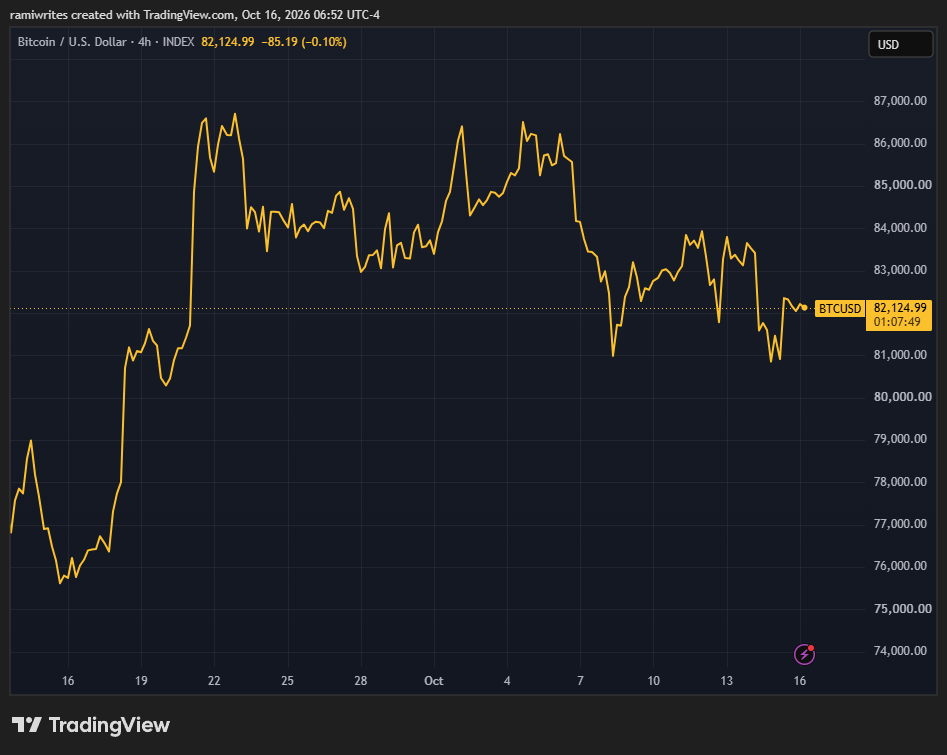
- The noise: Bitcoin dipped below $80,000 Thursday after the wholesale-price report, and nearly $1 billion in leveraged bets were liquidated.
- The signal: the level held. Last Friday we flagged $80,000 as the next line to watch if $82,000 broke. Bitcoin touched about $79,800, then climbed back to about $82,000 by Friday morning as hike odds fell.
Flows into spot Bitcoin funds were roughly flat, so long-term buyers sat out both the drop and the bounce.
For beginners: this week, digital assets traded like a bet on interest rates. Bitcoin is still about 35% below last October’s record of $126,200.
Featured Contributor

Today’s guest is Dylan Jovine of Behind the Markets, who wrote here Monday about SpaceX seeking $40 billion in debt to buy AI chips. Over nearly three decades on Wall Street he founded the brokerage and investment bank Lexington Capital Partners at 24, then built his research firm Tycoon Publishing to more than 500,000 readers across 28 countries before selling it to Agora in 2011. Nothing here is a recommendation.
T-Mobile Sold These Airwaves. They Just Caused Its Worst Day Ever.
Last year, T-Mobile agreed to sell a block of old airwaves to a private equity firm called Grain Management. The deal closed in August.
T-Mobile got $2.9 billion in cash, plus some of Grain’s own spectrum, per T-Mobile’s SEC filings.
Low-band spectrum, in the 800 MHz range. The kind of signal that passes through walls and tree cover.
Legacy stuff. The sale barely made the news.

On Oct. 8, Grain turned around and sold those same airwaves to SpaceX for about $8 billion in cash, per the Wall Street Journal. Neither company disclosed the price.
Elon Musk didn’t bury the announcement. He posted that it was “the last critical piece of the spectrum puzzle,” per Benzinga. The goal, in his words: “complete phone coverage in America.”
The next morning, the market did the math.
T-Mobile fell more than 13%, its worst day since it began trading as T-Mobile US in 2013, per CNBC.
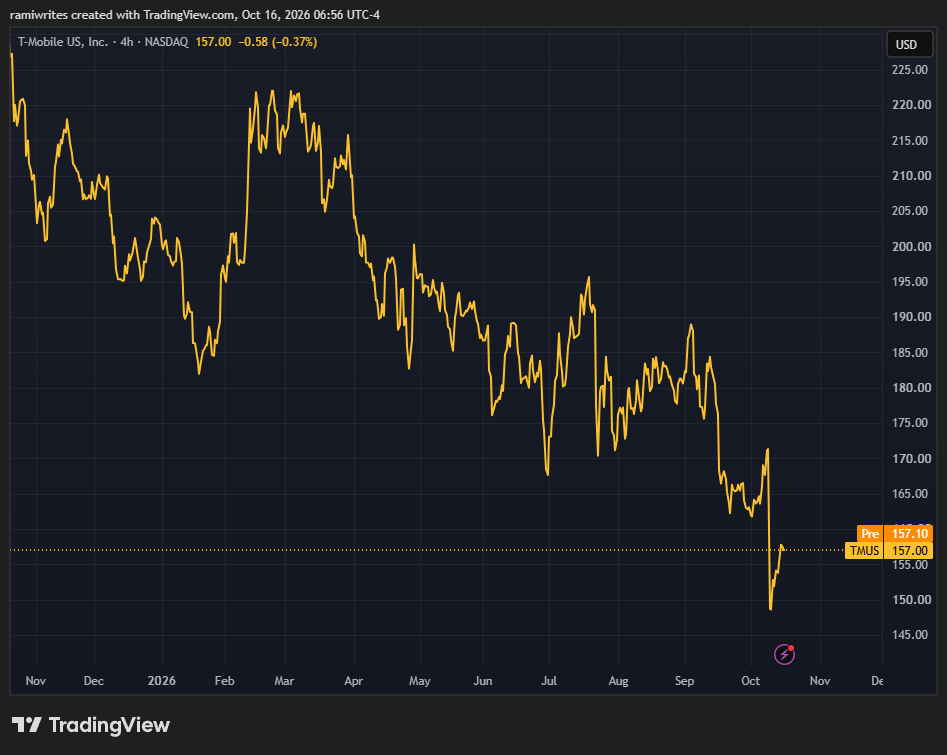
AT&T and Verizon dropped too. Together, the three carriers shed about $36 billion in market value on the news, per Axios.
Follow the chain one more time. T-Mobile sold the asset that just caused its worst day ever.
Why does a satellite company want ground spectrum? Because satellites have a weakness. Buildings.
Starlink can reach your phone on a hiking trail. It struggles to reach you in your kitchen. Low-band signals don’t care about your walls.
And the timing wasn’t an accident. The same week, the FCC approved SpaceX’s plan for up to 15,000 new Starlink Mobile satellites, per Reuters.
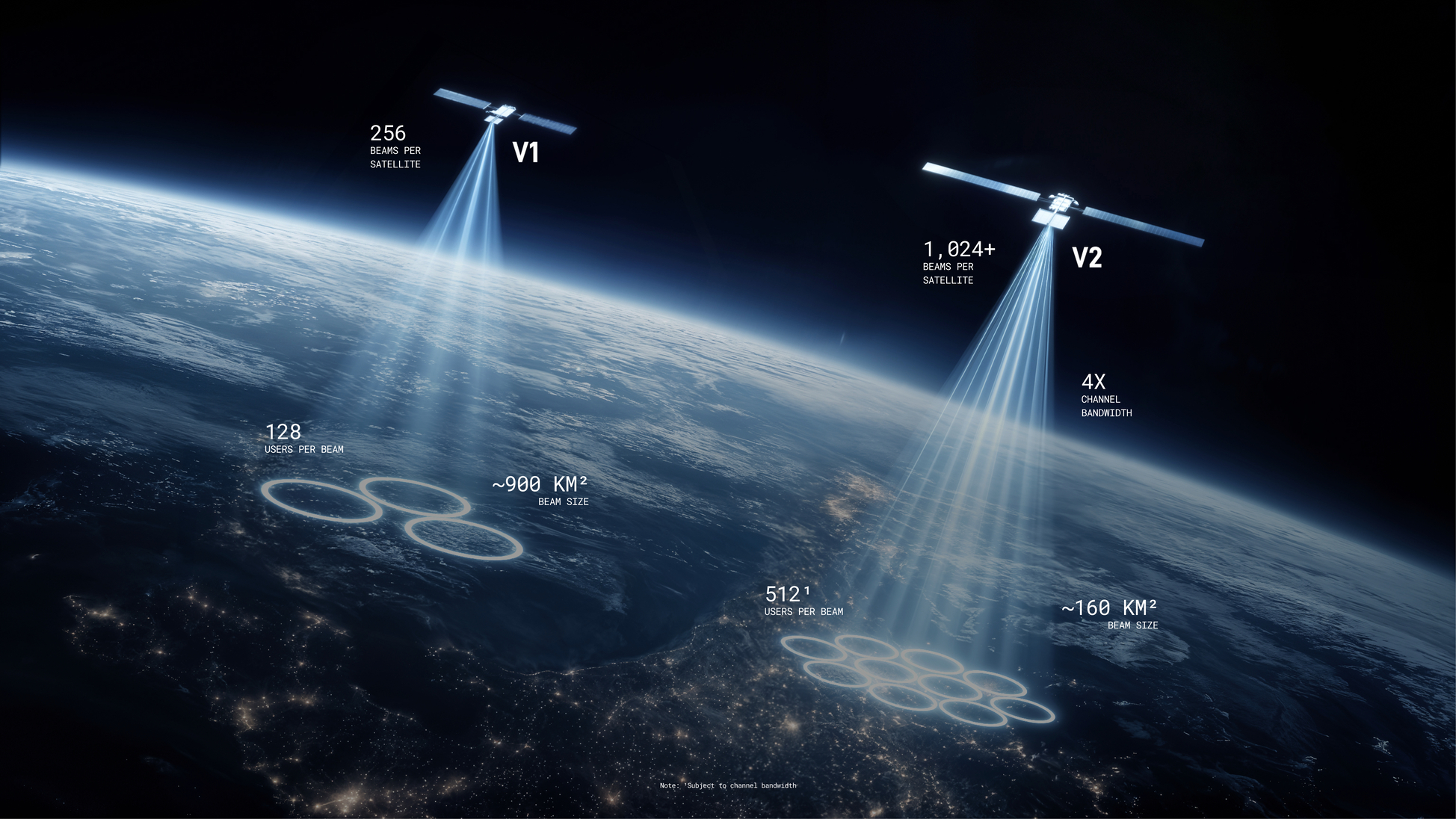
Musk summed up the deal himself: “To those who understand the spectrum wars, it’s an earthquake,” per Benzinga.
My read: the carriers’ real moat was never the towers. It was the licenses.
Spectrum is the one thing in wireless you can’t build, launch, or code your way around. You have to buy it from someone willing to sell.
T-Mobile was willing. It priced those airwaves like leftovers. Musk priced them like a key.
Now, before anyone writes the carriers’ obituary, slow down.
The deal still needs FCC approval, per Reuters. SpaceX has to spend years and billions building a network that uses those airwaves.
And back on Sept. 29, AT&T CEO John Stankey called SpaceX’s phone plan “not a viable strategy,” per Axios.
By Monday afternoon, T-Mobile had clawed back 3%, per 24/7 Wall St.
But the wireless business just gained a competitor who owns the rockets, the satellites, and now the airwaves to tie them together.
And one of the incumbents sold him a piece of the kit.
When you sell something you’ve decided is obsolete, make sure the buyer agrees.
- Dylan Jovine
Behind the Markets
Update: As of Thursday’s close, T-Mobile was still about 8% below where it traded before the deal. Analysts are split. Raymond James upgraded the stock on Monday, calling the pullback “a buying opportunity,” while Bernstein cut its price targets on all three carriers and downgraded AT&T.
Paid Advertisement
Grand Canyon Discovery Could Power America
The biggest energy deadline in American history is 12 days away.
On July 4th, Washington killed the tax credits for solar, wind, and EVs…
But left one energy source untouched. And gave it eight years of credits.
Because near the Grand Canyon, a drilling crew unearthed a clean energy well producing almost 8x the output of Saudi Arabia's largest oil well.
Google signed on. Bill Gates wrote a $100 million check.
On October 20th, 83 parcels of federal land hit the auction block.
One company owns the entire chain.
Get the Grand Canyon ticker before October 20th here >>
Disclosure: Behind The Markets is a paid partner of Future Finance. We may receive compensation from Behind the Markets if you click on our links and make any purchases. This compensation comes at no additional cost to you.
Final Thought
Two prices moved this week in ways the facts alone wouldn’t predict.
A block of airwaves T-Mobile let go for $2.9 billion in cash sold for about $8 billion two months later. Same signal, same walls it passes through.
And an October rate hike went from 41% odds to about 15% in two days, even as the inflation numbers behind it got hotter.
Both moves came down to belief about the future: what airwaves are worth to a satellite network, and what traders think Warsh will do next.
It’s worth remembering the next time a price on your screen jumps or drops overnight. The price is today’s opinion. Your job is to decide whether you agree with it.
The Fed goes quiet on Saturday, so the next thing you’ll hear from it is the decision on Oct. 28. Tomorrow, The Closing Bell rounds up the week.
Have a great weekend.
Editor in Chief | Future Finance
If The Dollar Is Being Debased, Where Do You Put Your Money?
If governments keep spending and the dollar keeps losing value over time, holding all your savings in cash is a slow leak.
One answer is to earn a real return that outpaces the debasement, on your own terms, instead of letting a bank pay you next to nothing on your deposits.
That is the whole idea behind Beat Banks, the weekly research on becoming your own bank and taking control of your financial destiny.
The dollar is designed to lose value over time. This is about making your money do the opposite.
Disclaimer: This content is not financial advice, it is for informational purposes only. All investments involve inherent risk. Any financial decisions you make are solely your responsibility.
Latest



Editor's Picks

Become a sharper capital allocator in 5 minutes a day.
Institutional-grade research on where the smartest capital is positioning, across AI, energy, biotech, robotics, and digital assets. Distilled into a daily read you finish before your coffee does.
Join 45,000+ readers · No spam · Unsubscribe anytime · No card needed