

Hike rate odds just doubled…
Fed rate-hike odds nearly doubled after hot inflation. Robert Rapier explains why diversification can feel like failure when a few stocks lead the market.
October 15, 2026
·
5 Min Read



The briefing serious investors read first.
Free analysis before markets open. Start thinking in decades, not days.
Join 45,000+ readers · No spam · Unsubscribe anytime · No card needed
Today’s Big Picture
September’s inflation report arrived with a suspect already in custody.
Gas prices jumped 9.1% in a month, and sure enough, gasoline accounted for more than half of the 0.6% rise in prices. Case closed, except for the other half.
Strip out food and energy, the number we flagged as the one to watch, and prices still rose 0.3%, for the second month in a row. That put core inflation at 2.6% from a year ago, a tenth above forecasts.
It’s the last inflation reading the Fed sees before it decides on rates October 28. Traders noticed: the odds of a hike that day nearly doubled within hours.
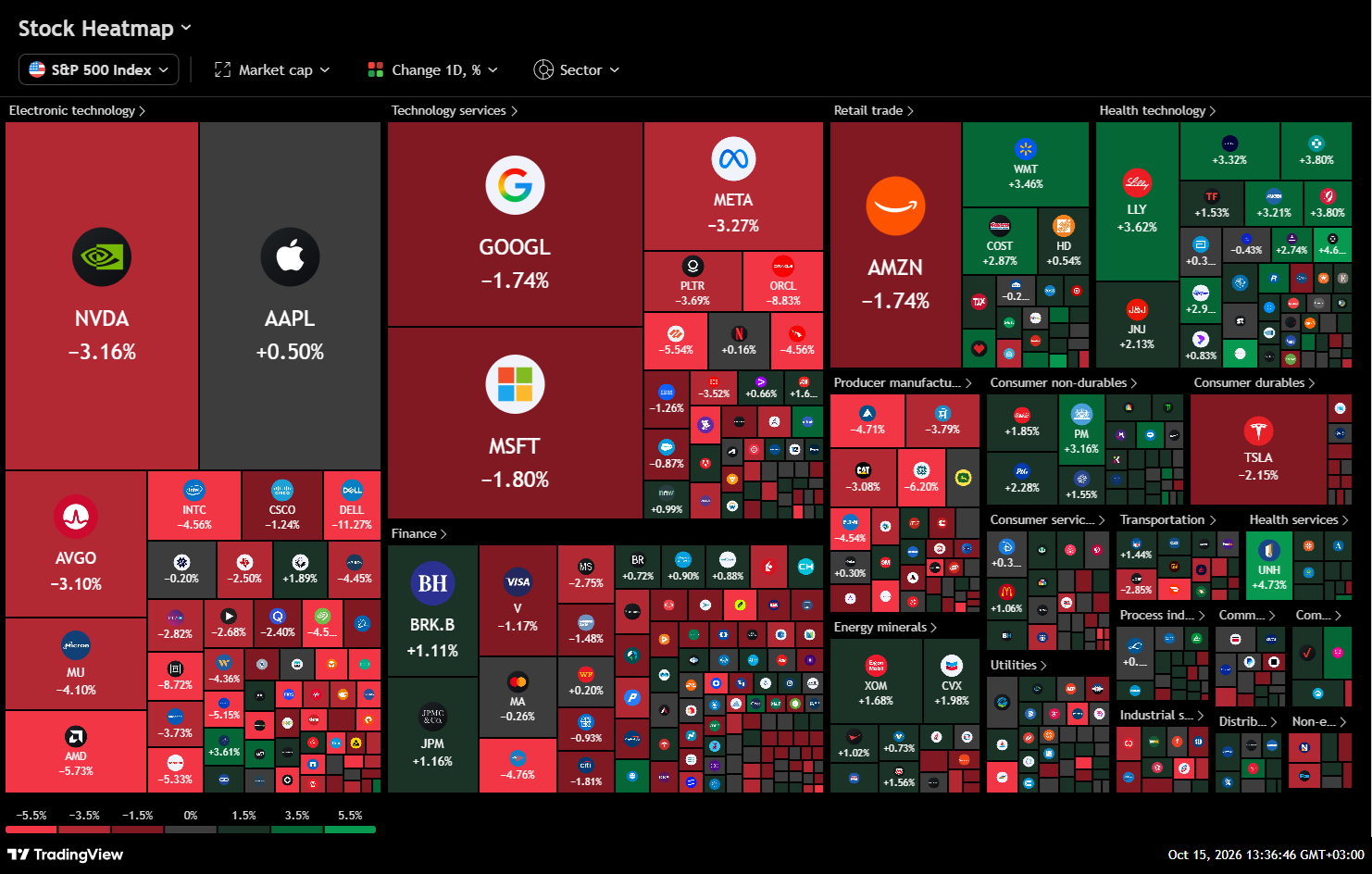
Then the market did something worth a second look. Tech, the year’s star, fell about 3% and dragged the S&P 500 to its worst day since July. Health care and consumer staples, two corners most investors stopped watching long ago, each rose more than 2%.
The stocks nobody brags about were the ones that held up.
Below, Robert Rapier explains why owning them can feel like failure in a market this narrow, and why that feeling usually misleads you.

One Stock. Three Potential Trillion-Dollar Spinoffs.
In 2014, Marc Chaikin told his readers to put a big chunk of their retirement money into Nvidia. He says anyone who followed that recommendation is up more than 45,000% at this point.
He now believes he has found an even better retirement stock for the years ahead. The company is sitting on three fast-growing businesses, and each one could be spun off into a separate publicly traded company.
One ticker today could become three tickers tomorrow:
See Chaikin's new #1 retirement pick here →
Disclosure: MarketWise is a paid partner of Future Finance. The forecasts, track record and claims above are the views of Marc Chaikin, Chaikin Analysis, and MarketWise, and do not represent the view of Future Finance. As always, do your own diligence.
Signal vs. Noise
Your Paycheck Lost the Race in September
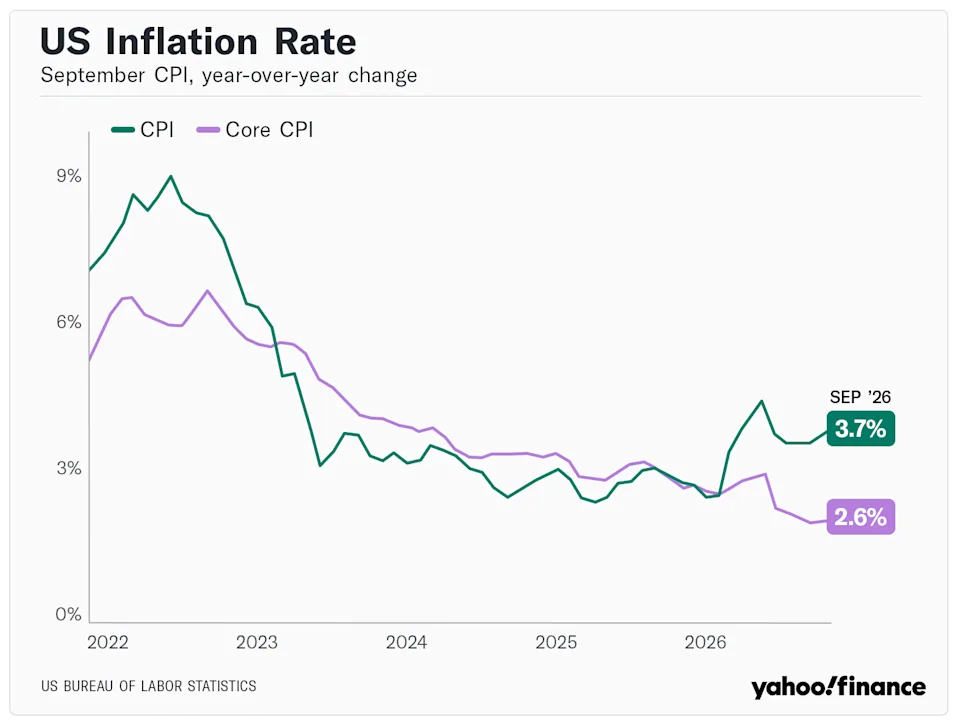
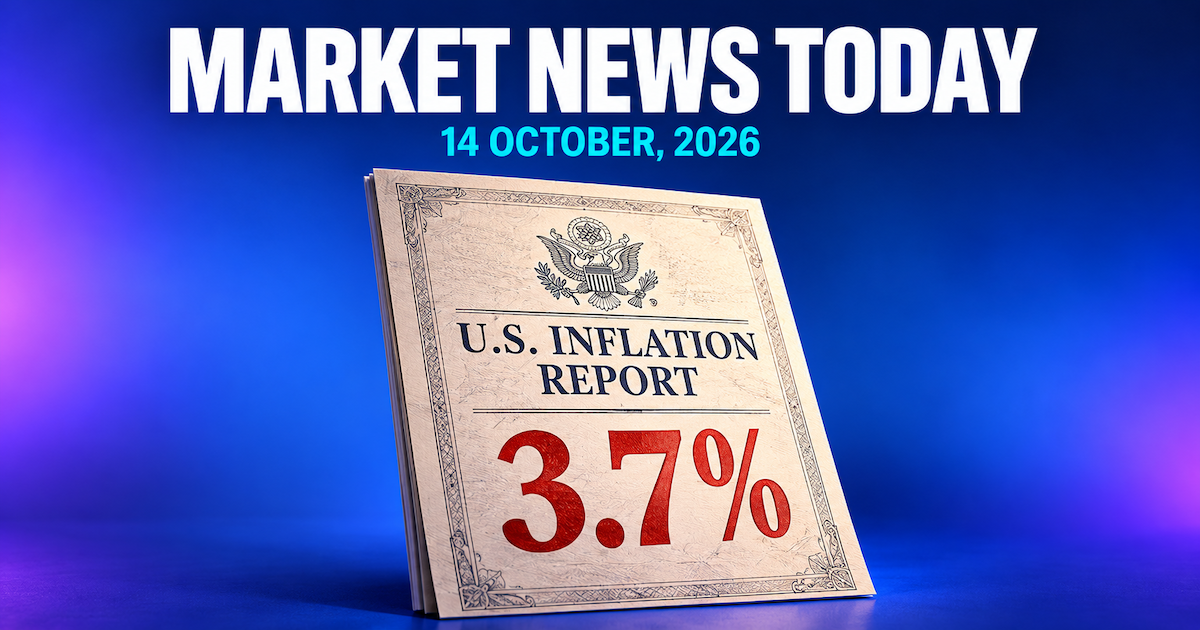
- The noise: inflation rose to 3.7% from a year ago, up from 3.4% in August.
- The signal: what it did to pay. Average hourly pay rose 0.1% in September while prices rose 0.6%, so the typical paycheck bought about 0.5% less than it did a month earlier.
Retirees get some relief. The same report sets next year’s Social Security raise at 3.6%, the largest in four years.
The part that won’t fade with gas prices is core inflation. Two straight months of 0.3% put it on a 3.4% annual pace over the past three months, by Schwab’s math, and September’s reading came in higher than all but 11 of the 73 economists Bloomberg surveyed.
For beginners: gasoline can fall as fast as it rose. Core inflation is stickier, and it decides whether your paycheck keeps losing ground.
Two Banks, Two Very Different Quarters
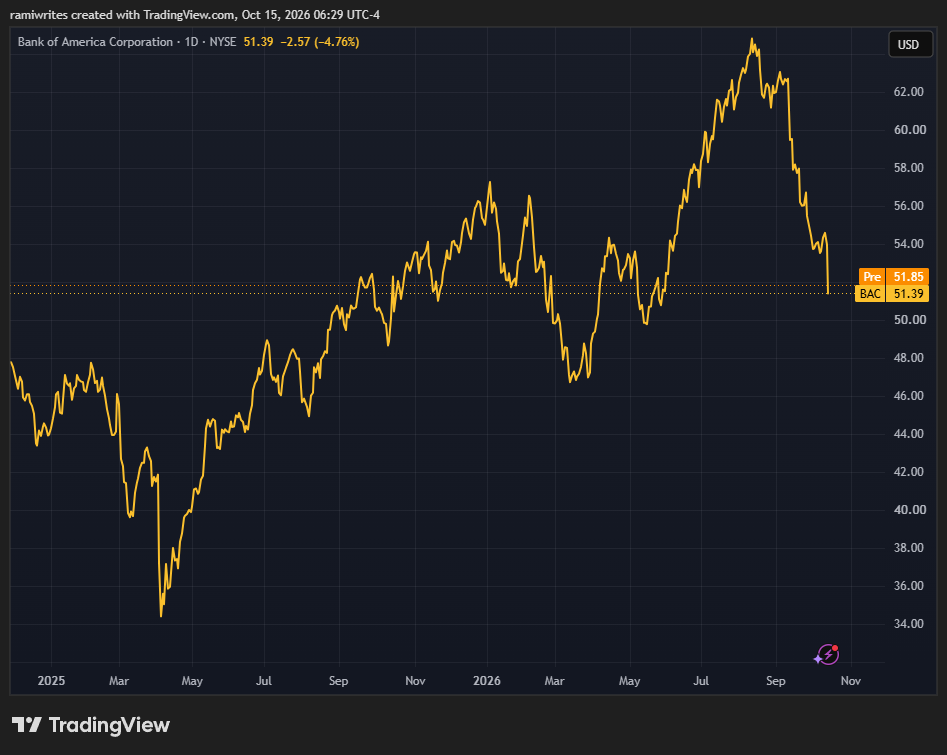
- The noise: Bank of America’s stock fell sharply after it missed estimates, earning 91 cents a share, or $1.08 excluding its $1.2 billion fine, against $1.10 expected.
- The signal: where the misses came from. BofA’s trading and dealmaking came up short, while the interest it earns on loans rose 7.9% to $16.6 billion.
Morgan Stanley beat, earning $3.03 a share against $2.91 expected, as its wealthy clients brought in a record $232 billion in new money.
Morgan Stanley CEO Ted Pick said activity was brisk in July and August, then slowed in September as Middle East tensions and rates rose. That’s the same late-quarter slowdown JPMorgan described on Tuesday.
The AI Leaders Are Still Delivering
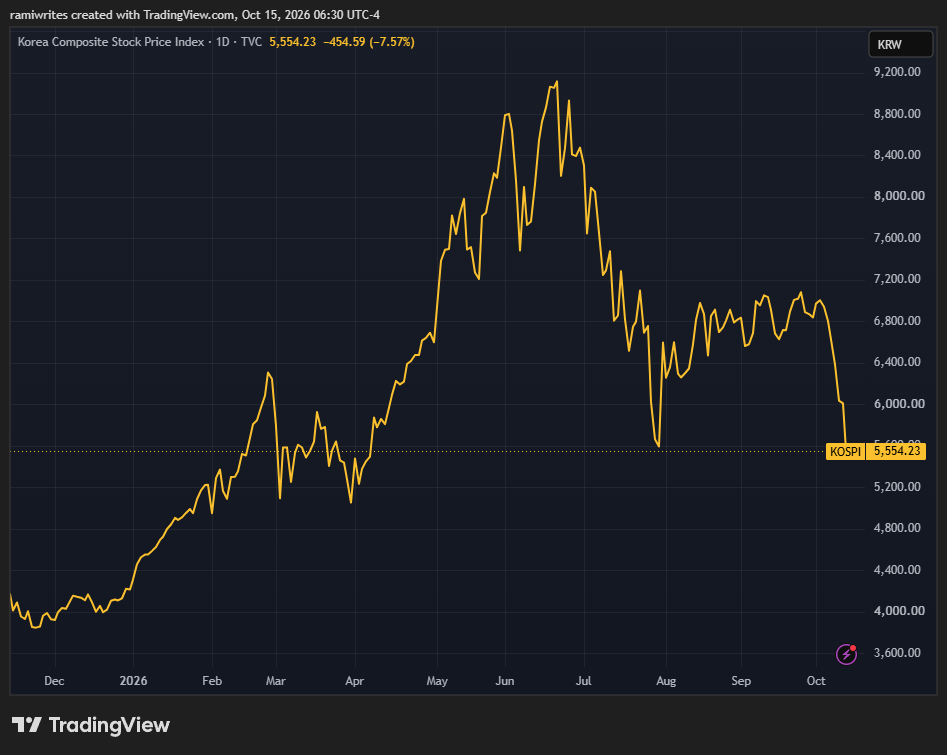
- The noise: chip stocks sold off Wednesday and Thursday, and South Korea’s market briefly halted trading after SK Hynix fell about 10%.
- The signal: TSMC, which makes most of the world’s advanced AI chips, reported a record quarterly profit on Thursday, up 68.7% from a year ago, its sixth straight record.
Revenue rose 50.9%, and the company said AI chip demand “remains strong, driven by the growing adoption of agentic AI and open-source AI models.”
For beginners: the stocks leading this market are leading because their profits are growing fast. Rapier’s warning below is about something else: how much of your money rides on a handful of them.
Featured Contributor

Today’s guest is Robert Rapier of Investing Daily. Robert's work has appeared in Forbes, The Wall Street Journal, The Washington Post and the Christian Science Monitor. He has been a featured expert on 60 Minutes and The History Channel. Nothing here is a recommendation.
Why Diversification Can Feel Like Failure in a Narrow Market
Diversification is one of the oldest principles in investing, and for good reason. Spreading money across different sectors, industries, and asset classes reduces the risk that one bad investment or one struggling corner of the market can do serious damage to a portfolio.
But there are periods when diversification can feel less like protection and more like punishment, and the current market is a good example.
The major indexes remain near record highs, but those headline numbers increasingly obscure what is happening beneath the surface. A relatively small group of technology and artificial intelligence-related stocks has been responsible for a disproportionate share of the market’s gains, while many other sectors and smaller companies have struggled.
The top 10 stocks now account for nearly 40% of the S&P 500 (about 39% as of Oct. 10), up sharply from where that concentration stood when the current bull market began in October 2022.
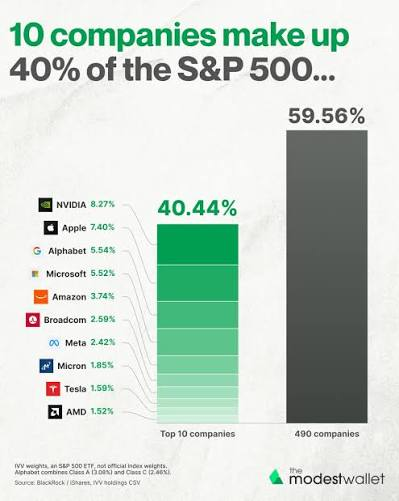
For investors with diversified portfolios, that can create a frustrating disconnect. You can look at an S&P 500 sitting near record territory, then look at your own holdings and see plenty of red.
Utilities are struggling, smaller companies may be weak, and income-oriented names are under pressure from high interest rates. If you do not own large positions in the handful of companies driving the major averages higher, your experience can look very different from what the financial headlines suggest.
The Index Is Not the Whole Market
The reason is partly structural. The S&P 500 is weighted by market capitalization, which means the largest companies have the greatest influence on its performance. When those companies are also the strongest performers, the index can rise even if a large share of its constituents are going nowhere or moving lower.
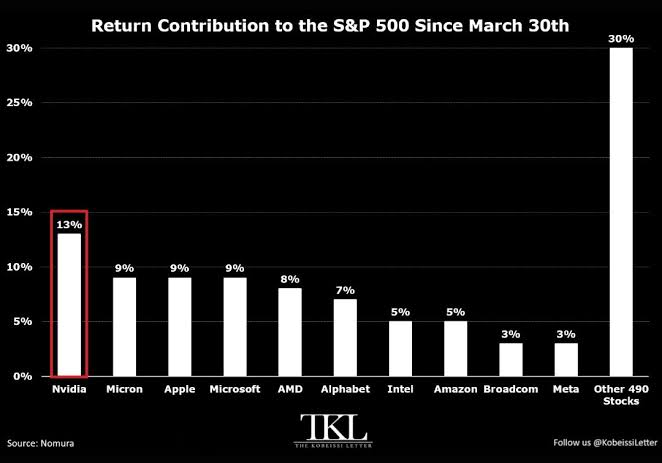
That is why I often look beyond the standard S&P 500 when I want a better sense of market breadth. The equal-weighted version of the index, which gives each company roughly the same influence, has lagged the cap-weighted index significantly as leadership has narrowed, after leading for much of this year.
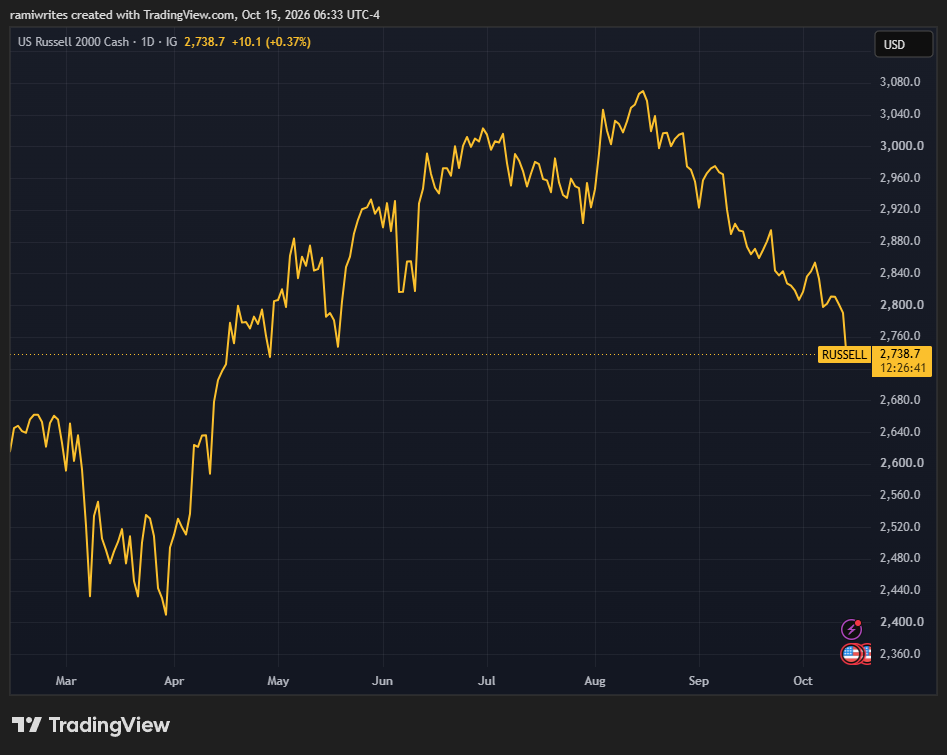
Small caps tell a similar story. The Russell 2000 has slipped about 11% from its August record even while the S&P 500 has remained near record highs, reinforcing the point that the performance of the headline index and the experience of the average stock can diverge sharply.
That distinction matters because investors often use the S&P 500 as a shorthand for “the market,” when in reality it is only one slice of the market, and one that is currently dominated by a relatively small group of very large companies.
Diversification Means Owning What Is Not Working
This is where diversification becomes psychologically difficult. By definition, a diversified portfolio will not be fully concentrated in whatever happens to be leading at the moment.
If megacap technology stocks are dramatically outperforming, then owning utilities, financials, energy producers, health care companies, consumer stocks, REITs, and smaller businesses will almost certainly drag on relative performance.
That can tempt investors to conclude that diversification is the problem. The obvious response seems to be selling the laggards and moving more money into the stocks that are already working. Sometimes that strategy can continue to pay off for a while, but it also introduces a different kind of risk: performance chasing.
The problem with performance chasing is that investors usually recognize a trend only after it has become well established. By that point, valuations may already be stretched and expectations may be extremely high. Reducing diversification at that stage can leave a portfolio more exposed precisely when concentration risk is at its greatest.
Diversification Works Over Cycles
The purpose of diversification was never to ensure that a portfolio beats the best-performing index every quarter or every year. Its purpose is to reduce the consequences of being badly wrong about which investments will lead next.
Market leadership changes over time. Technology can dominate for years, then energy can lead. Small caps can outperform for an extended period and then disappear from favor.
Utilities and dividend stocks can lag badly when interest rates rise, then become much more attractive when rates fall or investors begin looking for stability and income again.
The challenge is that those turning points are obvious only in hindsight. Nobody reliably knows when one leadership regime will end and another will begin, which is why diversification remains valuable even during periods when it feels frustrating.
Narrow Markets Can Create Opportunity
There is another side to narrow leadership. When investors crowd into a relatively small group of companies, other parts of the market can become increasingly attractive.
That does not mean every lagging stock is a bargain. Some companies are underperforming because their businesses are deteriorating, debt burdens are becoming more difficult to manage, or earnings expectations are falling.
But broad underperformance can also create attractive entry points in fundamentally sound companies. When an entire sector falls out of favor, good businesses can get marked down along with weak ones. That is where valuation, balance-sheet strength, cash flow, and competitive position become more useful than simply asking whether a stock has kept pace with the S&P 500.
Lagging Is Not the Same as Failing
There is an important difference between a portfolio that is lagging and one that is failing. A failing portfolio may contain deteriorating businesses, too much leverage, poor diversification, or investments bought at unrealistic valuations.
A diversified portfolio that temporarily trails a concentrated index is something else entirely. If the underlying businesses remain sound and the portfolio still reflects your objectives and tolerance for risk, then underperformance against an unusually narrow benchmark may simply be the cost of diversification.
Diversification was never designed to make sure you always own more of yesterday’s winners. It was designed to reduce the risk that your financial future depends on correctly predicting which small group of stocks will dominate tomorrow.
In a market this narrow, that distinction is worth remembering.
If you want to put that idea to work, the income side of the market is a good place to start. Dividend payers have been among this year’s laggards, and that has left some of them yielding far more than the S&P 500’s roughly 1%.
My colleagues at Investing Daily just published a report on seven of them. You can see the names here.
- Robert Rapier
Investing Daily
Paid Advertisement
$21,000. Then $5,350.
A retiree with $500,000 in the S&P 500 in 1985 collected about $21,000 a year in dividends without touching the principal.
The same $500,000 in the same index today produces $5,350.
Only 52 of the 500 companies in the index still pay 4% or better. Only 8 pay 6%.
One of Robert Rapier’s close colleagues just published a report naming 7 of them. Two of the seven currently yield more than they did on the day he bought them.
Disclosure: Investing Daily is a paid partner of Future Finance. The forecasts, track record and claims above are those of Nathan Slaughter and Investing Daily, and do not represent the view of Future Finance. As always, do your own diligence.
Paid Advertisement
Most Americans Are Making One Enormous Currency Bet
Most Americans earn, save, spend and invest almost entirely in U.S. dollars. They may not think of that as a currency strategy, but it is.
When so much of an investor’s financial life is tied to a single currency, the question becomes whether diversification should extend beyond the assets in a portfolio to the currencies behind them.
Battle Bank gives clients direct access to foreign currencies through Currency Deposit Accounts and Currency CDs, offering another way to diversify and build a more global financial strategy.
For investors accustomed to looking beyond a single stock, sector or asset class, looking beyond a single currency may be worth considering too.
Discover Foreign Currency Opportunities →
Disclosure: Battle Bank is a paid partner of Future Finance. We may receive compensation from Battle Bank if you click on our links and open an account or use certain banking products. This compensation comes at no additional cost to you.
FDIC insurance protects the deposit if the bank fails. It does not protect against changes in exchange rates or declines in the value of the currency held.
Battle Bank, N.A., Member FDIC. APYs as of 6/16/2026, using ZIP code 32224, and subject to change. Rate comparison as published by Battle Bank.
Final Thought
Nobody brags about the health care fund that rose 2% on a bad day. That’s the point of owning it.
Diversification rarely feels good while it’s working, because working usually looks like nothing much happening. Wednesday was one of the rare days you could see it.
With the Fed weighing another hike, the boring parts of a portfolio exist for days like that one.
Kevin Warsh, who runs the Fed, speaks in Bangkok late tonight, U.S. time, the last big Fed voice before officials go quiet on Saturday ahead of the meeting. Tomorrow, we’ll cover what he said, along with this week’s wholesale-price and retail-sales reports.
See you then.
Editor in Chief | Future Finance
Every AI Headline Runs on a Power Bill
Every investor can name the big AI companies. Far fewer are looking at what makes them run.
The largest gains in a build-out like this often come from the layer underneath the story, the power and the infrastructure most people ignore.
Finding those overlooked plays before the crowd is the whole job of Gems Uncovered.
The crowd buys the headline. The edge is in what powers it.
Disclaimer: This content is not financial advice, it is for informational purposes only. All investments involve inherent risk. Any financial decisions you make are solely your responsibility.
Latest



Editor's Picks



Become a sharper capital allocator in 5 minutes a day.
Institutional-grade research on where the smartest capital is positioning, across AI, energy, biotech, robotics, and digital assets. Distilled into a daily read you finish before your coffee does.
Join 45,000+ readers · No spam · Unsubscribe anytime · No card needed