

8:30 a.m., the morning after the midterms…
Tan Gera on November 4, the buyers thinning out of U.S. debt, and the cash you assume is safe.
September 28, 2026
·
5 Min Read



The briefing serious investors read first.
Free analysis before markets open. Start thinking in decades, not days.
Join 45,000+ readers · No spam · Unsubscribe anytime · No card needed
Today’s Big Picture
On November 4, the morning after the midterms, the U.S. Treasury tells the world how much it plans to borrow next quarter. Tomorrow, Tan Gera runs a live briefing on why that date matters for the savings you assume are safe.
His filter starts before any question about returns: know what your money sits on. Last week made that harder to answer.
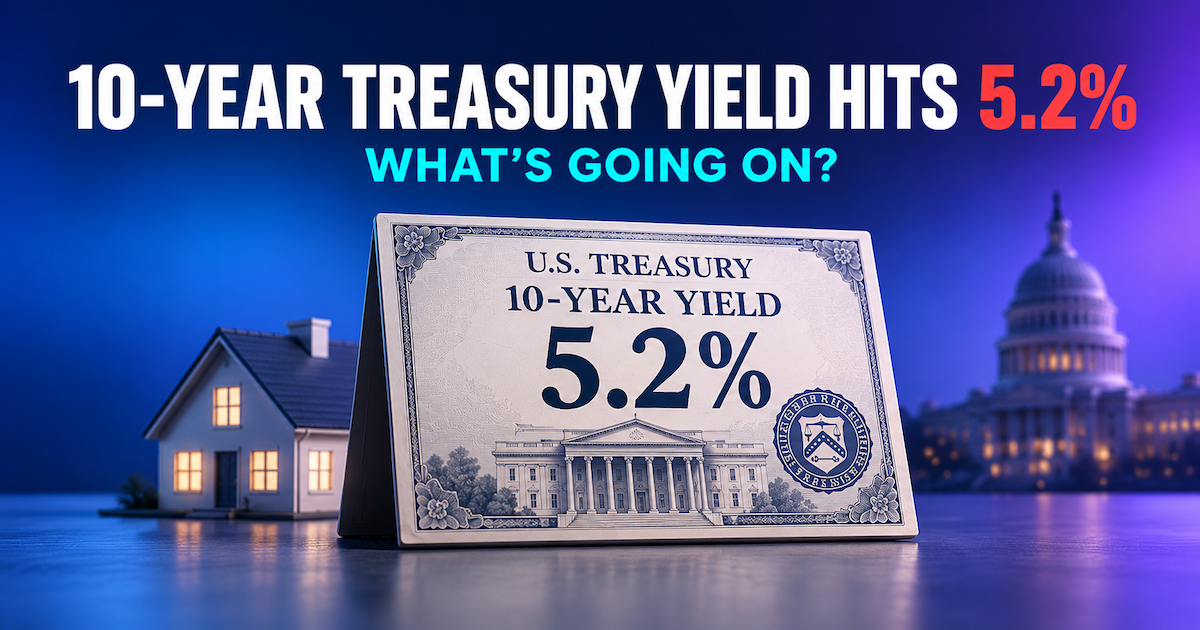
Lenders charged 5.085% for seven-year money, the most since 1993. The 10-year reached its highest yield since 2007. And the group of buyers that includes foreign central banks took its smallest share of a 5-year auction since 2020.
Rising yields are the same pressure that sank Silicon Valley Bank in 48 hours in 2023: bonds bought when yields were low, worth less once they rose.
Where your cash sits when that announcement lands is the part you get to decide. Tan’s piece below lays out the three pieces he’ll put on screen tomorrow.
Advertisement
The “November 4th Freeze”… The Same Hidden Problem That Collapsed Silicon Valley Bank In 48 Hours Could Hit Your Bank Account Next
Tan Gera, CFA Charterholder will break down exactly why the treasury’s announcement on Nov. 4th could be so dangerous, and how he’s positioning ahead of it to protect capital…
He’ll also reveal…
- Why this could trigger a “November 4th Freeze”… and the warning light that’s already flashing
- How the 52-year-old deal that’s helped fund America since 1974 is showing serious cracks…
- The exact 3-step system he’s using to protect his wealth right now.
The event is 100% free to attend: Tuesday, September 29, 11 AM ET. Save your seat →
Signal vs. Noise
The Worst 10 Days, Reversed
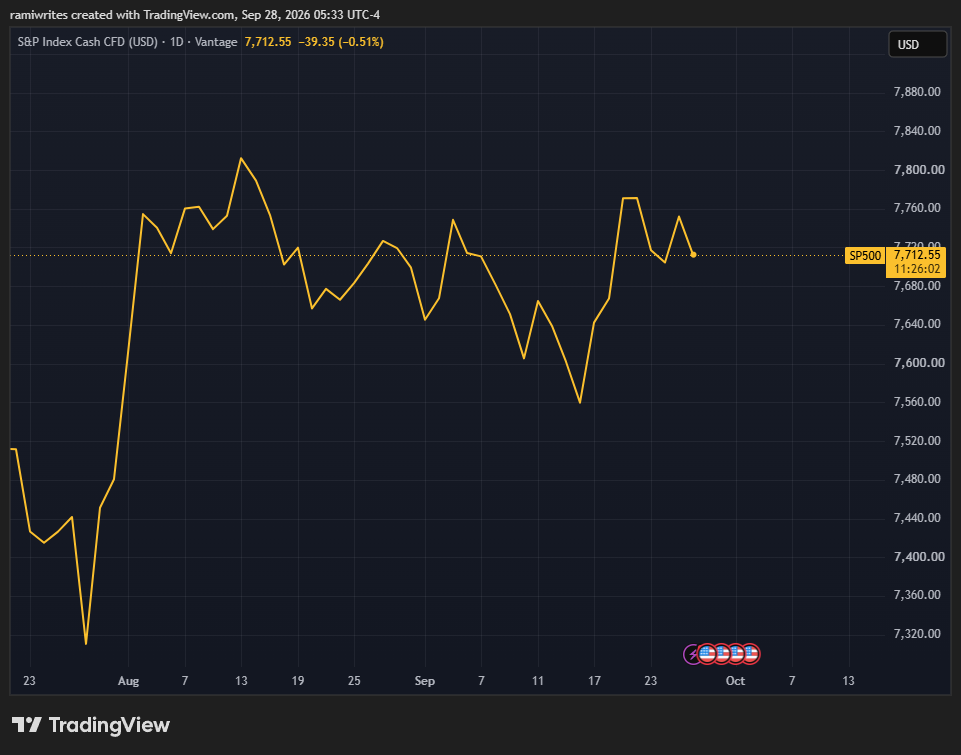
- The noise: the last 10 days of September are the worst stretch of the year for stocks.
- The signal: measured from the September 18 close, the S&P 500 is up 1.2%, finishing Friday at 7,743.41, within 0.7% of its record and up 13.1% for the year. A calendar pattern describes odds, and odds lose individual weeks all the time.
One observation from Friday: we wrote that the Dow was heading for a fourth straight losing week. It snapped the streak instead, up 0.3% on the week after a 479-point Friday.
Factories sent a mixed note underneath. August orders for long-lasting goods came in flat against an expected dip, while the orders that track business investment rose less than forecast.
Consumers Now Expect 4.6% Inflation
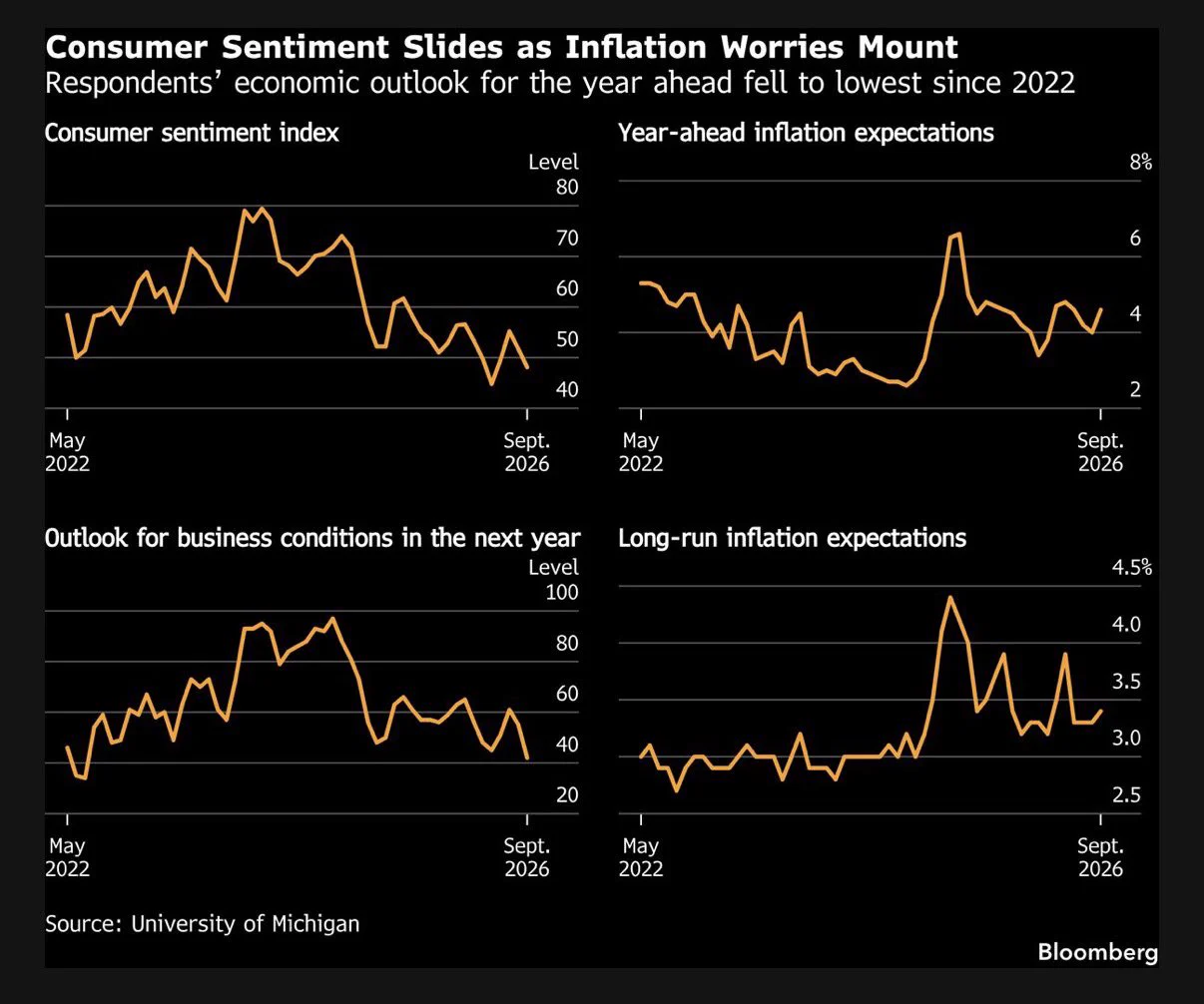
- The noise: consumer sentiment ticked up to 48.1 in the final September reading.
- The signal: what people expect prices to do next. Year-ahead inflation expectations jumped to 4.6% from 4.0%, the highest since June. In February, before the Iran conflict, they stood at 3.4%.
The Fed listens to that number. New York’s John Williams called another hike by year-end a “reasonable” way of thinking about it, and traders price an October move at roughly two in three.
Wednesday at 8:30, the Fed’s preferred inflation gauge lands, expected at 3.7% overall and 3.3% at the core, alongside an annual revision that some economists expect to trim a couple of tenths. If the number looks cooler than expected, check whether the revision did the cooling.
Oil Eased on Talks. The Barrels Are Still Slow.
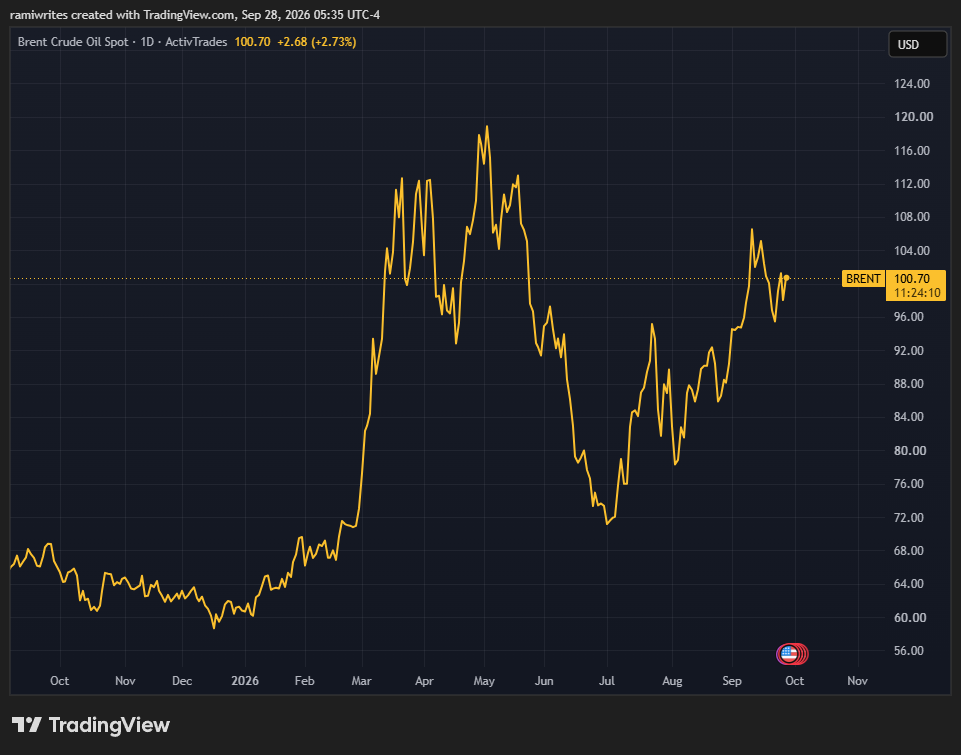
- The noise: oil fell more than 2% on Friday.
- The signal: the drop was priced on reports of a phased Hormuz reopening. WTI settled at $92.41 and Brent at $104.32, while tanker crossings through the strait still ran in single digits on some days.
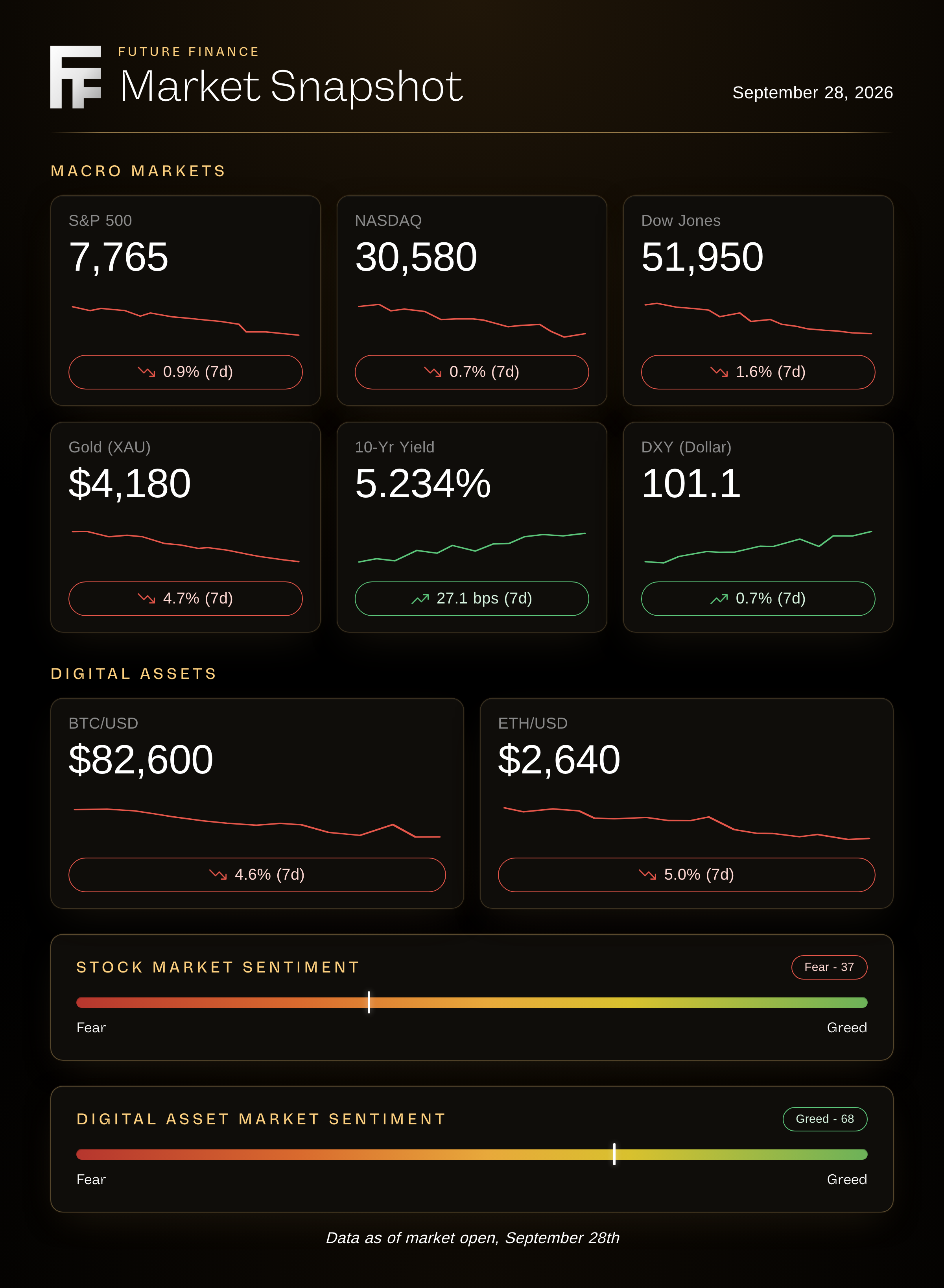
Monday reversed part of it: gold fell about 2% overnight to near $4,152 as firmer oil revived rate-hike bets. Bitcoin sits near $82,700 after a seventh straight day of fund inflows.
The quarter closes Wednesday, with Micron reporting after the bell; Dylan told you to watch the deposits [LINK: Sept 24 issue]. Australia’s central bank decides tonight, expected to lift rates to 4.60%, its highest since 2011. Jobs land Friday.
And Congress has already passed a stopgap through December 11, so there is no shutdown cliff at the fiscal year’s end.
Featured Contributor

Today’s guest is Tan Gera, co-founder of Decentralized Masters. Tan is a CFA charterholder and former investment banker who left traditional finance to pioneer his decentralized portfolio strategy. His battle-tested strategies have helped thousands navigate any market condition. He hosts a live briefing tomorrow, Tuesday, September 29.
8:30 A.M., the Morning After the Midterms
Put a date in your calendar that almost nobody outside the bond market has heard of: Wednesday, November 4, 8:30 a.m. Eastern.
That’s when the U.S. Treasury tells the world how much it plans to borrow next quarter, and for how long. It happens every three months. This time it lands the morning after the midterms.
In August, the Treasury said it expects to keep auction sizes steady “for at least the next several quarters.” November 4 is when the market finds out whether that still holds, and the market spent last week telling us how it feels about the question.
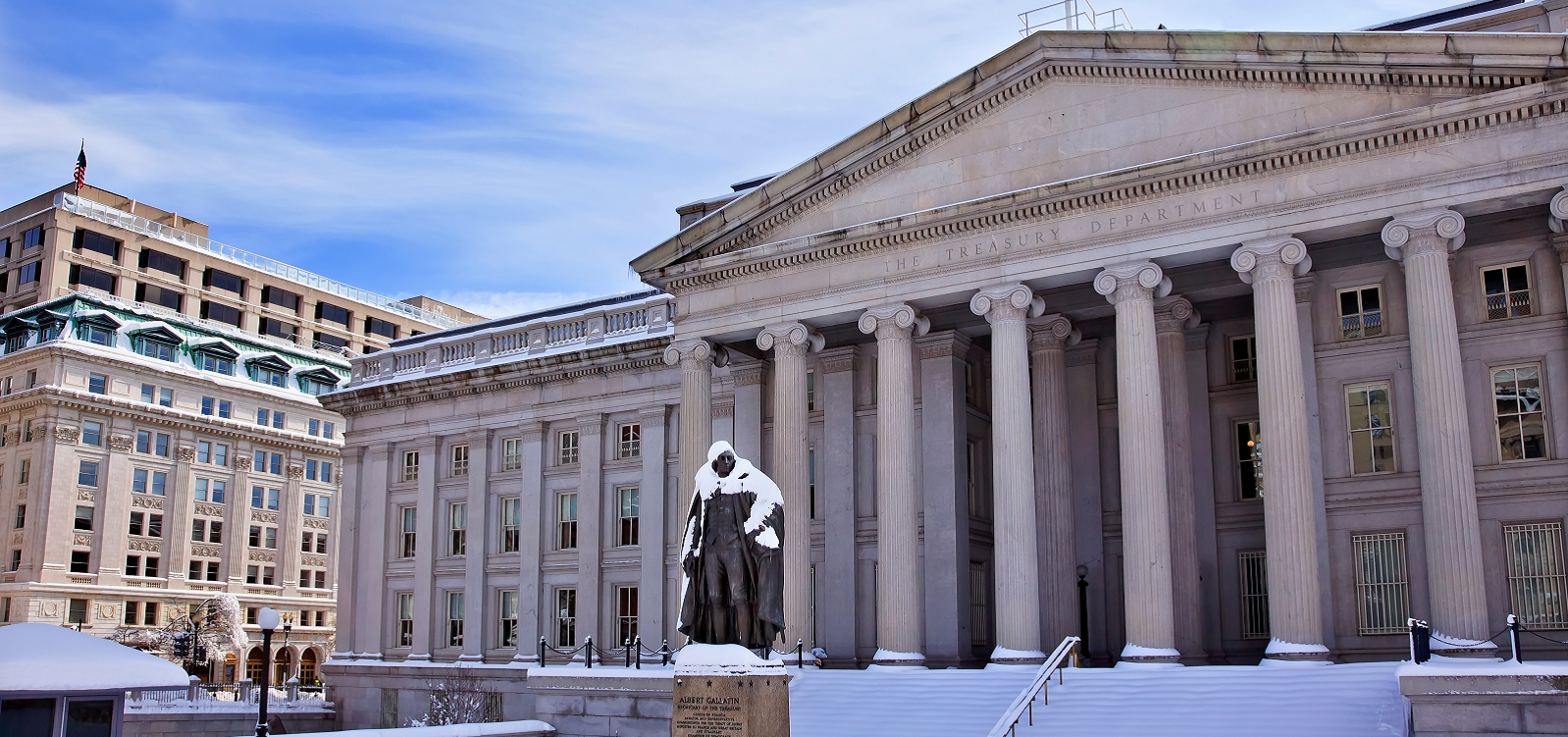
The deal that funded America since 1974
In 1974, Treasury Secretary William Simon flew to Saudi Arabia with a proposal. The kingdom would keep selling oil for dollars and lend those dollars back to Washington by buying U.S. government bonds. The details stayed quiet for decades.
That arrangement became the template for half a century: sell to America, get paid in dollars, recycle the dollars into Treasuries. Foreign buyers became the bid the government could count on.
You may have read that the deal “expired” in 2024. There was never a treaty with an end date, so it couldn’t.
A deal like that weakens a different way: the buyers show up smaller, or start buying something else, which is what China has been doing with gold [LINK: Sept 17 issue].

Last week, they showed up smaller
Indirect bidders, the group that includes foreign central banks, took 54.3% of last Wednesday’s 5-year auction, their smallest share since March 2020. At Thursday’s 7-year they took 57.2%, against a recent average near 65%, and the Treasury paid 5.085% to borrow for seven years, the most since 1993.
The 10-year touched its highest yield since 2007. The Treasury has been buying back its own long bonds to steady the price, $4.08 billion on Thursday alone, and yields rose anyway.
When a borrower has to buy back its own bonds to steady the price, the lenders are getting choosy.
Where Silicon Valley Bank comes in
Here’s why a bond auction belongs anywhere near your bank account.
In March 2023, Silicon Valley Bank failed in about 48 hours. The hidden problem sat in the safest assets on its books: government-backed bonds bought when yields were low, worth far less once yields rose.
When depositors learned the size of those losses, $42 billion left in a single day, a quarter of the bank’s deposits, with another $100 billion queued for the next morning. Most of that money sat above the insurance limit: 94% of the bank’s deposits were uninsured.
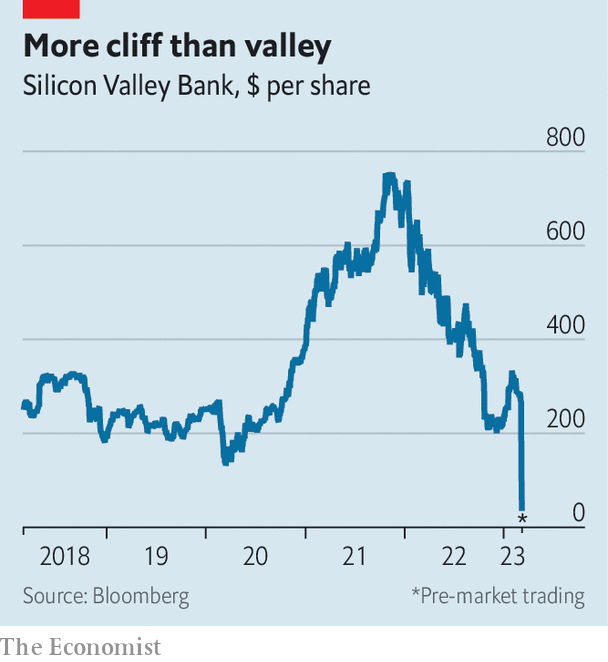
Yields at 2007 highs put the same pressure on every bank that still holds bonds bought at lower rates. Most can carry it. The question is always which ones can’t, and whether their depositors know.
What I’ll put on the screen tomorrow
Tomorrow I’ll lay the three pieces side by side: the November 4 announcement, the buyers thinning out of U.S. debt, and the bond math inside the banks. I’ll walk through why I’ve been calling it the November 4th Freeze, step by step, and the three-step system we teach for keeping savings outside its path.
The system works without predicting anything. It starts with knowing where your money sits and who carries the risk if something goes wrong.
Two things worth doing before then, briefing or no briefing. Check whether your deposits at any single bank sit above the FDIC’s $250,000 insurance limit. And notice where the rest of your cash sits, and who would hold the loss.
Nothing here says a bank will fail on November 4, and nothing here is a reason to move money in a panic. A system is how you decide calmly, in advance, so that a date on the calendar stays a date.
Tuesday, September 29, 11 AM ET. Save your seat →
- Tan Gera, CFA
Co-Founder & CEO, Decentralized Masters
Tan’s figures were verified against the U.S. Treasury, Treasury auction results, and the Federal Reserve Board’s Inspector General. Nothing here is a recommendation.
Why Is NASA Paying Elon To Destroy A $150 Billion Space Station?
The International Space Station cost $150 billion to build. Sixteen nations spent thirteen years putting it together. NASA is now paying Elon Musk $843 million to destroy it, in what SpaceDaily calls the most expensive demolition job ever commissioned.
SpaceX is even building a purpose-made spacecraft for the job.
But Elon is not building the replacement. That contract goes to a company less than half a percent the size of SpaceX, and Behind the Markets believes that firm is the real winner in the deal. They expect a NASA announcement on October 1 to be the catalyst.
See the full story before October 1 →
Disclosure: Behind the Markets is a paid partner of Future Finance. The forecasts, track record and claims above are Dylan Jovine’s and Behind the Markets’, not Future Finance research or advice. As always, do your own diligence.
Final Thought
Tan runs two live sessions in two days, and they point the same discipline at opposite ends of your money.
Today’s asks whether a private deal clears the bar before you buy it: the entry, the exit, what would make you leave. Tomorrow’s asks the same of the place your savings already sit, which most people check only after something goes wrong.
Filters are dull on purpose. They do their work in calm weeks, so that November 4 arrives as a date you prepared for.
See you tomorrow.
Editor in Chief | Future Finance
The Morning After the Midterms. Are You Prepared?
Tan Gera, CFA, goes live Tuesday to walk through the November 4 Treasury announcement, the buyers thinning out of U.S. debt, and what it means for the cash you keep in the bank.
One session, step by step, with the three-step system on screen.
Tuesday, September 29, 11 AM ET. Save your seat →
Disclaimer: This content is not financial advice, it is for informational purposes only. All investments involve inherent risk. Any financial decisions you make are solely your responsibility.
Latest


Editor's Picks

Become a sharper capital allocator in 5 minutes a day.
Institutional-grade research on where the smartest capital is positioning, across AI, energy, biotech, robotics, and digital assets. Distilled into a daily read you finish before your coffee does.
Join 45,000+ readers · No spam · Unsubscribe anytime · No card needed