

Every famous deal sounds great. That’s the problem…
A summit heavy on pomp, a 7-year auction at 5.085%, and Maxwell Nee on the famous deal he turns down twice a month. →
September 25, 2026
·
5 Min Read




The briefing serious investors read first.
Free analysis before markets open. Start thinking in decades, not days.
Join 45,000+ readers · No spam · Unsubscribe anytime · No card needed
Today’s Big Picture
Every deal that reaches Maxwell Nee’s desk sounds great.
- Famous name…
- famous backers…
- a story that took a decade to polish…
He says that’s the problem, and he has a sheet that ignores the name and reads the terms.
This week handed the rest of us the same test twice. The Xi summit had a B-1 flyover, a head table worth $1.13 trillion, and an eagle statue. The deliverable was a truce extended to January 10, announced on Wednesday before the two men met, and not yet confirmed by Beijing.
The AP’s verdict: heavy on pomp, light on substance.
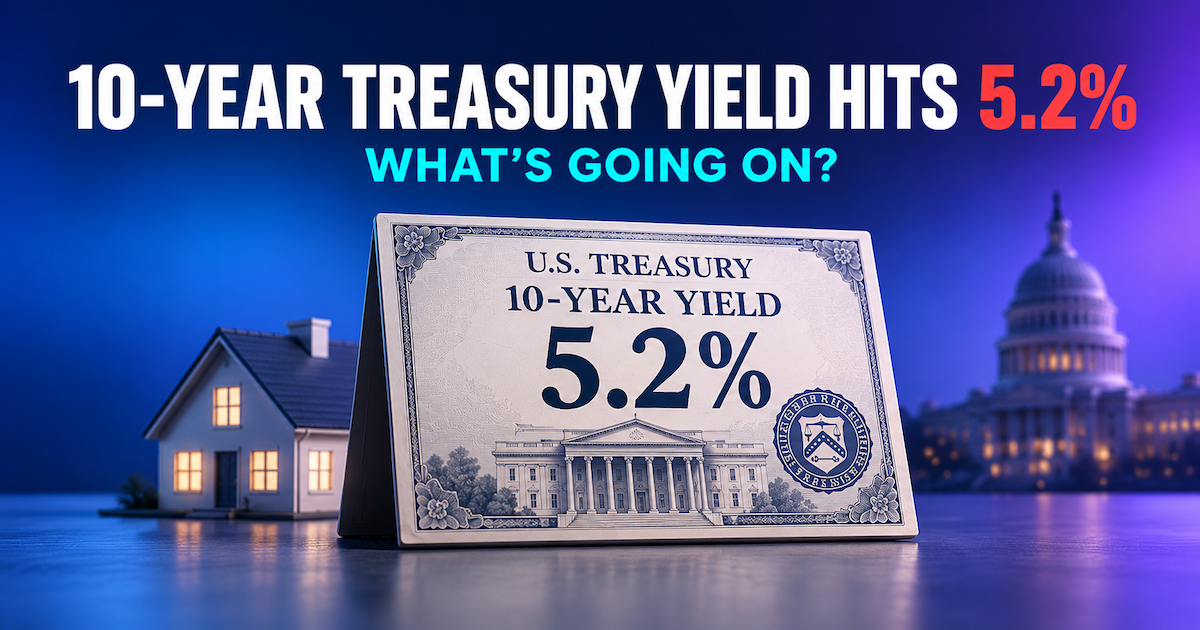
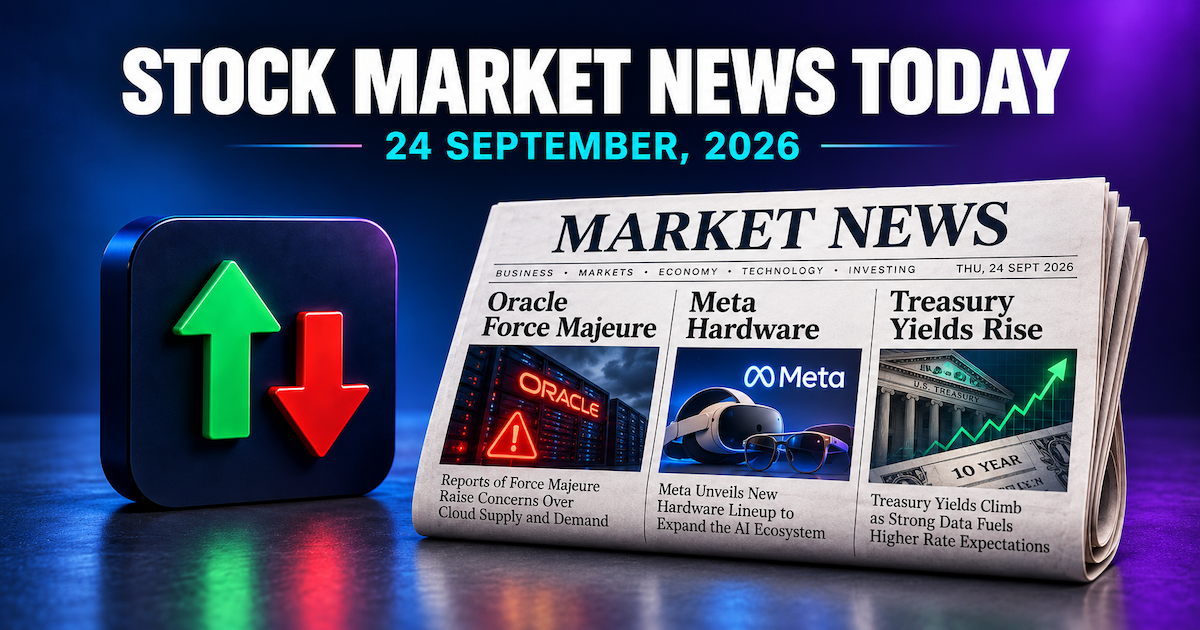
The lenders, meanwhile, read the terms. The Treasury had to pay 5.085% to borrow for seven years yesterday, the highest since 1993, and the 10-year touched 5.19% this morning, the highest since 2007. That’s with the Treasury buying back its own bonds to hold yields down.
Conviction comes from two lines: what you pay, and how you get out. The dinner guests had the famous name, and the bond market demanded the terms.
Yesterday I showed you companies buying five years of certainty and governments buying two months.
Today Maxwell runs the most famous deal in his inbox through the sheet, and it dies on exactly those two lines.
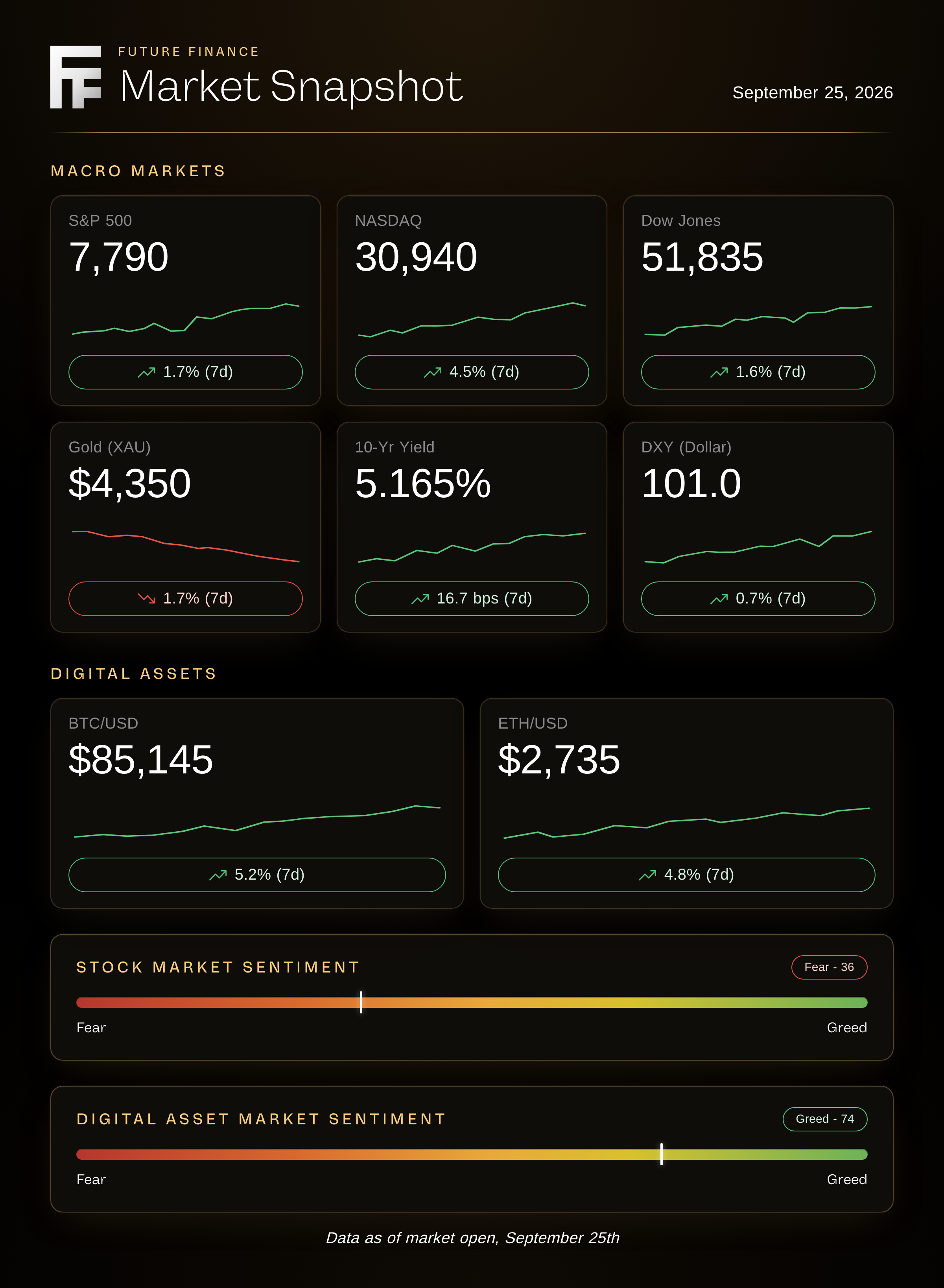
Signal vs. Noise
The Summit, Graded
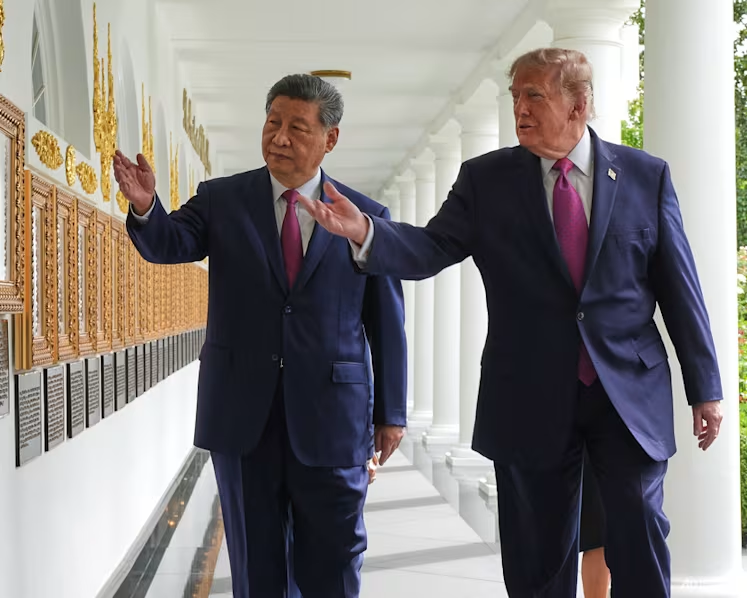
- The noise: the tarmac greeting, the honor cordon, Huang and Musk and Cook at the head table.
- The signal: what was signed, which was nothing new. There was no joint statement; each side briefed its own audience.
Xi urged “prudence” on Taiwan and offered to “continue AI dialogue.” No new Boeing order.
The one concrete item, the truce extension to January 10, was Bessent’s on Wednesday, and NPR reported Beijing had not officially confirmed it by Thursday night.
Markets treated it as a non-event. Asia was mixed overnight, U.S. futures sat flat, and the Dow is heading for a fourth straight losing week. One scoreboard worth keeping: the S&P is up about 0.7% inside the window that history calls the worst ten days of the year.
For beginners: a ceremony is what two governments do when they can’t yet agree on terms. Read the January date as the real output, and read Beijing’s silence as part of the price.
5.085%: The Price of Seven Years
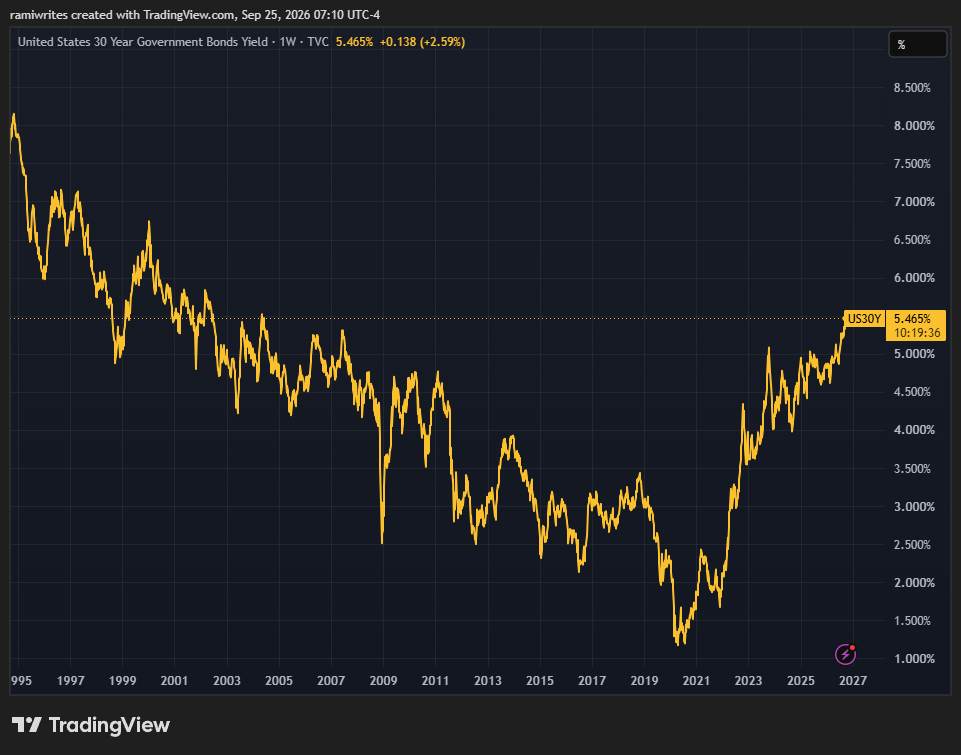
- The noise: “the auction was in line.”
- The signal: in line at a price nobody has paid for that maturity in 33 years. The Treasury sold $44 billion of 7-year notes at 5.085%, against 4.51% a month ago, with foreign-type demand at its lowest share in a year. The 30-year reached 5.47%, its highest since 2004.
The Treasury bought back $4.08 billion of its own long bonds the same afternoon, out of $6 billion offered. Yields rose anyway. Philadelphia’s Anna Paulson said “some modest further tightening may be warranted,” and October hike odds sit near 71%.
Where it lands on you: the average 30-year mortgage hit 7.12% this week, the highest since 2024. Every one of those auctions is a quote for your next house.
Costco’s Beat Came With a Refund
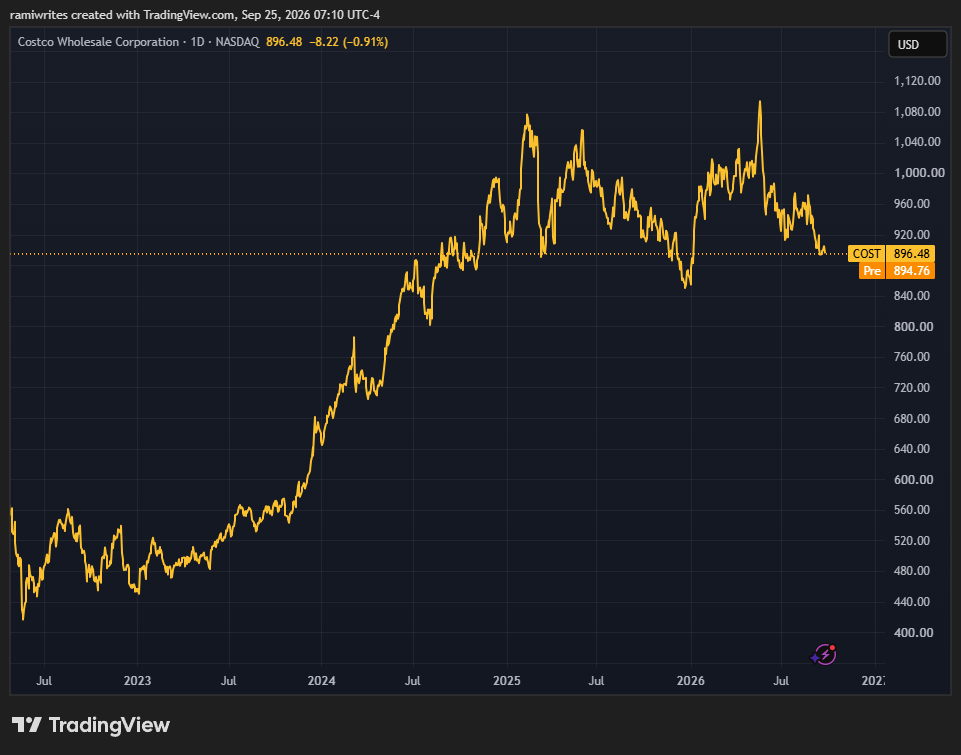
- The noise: “Costco crushed it.”
- The signal: earnings of $6.75 a share against $6.55 expected, of which 15 cents was a one-time tariff refund. Strip it out and the beat is a nickel.
The parts that matter held: sales up 11.2%, comparable sales up 6.7% without gas, membership fees up 7.3%, and a renewal rate of 92.3%. The stock barely moved, which is what priced-in looks like.
Oil snapped back. Brent settled at $106.60, up 3.4%, after Houthi missiles targeted Yanbu, the export terminal Saudi Arabia has been counting on, even as Reuters reported talks on a phased Hormuz reopening. Washington is studying a short-term diesel export ban with the pump price at $6.53.
And Bitcoin sits near $84,200 after six straight days of fund inflows totaling $2.8 billion, each smaller than the last. About $15.6 billion of Bitcoin options expired this morning.

Featured Contributor
Today’s guest is Maxwell Nee, Chairman and Founder of Family Office Insider and a co-lead of Inflection Club, a private investment club for its members. Two weeks ago he promised readers the club’s deal filter.
The Deal I Turn Down Twice a Month
There’s an email I get about twice a month. Different sender each time, same company inside it, and every one of you would know the name. It’s one of the most famous AI companies on earth, and somebody is always willing to sell me a piece.
Two weeks ago I promised you the filter we use on every deal. So let me show it to you the way I use it on a Tuesday, on that email, because the sheet is only interesting when there’s something you want on the other side of it.
I want that company. I’ll say that plainly. Wanting it is why the sheet exists.
Where the sheet came from
We didn’t invent it. In 1972 a firm with a three-million-dollar first fund backed Apple and Atari, and by its own count more than a fifth of the Nasdaq now traces back to companies Sequoia backed early. They publish the ten questions they want a founder to answer, and we started there.
But that list is written by the people who set the price. We never set the price. We arrive after someone else has done the deal and priced it, so every question we added is one Sequoia doesn’t have to ask.
The email hits the first gate
The first thing I do with that AI deal is ignore the company and look at who’s selling. Which fund holds the shares, on what terms, and would I take their word to the bank? Then I check whether the same block is sitting on a secondary marketplace with a price next to it. If it is, anyone with a login can buy it, and access that anyone has is not access.
This one usually passes that gate. Real holders, real paper. So I keep going.
The next two gates are about names and money. Every famous name on a deck gets sorted into two piles: people who wrote a cheque, and people who lent their name to a website. Then I want five million dollars of revenue spread across real customers, or partners so serious that they count for it. A company like this clears both without trying.
The fourth gate is the graveyard. I list every company that tried the same thing and died, and ask whether the moat would have saved them. The fifth is the kill switch: is there one regulator, one signature, that ends this business on a Tuesday? And I write down, before I go in, what would make us leave.
Five gates. It passes all five. Most deals I read never get this far, and this one is through in an afternoon.
Where it dies
Then come the seven points we score, and this is where the email goes wrong every time.
The founder is the heaviest line on the sheet. Not the résumé, the scar tissue. I want to know what they did in a bad quarter, and who picks up the phone when they call. Fine. The sector is one of our five. Fine. On unit economics I’ll sometimes pick up the phone myself, call someone I know, and try to sell them the product, because a deck can’t fake a customer’s hesitation. Fine.
Then the price. Every time this email arrives, the shares have been marked up again, sometimes twice since the last email, and the seller wants an upfront fee of as much as 15% on top. I have to be able to defend the entry price against comparables in front of any member who asks, and I have to be able to name a buyer and a timeline for the exit before we commit.
I can’t do either. So the score comes in short, and a short score has one answer.
On our sheet, twelve out of twelve means we chase it. Ten or eleven means we proceed and write down what has to become true to fix the gap. Nine or below is a no. Most deals never clear seven, which is the whole point of borrowing a bar from the best firm in history. It’s supposed to be hard to get over.
Why I’m telling you about a no
We’ve read 202 companies since June and put four in front of members. I could write this piece about one of the four. I’d rather show you the 198, because a club that only shows you its winners is marketing with a membership fee.
And because the hardest deal to turn down is the one that would have made us look clever for a year. Conviction over excitement. We passed, and we’ll keep passing until the entry and the exit both make sense.
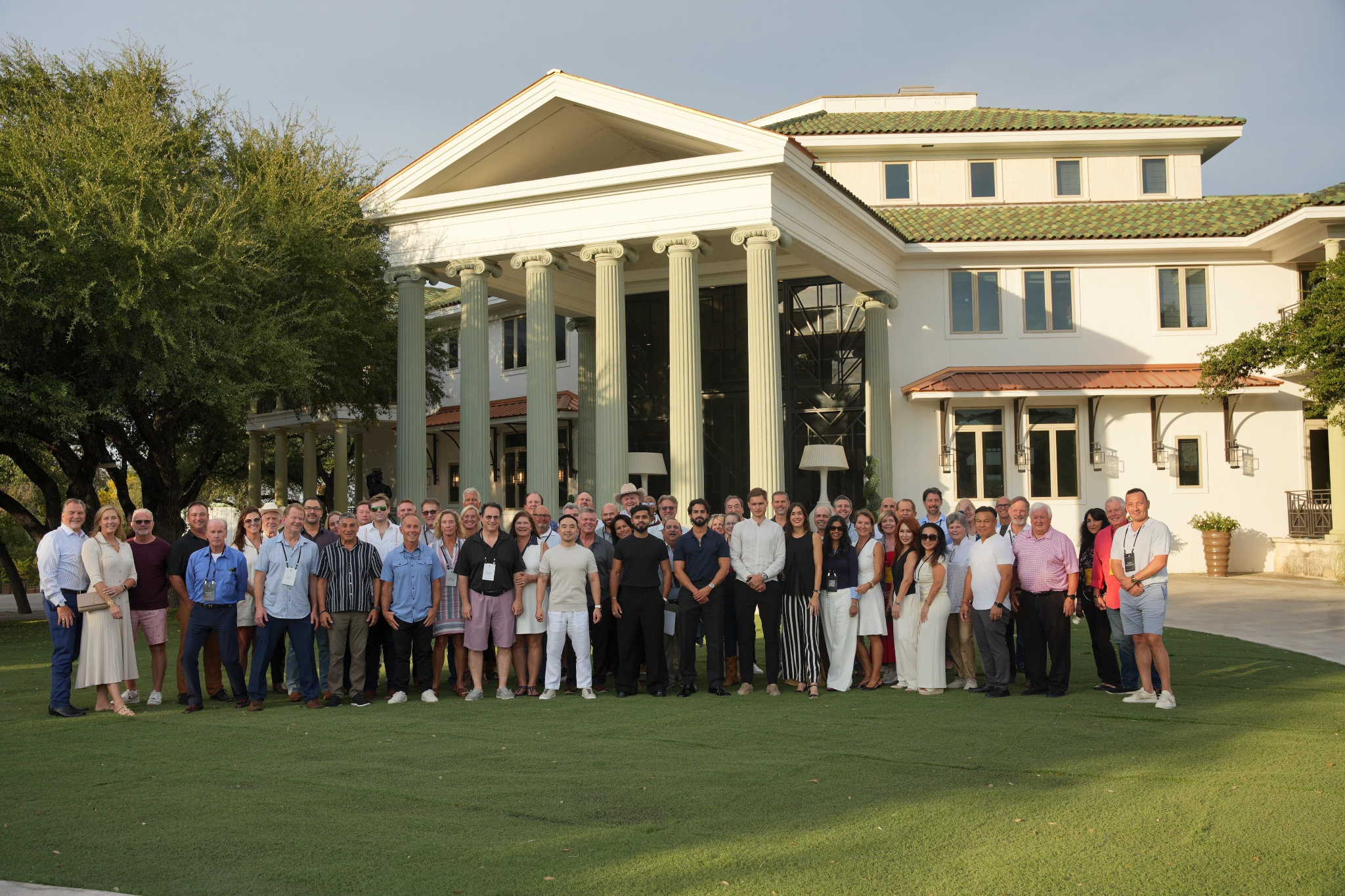
One more thing the sheet can’t do. It answers whether a company is good. It never answers whether it belongs in your portfolio, at that size, right now. That’s a different question, and Tan and Salim spent a morning in Austin on it.
And in this asset class, capital is at risk and you can lose all of it, in a company that cleared every gate on my list. The filter improves the odds without removing them.
So on Monday, September 28, Tan Gera will be putting the whole thing on the screen.
The sheet, the gates, the scoring, live and in real time.
He'll walk through the first deals we actually put in front of members, what we paid, and why they cleared the bar, and the ones we turned down flat. Then we'll do the part that matters most: run the filter live on a deal and show you where it passes and where it breaks.
You'll leave able to score the next famous-name email yourself. You can save your seat below.
Register Here, Monday Sept 28 @ 12 PM ET →
- Maxwell Nee
Chairman & Founder, Family Office Insider | Inflection Club
Nothing in this section is an offer, a solicitation, or a recommendation, and private investments can lose their entire value.
One Stock. Three Potential Trillion-Dollar Spinoffs.
In 2014, Marc Chaikin told his readers to put a big chunk of their retirement money into Nvidia. He says anyone who followed that recommendation is up more than 45,000% at this point.
He now believes he has found an even better retirement stock for the years ahead. The company is sitting on three fast-growing businesses, and each one could be spun off into a separate publicly traded company.
One ticker today could become three tickers tomorrow:
See Chaikin’s new #1 retirement pick here →
Disclosure: MarketWise is a paid partner of Future Finance. The forecasts, track record and claims above are the views of Marc Chaikin Chaikin Analysis and MarketWise, and do not represent the view of Future Finance.. As always, do your own diligence.
Final Thought
Three famous names crossed your screen this week: a summit, a retailer, and an AI company Maxwell won’t buy. Each one came with a story that sounded great. Each one came down to the same two lines.
The summit’s price was a January date. Costco’s exit was a refund it can’t repeat. The AI deal’s entry was marked up twice between emails.
The name stays the same from one email to the next, and only the terms move.
Next week the terms arrive without the ceremony: Micron on Wednesday, where Dylan told you to watch the deposits, the inflation gauge the Fed prefers the same morning, and the jobs report Friday. Starship’s next window opens Monday.
Tomorrow, the week in review. See you then.
Editor in Chief | Future Finance
The Public’s Buying The Robot. The Smart Money’s Buying The Power Cord.
Every investor can name the big AI companies. Far fewer are looking at what makes them run.
The largest gains in a build-out like this often come from the layer underneath the story, the power and the infrastructure most people ignore.
Finding those overlooked plays before the crowd is the whole job of Gems Uncovered.
The crowd buys the headline. The edge is in what powers it.
Disclaimer: This content is not financial advice, it is for informational purposes only. All investments involve inherent risk. Any financial decisions you make are solely your responsibility.
Latest


Editor's Picks


Become a sharper capital allocator in 5 minutes a day.
Institutional-grade research on where the smartest capital is positioning, across AI, energy, biotech, robotics, and digital assets. Distilled into a daily read you finish before your coffee does.
Join 45,000+ readers · No spam · Unsubscribe anytime · No card needed