

UPS fired its biggest customer on purpose…
Robert Rapier on why the market may be pricing the pain as permanent. →
September 8, 2026
·
8 Min Read




The briefing serious investors read first.
Free analysis before markets open. Start thinking in decades, not days.
Join 45,000+ readers · No spam · Unsubscribe anytime · No card needed
Today’s Big Picture
Sometimes a stock is cheap because the business is dying.
Sometimes it’s cheap because everyone is still staring at the wound.
UPS (NYSE: UPS) did something almost no company does: it fired its biggest customer on purpose.
It cut Amazon’s package volume by more than half, because those packages weren’t making enough money to be worth carrying.
Fewer packages, better packages.
Revenue per package rose 9% last quarter. It closed 45 buildings in six months and is taking about $3 billion of cost out of the network this year.
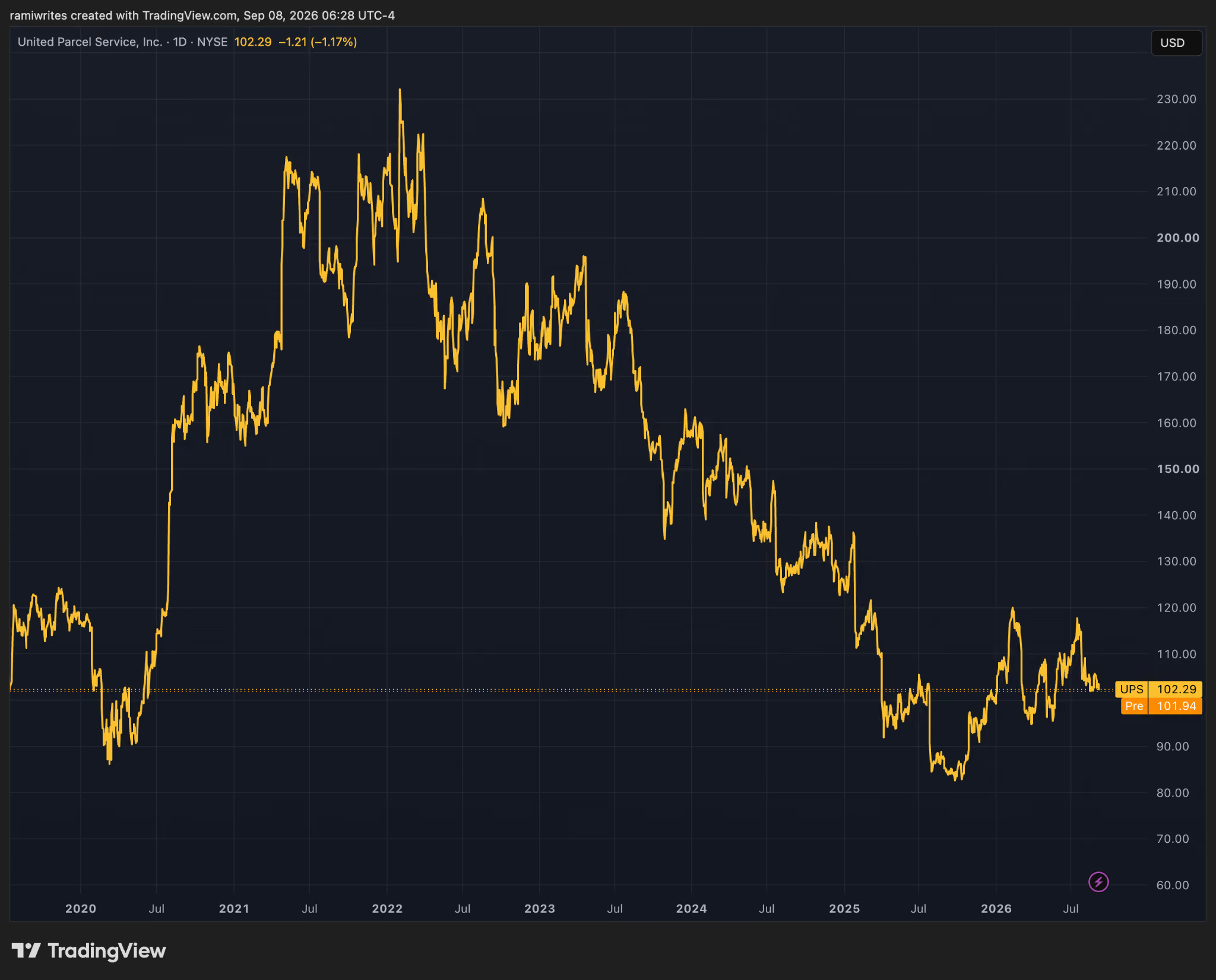
The market’s verdict so far: a stock near $102, about 17% below its February high and a third under where it traded in the pandemic shipping boom, with a dividend yield above 6%.
That yield is the reward for waiting, and it’s also the warning, because the dividend now eats about 90 cents of every dollar UPS expects to earn.
The market prices restructuring pain as permanent damage more often than it should, and the dividend yield is where the mispricing shows.
Today’s guest, Robert Rapier of InvestingDaily, makes the case that this is one of those times.
His piece is next, and after it I’ll show you the one number that settles the question.
Paid Advertisement
Elon Filed Something With the FCC. Then Said Nothing.
No announcement. No tweet. From the loudest man in tech, silence is the signal. James Altucher read the filing, and says what's inside is bigger than Tesla, SpaceX, and X combined, because it solves the one problem holding back the $25 trillion AI race.
His free masterclass breaks down the filing, the plan, and the tickers.

Featured Contributor
Today’s guest is Robert Rapier of Investing Daily. Robert's work has appeared in Forbes, The Wall Street Journal, The Washington Post and the Christian Science Monitor. He has been a featured expert on 60 Minutes and The History Channel.
This Stock is a Screaming Bargain
Sometimes a stock is cheap because the business is deteriorating and deserves a low valuation.
Other times, investors become so focused on what has gone wrong that they are slow to recognize when the situation is beginning to improve. I think the latter may be happening with United Parcel Service (NYSE: UPS).
UPS has spent the past several years dealing with weaker package volumes, rising labor costs, a slowing economy, and the deliberate reduction of business from its largest customer. The stock has reflected all of those concerns, but the latest results suggest the market may now be discounting too much bad news.
United Parcel Service closed the week of August 28 at about $105, well below the levels it reached during the pandemic-era shipping boom and roughly 14% below its 52-week high. At that price, the shares yield more than 6% and trade at roughly 14.5 times management’s expected 2026 adjusted earnings.
That is not the valuation of a company investors expect to deliver much growth.
The question is whether the problems depressing the valuation are permanent or whether UPS is already emerging from the most difficult part of its restructuring.
Walking Away From Bad Business
The biggest change at UPS has been its relationship with Amazon (NSDQ: AMZN).
For years, Amazon was the company’s largest customer and generated enormous package volume, but volume alone does not necessarily translate into attractive profits.
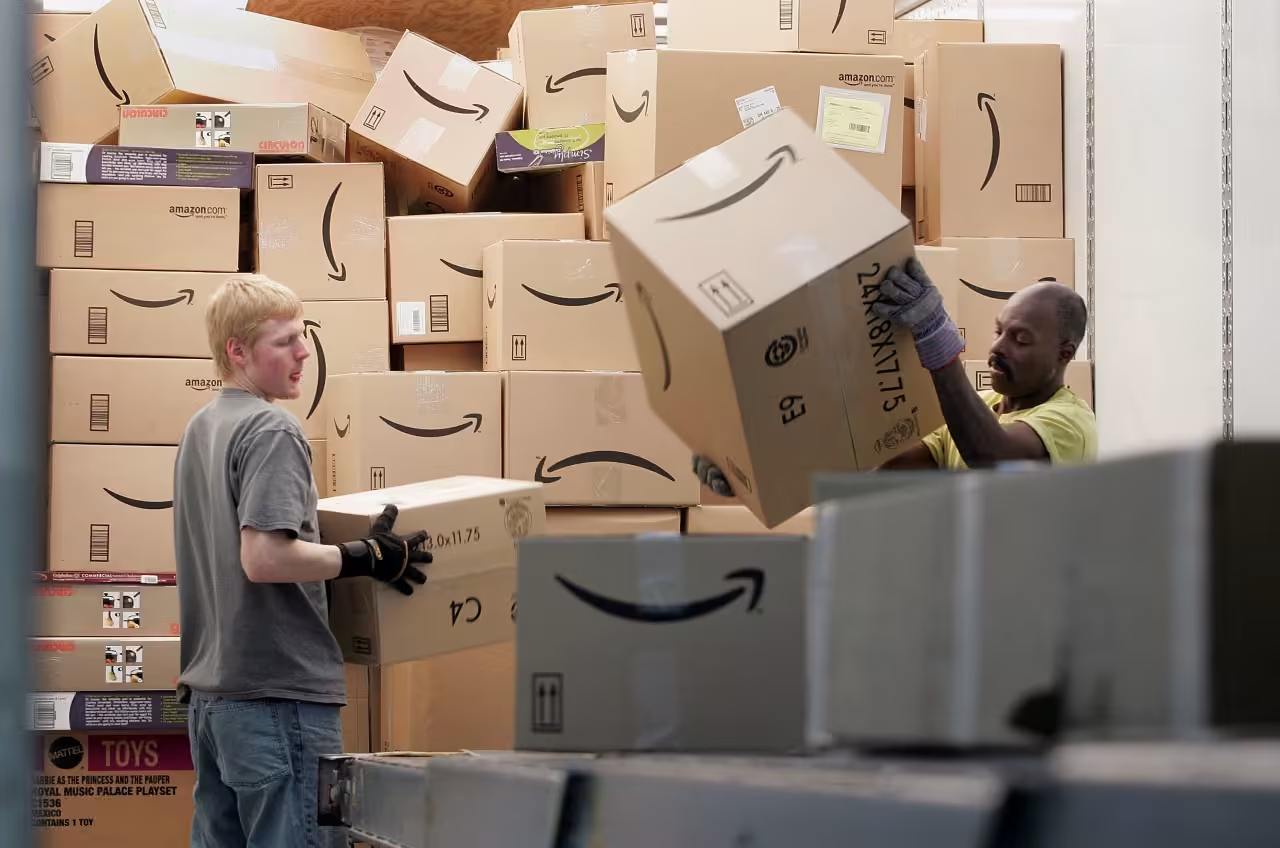
Management concluded that a significant portion of the Amazon business was not generating adequate returns and made the unusual decision to reduce that volume by more than 50% from 2024 levels.
Most companies do not voluntarily surrender large amounts of business from their biggest customer, so the decision understandably worried investors.
UPS is trying to replace that low-margin volume with business that generates better returns. The company has been emphasizing small and midsized businesses, healthcare logistics, international shipping, and other customers willing to pay more for specialized or time-sensitive services.
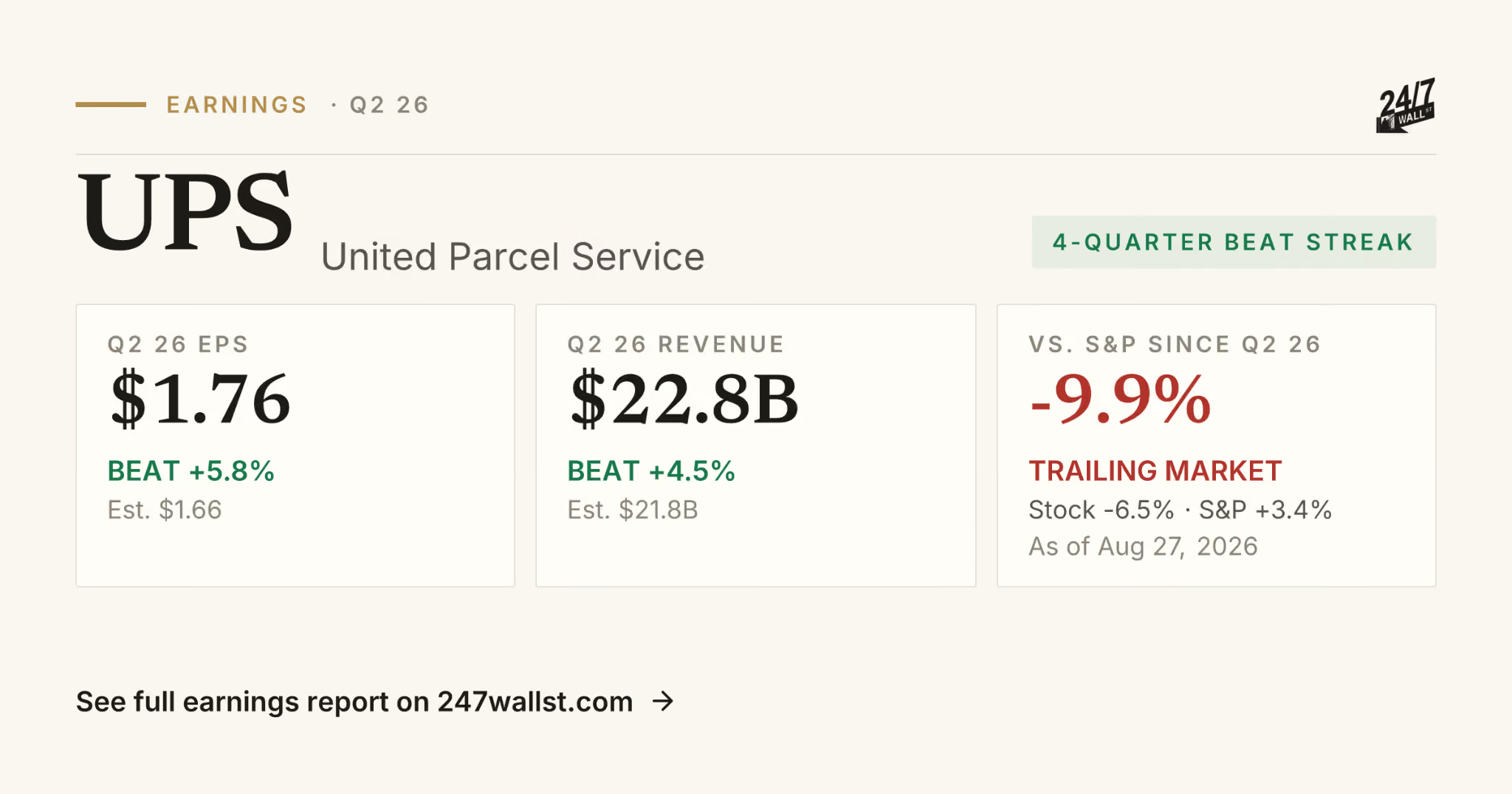
The second quarter provided some evidence that this strategy is gaining traction. Revenue reached $22.8 billion, U.S. domestic revenue increased 6%, revenue per package rose more than 9%, international revenue climbed 12.5%, and Supply Chain Solutions revenue increased nearly 8%.
Perhaps most importantly, management says the major reduction in Amazon volume is now essentially complete. Investors have spent much of the past year watching package counts fall while wondering what UPS would look like after that business disappeared.
We are finally starting to get a clearer picture, and it suggests that fewer packages do not necessarily mean a weaker company if UPS can improve the economics of the packages it does handle.
A Leaner UPS Is Emerging
Giving up millions of packages only makes sense if UPS can also eliminate the costs associated with moving them through its network.
That is why the company has been closing facilities, automating sorting operations, consolidating routes, reducing its workforce, and removing excess capacity.
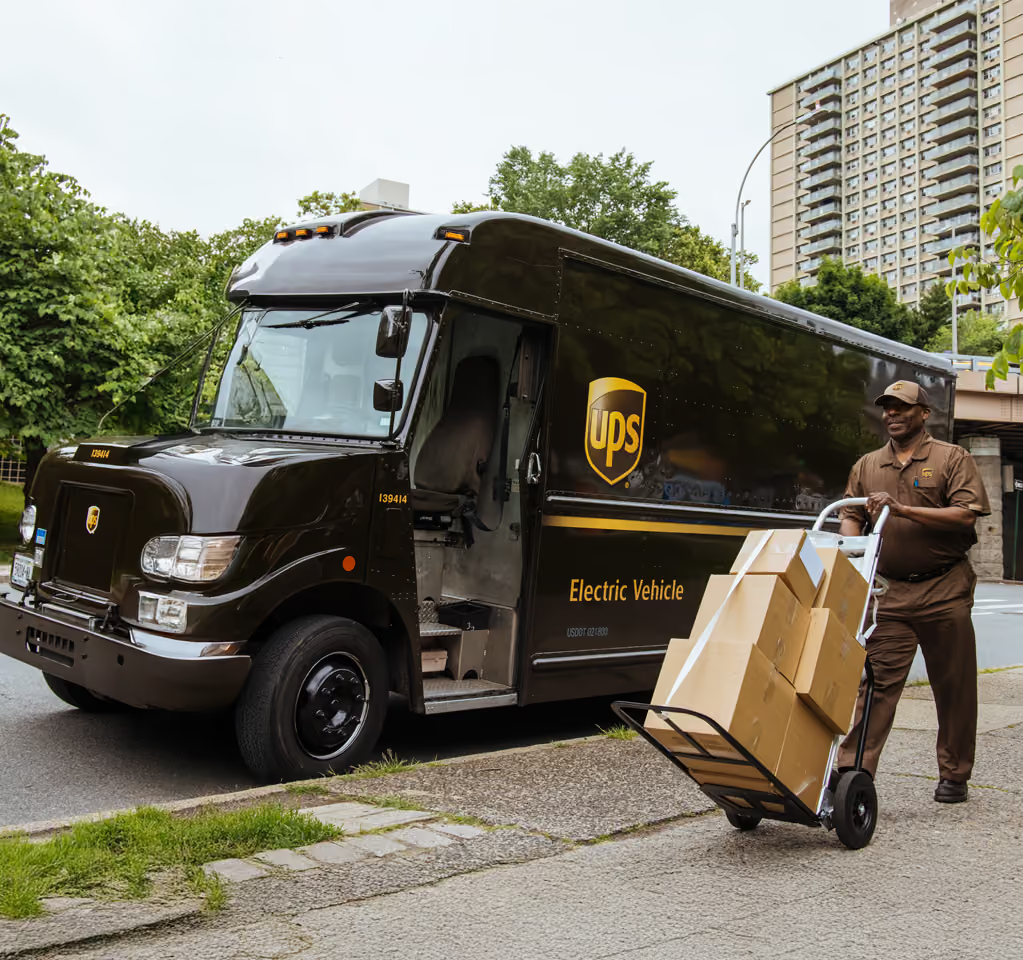
During the first half of 2026 alone, UPS closed operations at 45 buildings, nearly all permanently. Management says its network restructuring and efficiency programs generated roughly $1.2 billion in benefits during the first half and should produce about $3 billion for the full year.
Those changes have been expensive in the short run. Second-quarter GAAP earnings were substantially reduced by restructuring charges, particularly costs associated with employee separations.
That makes the headline earnings numbers look worse than the performance of the underlying business, but those expenses are being incurred in an effort to create a smaller and more efficient network.
If UPS can permanently remove billions of dollars of costs while replacing lower-margin volume with higher-value business, earnings can improve without package volume ever returning to its former peak.
Management appears increasingly confident that this is happening.
Following the second quarter, UPS raised its full-year outlook for revenue, adjusted operating profit, and adjusted earnings per share.
The company now expects approximately $91.2 billion in 2026 revenue and adjusted earnings of about $7.22 per share.
A company facing accelerating deterioration usually does not raise all three of those forecasts at the same time, which is one reason I think investors may be placing too much emphasis on the problems of the past few years and not enough on what the business could look like after the restructuring is complete.
The Dividend Gets Your Attention
The other number that immediately stands out is the dividend. UPS currently pays $1.64 per quarter, or $6.56 annually, which translates into a yield of roughly 6.2% at the current share price.
There are not many globally dominant companies offering that level of income, particularly companies with a long history of returning cash to shareholders.
UPS has maintained or increased its dividend every year since becoming publicly traded in 1999, and management expects to distribute about $5.4 billion in dividends this year.
I would not ignore the warning embedded in that unusually high yield.
Based on management’s current adjusted earnings forecast, the dividend consumes roughly 90% of expected earnings, which is higher than I normally like to see for a cyclical company that must continue investing heavily in its network. The dividend therefore deserves monitoring, especially if the economy weakens materially or the restructuring fails to produce the expected improvement.
What makes the situation more interesting is that earnings may be closer to a trough than a peak. If UPS realizes the expected cost savings and margins recover as lower-quality business leaves the network, dividend coverage should gradually improve without requiring a cut. That is a very different situation from a company whose payout ratio is rising because the underlying business is in permanent decline.
What the Market May Be Missing
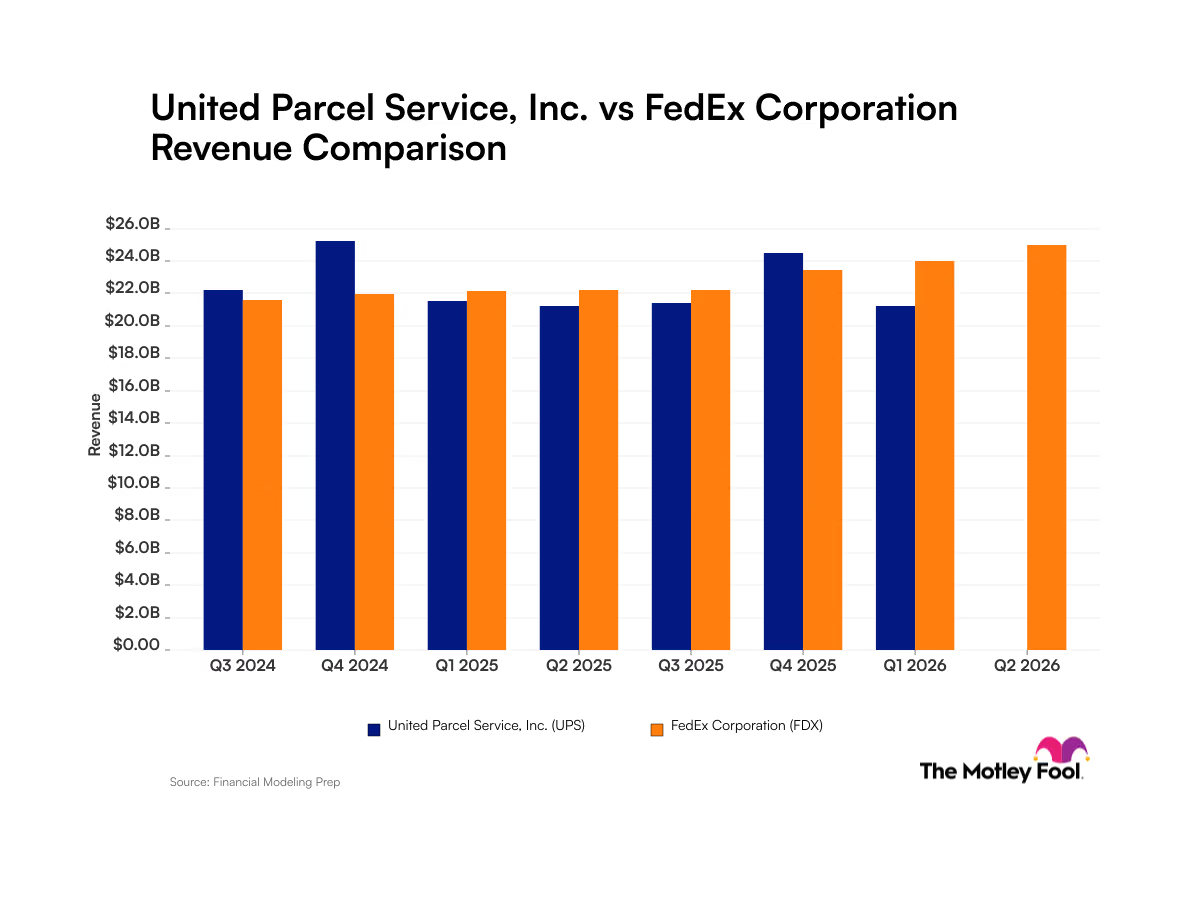
The bearish case for UPS is not difficult to understand. Package shipping remains economically sensitive, Amazon has developed an enormous logistics network of its own, FedEx (NYSE: FDX) remains a formidable competitor, labor costs are high, and global trade remains vulnerable to tariffs and geopolitical disruptions. A dividend yield above 6% is also often the market’s way of signaling that investors see significant risk, and in this case those concerns should not simply be dismissed.
The key question is whether UPS is a permanently impaired business or a strong business working through an unusually painful transition. I lean toward the latter.
None of this guarantees a quick recovery in the shares. An economic downturn could delay the improvement, and I would continue watching both margins and dividend coverage closely. But investors rarely get paid more than 6% a year to wait for a turnaround after every problem has already disappeared. At today’s valuation, the market appears to be assuming that many of the difficulties UPS has experienced over the past several years are permanent.
I think there is a reasonable chance they are not. That is why I think the market may be pricing this stock wrong.
I wrote about UPS because it shows a pattern I've spent my career hunting: the market prices a temporary problem as permanent damage, and the mispricing shows up in the dividend yield. But UPS is one stock. The bigger story is the group it belongs to.
For 20 years, Wall Street ignored America's essential-service companies, the boring, mandated businesses that keep the lights on, the water running, and the grid standing. They moved so slowly the Street nicknamed them "bond proxies" and stopped watching.
The AI boom just changed that. Every data center Microsoft and Nvidia race to build needs power, water, and grid access, exactly what these companies control, much of it by law, and demand is climbing fast. The tortoises are starting to sprint, and Wall Street is only now circling back.
That's the trade I lay out in Utility Forecaster: which essential-service stocks are waking up, which are best positioned to run, and the exact tickers. If you'd like to see the ones I'm holding right now, the full case is here.
Discover the "Essential Service Stocks" Finally Waking Up →
Guest content: the opinions, securities, and performance figures above are Robert Rapier's and Investing Daily’s own, not Future Finance research, advice, or a recommendation to buy or sell any security. Past performance does not guarantee future results. Always do your own research. This piece ran on Sept 1 in Investing Daily. It was edited for length.
Stop Lending Your Bank Money For Free
Your bank pays you close to nothing, then lends that money out at several times the rate and keeps the difference
Battle Bank’s High Yield Cash Account pays 3.35% on cash you can still spend and move. FDIC insured to $250,000 per account holder.
The money was always yours. The yield should be too.
Open a High Yield Cash Account →
Disclosure: Battle Bank is a paid partner of Future Finance. We may receive compensation from Battle Bank if you click on our links and open an account or use certain banking products. This compensation comes at no additional cost to you.
Battle Bank, N.A., Member FDIC. APYs as of 6/16/2026, using ZIP code 32224, and subject to change. Rate comparison as published by Battle Bank.
Signal vs. Noise
Now the number I promised, and two more stories that belong next to it.
A 6% Yield Is the Reward and the Warning
- The noise: “UPS pays 6%. That’s free money while you wait.”
- The signal: a yield climbs because a price falls, so an unusually high one is often the market pricing in a cut. UPS pays $6.56 a share against expected earnings of about $7.22, a payout ratio near 91%. Last year its dividends, about $5.4 billion, ran ahead of the roughly $4.8 billion of free cash it generated.
That’s the pattern that preceded real disasters.
Walgreens suspended a dividend it had paid for 92 years. 3M cut its payout by more than half. Intel stopped paying entirely.
And it’s also the pattern the market gets wrong. Meta fell 64% in 2022 as investors priced its spending as permanent, then gained 178% the next year once margins rose from 25% to 35%.
So the number that settles UPS is coverage: whether free cash flow climbs back above $5.4 billion as the restructuring savings land, and whether the operating margin keeps expanding. It was 9.2% last quarter, up from a year ago. The next reading is late October.
Canada’s Tariffs Started at Midnight

- The noise: two weeks of advance warning turned this into background noise.
- The signal: as of 12:01 a.m., about $20 billion of U.S. goods face Canadian tariffs of 15%, 25%, and 50%, with steel and aluminum at the top rate and dairy, appliances, and farm equipment on the list. Ottawa attached a $7.5 billion (Canadian) support package for its own businesses.
Two reasons it matters this week. Tariffs push prices up, and Friday’s inflation report is the whole argument before the Fed decides. And cross-border parcels are among the most profitable lanes a carrier like UPS runs, so today’s guest piece has a live headwind attached.
Oil is the other price pressure. Brent sits near $97, a six-week high, after the U.S. struck three Iranian tankers over the weekend and Iran fired missiles at two Navy ships. The strategic reserve is at its lowest since 1982.
Bitcoin’s Golden Cross Confirmed. The Price Didn’t Notice.
- The noise: “The golden cross always means a rally.”
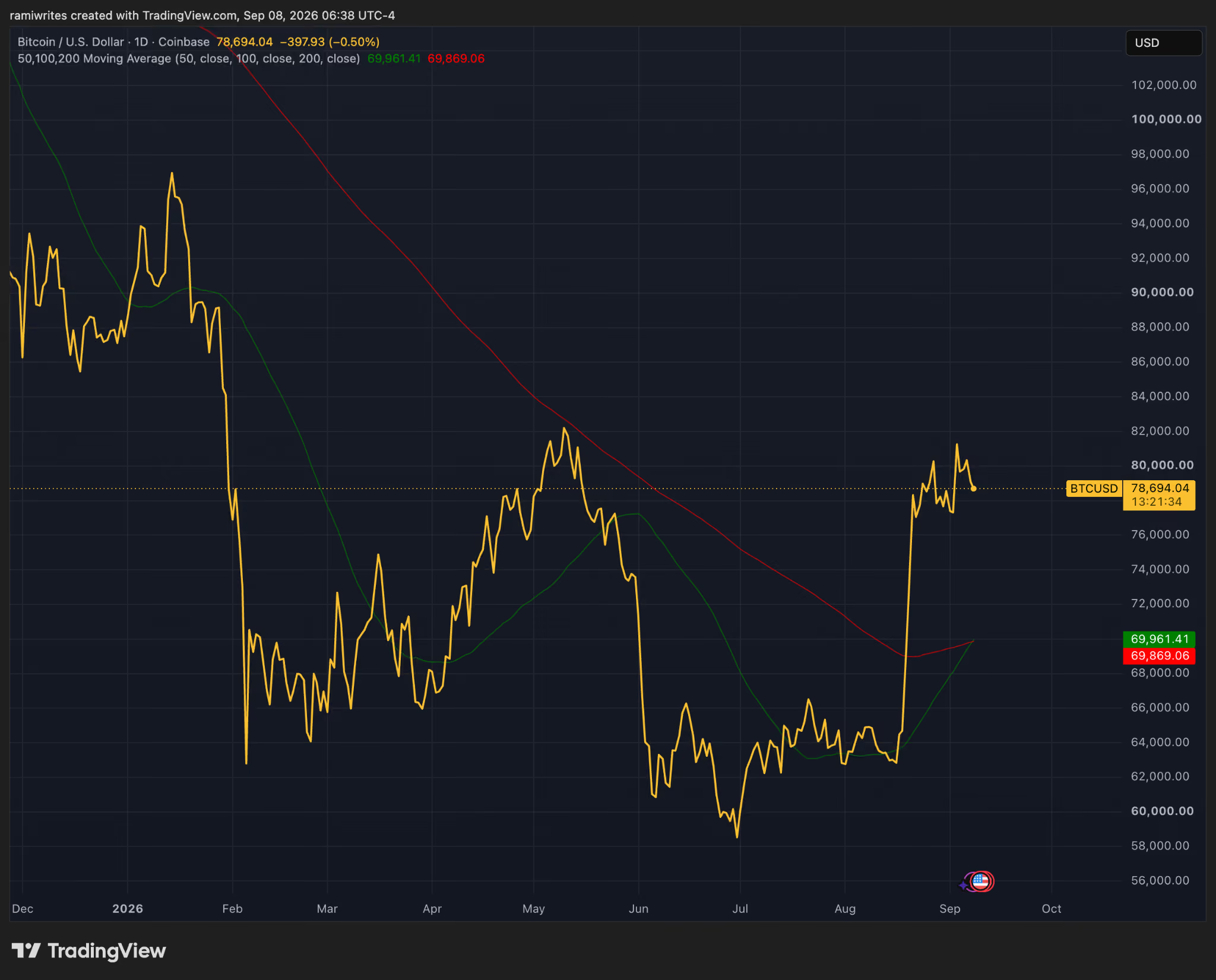
- The signal: the 50-day average crossed above the 200-day this week, the signal chart-watchers have circled since August. Bitcoin marked the occasion by trading near $78,700, still below the $80,000 it lost on Saturday’s jobs report.
The record on this signal is honest, not magical: only three of the last twelve golden crosses since 2012 stayed valid a full year, though the average gain three months later was about 25%. Meanwhile the funds have taken in roughly $3.8 billion over three weeks, their strongest stretch of the year.
Same read as yesterday. Price down, money in, and a Fed that may hike in eight days sitting on top of both.
Final Thought
The most useful sentence in today’s guest piece is the one most readers will skip: investors rarely get paid more than 6% a year to wait for a turnaround after every problem has already disappeared.
That’s true, and so is its shadow. Sometimes the 6% is there because the problems aren’t going to disappear. Only one number tells you which, and for UPS it’s whether the cash covers the dividend by October.
One correction: Sunday’s and yesterday’s issues had Oracle reporting tonight. It reports Thursday after the close. My mistake.
Friday’s inflation number still gets the last word. See you soon.
Editor in Chief | Future Finance
One Subscription. The Entire Gems Uncovered Research Library.
You just read why the surface of the news rarely tells the whole story.
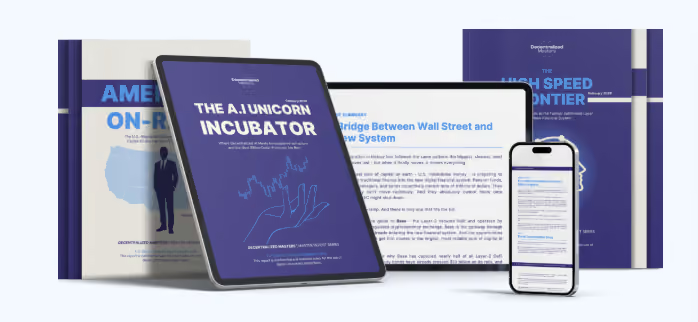
Gems Uncovered is built on that same principle. It’s our weekly research briefing on early-stage assets and native market access, the opportunities that build real wealth before they ever reach a mainstream exchange.
One level beneath the headlines is where the edge lives.
Latest



Editor's Picks

Become a sharper capital allocator in 5 minutes a day.
Institutional-grade research on where the smartest capital is positioning, across AI, energy, biotech, robotics, and digital assets. Distilled into a daily read you finish before your coffee does.
Join 45,000+ readers · No spam · Unsubscribe anytime · No card needed