

$300, and still underwater…
Wall Street says $300. First-day buyers are still red. The IPO game, explained with the biggest IPO in history. →
September 7, 2026
·
8 Min Read



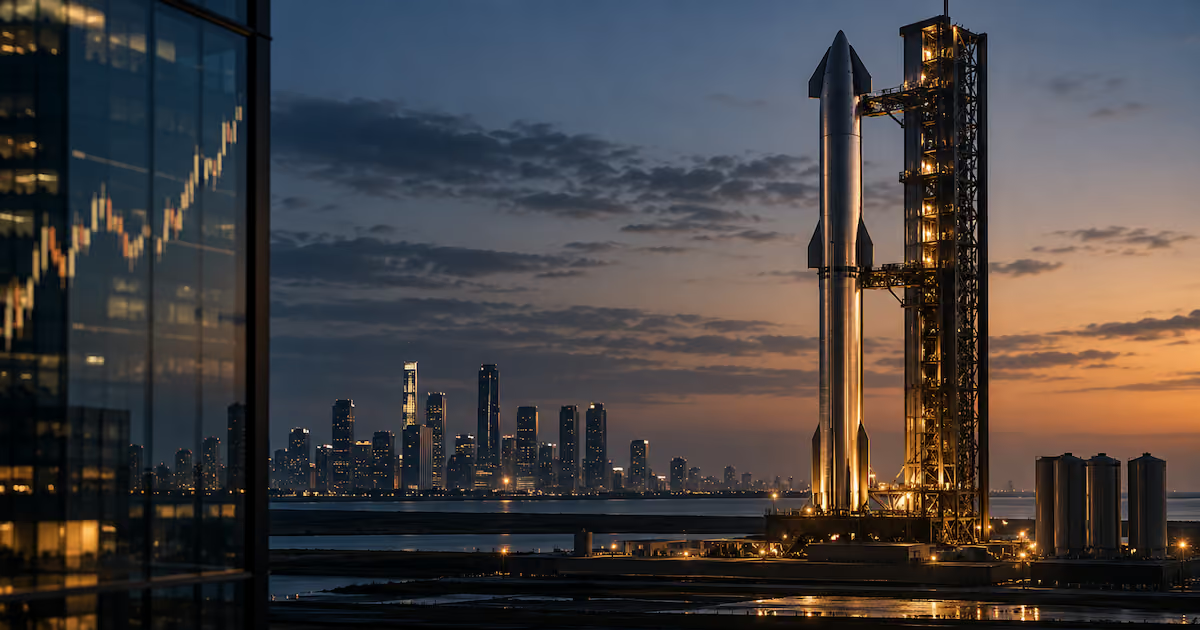
The briefing serious investors read first.
Free analysis before markets open. Start thinking in decades, not days.
Join 45,000+ readers · No spam · Unsubscribe anytime · No card needed
Today’s Big Picture
Markets are closed for Labor Day, which makes this a good morning to read something slowly.
The week behind us ended with a jolt: 162,000 new jobs in August against a forecast near 55,000, July’s loss rewritten as a gain, and the odds of a September rate hike back near two-in-three. Bitcoin lost $80,000 on the news. The Fed can’t say a word about any of it until the 16th.
The week ahead is four trading days and one number: Friday’s inflation report. Everything before it is a warm-up.
So today I’m using the quiet to tell you the truth about the biggest IPO in history, three months on. Morgan Stanley just put a $300 target on SpaceX. That number means four completely different things depending on when you bought, and one of those four is still losing money.
A price target is one number. Your return depends on the price you paid. That’s the whole IPO game, and the lead below walks through it with real figures.

Paid Advertisement
One Stock. Three Potential Trillion-Dollar Spinoffs.
In 2014, Marc Chaikin told his readers to put a big chunk of their retirement money into Nvidia. He says anyone who followed that recommendation is up more than 45,000% at this point.
He now believes he has found an even better retirement stock for the years ahead. The company is sitting on three fast-growing businesses, and each one could be spun off into a separate publicly traded company.
One ticker today could become three tickers tomorrow:
See Chaikin’s new #1 retirement pick here →
Disclosure: MarketWise is a paid partner of Future Finance. The forecasts, track record and claims above are the views of Marc Chaikin / Chaikin Analysis and MarketWise, and do not represent the view of Future Finance. As always, do your own diligence.
Signal vs. Noise
162,000 Jobs, and the Hawks Got Their Number
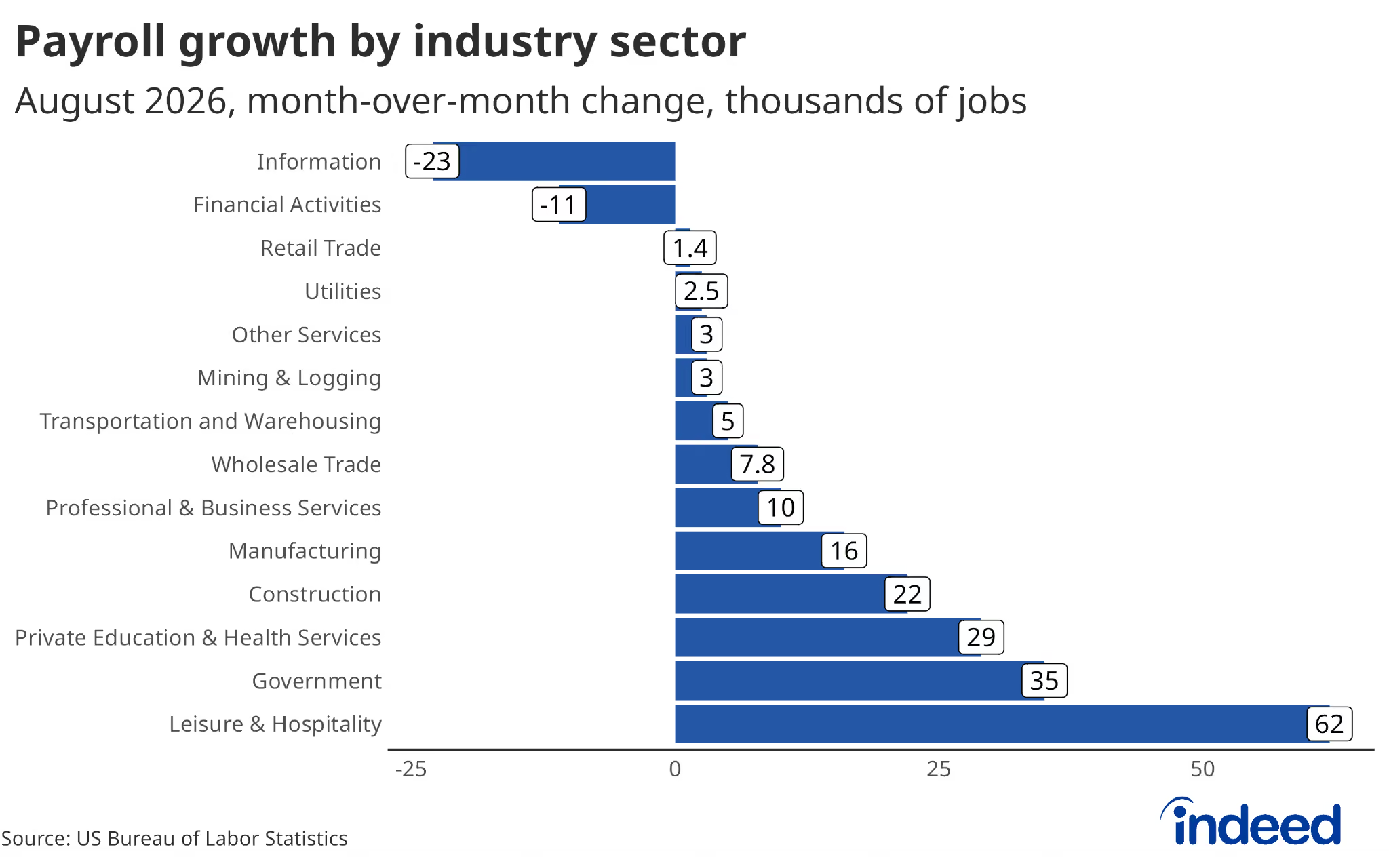
- The noise: three months of “the labor market is cracking” headlines, capped by July’s reported loss of 23,000 jobs.
- The signal: August added 162,000, the strongest month since March, and the previous two months were revised up by a combined 55,000. July’s loss is now a gain of 21,000. Unemployment held at 4.1%.
Remember the rule from last week: the Fed is debating a hike, so strong jobs are the hawkish outcome. Stocks slipped, the two-year Treasury yield climbed to 4.37%, its highest since January 2025, and hike odds for the 16th moved to about 63%.
One Fed governor said before the blackout that August’s inflation report would “heavily influence” his vote. That report lands Friday. Jobs gave the hawks half of what they need.
Bitcoin Fell Below $80,000. The Money Kept Arriving.
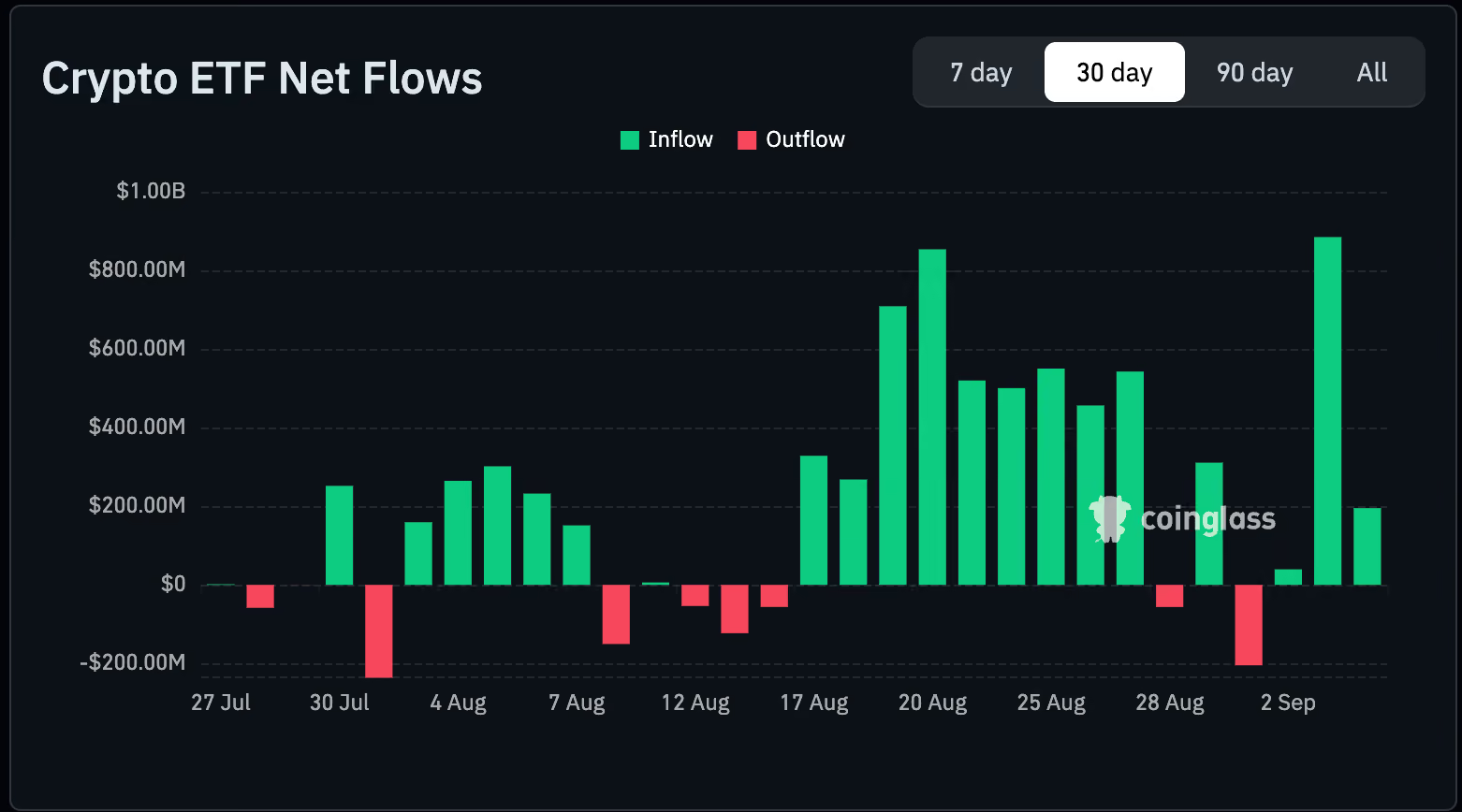
- The noise: “Bitcoin can’t hold $80,000.” It couldn’t, and it slipped to about $79,600 over the weekend on the hot jobs number.
- The signal: the day before, the Bitcoin funds took in $730.8 million, their biggest single day since January. Friday added another $174.6 million. Roughly $770 million for the four days, while the price fell.
Price down, money in. Those two facts together usually mean larger investors are buying the weakness rather than selling into it. Hold both, and watch the mid-$70s: the chart’s next milestone, the 50-day average crossing the 200-day, still needs price to stay there.
Tuesday Opens With a Tariff and Closes With a $638 Billion Question
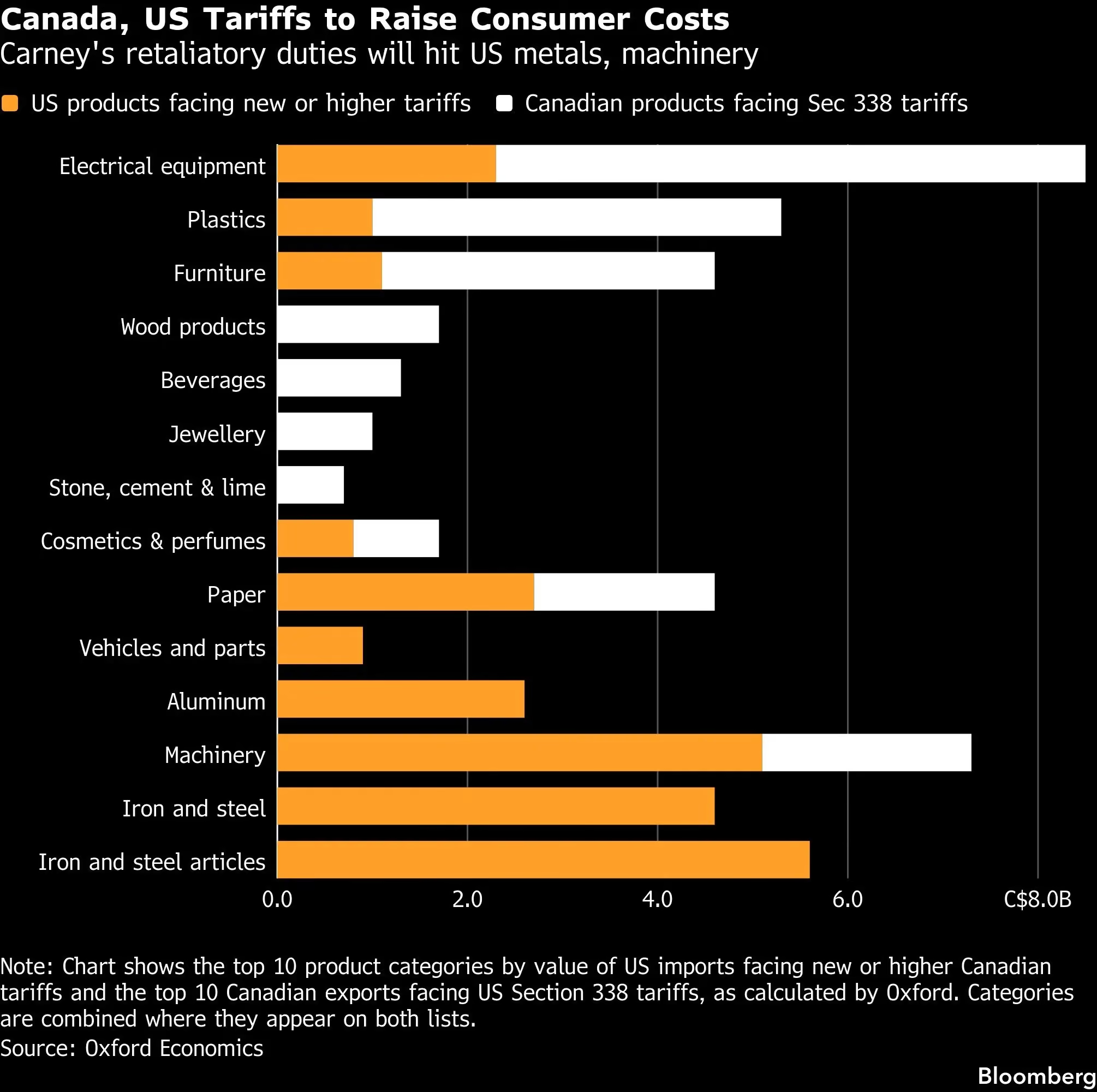
- The noise: Canada’s counter-tariffs have been announced for two weeks, so the market treats them as old news.
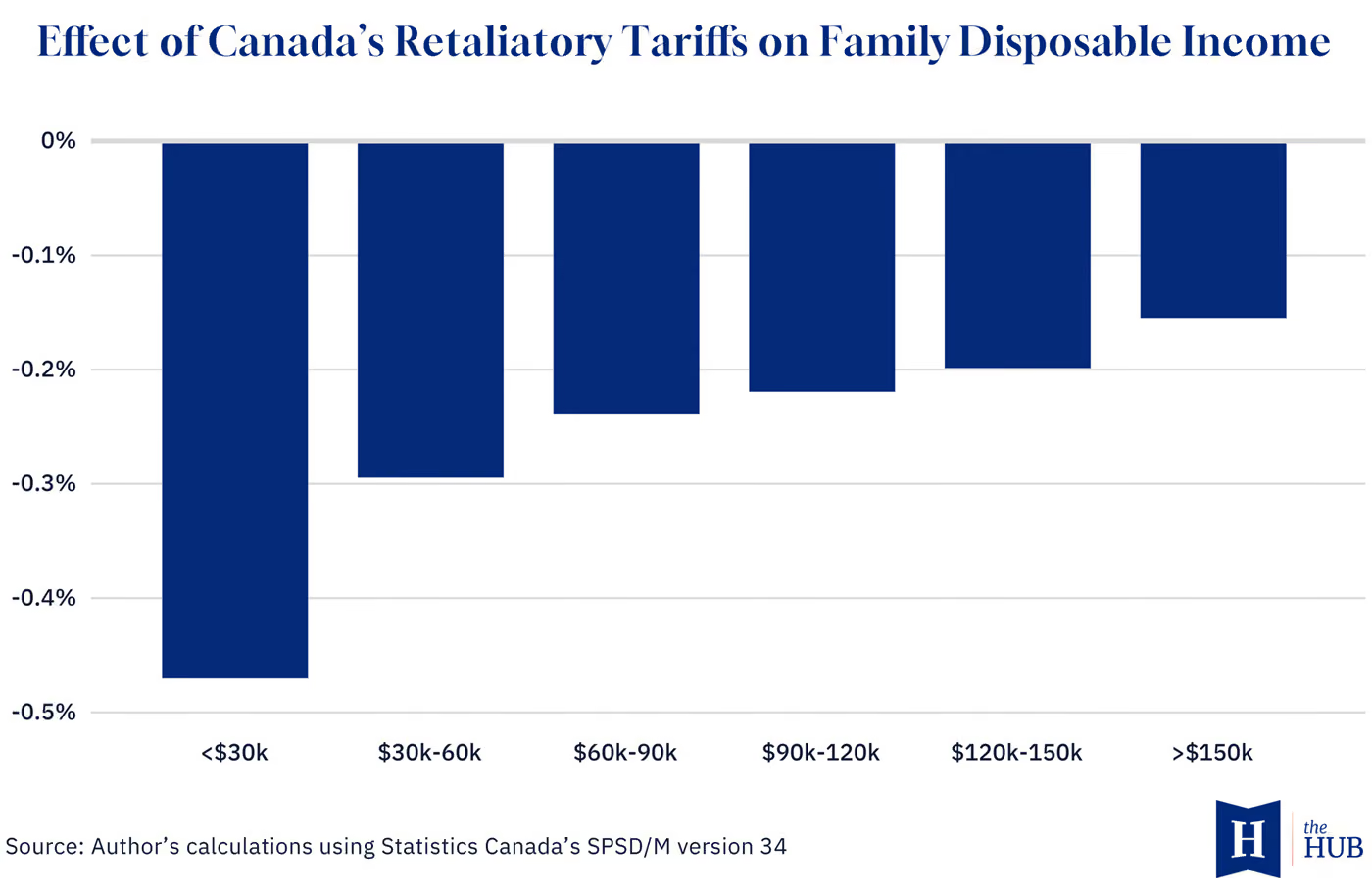
- The signal: they take effect at 12:01 a.m. tomorrow on about $20 billion of U.S. goods at rates of 15%, 25%, and 50%. Steel, aluminum, dairy, appliances, farm equipment.
Goods already in transit are exempt. Tariffs raise prices, and prices are the entire argument this month.
After the close, Oracle (NYSE: ORCL) reports with a backlog of $638 billion, more than half of it reportedly tied to OpenAI. Last week Broadcom beat everything and fell 6% because its guide only matched. The question for Oracle is the same: is the backlog turning into cash fast enough to justify the price?
Featured Lead

Today’s lead is written by me. All SpaceX figures are from Barchart’s September 4 report on Morgan Stanley’s initiation and the company’s IPO filings; nothing here is a recommendation to buy or sell anything.
The IPO Game, Three Months On
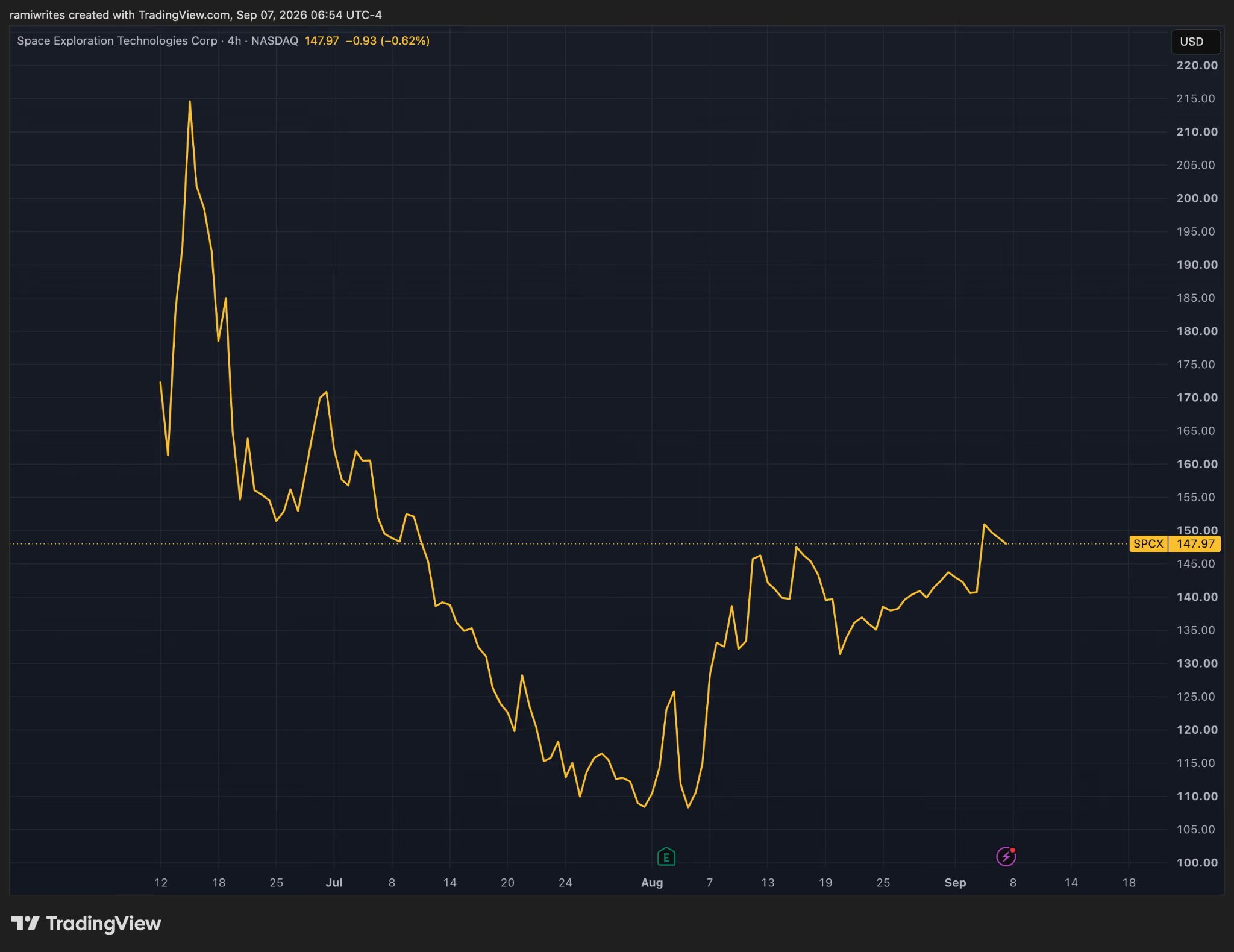
On Friday, Morgan Stanley put a $300 price target on SpaceX (NASDAQ: SPCX). Against the September 1 close of $142.23, that’s a 111% gain. Headlines wrote themselves.
Here is what the headlines left out.
SpaceX went public on June 12 at $135 a share. It closed its first day at $160.95. Four days later it touched $225.64, and it has never been back.
Now run the same $300 target against each of those prices, and a different story forms for each.
- From the $135 IPO price: a gain of 122%.
- From the $160.95 first-day close: a gain of 86%.
- From the $225.64 peak: a gain of 33%.
- From the $142.23 September 1 close: a gain of 111%.
Same target. Four different stories. And the people in the second and third rows are still underwater today, waiting for a Wall Street price target just to get back to even.
Who got $135
Here’s the part of the IPO game nobody puts on the poster. The $135 price went to the people who were allocated shares before trading began. SpaceX set aside about 30% of the offering for retail, more than most IPOs, but retail orders reportedly topped $100 billion against a fixed pool of shares.
Most people who asked for shares got a fraction of what they wanted, or nothing. Then they did what rationed buyers always do: they bought at the open, near $150, or into the excitement at $160, $176, and eventually $225.
“Retail access” and “retail got the IPO price” are not the same thing. The allocation is the game. The pop is what’s left for everyone else.
This is not new, and it is not a law
Jay Ritter, the University of Florida professor who has tracked every U.S. IPO since 1980, puts the average first-day pop at 19%. His most cited finding is what happens next: measured from the first-day close, IPOs have historically fallen behind comparable companies over the following three years.
Facebook offered at $38 and touched $17.73 within four months. Alibaba closed its first day at $93.89 and traded near $54 a year later. Uber and Rivian first-day buyers spent a year or more in the red.
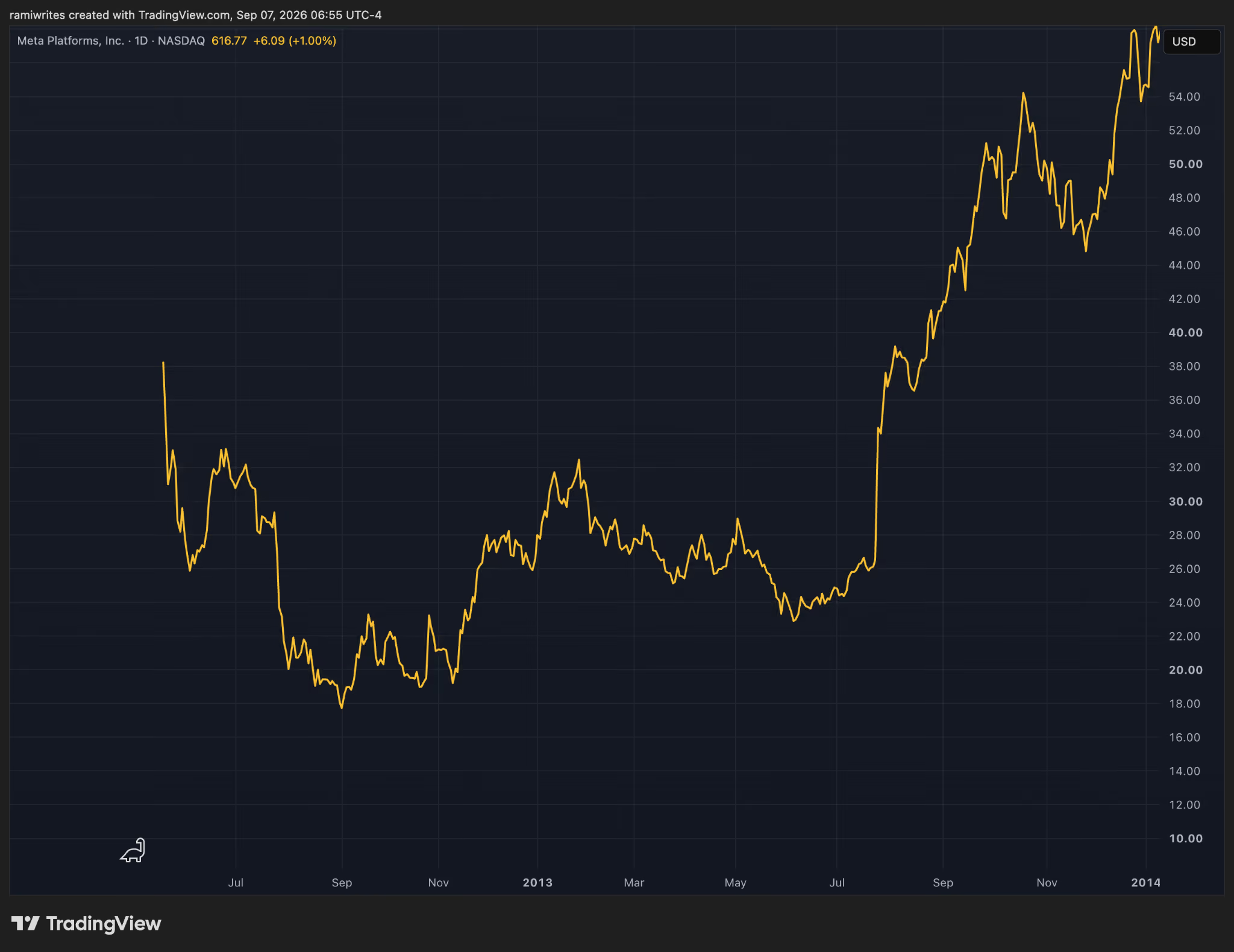
And then there’s the other column. Arm and Reddit first-day buyers were up more than 100% a year later. CoreWeave went nowhere for months, then tripled.
So the lesson isn’t “never buy a new stock.” The lesson is that the price you pay decides which column you land in, and the pop is often the most expensive price there is for a long time.
What $300 is really a bet on
Read Morgan Stanley’s math and something jumps out: more than half of the $300 comes from SpaceX’s AI business, the orbital computing plan. Rockets and Starlink alone get you to roughly $127 a share. That segment did $2.6 billion of revenue last quarter, up 247%.
Morningstar, looking at the same company, puts fair value near $62 a share. One firm sees a triple. Another sees a stock worth less than half its IPO price.
The gap between them is one question: whether computers in orbit become a business this decade.
That question runs through an FCC filing SpaceX made in January, which James Altucher has been writing about all week. His free masterclass makes his case for what the filing means. Read it with today’s table in mind: the story can be right and the price can still be wrong, depending on which row you’re in.
One more date for the calendar. Insider lock-ups on SpaceX shares expire in stages, with Musk’s own shares locked until next June. Every unlock is more supply meeting the same demand.
Rationed buyers rarely think about that on day one. They think about it in month twelve.
- Rami
Elon Filed Something With the FCC. Then Said Nothing.
No announcement. No tweet. From the loudest man in tech, silence is the signal. James Altucher read the filing, and says what’s inside is bigger than Tesla, SpaceX, and X combined, because it solves the one problem holding back the $25 trillion AI race.
His free masterclass breaks down the filing, the plan, and the tickers.
Disclosure: Paradigm Press is a paid partner of Future Finance. The forecasts and claims above are James Altucher’s / Paradigm’s, not Future Finance research or advice. As always, do your own diligence.
What to Watch For
- Tuesday: Canada’s counter-tariffs at 12:01 a.m. Oracle after the close, with its $638 billion backlog under the microscope.
- Wednesday: the Treasury’s first enlarged buyback of its own long bonds, at least $4 billion, on the same afternoon it auctions new 10-year notes. Apple’s iPhone event at 1 p.m., the first under CEO John Ternus.
- Thursday: producer prices and jobless claims at 8:30 a.m., the 30-year bond auction at 1 p.m., and Adobe after the close.
- Friday, 8:30 a.m.: the August consumer inflation report. July ran 3.4% with core at 2.5%; consensus is 0.3% on the month for both. This is the number the Fed reads last.
- Circle: September 15, the Senate’s crypto vote and the earliest date for Starship’s next flight. September 16, the Fed decides. September 21, Europe’s tokenized settlement goes live.
Final Thought
Every IPO produces two groups of people who own the same stock and tell completely different stories about it. The difference is one line on a brokerage statement: the price they paid.
That line is the only number in investing you fully control. Targets, backlogs, and filings belong to other people. Your cost basis belongs to you.
Friday’s inflation report decides the Fed’s hand. Until then, enjoy the day off.
See you soon.
Editor in Chief | Future Finance
The Next IPOs Won’t Let You In Like SpaceX Did.
Anthropic and OpenAI are next, together worth about $1.8 trillion. But by the time their shares reach you, the early run will already be over.
Gems Uncovered tracks the early-stage assets and native access plays that let you get positioned before the crowd shows up, and hold them yourself.
Get Gems Uncovered →
Disclaimer: This content is not financial advice, it is for informational purposes only. All investments involve inherent risk. Any financial decisions you make are solely your responsibility.
Latest



Editor's Picks
Become a sharper capital allocator in 5 minutes a day.
Institutional-grade research on where the smartest capital is positioning, across AI, energy, biotech, robotics, and digital assets. Distilled into a daily read you finish before your coffee does.
Join 45,000+ readers · No spam · Unsubscribe anytime · No card needed