

The promise CEOs made before diesel hit $6.53…
Earnings season starts now, and the report card matters less than the note about next quarter. Plus: a new Sunday feature for earnings season. →
October 7, 2026
·
5 Min Read




The briefing serious investors read first.
Free analysis before markets open. Start thinking in decades, not days.
Join 45,000+ readers · No spam · Unsubscribe anytime · No card needed
Today’s Big Picture
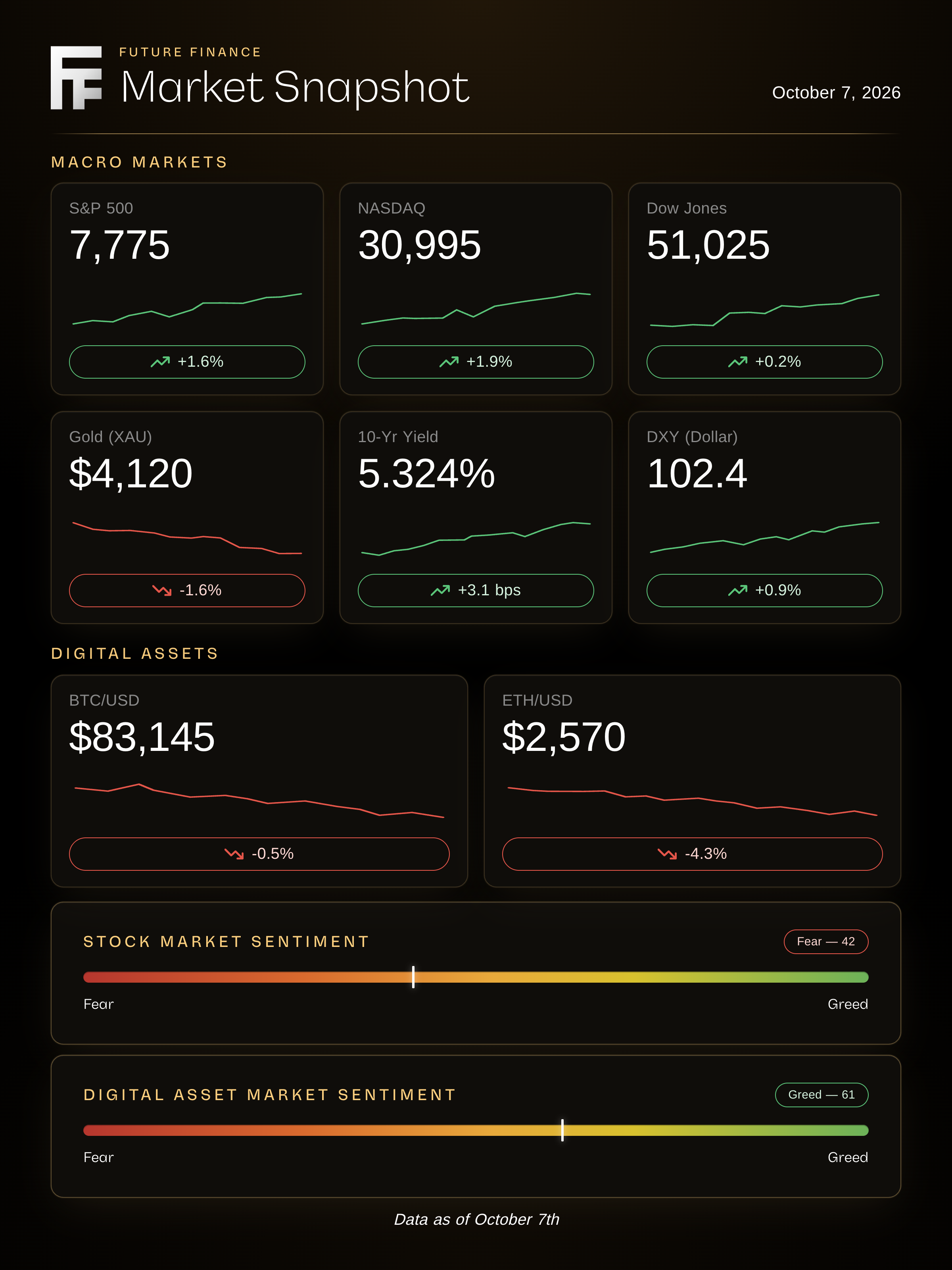
Every quarter, America’s biggest companies hand in a report card. This season starts with PepsiCo on Thursday and Delta on Friday, and the big banks follow next Tuesday.
Most headlines will grade the report card itself. The market grades the note about next semester: guidance, what management expects for the months ahead.
This season the note comes with a twist. Over the summer, companies guided up at a near-record pace. Then diesel hit a record and the 10-year yield climbed to its highest since 2002, after those promises were made.
The question for the next six weeks is whether companies can keep promises they made before their costs went up.
Frank Curzio explains below why that could get ugly.
So starting this Sunday, you get the syllabus before the exams. The Earnings Ahead will preview every major company reporting in the week ahead: what Wall Street expects, what the company promised last time, and the one line to listen for.
It runs every Sunday from here on, and the standouts get their own write-up during the week, once the grades are in.
Advertisement
The Next Crisis Won’t Destroy Wealth. It Will Simply Change Hands.
A severe financial crisis does not make the world’s real wealth disappear. The businesses, land, natural resources, commodities, and productive assets still exist. What changes is who owns them.
Doug Casey believes the United States is approaching upheaval unlike anything most investors have experienced. Government debt is approaching $40 trillion. Washington spends roughly $2 trillion more each year than it takes in.
The turmoil ahead could destroy years of savings for millions of Americans. For others, it could become the opportunity of a lifetime.
Casey and David Stockman, Reagan’s former budget director, have released an urgent briefing on how to position before the transfer.
Disclosure: The forecasts, track record and claims above are the views of Doug Casey, David Stockman and International Man, and do not represent the view of Future Finance. As always, do your own diligence.
Signal vs. Noise
Companies Guided Up Before the Bills Came
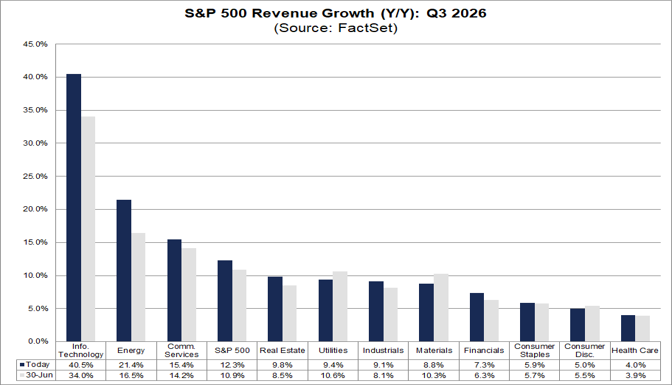
- The noise: Wall Street expects S&P 500 earnings to grow about 29% from a year ago, per FactSet.
- The signal: how high companies set their own bar. Of the 116 that issued third-quarter guidance, 72 guided up and 44 guided down. That 62% positive share compares with a five-year average of 40%, and analysts raised their estimates during the quarter, when they usually cut them.
Most of those promises came in July and August, before diesel and yields jumped, and 44 of the 72 upbeat guiders are technology companies. For beginners: a high bar set in calm weather is the easiest kind to trip over.
Delta Is the First Fuel Test
- The noise: PepsiCo reports Thursday morning and gets the first headlines of the season.
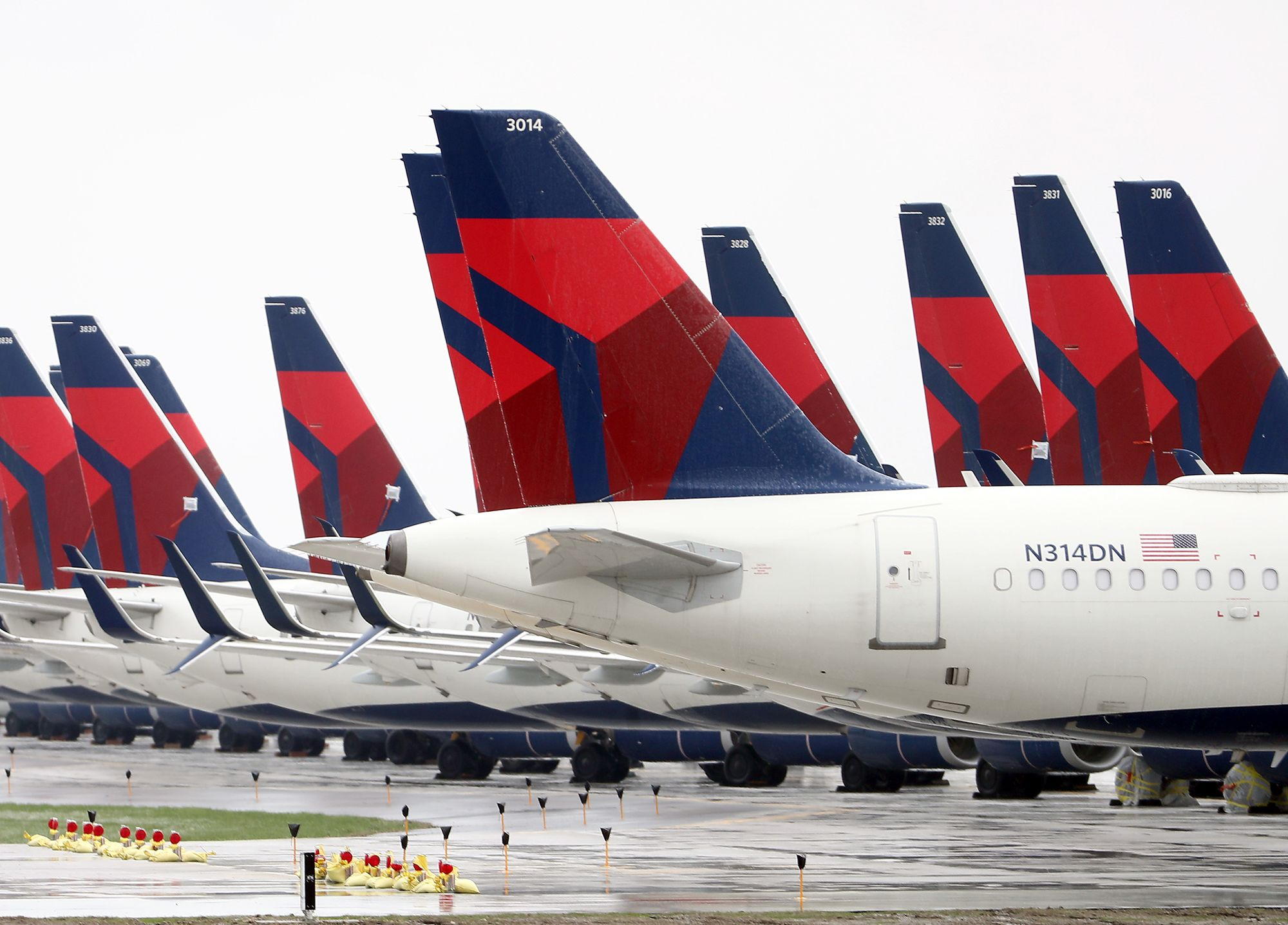
- The signal: Delta on Friday. In July it guided to $2.00 to $2.50 a share for this quarter, assuming jet fuel near $3.15 a gallon. Analysts have since slipped to about $1.88, below Delta’s own range.
Those are analysts cutting, so Friday shows whether the company agrees. We saw the same pattern last week when Nike paired a profit beat with a gloomy forecast for the year, and the forecast is what moved the stock.
Nike’s problem was weaker demand. Delta’s is a fuel bill that rose after the promise was made, which makes it the cleaner test of Frank Curzio’s thesis.
The Auctions Are the Other Earnings Report
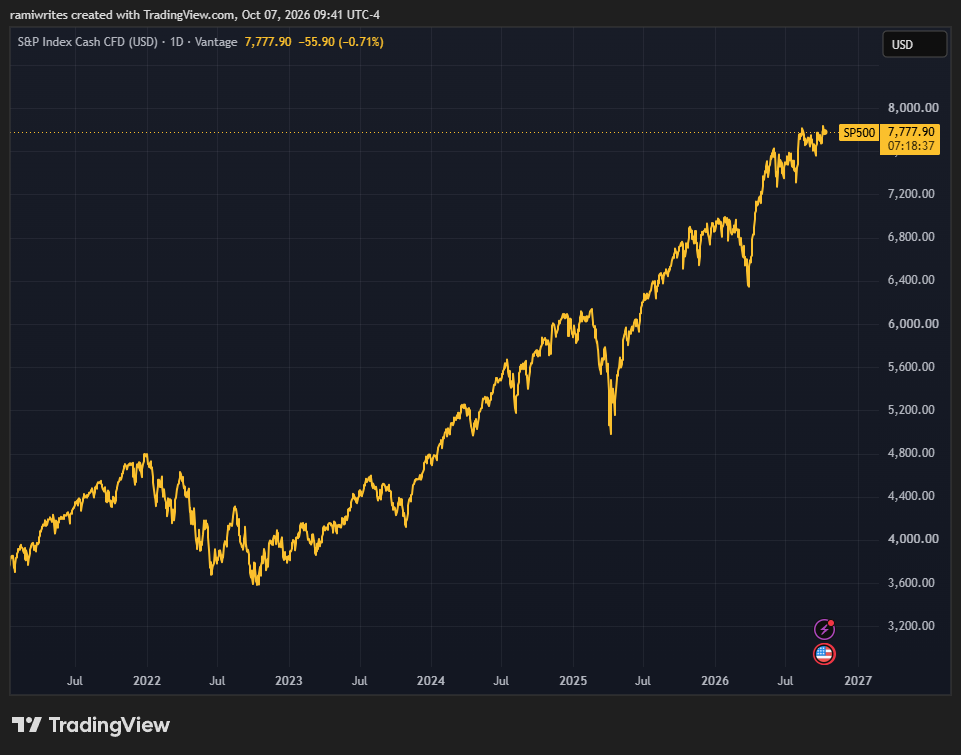
- The noise: the S&P 500 closed above 7,800 for the first time Tuesday, a record 7,818.93.
- The signal: the government’s own report card on demand for its debt. Tuesday’s three-year note auction cleared at 4.932%, an in-line result. Today brings $39 billion in 10-year notes at 1 p.m., and $22 billion in 30-year bonds follows Thursday.
At 2 p.m. the Fed releases the minutes of its September meeting, where it raised rates for the first time since 2023. Traders put roughly a one-in-five chance on another hike October 28, and still lean toward one by December.
Why it matters for earnings: the 10-year sets the borrowing cost Frank Curzio flags below. A weak auction pushes that yield higher before most companies have reported, and it raises the bar for every forecast still to come.
Featured Contributor

Today’s guest is Frank Curzio of Curzio Research who last wrote here about AI spending as the economy’s shock absorber. Frank spent five years helping CNBC’s Jim Cramer find ideas for Mad Money and the Action Alerts Plus portfolio, launched two newsletters at Stansberry Research, and hosts Wall Street Unplugged, ranked the No. 1 “most listened-to” financial podcast on iTunes. His piece ran Tuesday on the Curzio Research site; we’ve updated it for today and checked it against EIA, BLS, FactSet and Treasury data.
Nothing here is a recommendation.
Why Q3 Earnings Season Could Get Ugly Fast
Third-quarter earnings season kicks off this week with PepsiCo and Delta, and shifts into high gear next week when the big banks report. Most investors will be watching whether companies beat their numbers.
But we’re watching something else: guidance.
You see, when a company reports earnings, it shares results for the last three months. Those numbers are already old, because the books usually close a few weeks before the report.
But stocks trade on the future. A company can beat every estimate and still get crushed if the CEO says the next three months look weak.
And right now, companies are battling a couple of significant headwinds that are making the future look murky.
Two costs that CEOs didn’t see coming
Over the past few months, two major business costs have risen significantly.
The first is borrowing. The 10-year Treasury yield, which sets the tone for mortgages, car loans, and corporate debt, topped 5.3% last week and hit about 5.35% on Monday, its highest level since 2002.
The bond market felt it. The largest U.S. bond index funds fell about 2.6% in September, their worst month in four years.
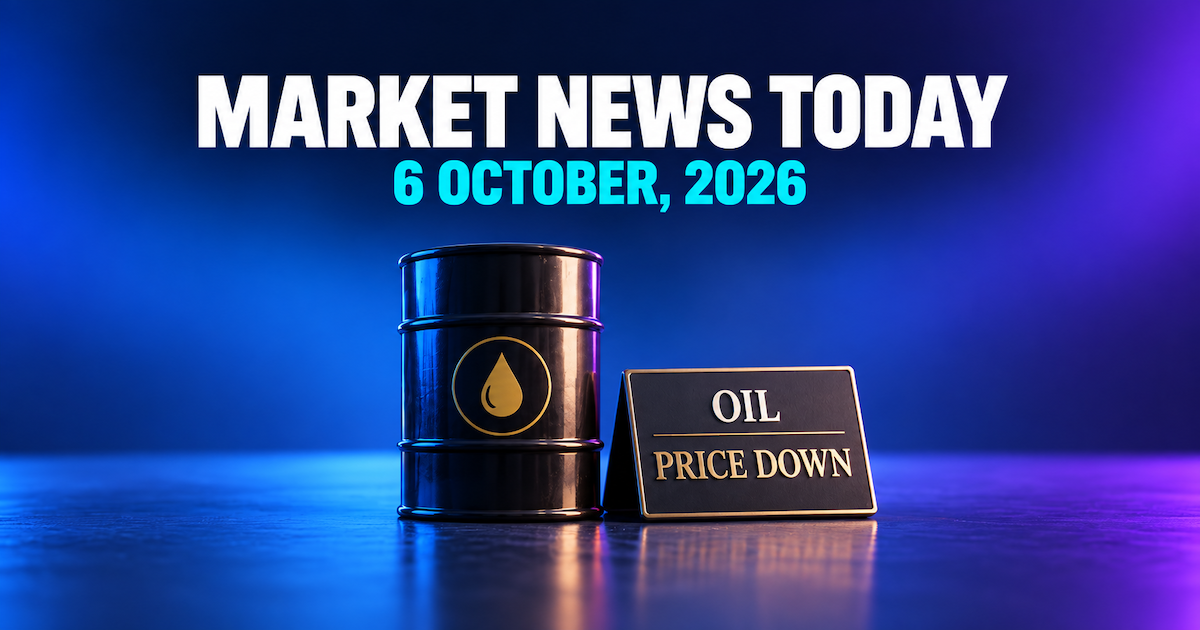
The second is diesel. Diesel moves the trucks, trains, and ships that carry almost everything we buy. So when prices climb, nearly every business feels it one way or another.
The national average diesel price hit a record $6.53 a gallon in late September. Even after easing to about $6.20, it’s still up about 16% since early August.
Prices are high enough that President Trump signed an executive order Monday aimed at bringing them down.
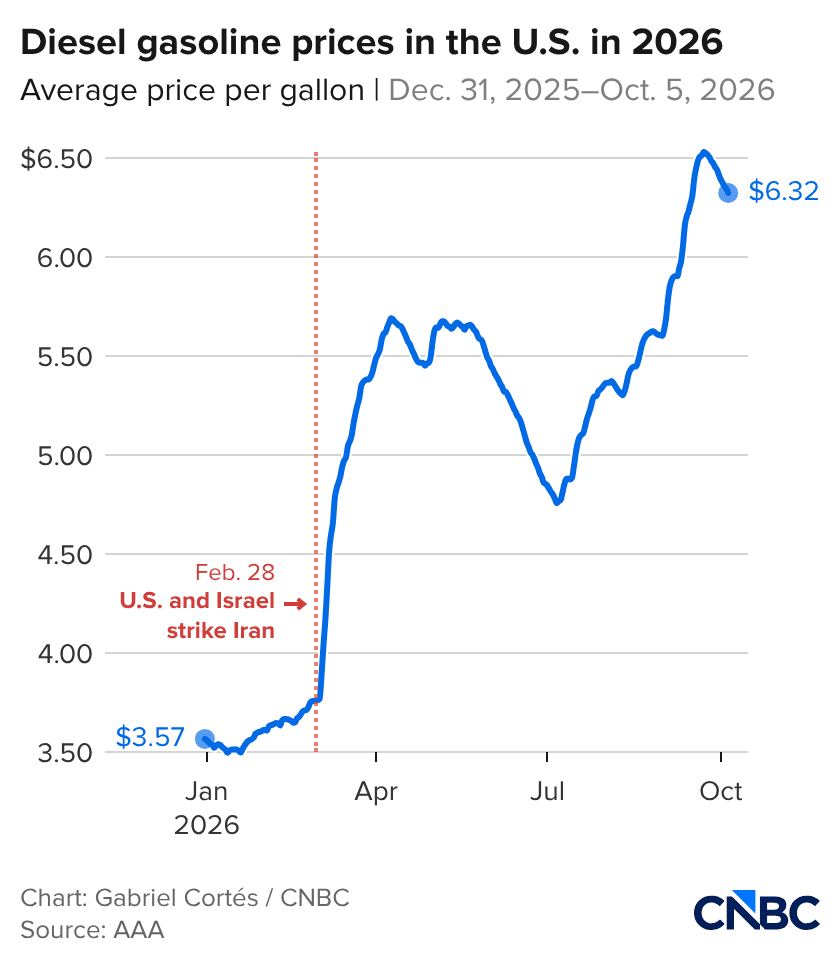
The timing added another layer of complexity: costs jumped mid-quarter, after CEOs had already set their outlooks.
That leaves management teams with two choices: absorb the higher costs and cut earnings forecasts, or raise prices.
The problem is that raising prices takes pricing power, the ability to charge more without losing customers. And consumers have less room to absorb another round of increases.
Inflation has now outpaced wage growth for five straight months, the first such stretch since 2023.
Simply put, many management teams could find themselves under pressure to lower their forecasts. And for stocks already priced for strong growth, even a modest guidance cut could trigger a sharp selloff.
How to prepare
All of this adds more risk to a few specific areas heading into earnings calls, especially stocks trading near their 52-week highs:
- Companies with heavy transportation and logistics costs, including retailers, food producers, and restaurants
- Consumer-sensitive businesses like travel and discretionary retail
- Highly leveraged companies and rate-sensitive sectors
- Housing-linked businesses exposed to higher financing costs
That doesn’t mean investors should sell everything ahead of earnings. But this is a good time to be selective, and to keep some cash available.
If higher costs force companies to cut their outlooks, some great businesses could suddenly trade at much more attractive prices.
- Frank Curzio
Curzio Research
Advertisement
Gold Investors Focus on the Wrong Number
The price of gold gets plenty of attention. The cost of owning it often gets considerably less.
Premiums, storage costs, account fees and other expenses can add up, leaving investors with less money actually invested in the metal they wanted to own in the first place.
Battle Bank’s Unallocated Metals Account offers a streamlined way to own gold, silver, platinum and palladium without account fees, storage fees or traditional minting premiums. Client ownership is backed by physical metal held in custody rather than a leveraged paper structure.
For investors looking to keep costs down while understanding exactly what stands behind their position, Battle Bank offers a simpler way to put precious metals to work.
See a Smarter Way to Own Precious Metals →
Precious metals are not FDIC insured, are not bank guaranteed, and are subject to market risk, including possible loss of principal.
Battle Bank, N.A., Member FDIC. APYs as of 6/16/2026, using ZIP code 32224, and subject to change. Rate comparison as published by Battle Bank.
Final Thought
A report card tells you how the last semester went. The teacher’s note tells you whether to worry about the next one, and for the next six weeks, that note is where the money moves.
When you read an earnings headline this season, look past the beat or miss to three things: whether the company raised, held or cut its forecast; whether it says it can raise prices; and how often fuel, freight or interest costs come up on the call.
Those three questions are the backbone of The Earnings Ahead. The first one lands this Sunday, led by the big banks, who report Tuesday and Wednesday and will tell us what 5% borrowing costs are doing to their customers.
Tomorrow, the Fed’s minutes and how the 10-year auction went. See you then.
Editor in Chief | Future Finance
The Public’s Buying The Robot. The Smart Money’s Buying The Power Cord.
Every investor can name the big AI companies. Far fewer are looking at what makes them run.
The largest gains in a build-out like this often come from the layer underneath the story, the power and the infrastructure most people ignore.
Finding those overlooked plays before the crowd is the whole job of Gems Uncovered.
The crowd buys the headline. The edge is in what powers it.
Disclaimer: This content is not financial advice, it is for informational purposes only. All investments involve inherent risk. Any financial decisions you make are solely your responsibility.
Latest


Editor's Picks


Become a sharper capital allocator in 5 minutes a day.
Institutional-grade research on where the smartest capital is positioning, across AI, energy, biotech, robotics, and digital assets. Distilled into a daily read you finish before your coffee does.
Join 45,000+ readers · No spam · Unsubscribe anytime · No card needed