

One year ago today, Bitcoin hit $126,210…
Everyone remembers the top and today’s price. Tan Gera on the 268 days in between, and what his plan did while they happened. →
October 6, 2026
·
5 Min Read



The briefing serious investors read first.
Free analysis before markets open. Start thinking in decades, not days.
Join 45,000+ readers · No spam · Unsubscribe anytime · No card needed
Today’s Big Picture
A year ago today, Bitcoin traded at $126,210, the highest price it has ever reached.
This morning it sits near $85,600. That’s 32% below the record and about 48% above the low it hit on July 1, near $57,700.
Most people will remember this year by those two numbers, the top and today. But the part that decides how anyone comes out of a drawdown is everything in between.
The middle of a drawdown is where plans get tested, and where most people abandon theirs.
Tan Gera has been grading his own plan in public since the slide began, including the scoreboard he walked through last month. Today he looks back at the full year: the move he made late, the order that filled on the worst day, and the misses he wrote down along the way.
Why Are Retirement Investors Looking Beyond Wall Street?
Traditional retirement accounts tend to offer investors a familiar menu of stocks, bonds and mutual funds. For many investors, that may be enough. For others, it can feel unnecessarily limiting.
A Checkbook IRA gives eligible investors greater control over how their retirement capital is deployed, with access to a broader range of alternative investments, including real estate, private equity, private debt, cryptocurrency and precious metals.
That flexibility can allow investors to pursue opportunities beyond the traditional brokerage menu and act when those opportunities arise.
For investors who have spent years building retirement capital, having more say in where it can go may be just as important as how much they have accumulated.
Discover Greater Control With a Checkbook IRA →
Battle Bank, N.A., Member FDIC. APYs as of 6/16/2026, using ZIP code 32224, and subject to change. Rate comparison as published by Battle Bank.
Signal vs. Noise
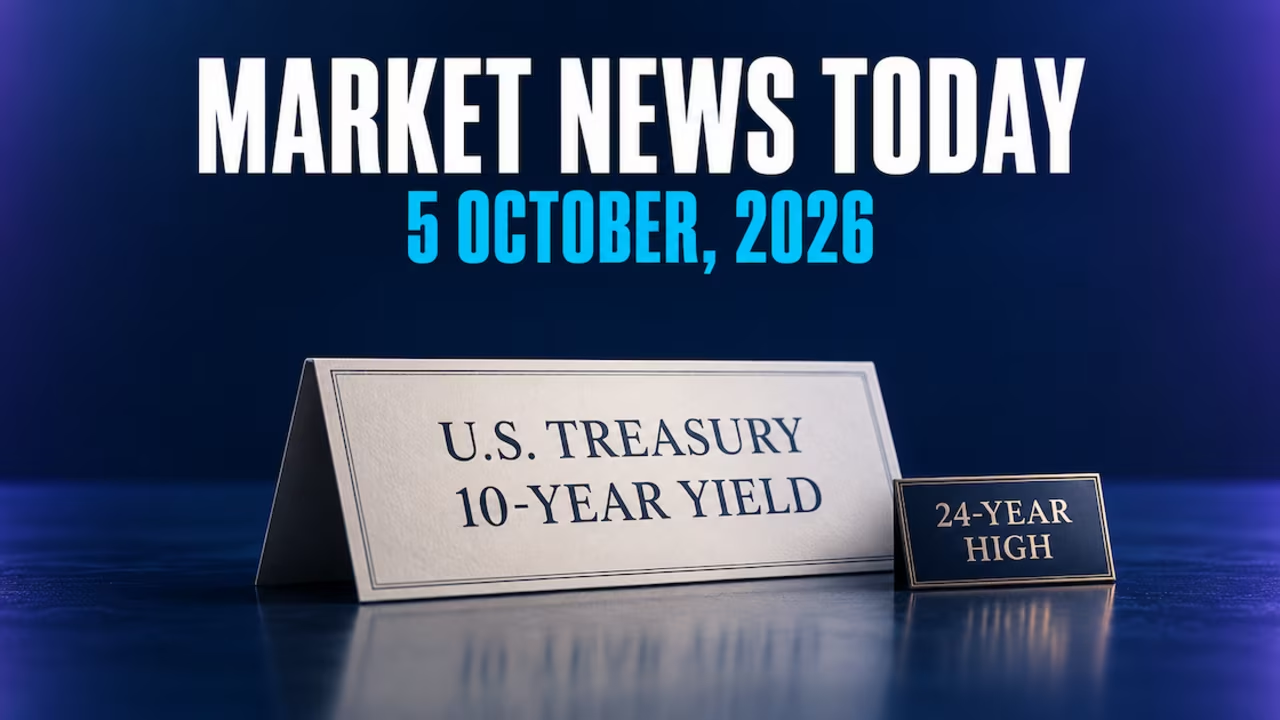
The 10-Year Touched a 2002 High
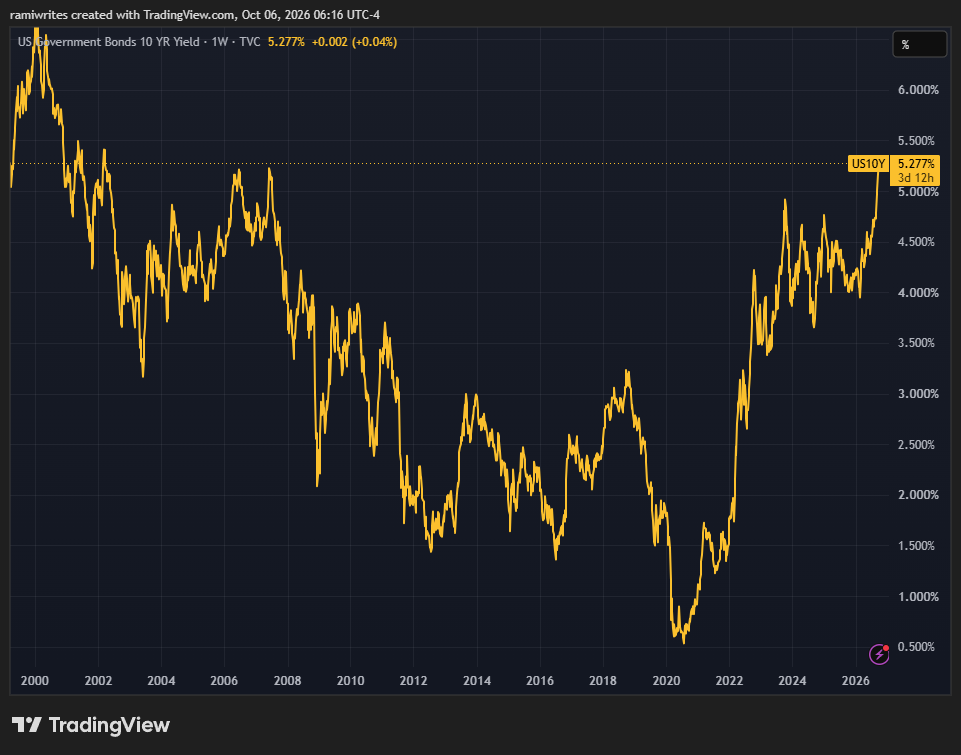
- The noise: the Nasdaq closed at a record on Monday, with Nvidia at a record of its own.
- The signal: the bond market kept climbing underneath it. The 10-year Treasury yield touched 5.35% during the day, its highest since April 2002, before closing near 5.31%. It started the year near 4.15%.
This week the government sells about $119 billion in new Treasurys: three-year notes today, 10-year notes Wednesday and 30-year bonds Thursday. For beginners: an auction is the government borrowing in public. When buyers ask for higher yields to take that debt, mortgage and loan rates tend to follow.
Traders see roughly a one-in-five chance the Fed raises rates on October 28, and better-than-even odds that it does by December 9.
Services Got Pricier Again
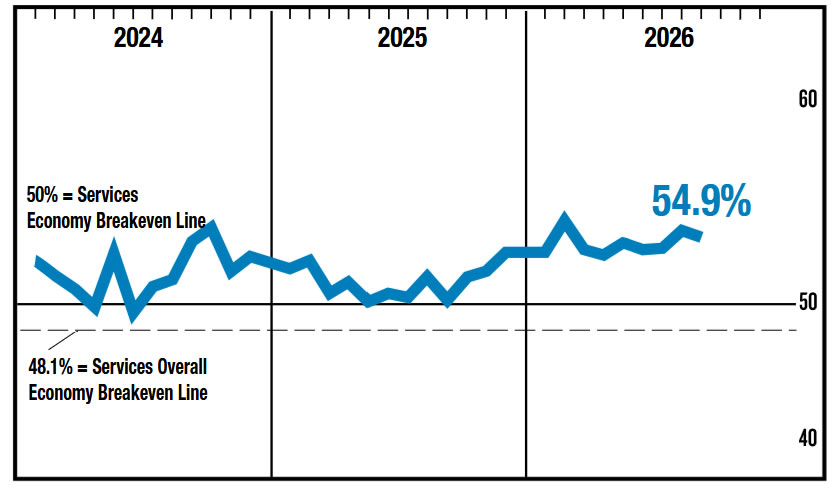
- The noise: the services survey slipped to 54.9, a touch below forecasts.
- The signal: the prices line. What service businesses pay rose to 74.0, the highest reading since July 2022. When costs climb that fast, businesses tend to pass them along to customers within a few months.
Services are most of what households spend on, from rent to haircuts, so this is the inflation that lingers. The factory survey’s price gauge hit 77.9 last week, so the pressure is showing up on both sides of the economy. The Fed’s meeting minutes come out Wednesday afternoon, and September’s inflation report lands October 14.
The Dollar Reached an 18-Month High
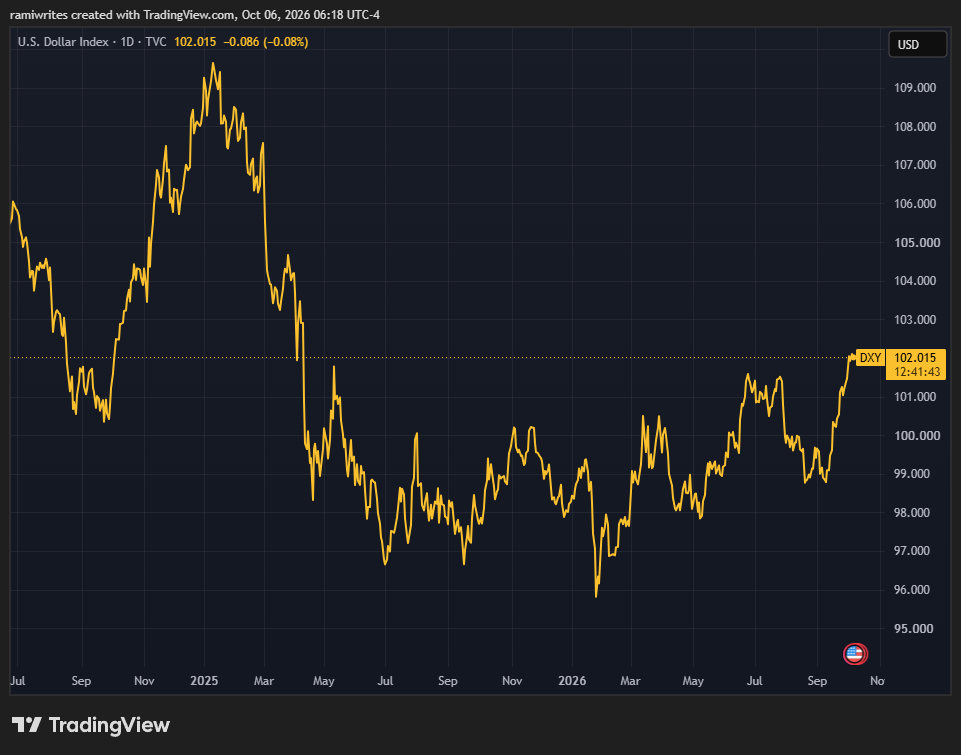
- The noise: gold slipped again, to about $4,140, down roughly 6% over the past month.
- The signal: the dollar index climbed near 101.9, its strongest in 18 months. A stronger dollar and a 5.3% Treasury both make it more expensive to hold a metal that pays nothing.
For beginners: gold is priced in dollars, so when the dollar strengthens, the same ounce costs more for anyone paying in another currency. Oil eased too after Saudi Aramco cut prices for Asian buyers, with Brent’s December contract settling at $100.32.
That puts gold about 3% above the $4,000 line in our Q4 calls. Bitcoin, at about $85,600, is still roughly 12% above the $75,000 line on that same list. Of our five calls, gold is now the closest to being decided.
Featured Contributor

Today’s featured piece is from Tan Gera, Decentralized Masters’ co-founder and CEO, who writes The Macro Letter. Figures come from his letters and public market data as of this morning. It describes Tan’s own portfolio, shared for transparency, and is not a recommendation.
A Year From the Top: What the Middle Felt Like
A year ago today, Bitcoin traded at $126,210 on Coinbase, the highest price it has ever reached.
I didn’t sell that day. I didn’t know it was the top, and neither did anyone I know who now says they did.
Four days later, more than $19 billion of leveraged bets were wiped out in a single day, the largest liquidation in crypto’s history. Most people remember that day and today’s price. Almost nobody remembers the 268 days in between, and that’s the part worth talking about.
I didn’t sell the top
On November 20, with Bitcoin above $90,000, I sold into strength and moved my portfolio to defense: 40% tokenized gold, 40% stablecoins earning yield, 20% Bitcoin. I did it on camera, in front of more than a thousand people.
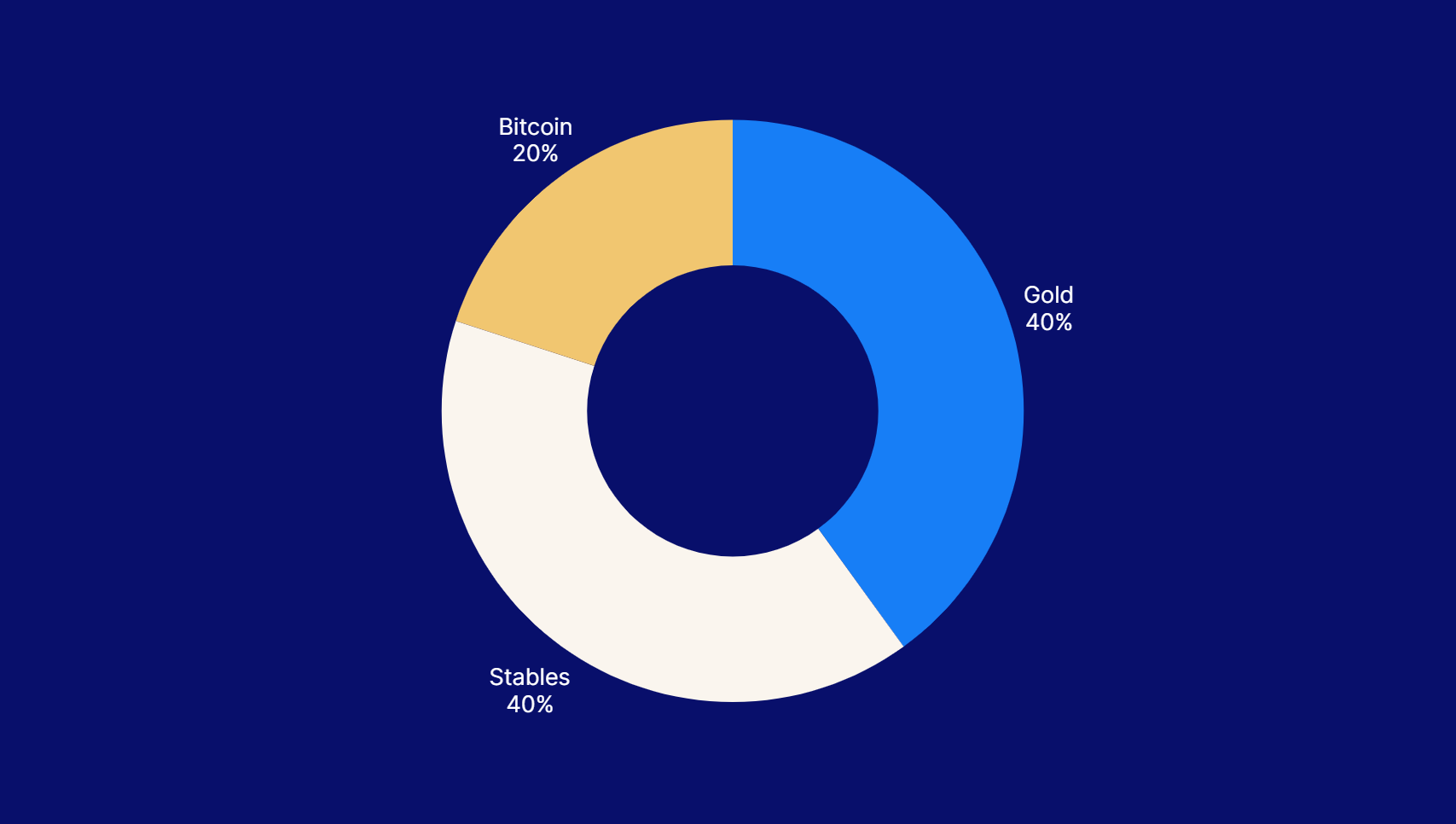
That was about six weeks and 28% after the peak. I got two things wrong last year: the Fed’s timing, and how long the correction would run.
What I got right was smaller and more useful. I stopped needing to be right about the next move.
What the middle felt like
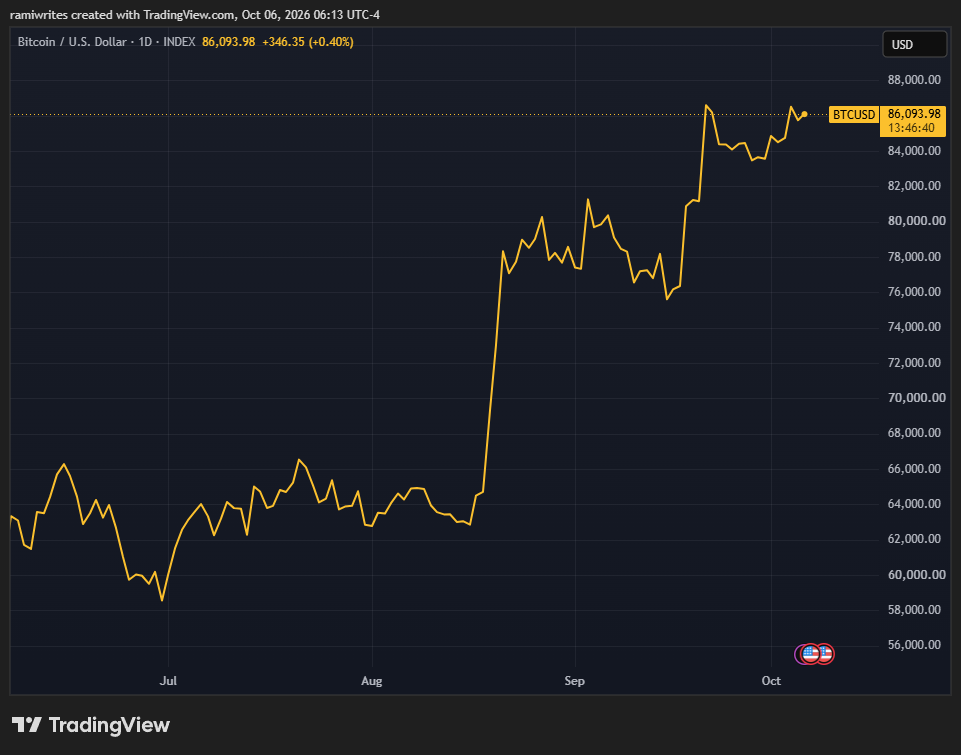
In February, Bitcoin broke below $70,000 for the first time in 15 months. In June, the big Bitcoin funds had their worst month on record, with roughly $4.5 billion walking out the door, and Strategy, the largest corporate holder, sold Bitcoin for the first time since 2022.
On July 1, Bitcoin touched about $57,700, 54% below the top. My inbox filled with people asking whether to sell everything, and plenty of smart voices were calling for $40,000.
That’s what the middle feels like. Every headline confirms the fear, and every day you hold feels like a decision you have to make again.
What the plan did
The plan made those decisions before the bad days arrived.
In February, I wrote down a range: Bitcoin between $60,000 and $100,000, with $60,000 the buy of a generation and $70,000 still a buy. In the spring, I placed an order at $62,000 and left it there.
It filled on July 1, the day of the low, while everything on my screen was red. I didn’t have to be brave that morning. The order had been waiting for weeks.
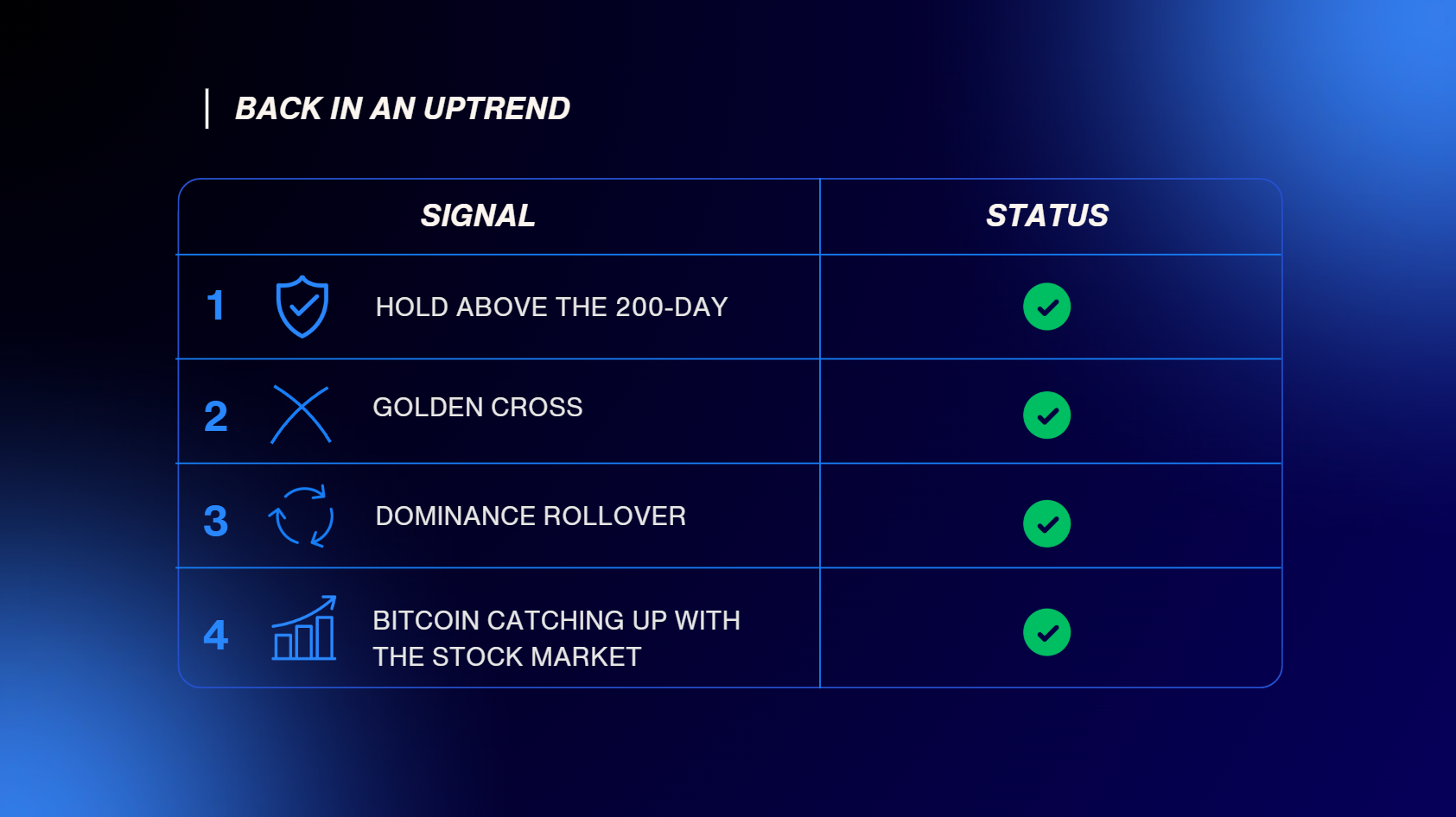
In April, I also wrote down four signals to tell me when defense could turn back into offense: Bitcoin holding above its 200-day average, the 50-day average crossing above the 200-day, Bitcoin’s share of the crypto market rolling over, and Bitcoin catching up with stocks. In mid-July, none of them were green.
Then they turned, one at a time. The first in late August, and the second, the golden cross, on September 8.
By September 24, all four were green.
Along the way, gold hit my sell level at $4,500 on August 19, the first sale this plan had made in nine months. I bought some back at $4,350 on September 24.
Bitcoin went from 20% of my portfolio to 36% today, against a target of 40%. The $62,000 lot is up about 38%.
What I missed
The plan has rough edges, and I’d rather show you the misses than hide them.
In mid-September, Bitcoin closed $162 below a level I’d drawn at $77,000, which put one signal on probation for a week. I drew my line for Bitcoin’s market share about half a point too high, so that signal turned green later than it should have.
I moved most of my remaining Bitcoin buy money up to $81,000, and the closest Bitcoin has come since is $82,739, so that order hasn’t filled. The gold I bought back at $4,350 sits around $4,140, underwater for now.
Every one of those is written down, which is the only way I can grade it.
Where it stands, 365 days later
Bitcoin trades near $85,600 this morning, 32% below the record and about 48% above the July low.
This was the shallowest drawdown in Bitcoin’s history. The last three fell 77%, 84% and 86% from their peaks. This one stopped at 54% if July 1 holds as the low, and it took 268 days.
Four of four tells me which way the trend is pointing. It doesn’t tell me the path, and every past recovery included at least one drop of 20% or more.
So my orders are still where I wrote them: $81,000 and $72,000 for Bitcoin, $4,000 for gold. I don’t know which one fills next. I decided where when the market was calm, and I’ll let the market decide when.
- Tan Gera
Co-founder and CEO, Decentralized Masters | The Macro Letter
Every Order. Every Hit. Every Miss. Graded in Public.

You just read one year of Tan Gera’s plan, from the defensive move he made late to the order that filled on the worst day.
The Macro Letter is where he writes it as it happens: the levels he sets in advance, the moves he makes in his own portfolio, and the misses, down to the $162.
Twice a week, in plain numbers, before the market reaches his levels.
Positions described are Tan’s own portfolio, shared for transparency, and are not a recommendation to buy or sell any asset. Past performance is not indicative of future results.
Final Thought
The line from Tan Gera’s piece I’d keep is the plainest one: he didn’t have to be brave on July 1, because the decision was already made.
Most investing mistakes happen on bad days, when fear makes the choice. The fix is unglamorous. Decide what you’d do while the market is calm, write it down, and let the bad day arrive on its own schedule.
Gems Uncovered works the same way for earlier-stage assets: levels set before the crowd shows up. There’s more on it at the bottom of this issue.
Tomorrow, the Fed’s minutes and the 10-year auction. See you then.
Editor in Chief | Future Finance
The Institutions Are In. The Edge Is In What They Buy Next.

Disclaimer: This content is not financial advice, it is for informational purposes only. All investments involve inherent risk. Any financial decisions you make are solely your responsibility.
Latest


Editor's Picks


Become a sharper capital allocator in 5 minutes a day.
Institutional-grade research on where the smartest capital is positioning, across AI, energy, biotech, robotics, and digital assets. Distilled into a daily read you finish before your coffee does.
Join 45,000+ readers · No spam · Unsubscribe anytime · No card needed