
Before you check your portfolio, read this.
Most people are reading the inflation number wrong.
June 10, 2026
·
9 min read



The briefing serious investors read first.
Free analysis before markets open. Start thinking in decades, not days.
Join 45,000+ readers · No spam · Unsubscribe anytime
Before we begin: this report is for education, not financial advice. Nothing here is a recommendation to buy or sell any stock, company, or asset, and we make no price predictions. Investing carries risk, including loss. Please read the full disclaimer at the end.
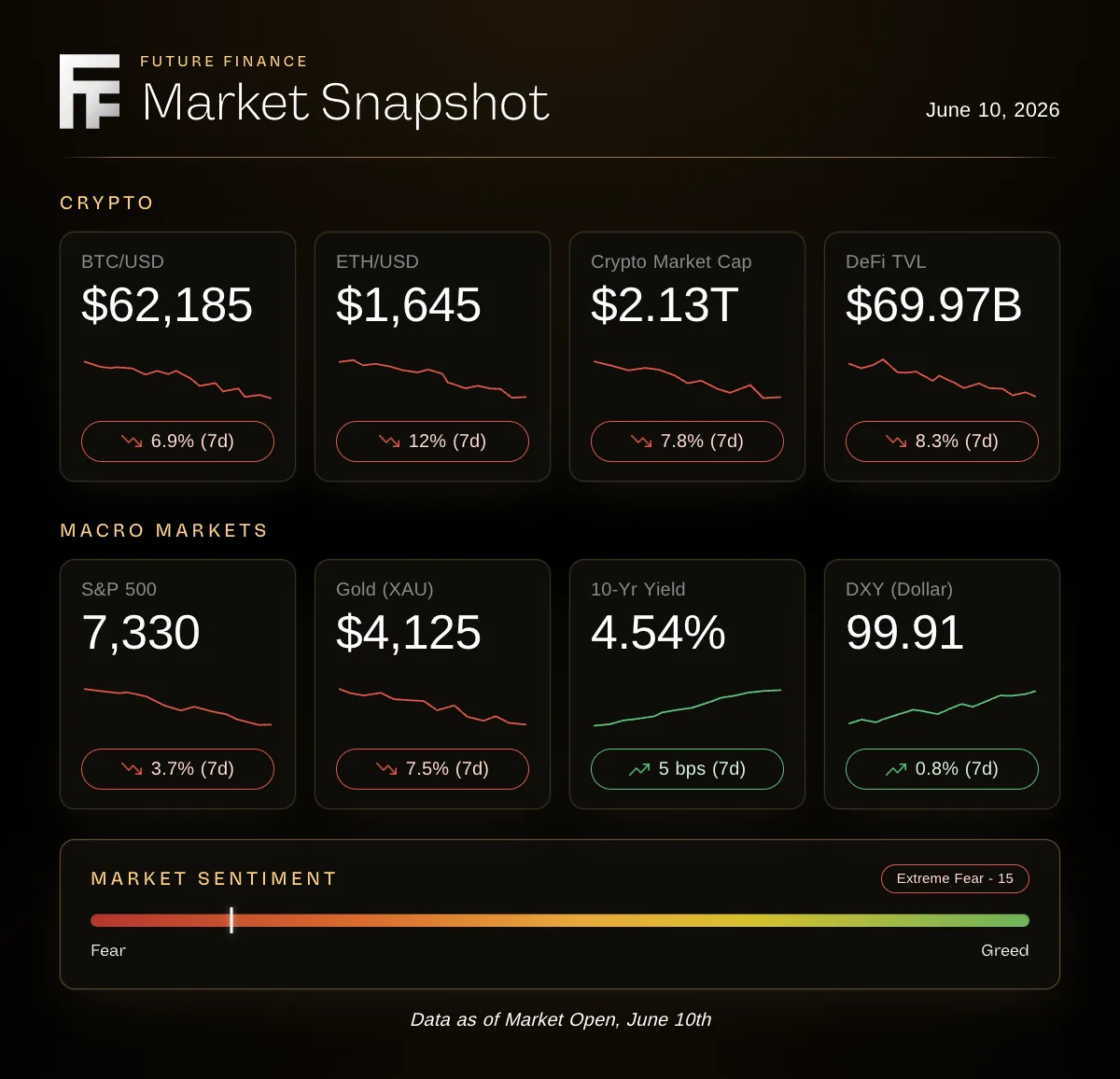
📊 Today’s Big Picture
Overnight, the United States struck Iran.
The trigger was a downed US helicopter over the Strait of Hormuz. Iran struck back at US sites across the region.
All week, the market has juggled two fears. War, and inflation.
This morning, they became one number.
Inflation rose to 4.2% in May. The first time it has been above 4% since 2023.
And the single biggest driver was energy. The same oil the war keeps pushing higher.
The war is now an inflation story.
A missile over a narrow strip of water is, two steps later, the price of gas and the Fed's next move.
But here is the twist that matters. Strip out food and energy, and the core reading actually cooled.
So the headline screams trouble while the engine underneath is quieter than feared.
By the end of this issue, you’ll know how the war became an inflation story, why the number was hot and calm at the same time, and why even gold is not helping.
🔍 Signal vs. Noise
Three Headlines, Three Realities

1. The first headline is that inflation is back above 4%.
- What the math says: it is, and it is not the whole story.
Prices rose 4.2% over the past year. The hottest reading since 2023, up from 3.8% the month before.
That number alone would frighten anyone.
But more than half of the monthly increase came from one place. Energy.
Gasoline is up roughly 40% over the past year, driven by the oil spike the war keeps feeding.
Now strip out food and energy, the volatile stuff, and look at the core. Month to month, it actually slowed.
So the headline is hot because of oil. The underlying trend is calmer than the 4.2% makes it look.
2. The second headline is that this guarantees the Fed hikes.
- What reality says: it is more complicated, and the market felt the relief.
A 4% headline screams for higher rates. But the Fed looks hardest at that cooler core number, because it strips out the noise.
That is why the reaction was not panic. Bond yields eased back. Stocks came off their lows. Bitcoin (BTC) steadied.
The market read the report as hot on the surface, manageable underneath.
The rescue everyone wants, a rate cut, is still off the table. But a calmer core buys a brand-new Fed chair a little room at his first meeting next week.
Hot headline. Soft core. A market exhaling, carefully.
3. The third headline is that gold is protecting people from all this.
- What the math says: gold fell to its lowest level of the year.
This is the strange part. Gold is the classic protection against inflation. And this morning, inflation hit a three-year high.
So why is gold falling?
Because the fear of higher rates is stronger than the fear of inflation itself.
Cash that pays four percent competes with gold that pays nothing. When rates look like they are staying high, that competition gets brutal.
Gold's protection against printed money is real, and that threat has not gone away. But in this moment, the rate fear is winning.
The noise says last night was a war story, and this morning is an inflation story.
The signal says they are the same story, and it runs straight to the Fed.
🏛️ The Chain Runs Through an Aging System
Every link in this morning's story (the strike, the oil price, the inflation print, the Fed's next move) runs through the same financial infrastructure.
The same one that closes at 5pm on Fridays. Settles in three to five business days. And was built for a world that no longer exists.
While today's number is being debated on Bloomberg, the world's largest institutions are quietly routing billions onto a parallel system. One that settles in seconds. Operates around the clock. And processes what the old rails simply cannot handle.
BlackRock. JPMorgan. Visa. They're already there.
And right now, before institutional capital fully floods in, early-stage opportunities inside these markets are trading at a fraction of where they'll be when it does.
Tan built a research service around finding them before the crowd arrives.
Watch him explain exactly where to look →
🧠 Behind the Headlines

This week, Decentralized Masters CEO Tan Gera on the pillar of the ABN System that matters most right now.
There is a question I have spent my entire career answering. First on a Wall Street trading desk, now for the four thousand investors who trust my firm.
The hard question was never which way the market goes next. It was how you build a portfolio that survives being wrong about that.
This morning gives you the reason the question matters.
What 1973 Actually Taught Us
In October of 1973, war broke out in the Middle East.
The world’s largest oil producers cut off supply to the United States. Within months, the price of oil had quadrupled.
Before you dismiss this as ancient history, understand what oil actually is. It is the cost sitting underneath everything else.
It moves the trucks that carry food. It runs the factories that make goods. It heats the homes people live in.
When it quadrupled, the price of nearly everything followed it upward. And inflation ran through the entire decade that followed.
Who Lost, And Who Survived
The investors hurt worst were the ones who believed they were playing it safe.
They held cash, and inflation drained its value year after year.
They held long-term bonds, and rising rates cut them down.
They held the popular stocks of the day, and watched them go nowhere for the better part of ten years.
The investors who came through with their wealth intact did something different.
They owned real assets. The things that carry actual value and tend to rise when money is losing it.
And they earned real income. Yield that outpaced inflation instead of falling behind it.
They did not need to forecast when the war would end or where oil would settle. Their portfolio did not depend on getting that forecast right.
Why This Is the All-Weather Pillar
That is the entire idea behind the first pillar of our framework, the one we call All-Weather.
It is the foundation that keeps you standing when the environment turns against you.
The oil shock in front of us today is far smaller than 1973. I want to be precise about that rather than sell you fear.
But the chain is the same one, link for link. A conflict pushes energy higher. Energy pushes inflation higher. And a central bank is forced into decisions that punish the unprepared.
You cannot control the headlines out of Hormuz. You can control whether your portfolio was built to withstand them.
That choice gets made before the shock arrives, not during it.
📰 From Around the Market
Every issue, we bring you the most important stories from around the world and show you why they matter. Think of this as your shortcut through the noise - one click per story, and you’re caught up.
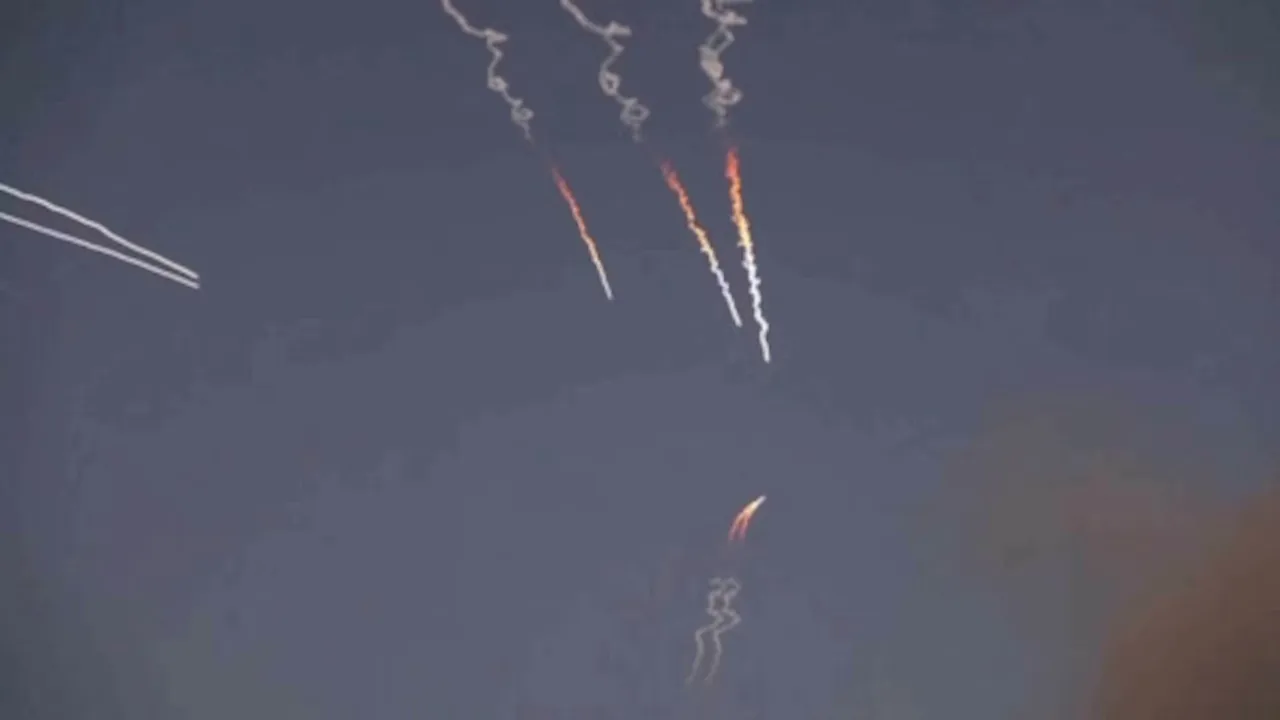
The US struck Iran overnight, and the peace deal is hanging by a thread.
After Iran downed a US helicopter over the Strait of Hormuz, US forces hit Iranian sites in response.
The 60-day deal to extend the ceasefire was never signed. Now it may not be.
President Trump has still not made his final call. Here’s where things stand.
Inflation hit a three-year high, and markets shrugged.
Prices rose 4.2% over the past year, the most since 2023, pushed up by energy.
But the core reading, stripped of food and fuel, came in cooler than expected.
Wall Street treated it as a relief. The reason why is the heart of this issue.
Gold just broke a level it has not seen all year.
Gold fell below $4,200, its lowest of 2026.
It is down roughly a fifth from the peak it hit a month ago.
The reason a safe haven is falling during a war is the counterintuitive part worth understanding.
Bitcoin is steadying near $62,000 after a brutal stretch.
Bitcoin briefly broke under $60,000 last week for the first time since 2024.
It has clawed back toward $62,000 and held through this morning’s inflation number.
For now, it is trading like a risky tech stock, not the safe haven it is sometimes sold as.
👀 What to Watch For

Oracle reports earnings tonight.
Oracle (NYSE: ORCL) reports after the close. It is the next big test of the AI-spending story after Broadcom (NASDAQ: AVGO) stumbled last week.
The number that matters is Oracle’s cloud business, and whether its record backlog of future orders is actually turning into revenue.
A strong report could steady the AI trade. A weak one could reignite the bubble fears. Options point to a large move either way.
Tomorrow brings a second inflation reading.
The May report on wholesale prices lands Thursday. It measures inflation one step before it reaches store shelves.
After this morning’s number, it is the second data point this week feeding the Fed’s decision.
If wholesale prices echo this morning’s energy spike, the pressure builds going into next week.
Whether the strikes escalate from here.
The first question is whether last night was a one-time response or the start of something larger.
Every step in either direction moves oil. And oil feeds the inflation number the Fed is watching.
Watch whether the ceasefire framework survives the week, or falls apart.
💭 Today’s Final Thought
Overnight, the United States struck Iran.
Oil moved.
And this morning, inflation came in at a three-year high, pushed there by energy.
For a week, the market juggled two fears. War, and inflation. Today, they fused into one number.
This is what it looks like when the boxes break. When war and oil and inflation and the Fed stop being separate stories and become a single chain.
The one mercy was the core reading underneath, which came in calmer than feared and bought a new Fed chair a little room before his first meeting next week.
Even gold, the oldest refuge there is, fell.
The institutions are not betting on how the war ends or which way the next number breaks. They own a structure built to hold up while the chain runs its course.
That is the difference between owning a plan and hoping for an outcome.
Last night, a war became an inflation story.
By next week, it’ll be the Fed’s problem.
Build for the chain, not the headline.
- Rami Al-Sabeq (Editor in Chief | Future Finance)
About Future Finance
Future Finance is written by Rami Al-Sabeq, Editor-in-Chief, and his research team. His macro-to-crypto work has been featured in Unchained and Cryptonary, and his independent essays appear at RamiWrites.Substack.com.
Behind every issue sits Head of Research Tyler Hubbard, whose track record across 590+ digital asset picks has produced an 85% directional accuracy rate and a 426% average peak return. That’s as of the third-party audit measuring performance through April 30th, 2026. Follow him on TradingView here.
Gems Uncovered
Go Deeper With Gems Uncovered
Most investors see one layer of the market. The opportunities that build real wealth live beneath it. Gems Uncovered is our monthly research briefing on early-stage assets, native market access, and high-conviction plays before they surface on mainst
Subscribe to Gems Uncovered →Disclaimer: This content is not financial advice, it is for informational purposes only. All investments involve inherent risk. Any financial decisions you make are solely your responsibility.
Latest


Editor's Picks

Become a sharper capital allocator in 5 minutes a day.
Institutional-grade research on where the smartest capital is positioning, across AI, energy, biotech, robotics, and digital assets. Distilled into a daily read you finish before your coffee does.
Join 45,000+ readers · No spam · Unsubscribe anytime