

The one country no one’s watching…
It isn't Iran. And what it did this weekend is pulling the whole agreement back toward the edge.
June 22, 2026
·
9 min read




The briefing serious investors read first.
Free analysis before markets open. Start thinking in decades, not days.
Join 45,000+ readers · No spam · Unsubscribe anytime · No card needed
Before we begin: this report is for education, not financial advice. Nothing here is a recommendation to buy or sell any stock, company, or asset, and we make no price predictions. Investing carries risk, including loss. Please read the full disclaimer at the end.
📊 Today’s Big Picture
Last week, the world got a peace deal. This week, we see if the markets trust it.
The war between the U.S. and Iran officially ended. Oil crashed. Gas fell below $4 for the first time since March.
But a signed deal is not the same as peace.
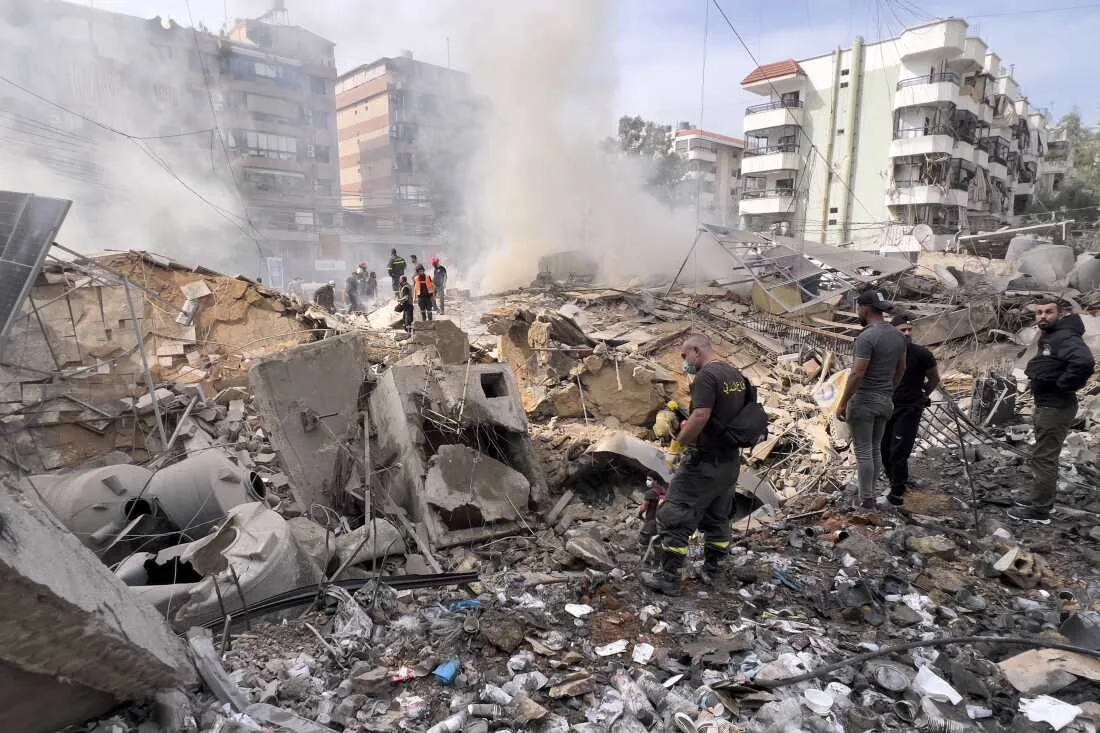
Israel was never part of that deal, and it has kept up its invasion of Lebanon. That fighting got the first signing ceremony cancelled and nearly broke apart this weekend's talks.
Over the weekend, the deal looked shaky.
- Trump threatened to strike Iran…
- Iran threatened to close the Strait of Hormuz again…
- Oil jumped.
Then this morning, negotiators said they had agreed on a path to a final deal, and oil gave the gains right back.
The market is now swinging on every headline out of the Middle East.
Today, I’ll show you why this “finished” deal is anything but, why the swings keep showing up in the oil price first, and why the Fed will have a bigger impact on markets than the war…
🔍 Signal vs. Noise
Three Headlines, Three Realities
1. The first headline is that the war is over, so the risk is gone.
- What reality says: the shooting stopped. The deal is far from finished.
The ceasefire is holding, and that is real. But the agreement was signed electronically, the in-person ceremony was scrapped, and the hardest parts were pushed into 60 days of talks.
Those talks have been rocky.
Israel, which never signed the deal, has kept fighting in Lebanon, and that fighting got the first ceremony cancelled and nearly derailed this weekend's session.
Trump threatened fresh strikes. Iran threatened to close the Strait of Hormuz again. Then this morning, negotiators said they had agreed on a path forward.
The war headline ended. The negotiation is still alive, still fragile, and still swinging the markets.
A ceasefire is a pause in the fighting, not a finished peace.
2. The second headline is that cheaper gas means the Fed will start cutting rates.
- What the math says: the Fed just signaled the opposite.
Last week the Fed held rates steady, but its own officials shifted. Nine of the 18 who set policy now expect to raise rates this year, and almost all of them said they are more worried about inflation going up than down.
Cheaper gas helps.
But the inflation from this year's oil shock is still working through the economy, and the Fed would rather stay tough than ease too soon.
So the relief at the pump and the message from the Fed are pointing in opposite directions.
Cheaper gas is today. The Fed is looking at next year.
3. The third headline is that gold protects you when the world gets scary.
- What reality says: gold fell during the scariest stretch of the year.
Gold is supposed to be the safe haven. Yet it has dropped about 8% this month and sits far below its January record.
The reason is the same force moving everything else. When inflation pushes interest rates higher, cash and bonds start paying more, and gold, which pays nothing, looks less attractive.
Gold did not fail. It was just answering to interest rates, like every other asset right now.
Even the safe haven bends to the interest rate.
The noise says the war is behind us, cheaper gas will bring rate cuts, and gold keeps you safe no matter what.
The signal says the deal is unfinished, the Fed is still leaning toward a hike, and even gold is moving on interest rates.
Behind the Headlines

This week, Decentralized Masters CEO Tan Gera, CFA, on the one principle that matters most in a market swinging on every headline.
Watching markets re-price the Iran deal this morning reminded me of something I learned early in my career. Markets are terrible at pricing geopolitics.
Let me show you what I mean with a story.
The Day Oil Crashed 33% In A Single Session
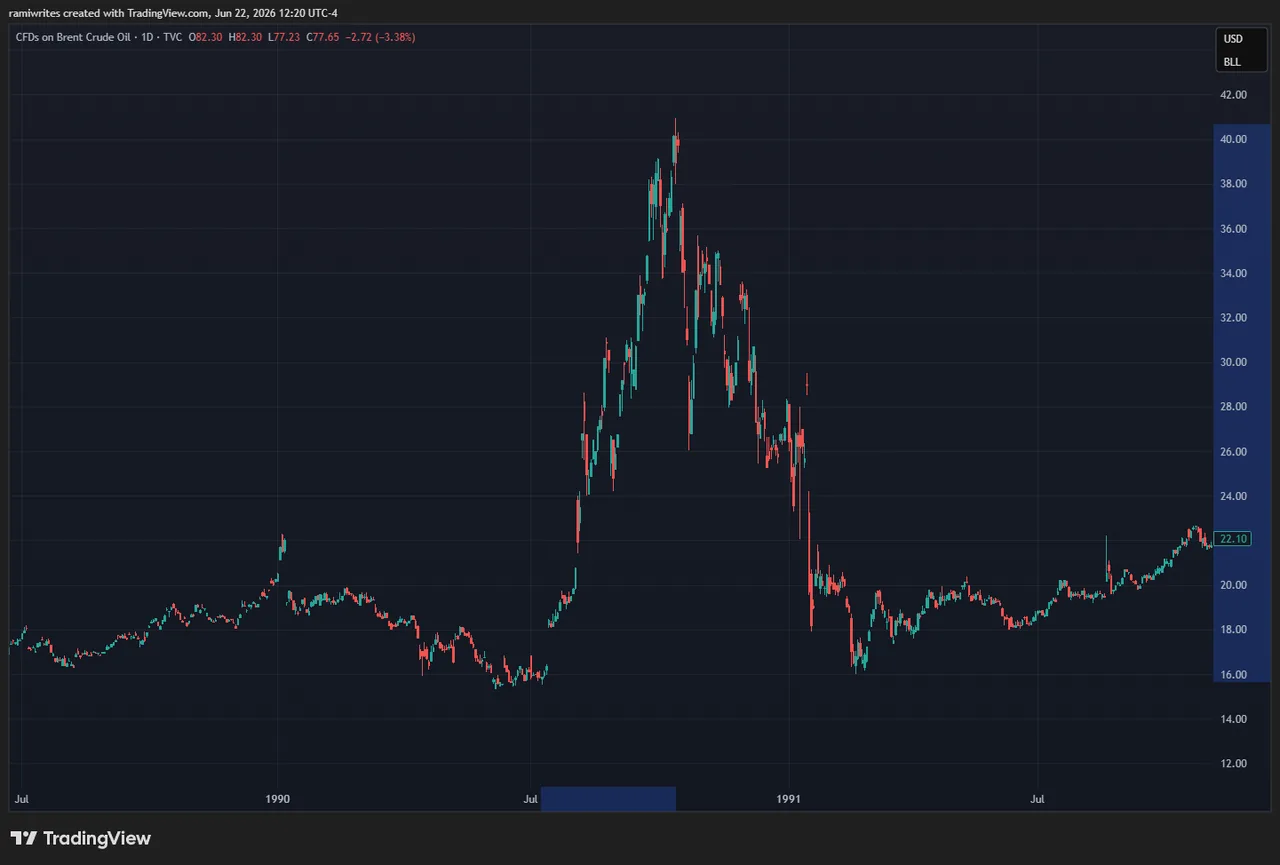
In August of 1990, Iraq invaded Kuwait. Oil nearly doubled in a matter of weeks. The fear was everywhere, that this was the start of a long and painful energy crisis.
Markets braced for the worst.
Then, in January of 1991, the U.S.-led operation began, and it quickly became clear the oil supply would hold.
Oil crashed about 33% in a single day. The stock market jumped, and the Dow crossed 3,000 for the first time.
The lesson was simple, and I have watched it repeat for 30 years.
Markets wildly overprice the start of a crisis, then wildly underprice the messy aftermath.
Why That Matters This Morning
We are watching the mirror image of 1990 right now.
The market has already priced in the peace. Oil fell 40%. Gas dropped below $4. Everyone exhaled.
But the deal is unsigned in person, the talks are strained, and a country that never agreed to anything, Israel, is still fighting in Lebanon.
The front end of this crisis is behind us. The messy aftermath is just beginning.
And the messy aftermath is exactly the part markets are worst at handling.
What You Actually Control
Here is the part I want you to take away.
You cannot predict whether those talks hold next week. Nobody can. Not me, not the Fed, not the traders yanking oil around on every headline this morning.
What you can control is whether your money depends on the answer.
The first pillar of our framework is the one we call All-Weather. You build a portfolio that holds up whether the peace holds or breaks, whether oil falls or spikes, whether the Fed cuts or hikes.
You stop betting on the headline. You own something for every version of the story.
That is how you sleep through a weekend like the one we just had.
This is the exact system more than 4,000 investors are already using to position themselves ahead of events like this week’s. See it for yourself, right here…
📰 From Around the Market
Every issue, we bring you the most important stories from around the world and show you why they matter. Think of this as your shortcut through the noise - one click per story, and you’re caught up.
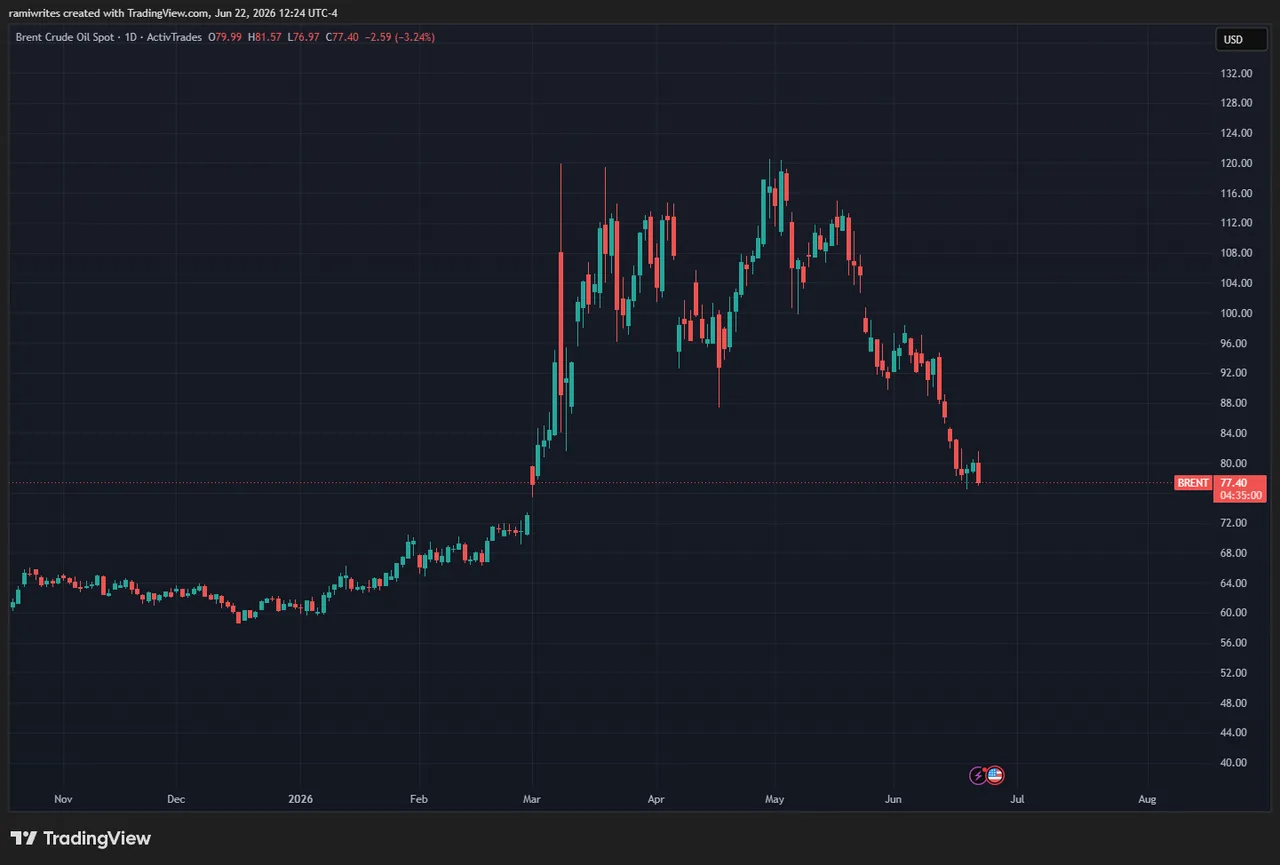
Oil whipsawed as the peace deal wobbled, then steadied.
Crude spiked over the weekend after Trump threatened Iran and Iran threatened the Strait of Hormuz, then gave the gains back Monday as negotiators reported progress.
The shipping lane that carries a fifth of the world's oil is open again, but barely, and the price now jumps on every headline.
Here’s why one narrow strait controls what you pay at the pump.
Markets are back from the long weekend, waiting and watching.
With U.S. markets closed Friday for Juneteenth, today is the first chance to react to a hawkish Fed and a shaky peace deal all at once.
Stock futures were little changed and the dollar sat near a one-year high as investors awaited this week's big inflation report.
Here’s what three days of pent-up news can do.
Bitcoin is stuck near $64,000, and the Fed is the reason.
Bitcoin has churned around $64,000, and what moves it now is not the Middle East. It is interest rates.
It has been trading almost in lockstep with tech stocks, rising and falling on what the Fed does.
Here’s why crypto keeps taking its cues from interest rates.
The next big test for the AI boom lands Wednesday.
Micron (NASDAQ: MU), a key maker of the memory chips that power AI, reports earnings Wednesday after a record-setting run, hitting an all-time high just last week.
After the Intel chip deal sent the sector to a record high, investors want proof the AI demand is real.
Here’s what to watch when the numbers drop.
👀 What to Watch For

Whether the Iran talks hold.
The 60-day negotiations have already been strained by Israel's fighting in Lebanon, and Iran has threatened to close the Strait of Hormuz again.
Watch for whether the talks keep making progress this week or break down. If they collapse, oil and gas could climb back fast.
Thursday's inflation report.
The Fed's favorite inflation gauge, called PCE, comes out Thursday. It is the most important number of the week.
A hot reading makes a rate hike look more likely. A soft one revives hope for cuts.
Oil and the price at the pump.
Oil is the bridge between the Middle East and your wallet, and right now it moves on every headline out of the region.
Watch whether it settles or climbs back toward where it was. Your gas price follows it with a lag.
Wednesday's Micron earnings.
The chip rally has carried the whole market. Micron's results will test whether the AI demand can justify the prices.
Watch the reaction as a read on how much froth is left in the AI trade.
💭 Today’s Final Thought
Last week ended with a feeling of relief.
- A war was over.
- Oil was falling.
- Gas dropped below $4.
The danger, it seemed, had passed.
Then a weekend reopened the whole question.
- Israel kept fighting in Lebanon.
- Trump threatened Iran.
- Iran threatened the Strait again.
Oil jumped, then reversed this morning when negotiators reported progress.
Here is what this whipsaw is trying to teach you.
A headline can declare peace, but it cannot enforce it.
The risk does not leave when the announcement is made. It lingers in the gaps, in the parts still being negotiated, in the players who never signed.
The market priced the good news in a week. The harder, messier truth is only starting to surface now.
You will never out-guess which way the next headline breaks. What you can do is stop needing to.
The world declared peace. The markets are not sure.
Build a portfolio that does not need to know who is right.
- Rami Al-Sabeq (Editor in Chief | Future Finance)
About Future Finance
Future Finance is written by Rami Al-Sabeq, Editor-in-Chief, and his research team. His macro-to-crypto work has been featured in Unchained and Cryptonary, and his independent essays appear at RamiWrites.Substack.com.
Behind every issue sits Head of Research Tyler Hubbard, whose track record across 590+ digital asset picks has produced an 85% directional accuracy rate and a 426% average peak return. That’s as of the third-party audit measuring performance through April 30th, 2026. Follow him on TradingView here.
One Subscription. The Entire Gems Uncovered Research Library.
You just read why the surface of the news rarely tells the whole story.
Gems Uncovered
Go Deeper With Gems Uncovered
Most investors see one layer of the market. The opportunities that build real wealth live beneath it. Gems Uncovered is our monthly research briefing on early-stage assets, native market access, and high-conviction plays before they surface on mainst
Subscribe to Gems Uncovered →Disclaimer: This content is not financial advice, it is for informational purposes only. All investments involve inherent risk. Any financial decisions you make are solely your responsibility.
Latest


Editor's Picks

Become a sharper capital allocator in 5 minutes a day.
Institutional-grade research on where the smartest capital is positioning, across AI, energy, biotech, robotics, and digital assets. Distilled into a daily read you finish before your coffee does.
Join 45,000+ readers · No spam · Unsubscribe anytime · No card needed