
The good news nobody celebrated
Peace, cheap oil, cheaper gas... and a selloff. Here's why.
June 24, 2026
·
9 min read




The briefing serious investors read first.
Free analysis before markets open. Start thinking in decades, not days.
Join 45,000+ readers · No spam · Unsubscribe anytime
Before we begin: this report is for education, not financial advice. Nothing here is a recommendation to buy or sell any stock, company, or asset, and we make no price predictions. Investing carries risk, including loss. Please read the full disclaimer at the end.
📊 Today’s Big Picture
This week, almost every headline is good news.
The market sold off anyway on Monday and Tuesday.
- The ceasefire with Iran is holding.
- Oil just dropped to its lowest price since before the war even started.
- Gas is getting cheaper.
A month ago, news like that would have sent stocks soaring.
Instead, tech stocks tumbled in a global selloff on Tuesday. Bitcoin (BTC) slipped. Gold fell below $4,000 for the first time since November.
And while it’s ticking up today, the S&P 500 is still down 1.4% over the last five days.
So what is going on?
The market has stopped watching the war. It is now staring at two things, and both of them land in the next 48 hours.
Tonight, after the close, a chip company called Micron (NASDAQ: MU) reports its earnings. It has become the single most important read on whether the AI boom is real.
Then on Thursday, the government releases its most trusted inflation report, the one number the Fed watches most.
Today, I’m going to reveal why one company and one report matters more to your money than war and peace, and why that should make you think hard about how your savings are built.
🔍 Signal vs. Noise
Three Headlines, Three Realities
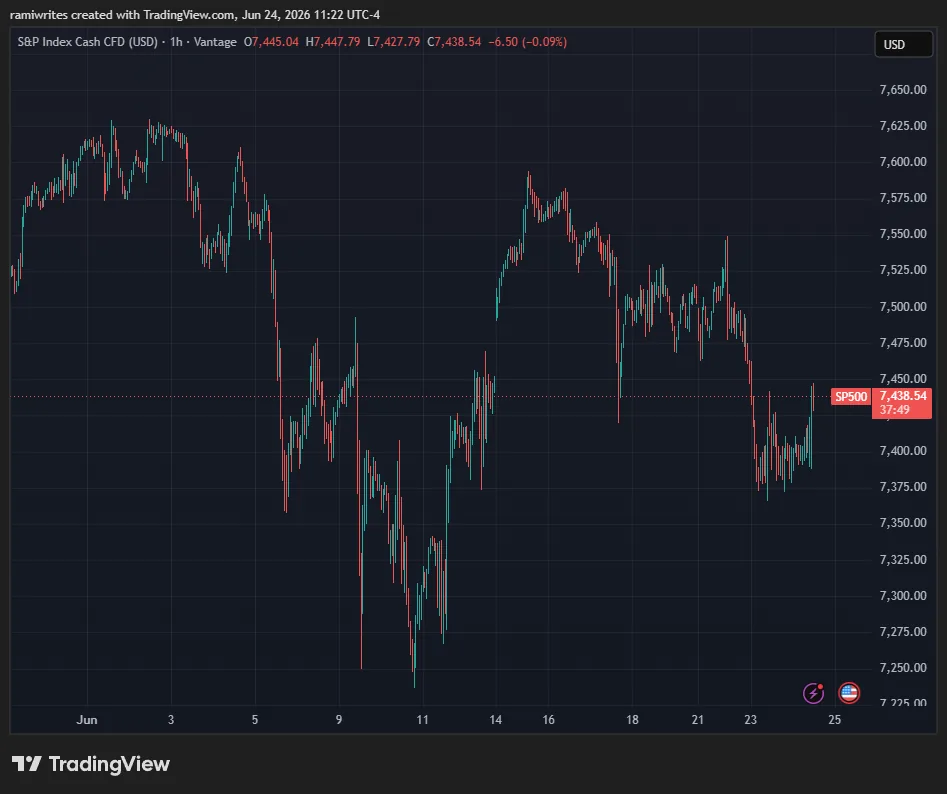
1. The first headline is that the war calming down should lift the market.
- What reality says: the market has already moved on.
The good news is real. The ceasefire is holding, oil has fallen to pre-war lows, and cheaper gas is on the way.
But none of it stopped Tuesday's selloff.
The market has shifted its attention away from the Middle East and onto interest rates and AI. Peace is yesterday's story. The Fed and the chip makers are today's.
When good news stops moving the market, pay attention to what is moving it instead.
2. The second headline is that the AI boom is unstoppable.
- What reality says: on Tuesday, it looked very stoppable.
A wave of selling hit chip stocks around the world. Micron, the company reporting tonight, fell about 13%. In South Korea, the market dropped so fast that trading was halted.
For the first time in a while, investors openly asked the uncomfortable question. What if the trillions being spent on AI never pay off?
The boom is not over. But the doubt is real, and it arrived right before tonight's big test.
The story everyone believes is the most dangerous one to stop checking.
3. The third headline is that cheaper gas means inflation is beaten.
- What the math says: the number that matters comes Thursday, and it may not cooperate.
Falling gas helps. But the Fed's favorite inflation gauge, due Thursday, is expected to tick higher, not lower.
That is because the inflation from this year's oil shock is still working through the system, with a delay.
If that number runs hot, a rate hike this year goes from possible to likely. And higher rates pressure stocks, crypto, and gold all at once.
Cheaper gas is what you see. Sticky inflation is what the Fed sees.
The noise says peace is bullish, AI is invincible, and cheap gas fixed inflation.
The signal says the market has moved on from the war, the AI trade just cracked, and Thursday's number could tie the Fed's hands.
Behind the Headlines

This week, Decentralized Masters CEO Tan Gera on the parallels in today’s market to the 1970s.
Watching markets re-price the Iran deal this morning reminded me of something I learned early in my career. Markets are terrible at pricing geopolitics.
Let me show you what I mean with a story.
Tuesday's selloff was a warning, though probably not the one you would expect. The part that should worry you is how much of the market fell alongside a handful of AI stocks.
Let me explain what I mean.
The Most Crowded Bet In 50 Years
Over the past decade, the U.S. stock market has become a bet on a handful of companies.
The 10 largest companies in the S&P 500 now make up about 41% of the entire index. Back in 1990, that figure was around 19%.
Narrow it to the AI story, and roughly 30 AI-linked stocks now account for close to 44% of the market's total value.
That is more concentrated than the market was in the early 1970s, at the peak of a famous group of stocks called the Nifty Fifty.
When you own a simple index fund today, you are not as diversified as you think. You are making a very large bet on a very small number of names, almost all tied to the same story.
What History Says Happens Next
Here is the part worth remembering.
In the early 1970s, investors decided the Nifty Fifty were one-decision stocks. You bought them and never sold. They were the safest, best companies in America.
Then the market turned, and those same untouchable names fell hardest and took years to recover.
Goldman Sachs studied this. After the great runs of both the Nifty Fifty and the internet leaders of the late 1990s, the top five names went on to badly underperform the rest of the market over the following years.
The investors who simply owned the rest of the market, in equal measure, came out far ahead.
Why This Matters Tonight
I want to be careful and fair here. Today's leaders are not the ‘empty hype’ of the year 2000. Micron and the other giants have real sales, real profits, and real demand.
This is not an obvious bubble.
But concentration is its own risk, separate from whether the companies are good.
When so much money rides on so few names, one stumble, a weak Micron report tonight, a hot inflation number Thursday, can drag the entire index down with it.
That is the lesson of the All-Weather portfolio. You do not let your future depend on one story, no matter how good that story looks.
You spread your wealth across assets that do not all rise and fall together. So that when the crowded trade finally wobbles, and it always does eventually, you are steady instead of scared.
The goal is not to predict the storm. It is to be built for any weather.
We have a full free training on exactly how this system works, right here…
📰 From Around the Market
Every issue, we bring you the most important stories from around the world and show you why they matter. Think of this as your shortcut through the noise - one click per story, and you’re caught up.
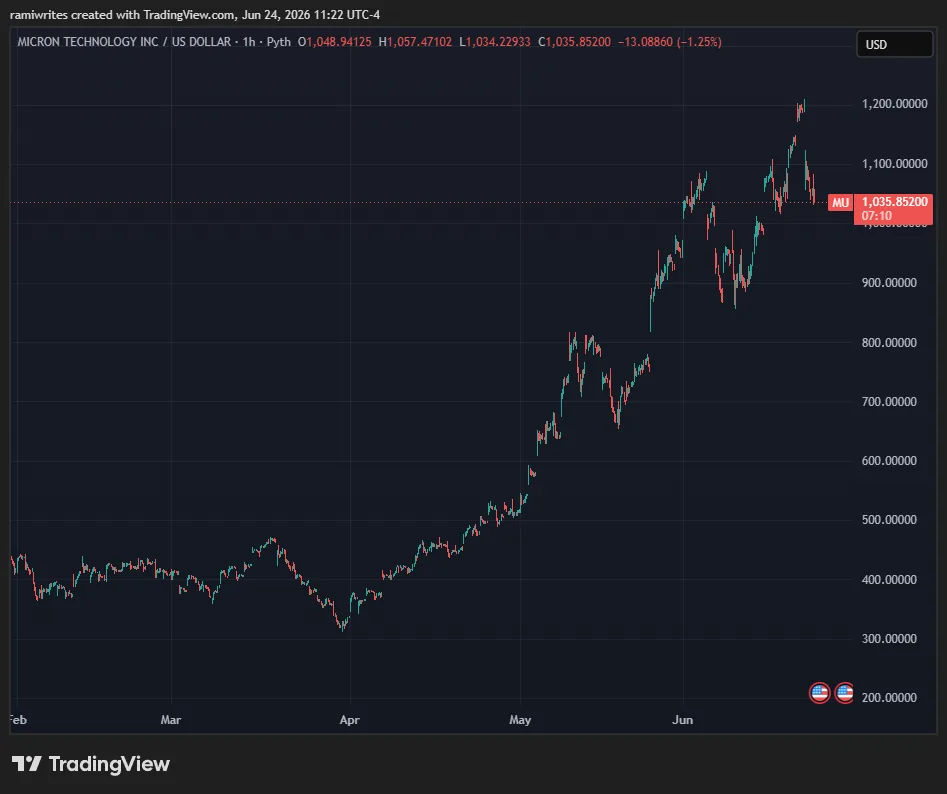
The whole market is waiting on one earnings report tonight.
Micron, the company that makes the memory chips AI runs on, reports earnings after the close today.
Its stock fell about 13% Tuesday, and traders are bracing for a swing of around 17% once the numbers hit.
Here’s why one chip company holds the market's mood in its hands.
A global chip selloff just reopened the AI bubble debate.
Tuesday saw a worldwide rout in chip stocks, with losses from Silicon Valley to South Korea, where trading was briefly halted after a 10% crash.
It was the clearest sign yet that investors are nervous about how much has been spent on AI.
Here’s what set off the global slide.
Oil just fell to its lowest price since before the war.
Crude dropped for a third straight day as Middle East shipping reopens and Iranian barrels return to the market.
Cheaper oil should mean cheaper gas, though the President is now demanding an investigation into why pump prices are not falling faster.
Here’s why cheaper oil is not rescuing the market.
Bitcoin is stuck near $62,000 ahead of a huge week.
Bitcoin has slipped toward $62,000, weighed down by the same nervous wait for Thursday's inflation report.
A massive batch of crypto bets also expires Friday, which could swing the price sharply.
Here’s what to watch as both events collide.
👀 What to Watch For

Tonight's Micron earnings.
The chip maker reports after the close, and the market has made it the verdict on the entire AI trade.
A strong outlook could calm the nerves from Tuesday. A weak one could deepen them. Watch the reaction more than the headline number, and we will break down what it means in Friday's issue.
Thursday's inflation report.
The Fed's favorite inflation gauge, called PCE, comes out Thursday morning. It is the most important number of the week.
A hot reading pushes a rate hike closer. A soft one brings relief. Either way, expect a reaction.
The price of gas.
Oil is at pre-war lows, and the pressure is on for gas to follow.
Watch whether prices at the pump finally start dropping. That is the real peace dividend for your wallet, even if the market does not care today.
Friday's crypto expiry.
More than 10 billion dollars in Bitcoin options expire Friday, the largest of the year.
Watch for sharp moves in crypto around it, especially if Thursday's inflation number surprises.
💭 Today’s Final Thought
This was a week of good news that the market refused to celebrate.
- The war is calming.
- Oil is cheap.
- Gas is easing.
And stocks fell anyway.
The lesson underneath it is one of the most useful you will ever learn as an investor.
The headlines that grab your attention are not always the forces that move your money.
This week, peace and cheaper gas took a back seat to one company's earnings and one inflation report.
And the deeper warning from Tuesday is less obvious, but it matters more. The market has crowded into a handful of names, all riding the same story.
That works beautifully, right up until it does not.
You cannot control what Micron says tonight, or what the inflation number shows tomorrow.
You cannot control whether the AI boom keeps climbing or finally cools.
What you can control is whether your future is riding on the answer.
The calm investors this week are not the ones who guessed right.
They are the ones who built a plan that does not need to.
- Rami Al-Sabeq (Editor in Chief | Future Finance)
About Future Finance
Future Finance is written by Rami Al-Sabeq, Editor-in-Chief, and his research team. His macro-to-crypto work has been featured in Unchained and Cryptonary, and his independent essays appear at RamiWrites.Substack.com.
Behind every issue sits Head of Research Tyler Hubbard, whose track record across 590+ digital asset picks has produced an 85% directional accuracy rate and a 426% average peak return. That’s as of the third-party audit measuring performance through April 30th, 2026. Follow him on TradingView here.
One Subscription. The Entire Gems Uncovered Research Library.
You just read why the surface of the news rarely tells the whole story.
Gems Uncovered
Go Deeper With Gems Uncovered
Most investors see one layer of the market. The opportunities that build real wealth live beneath it. Gems Uncovered is our monthly research briefing on early-stage assets, native market access, and high-conviction plays before they surface on mainst
Subscribe to Gems Uncovered →Disclaimer: This content is not financial advice, it is for informational purposes only. All investments involve inherent risk. Any financial decisions you make are solely your responsibility.
Latest


Editor's Picks
Become a sharper capital allocator in 5 minutes a day.
Institutional-grade research on where the smartest capital is positioning, across AI, energy, biotech, robotics, and digital assets. Distilled into a daily read you finish before your coffee does.
Join 45,000+ readers · No spam · Unsubscribe anytime