

AI has 10 weak spots. Each is a market.
Plus the Fed’s own list of AI risks →
November 19, 2026
·
8 Min Read



The briefing serious investors read first.
Free analysis before markets open. Start thinking in decades, not days.
Join 45,000+ readers · No spam · Unsubscribe anytime · No card needed
Before we begin: this report is for education, not financial advice. Nothing here is a recommendation to buy or sell any stock, company, or asset, and we make no price predictions. Investing carries risk, including loss. Please read the full disclaimer at the end.
Today’s Big Picture
Nvidia just reported the biggest quarter in its history: $115.8 billion of revenue.
On Wednesday, its stock fell 2.9%, on about twice its usual volume.
Investors priced two weak spots no chip can fix: who runs the company, and how much it can sell to China.
The first is the founder premium we wrote about on Nov. 9.
Hours later, the Fed published the minutes of its October meeting, and AI came up again and again: as a source of inflation, of hard-to-see debt and of returns that might disappoint.
Every AI weakness is a risk for someone and a market for someone else.
Below, the three stories that matter today. Then James Altucher on ten of AI’s weak spots, and who gets paid to fix them.

Paid Advertisement
ALTUCHER: One Company Flying Under Everyone’s Radar
James Altucher says one company sits at the dead center of Elon Musk's AI plans, and it still trades for less than $100.
Almost no one is talking about it. James thinks Elon's plans could create up to 1.8 million new millionaires, starting December 8.
He covers it in his FREE Millionaire Maker Masterclass.
Disclosure: Paradigm Press is a paid partner of Future Finance. The forecasts and claims above are James Altucher's / Paradigm's, not Future Finance research or advice. As always, do your own diligence.
Signal vs. Noise
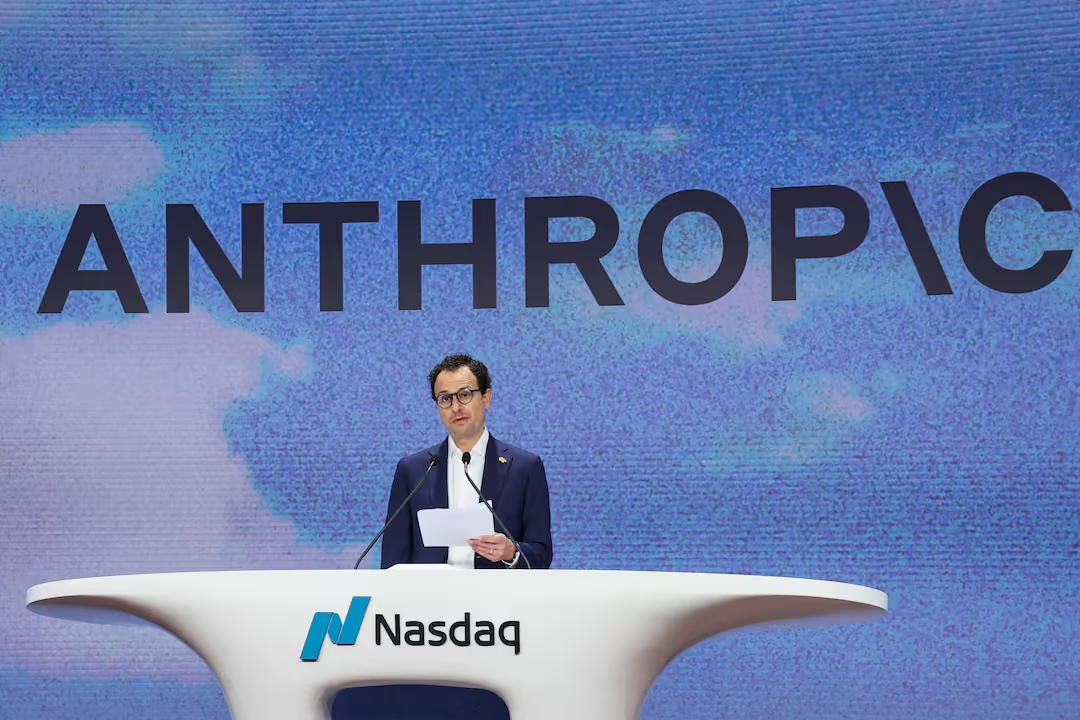
Anthropic Starts Trading Today. Watch the Calendar, Too.
- The noise: gray-market trades hinting at a big first-day jump.
- The signal: the deal grew, and so will the supply of shares.
Anthropic priced its IPO at $83 a share on Wednesday night, above its $70 to $78 range, and sold 980 million shares instead of the 825 million it first filed for.
It raised about $81 billion, the largest IPO on record, ahead of SpaceX’s roughly $75 billion in June. That values the company at about $1.5 trillion, counting every share and option.
Not everyone is cheering. Sen. Elizabeth Warren warned that regulators are “asleep at the switch” on the deal’s risks.
Here’s the part to put in your calendar. Most insiders can’t sell for about 180 days, which runs to around mid-May 2027, and some co-founders and big holders are locked up for up to a year. The $26 billion of shares that seven tech companies bought alongside the IPO has no lockup at all.
For context: since 2001, U.S. IPOs that raised $1 billion or more rose about 18% on their first day, on average, according to University of Florida professor Jay Ritter. SpaceX jumped 19% on day one in June, fell about 50% from its peak by late July, and closed last Friday about 3% above its IPO price.
The first day shows you demand. The lockup calendar shows you supply.
The Fed Wrote Down AI’s Weak Spots
- The noise: the idea that the minutes told markets nothing new.
- The signal: almost every official at the October meeting expected more rate hikes, and a couple raised the idea of going bigger than a quarter point in December if inflation came in hot. It did, two weeks later.
AI ran through the whole document. Many officials called the AI buildout a “material source of inflation risk.” Almost all of them discussed what happens if AI returns turn out “disappointing,” and most noted that AI-related debt has grown through “complex and opaque financing structures.”
Both things we told you to watch for came through.
Markets took it the hawkish way. Gold fell about 3% to its lowest in 13 months, the dollar hit a 19-month high and Bitcoin slid as U.S. bitcoin funds lost about $307 million in a day.
Traders now see a December rate hike as close to a sure thing, according to CME FedWatch.
Even the Fed is keeping a list of AI’s weak spots now.
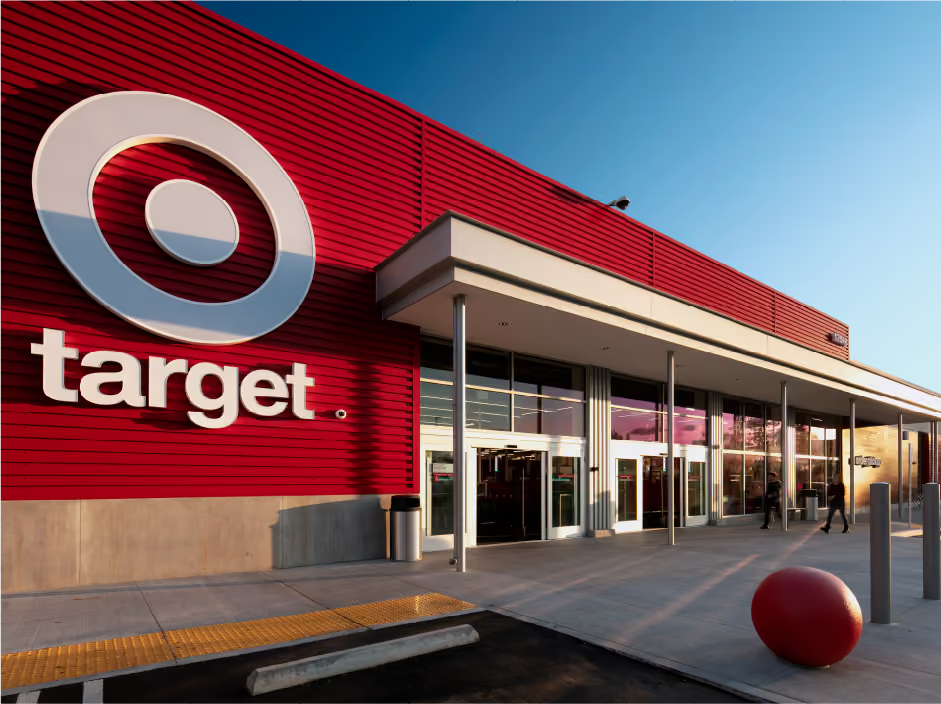
Shoppers Are Still Showing Up. Check the Receipt.
- The noise: Target’s headline beat.
- The signal: Target (NYSE: TGT) had its best sales growth in five years, with sales at stores open a year or more up 5.6%. But 50 cents of its $2.65 a share in profit came from one-time tariff refunds. That’s about a fifth of the quarter.
TJX rose 8% on a strong quarter. Meanwhile, permits for new single-family homes fell to their lowest since January 2023, a sign builders expect fewer buyers ahead.
On Tuesday, Home Depot showed the same pattern: fewer purchases, bigger receipts.
This morning, Walmart broke the tie. Revenue rose 5.2% to $188.8 billion, U.S. sales at stores open a year or more rose 2.9%, and it raised its forecast for the year.
Its shares still slipped about 2% before the opening bell, after the company flagged more than $2 billion of extra costs this year for fuel, transportation and its own investments.
Strip out the one-time refund, and the receipt looks smaller.

Featured Contributor
Today, a special guest: James Altucher, the hedge fund manager turned bestselling author of Choose Yourself, who has built and sold companies, hosted one of the most popular business podcasts in the world, and made, by his own admission, one legendary mistake. What he did next with that mistake is the reason he’s here.
The AI Babysitter Boom
You’ve probably asked an AI something this week.
Maybe even today.
A health question. A tax question. What to do with your 401(k).
I use AI all day. I’m a super-bull. I think the $10 trillion going into it pays back four times over in the next ten years.
But AI has weak spots. Places where it needs a babysitter.
And every one of them is an opportunity waiting for someone (basically ANYONE, in a bunch of ways) to grab it.
I’ll run through them.
1. It gives you the average answer. Ask it for a toast at your daughter’s wedding and you’ll get a toast a million fathers could give. That won’t change, and it makes anything with a human fingerprint worth more. Your voice, your memories, your experience, and your judgment just became more valuable. Congratulations on your promotion.
2. It does the math on assumptions you never chose. Ask how long your savings will last if you withdraw 4% a year. The arithmetic will be right. But it picked the inflation rate, the market returns and how long you’ll live. Only you know which of those fit your life. Human judgment (and liability) will always count.
3. It loses the thread on long jobs. Spend a few weeks working through your estate plan with it. Somewhere along the way, it drops a detail you gave it in week one. Even the best models still say “I’m sorry. I slipped.” Whoever perfects AI memory will win your business. You can build your own assistant, but it still needs hardware to run on. Either way, the memory-chip makers get paid.
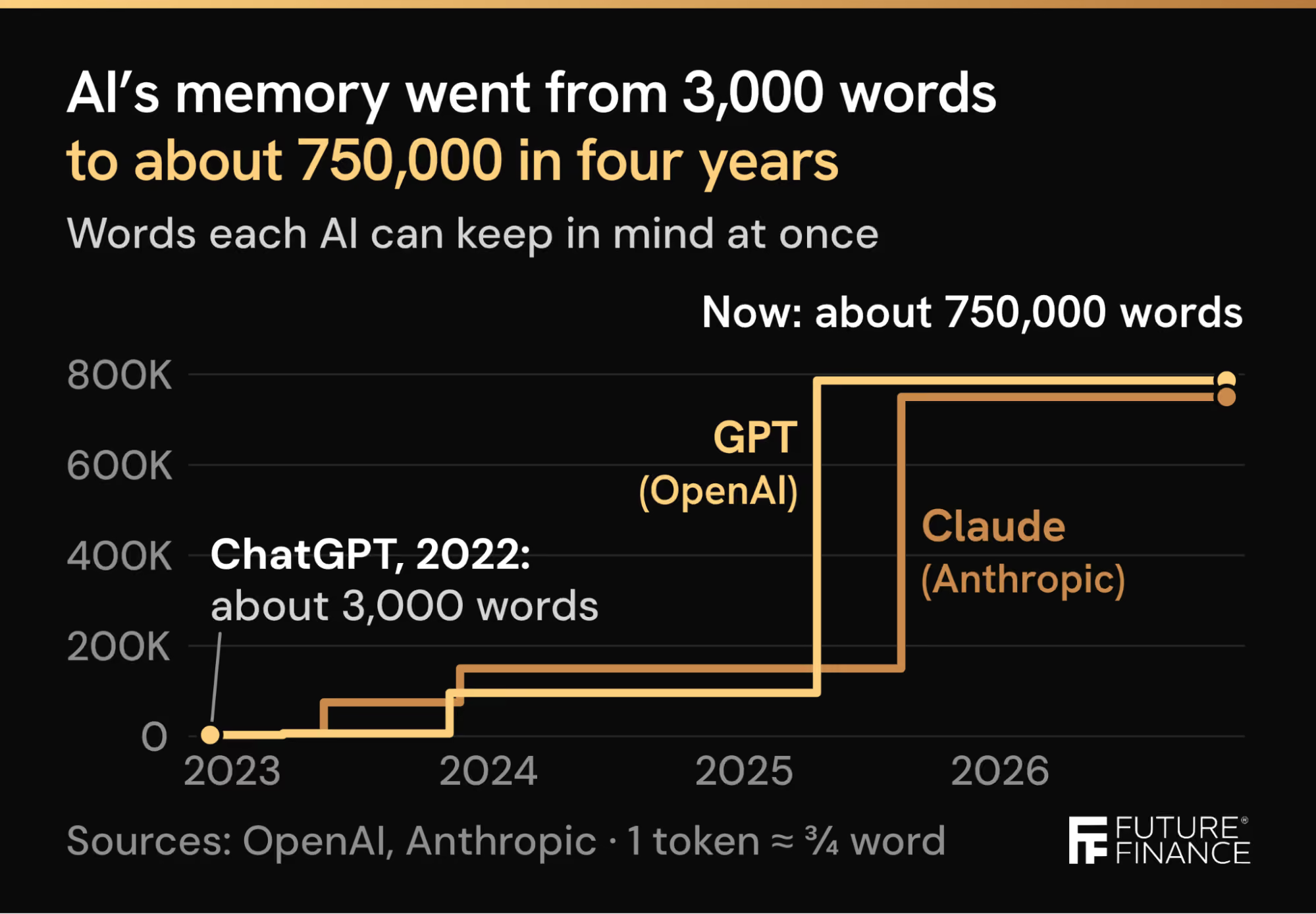
4. It has no taste. It learned from billions of essays. Only a few thousand are any good. Taste is scarce, and scarce things get paid. Great editors, designers and curators who learn to use AI effectively are about to be worth a lot more.
5. It’s stuck in the past. Ask about this year’s Social Security raise with web search off, and you may get last year’s number. Companies that feed AI fresh, verified facts get paid every time it answers. This also applies to knowledge, skills, and expertise.
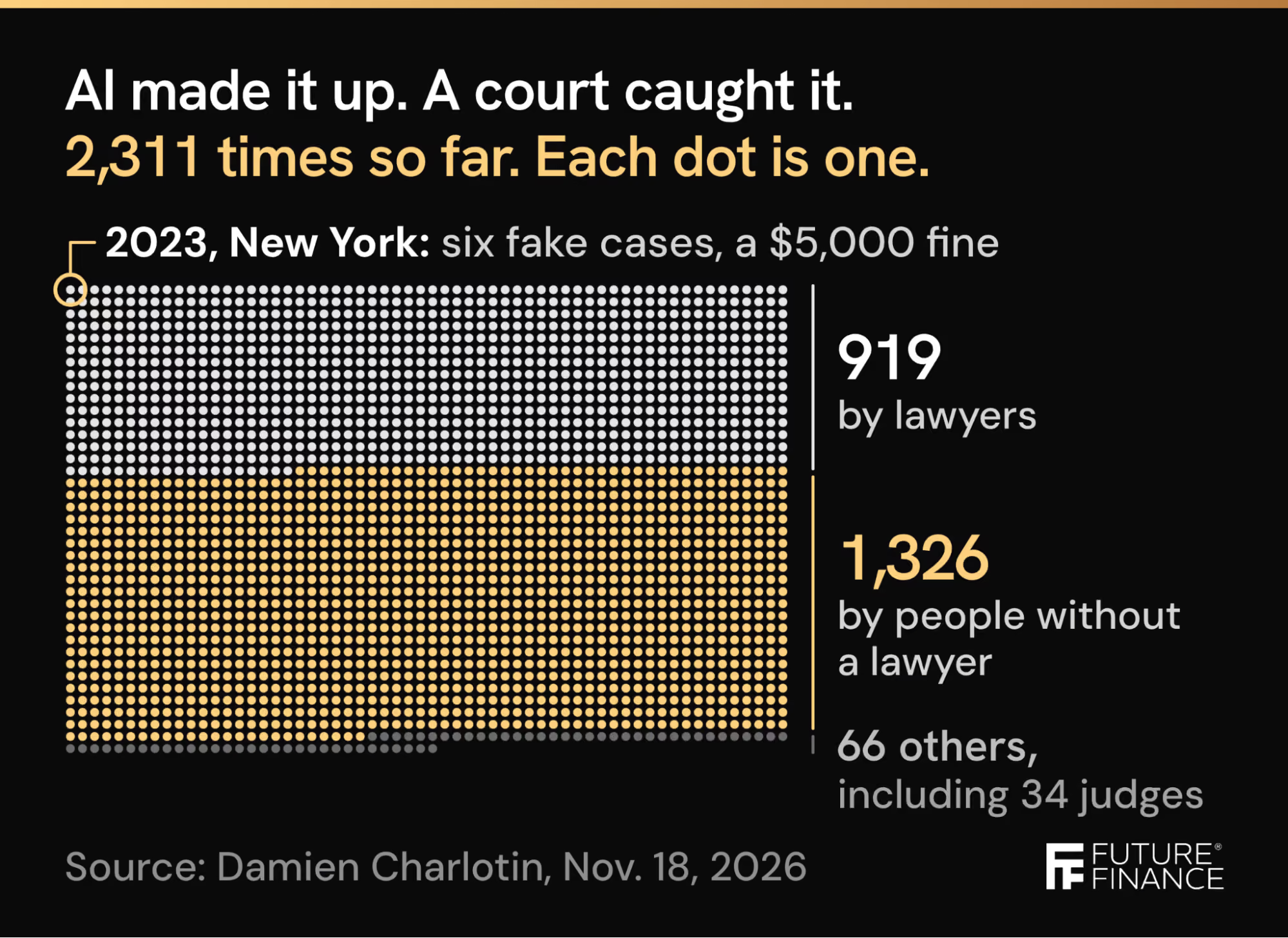
6. It’s confidently wrong. In 2023, a New York lawyer filed a brief citing six court cases ChatGPT made up. The judge sanctioned the lawyers. Someone will get rich making AI prove what it says. Others will go poor taking AI answers as gospel.
7. It changes its answer. Ask whether to claim Social Security at 62 or 70. Ask again tomorrow and you may get a different answer. Banks, insurers and hospitals will pay big for AI that gives the same answer twice. This means narrow, specialized AI is an opportunity.
8. It misses the rare case. Your symptoms usually point to the common thing, and AI bets on the common thing. You might be the exception. As AI handles the routine, the expert who catches the exception gets more valuable.
9. It agrees with you. Tell it “this stock can’t go any lower” and it will find reasons you’re right. That’s why smart users start every question with “Tell me why I’m wrong.” It also puts a premium on AI built to push back, and on advisers who push back for a living.
10. It’s getting worse at the small stuff. The AI giants chase the coding money. Your trade, your hobby and your town get less attention every year. Someone who knows a field cold can build the tool the giants won’t bother with.
AI has weaknesses.
Every weakness is a market.
If you think this opportunity has passed you by, think again. It’s only just beginning.
- James Altucher
One more thing from me: if James’s list got you thinking, he goes further in his free Millionaire Maker Masterclass. There, he names one company he says sits at the center of Elon Musk’s AI plans and still trades for under $100.
Watch James’s free masterclass →
Partner content: James Altucher writes for Paradigm Press, a paid partner of Future Finance. The views and claims above are his own and reflect his opinion at the time of writing, not Future Finance research or advice. Nothing here is a recommendation to buy or sell any security. As always, do your own diligence.
Everyone’s Chasing the AI Stocks. The Smarter Question Is What’s Underneath Them.
James just walked you through AI’s weak spots. Here’s the question underneath all of them, and most investors never step back far enough to see it.
America is carrying more than $39 trillion in debt, and the interest bill alone now runs past $1 trillion a year. Growth is the only realistic way out. And the government is betting on AI to deliver it.
That bet has to run through one specific asset class before a single model gets smarter.
Institutions like Goldman Sachs and BlackRock are already pointing there, and our research team just put the whole case into one free presentation.
Watch the free AI presentation right here…
Final Thought
James says every AI weakness is a market. This week, three of his weak spots came with price tags.
- Confidently wrong: courts around the world have now logged more than 2,200 decisions involving AI-invented citations, according to a database kept by researcher Damien Charlotin. The 2023 New York case James mentions cost the lawyers and their firm $5,000.
- Stuck in the past: Social Security’s raise is 3.6% for 2027. An out-of-date model might tell you last year’s 2.8%.
- Memory: SK Hynix, one of the biggest makers of AI memory chips, says its chips are effectively sold out through 2029.
And the Fed added one more to the list: the chance that all this spending doesn’t pay off.
Later today, Intuit, Ross Stores and Gap report after the closing bell.
Every weakness is a risk for someone and a market for someone else. Know which side of it you’re on.
See you tomorrow.
Editor in Chief | Future Finance
Paid Advertisement
Is This How America Ends?
Whitney Tilson called the 2000 tech wreck and appeared in an Emmy-winning 60 Minutes episode on the 2008 crisis.
Now he says the next six months will bring extreme change to America, driven by AI, and that no one in the country will be able to avoid it.
His full prediction is free to watch.
Disclosure: MarketWise is a paid partner of Future Finance. The forecasts, track record and claims above are those of Whitney Tilson, Stansberry Research and MarketWise, not Future Finance research or advice. As always, do your own diligence.
Disclaimer: This content is not financial advice, it is for informational purposes only. All investments involve inherent risk. Any financial decisions you make are solely your responsibility.
Latest



Editor's Picks
Become a sharper capital allocator in 5 minutes a day.
Institutional-grade research on where the smartest capital is positioning, across AI, energy, biotech, robotics, and digital assets. Distilled into a daily read you finish before your coffee does.
Join 45,000+ readers · No spam · Unsubscribe anytime · No card needed