

Bitcoin fell below $70K.
And the 5% number behind the drop →
November 16, 2026
·
7 Min Read




The briefing serious investors read first.
Free analysis before markets open. Start thinking in decades, not days.
Join 45,000+ readers · No spam · Unsubscribe anytime · No card needed
Before we begin: this report is for education, not financial advice. Nothing here is a recommendation to buy or sell any stock, company, or asset, and we make no price predictions. Investing carries risk, including loss. Please read the full disclaimer at the end.
Today’s Big Picture
What happens in Vegas stays in Vegas.
What happened to markets while we were there did not.
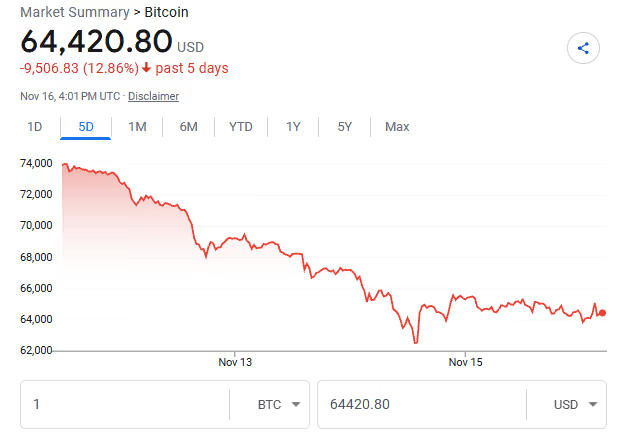
While we spent last week at the Bellagio with Decentralized Masters members, bitcoin fell for a sixth straight week. On Friday, it dropped below $70,000 for the first time since August.
By Monday morning, it was near $64,000, about half its record from October 2025.
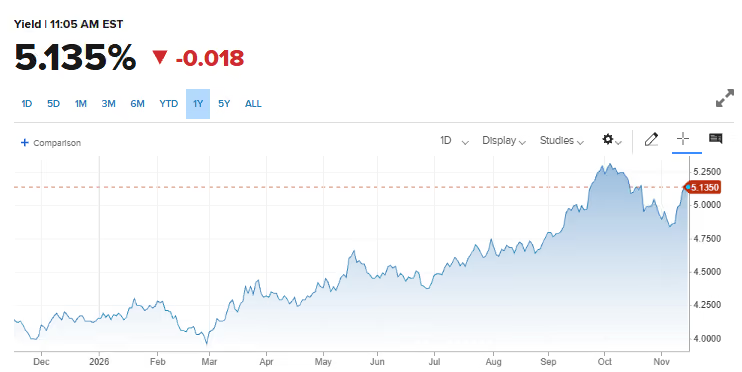
Gold slipped below $4,000. Nvidia lost its CEO. And the 10-year Treasury yield climbed to 5.15%.
When a safe government bond pays more than 5%, every other investment has to work harder to earn your money.
Below, the four things that mattered last week, and the noise you can skip.

Paid Advertisement
The Next Crisis Won’t Destroy Wealth. It Will Simply Change Hands.
A severe financial crisis does not make the world’s real wealth disappear. The businesses, land, natural resources, commodities, and productive assets still exist. What changes is who owns them.
Doug Casey and David Stockman have released an urgent briefing on how to position before the transfer.
Disclosure: International Man is a paid partner of Future Finance. The forecasts, track record and claims above are the views of Doug Casey, David Stockman and International Man, and do not represent the view of Future Finance. As always, do your own diligence.
Signal vs. Noise
Bitcoin Broke a Line It Rarely Breaks
- The noise: posts saying bitcoin is finished, and posts saying this is the bottom.
- The signal: on Friday, bitcoin fell below its 200-week average, its average price over roughly the past four years.
Long-term holders watch that line closely. In past cycles, bitcoin spent long stretches below it only in its deepest slumps, like 2018 and 2022.
The selling was broad. Investors pulled about $1.9 billion from U.S. spot bitcoin funds over seven straight trading days through Friday. On Monday, the Fear & Greed Index, a popular gauge of digital-asset sentiment, read 10 out of 100.
That tells you how scared the crowd is. It can’t tell you what happens next.
The Bond Market Did the Real Moving
- The noise: the day-to-day swings in stocks.
- The signal: the 10-year Treasury yield ended Friday at 5.15%. The 2-year yield, which tracks where traders think the Fed is headed, rose about 0.35 percentage point in a week, its biggest weekly jump since September 2024.
The push came from inflation. Prices at the wholesale level were up 6.5% from a year earlier in October, the most since November 2022.
After last week’s inflation report, traders put a December rate hike at about 9 in 10. By Friday, they saw it as close to a sure thing, according to CME FedWatch.
Gold, which pays no interest, fell below $4,000 on Thursday as yields and the dollar climbed.
That’s the thread through the whole week: safe money got more expensive, and the assets that pay nothing felt it first.
Nvidia Lost Its CEO. Tuesday Tests the Business.
- The noise: guesses about who runs Nvidia next.
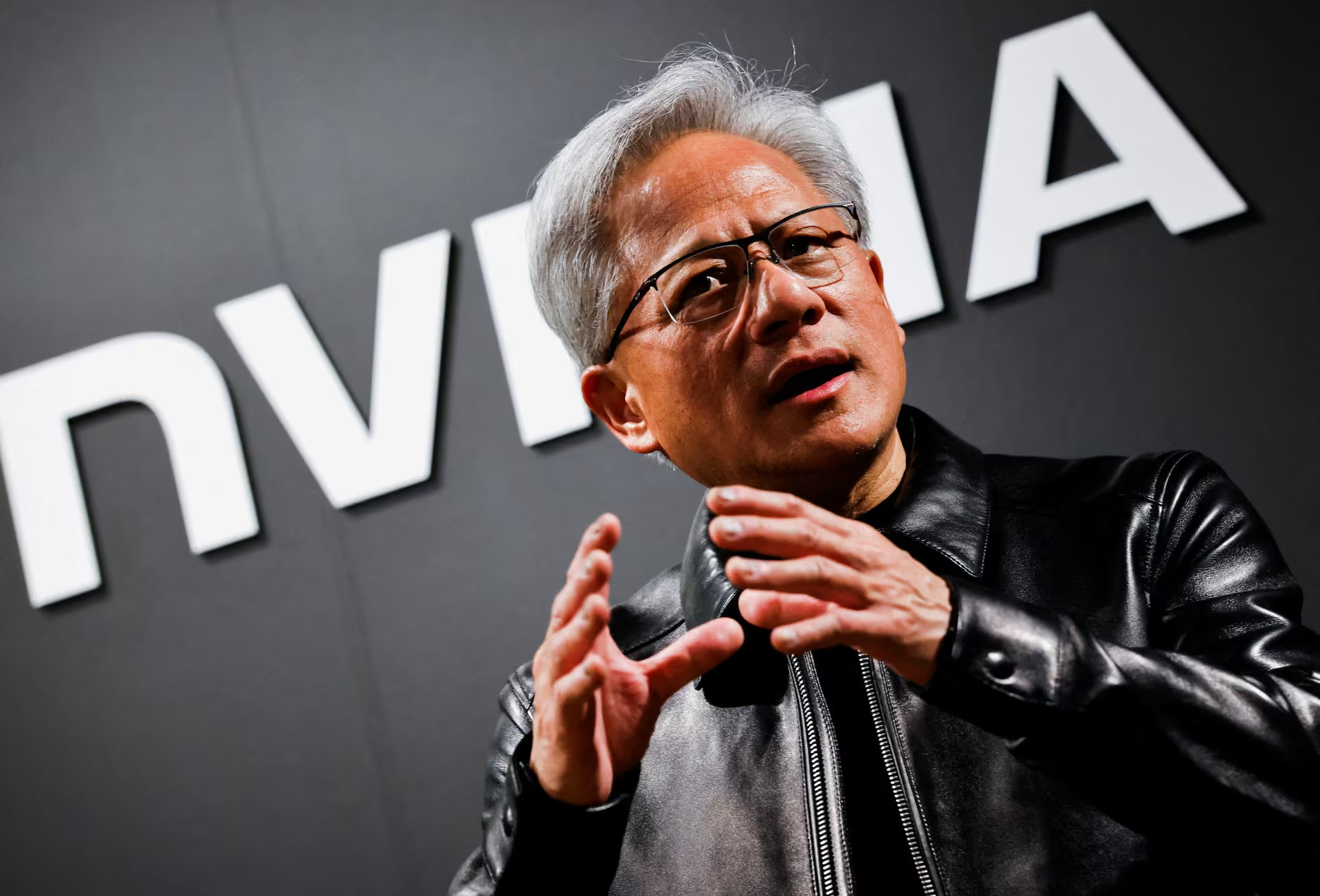
- The signal: Jensen Huang resigned as CEO last Thursday, effective immediately, four days after Nvidia’s directors opened an investigation. Chief financial officer Colette Kress is now interim CEO as well. The stock ended the week down about 13%.
Nvidia reports after the close on Tuesday. It told investors to expect about $108 billion of revenue for the quarter, and Wall Street expects a little more.
On Nov. 9, we wrote that the first day prices the person, and every day after that prices the business. Tuesday is the business’s turn.

Featured Contributor
Today’s featured contributor is Jeremy Harbour, a veteran M&A expert, Wall Street Journal bestselling author, and founder of The Harbour Club, who has personally bought, sold, or advised on more than 300 business acquisitions.
The Biggest Business Buying Opportunity of a Generation?
Thousands of baby boomers are reaching retirement age every day.
Many own businesses they have spent decades building. Companies with established customers, experienced employees, and years of trading history.
But there is a problem.
Their children often have no interest in taking over, and finding an external buyer can be surprisingly difficult.
Why smaller businesses struggle to sell
Private equity firms generally prefer larger acquisitions.
Businesses generating less than $10 million in annual revenue can be too small to interest institutional investors, yet too expensive for individuals who assume they need millions in the bank to buy one.
Some owners spend years searching for a buyer. Others eventually close otherwise viable businesses.
For prospective buyers, this creates an unusual opportunity.
Buying businesses without putting cash down
When an owner wants to retire, they may be willing to finance the sale themselves.
Rather than paying the full purchase price upfront, the buyer negotiates payments from the company’s future cash flow.
This is known as seller financing.
Other structures include deferred payments, earn-outs, and equity arrangements.
These methods can allow buyers to acquire established companies without committing their own capital upfront.
What do these deals look like?
Jeremy Harbour has spent 30 years using these strategies, and has documented more than 50 real-world acquisition case studies across over 20 industries.
Examples include:
- An engineering business acquired for 8 million with no capital upfront
- An entrepreneur who acquired 80% of a company for just one dollar
- A mother who acquired a 156-year-old electrical contracting business generating 3 million in annual revenue
- A buyer who acquired a 1.7 million business that came with 1 million in property
Of course, acquiring a business without upfront capital does not eliminate the risks.
Understanding its cash flow, liabilities, and ability to support future payments remains essential.
But these examples demonstrate something many prospective entrepreneurs overlook:
Buying an established business does not necessarily require millions in the bank.
Discover how these acquisitions were structured
Jeremy has made more than 50 real-world M&A case studies available, including interviews with buyers, live event presentations, and detailed breakdowns of completed acquisitions.
They reveal how entrepreneurs found their opportunities, negotiated with sellers, and structured deals without providing their own capital upfront.
The case studies cover more than 20 industries, including engineering, construction, healthcare, IT, education, and manufacturing.
Get 50+ real-world M&A case studies delivered to your inbox, with the first arriving in approximately 60 seconds.
Partner content: Jeremy Harbour is a Future Finance contributor. The views, figures, and case studies above are his own and reflect his opinion at the time of writing, not Future Finance research, advice, or a recommendation to buy or sell any security or business. Nothing here is investment, legal, or tax advice. Past performance does not guarantee future results, and any investment can lose money. Always do your own research before acting.
Paid Advertisement
Legendary investor drops MAJOR new bombshell about Elon Musk.
It’s a project James says will be even BIGGER than SpaceX – creating up to 1.8 million new millionaires over the coming years – starting on Dec 8.
And the pieces behind all of it are sitting inside this case – which he reveals 100% FREE in this brief video.
Disclosure: Paradigm Press is a paid partner of Future Finance. The forecasts and claims above are James Altucher’s / Paradigm’s, not Future Finance research or advice. As always, do your own diligence.
Final Thought
On Friday, Max told you how Las Vegas got built: the casino doesn’t need to win every hand. It needs a small edge, on every bet, for long enough.
Right now, the bond the world treats as its safest has an edge of its own. A 10-year U.S. Treasury pays 5.15% (as of Friday), and every other investment, from bitcoin to a stock to a small business, has to beat it.
This week tells us whether that bar keeps rising:
- Tuesday: October retail sales in the morning, then Nvidia after the close.
- Wednesday: housing starts, earnings from Target and Lowe’s, and the minutes of the Fed’s October meeting at 2 p.m. ET.
- Thursday: Walmart’s results, a read on how shoppers are holding up.
Every investment now has to beat the house.
And thank you to everyone who joined us in Las Vegas. Photos from Ocean’s DM are coming later this week, once I’m back on the ground.
See you tomorrow.
Editor in Chief | Future Finance
Paid Advertisement
Everyone Owns The Same Seven Stocks. The Edge Is Somewhere Else.
When 40% of the market is crowded into a handful of names, the opportunities with real room to run are the ones the crowd hasn't found yet.
That's the whole job of Gems Uncovered, the weekly research report on early, asymmetric plays before they reach the mainstream.
The crowd piles into what's already big. This is about what's next.
Disclaimer: This content is not financial advice, it is for informational purposes only. All investments involve inherent risk. Any financial decisions you make are solely your responsibility.
Latest




Editor's Picks


Become a sharper capital allocator in 5 minutes a day.
Institutional-grade research on where the smartest capital is positioning, across AI, energy, biotech, robotics, and digital assets. Distilled into a daily read you finish before your coffee does.
Join 45,000+ readers · No spam · Unsubscribe anytime · No card needed