

4 ways 2027 plays out.
Here’s what happens, with photos →
November 18, 2026
·
8 Min Read



The briefing serious investors read first.
Free analysis before markets open. Start thinking in decades, not days.
Join 45,000+ readers · No spam · Unsubscribe anytime · No card needed
Before we begin: this report is for education, not financial advice. Nothing here is a recommendation to buy or sell any stock, company, or asset, and we make no price predictions. Investing carries risk, including loss. Please read the full disclaimer at the end.
Today’s Big Picture
At last weekend’s event for Decentralized Masters members, we gave every table in a Bellagio ballroom $10 million of pretend money and four different versions of 2027.
Round after round, every table had to guess what was coming.
The lesson of the weekend came from a split that never won a single round.
Held through all four, it beat every round’s “perfect” answer.
You can’t pick the year. You can build a plan that survives all of them.
That’s a handy idea for a week like this one.
- Nvidia just posted a record quarter
- Anthropic is expected to price its IPO tonight
- and the Fed’s minutes land this afternoon
Below, the signal in the two biggest stories. Then the full story from Vegas, with photos.

Paid Advertisement
“This Is Going To Be One For The Record Books.”
Doug Casey believes the years ahead could prove more dangerous than the 1930s, the 1940s, and even the 1860s.
But he draws a distinction: just because society experiences turmoil doesn't mean your personal life has to.
He and former Reagan budget director David Stockman explain how to keep America's crisis from becoming your crisis.
Disclosure: International Man is a paid partner of Future Finance. The forecasts, track record and claims above are the views of Doug Casey, David Stockman and International Man, and do not represent the view of Future Finance. As always, do your own diligence.
Signal vs. Noise
Anthropic Is Expected to Price Its IPO Tonight. Read Past the Pop.

- The noise: tomorrow’s first-day move, the trillion-dollar headlines and reports that orders far outnumber the shares on offer.
- The signal: what the filing says about the business, its bills and who’s in control.
The deal. Anthropic plans to sell 825 million shares at $70 to $78 each, with trading expected to start Thursday on Nasdaq under the ticker ANT. CNBC, Bloomberg and The Wall Street Journal report the price could land above that range. Up to 20% of the shares may go to individual investors, well above the usual 5% to 10%.
The business. Revenue went from $4.6 billion in all of 2025 to $33.2 billion in the first nine months of 2026, according to its filing. It made an operating profit in the second quarter and an operating loss of $567 million in the third. Its much larger net losses come mostly from non-cash accounting charges tied to its rising value.
The bills. The filing lists about $895 billion of spending commitments, almost all for computing power, with about $70 billion due within a year. Seven companies, several of them Anthropic’s own suppliers, agreed to buy $26 billion of stock alongside the IPO.
The control. Public shares get one vote each. A single share held by the co-founders carries 50.1% of the vote on most matters, and a trust elects most of the directors. It’s a public benefit corporation, and the filing says its mission can conflict with shareholders’ financial interests.
The history. Since 1980, U.S. IPOs have risen an average of about 19% on their first day, with a median of 7%, according to University of Florida professor Jay Ritter. Over the following three years, they’ve trailed the market on average.
SpaceX, which listed in June at $135, closed its first day near $161, traded around $105 in August, and closed Monday near $137.
The first day tells you what people will pay. The filing tells you what they’re buying.
Nvidia: Record Quarter, No CEO
- The noise: the beat. Revenue came in at $115.8 billion, against about $109 billion expected.
- The signal: the forecast, which is exactly what we said to listen for first.
Nvidia guided to about $130 billion next quarter, above the roughly $125 billion Wall Street wanted. That figure includes an extra week, assumes nothing from China and comes with thinner profit margins: 71% to 72%, down from about 75%.
On the call, Harvey Jones, who now leads Nvidia’s directors, said they don’t intend to bring Jensen Huang back as CEO. Interim CEO Colette Kress closed with four words: “We have got this.”
The stock was up about 4% before the opening bell. That follows a rough Tuesday, when the S&P 500 fell 1% to its lowest close since late July and the Dow lost nearly 850 points.
The numbers answered the business question. The leadership question is still open.

Featured Lead
Today’s Featured Lead comes from me, Rami Al-Sabeq, Editor in Chief of Future Finance. I MC’d Decentralized Masters’ live event in Las Vegas last weekend and ran three of its sessions. Nothing here is a recommendation.
We Ran Four 2027 Scenarios. Here’s What Won.
I got home from Las Vegas a few hours before writing this, and I’m still buzzing.
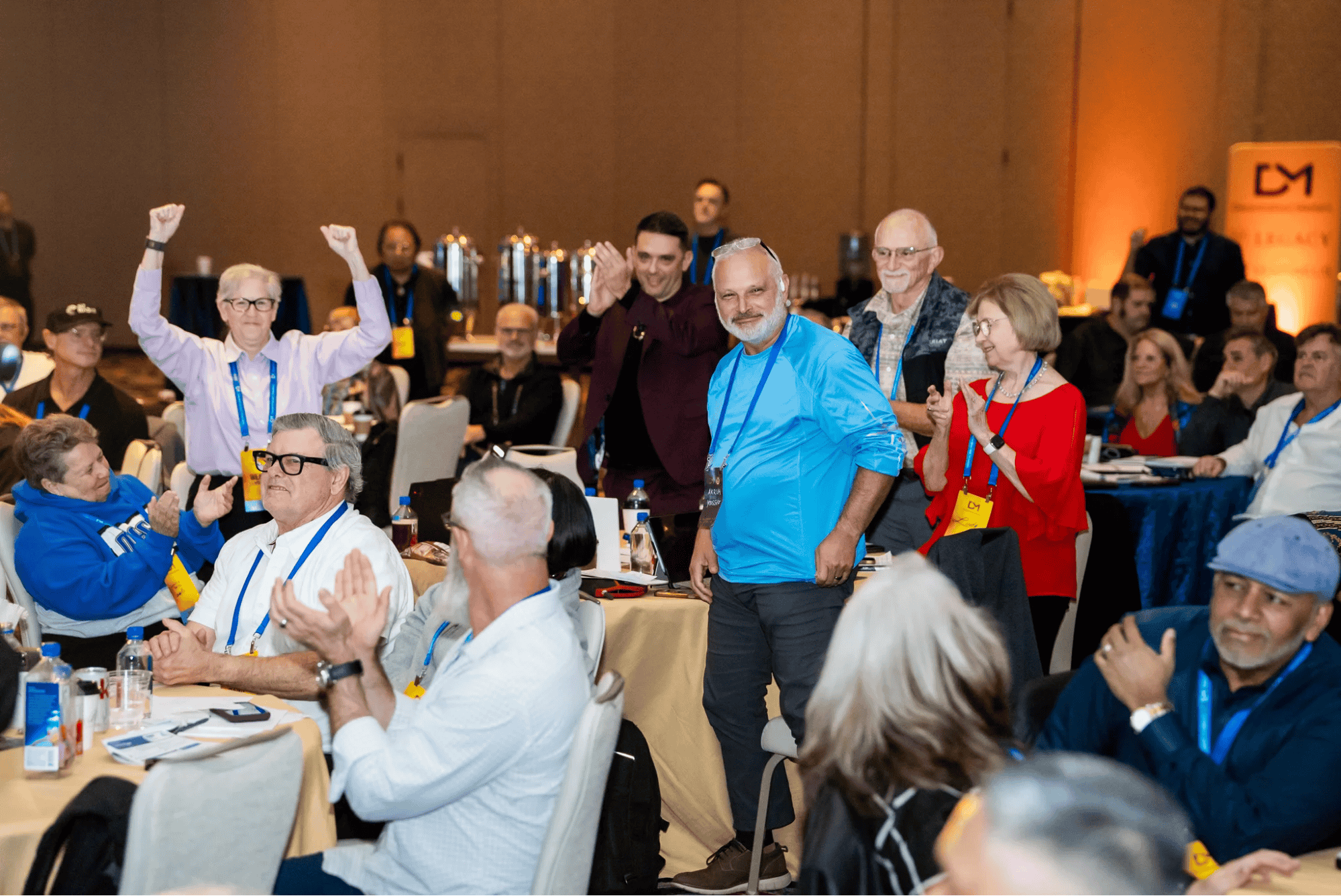
Last weekend, Decentralized Masters took over a ballroom at the Bellagio for Ocean’s DM, our live event for members.
More than one person walked up to us to say they go to many conferences a year, hundreds over their careers, and had never been to one quite like this.
Here’s why.
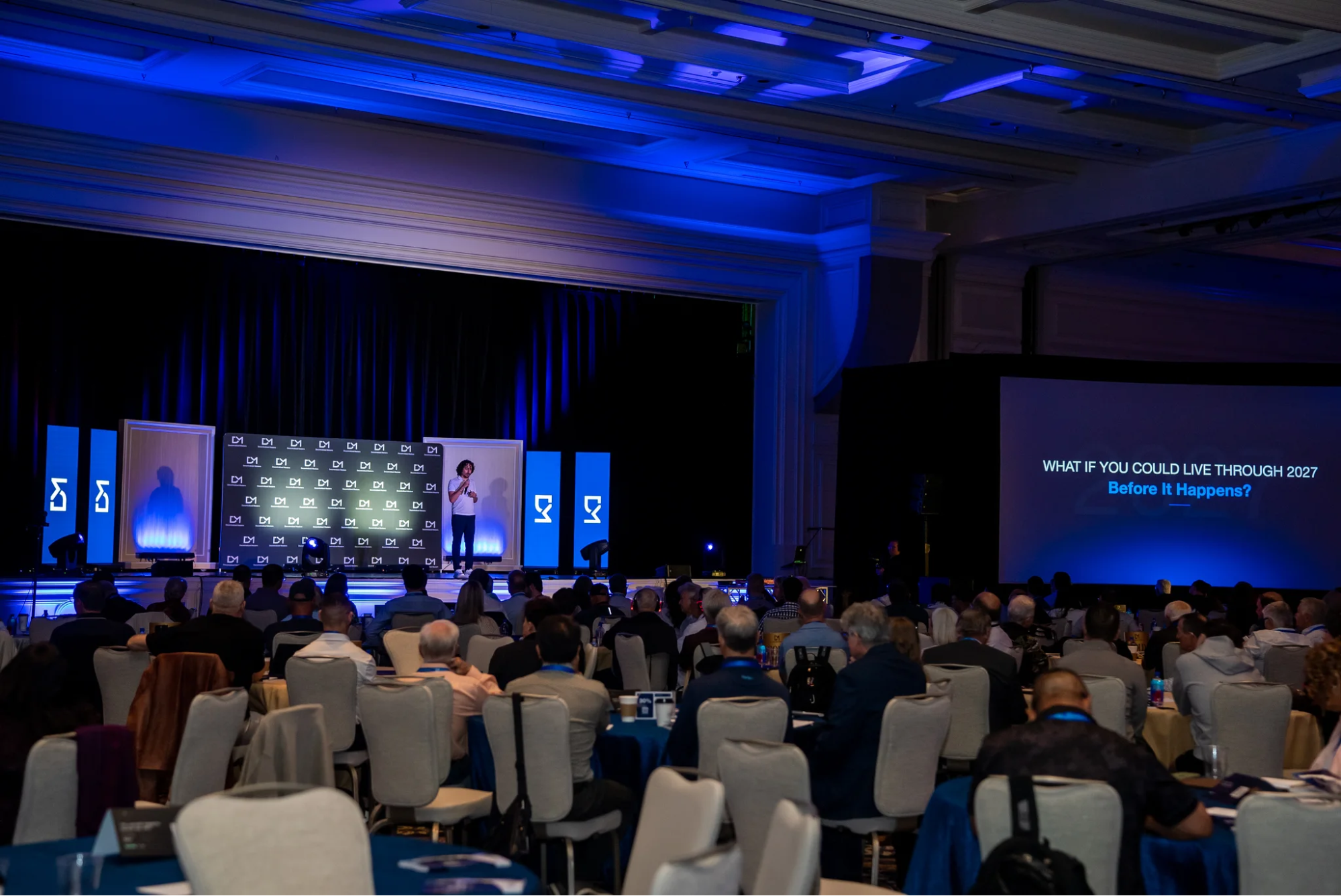
Ocean’s DM at the Bellagio, Las Vegas, November 2026.
The game
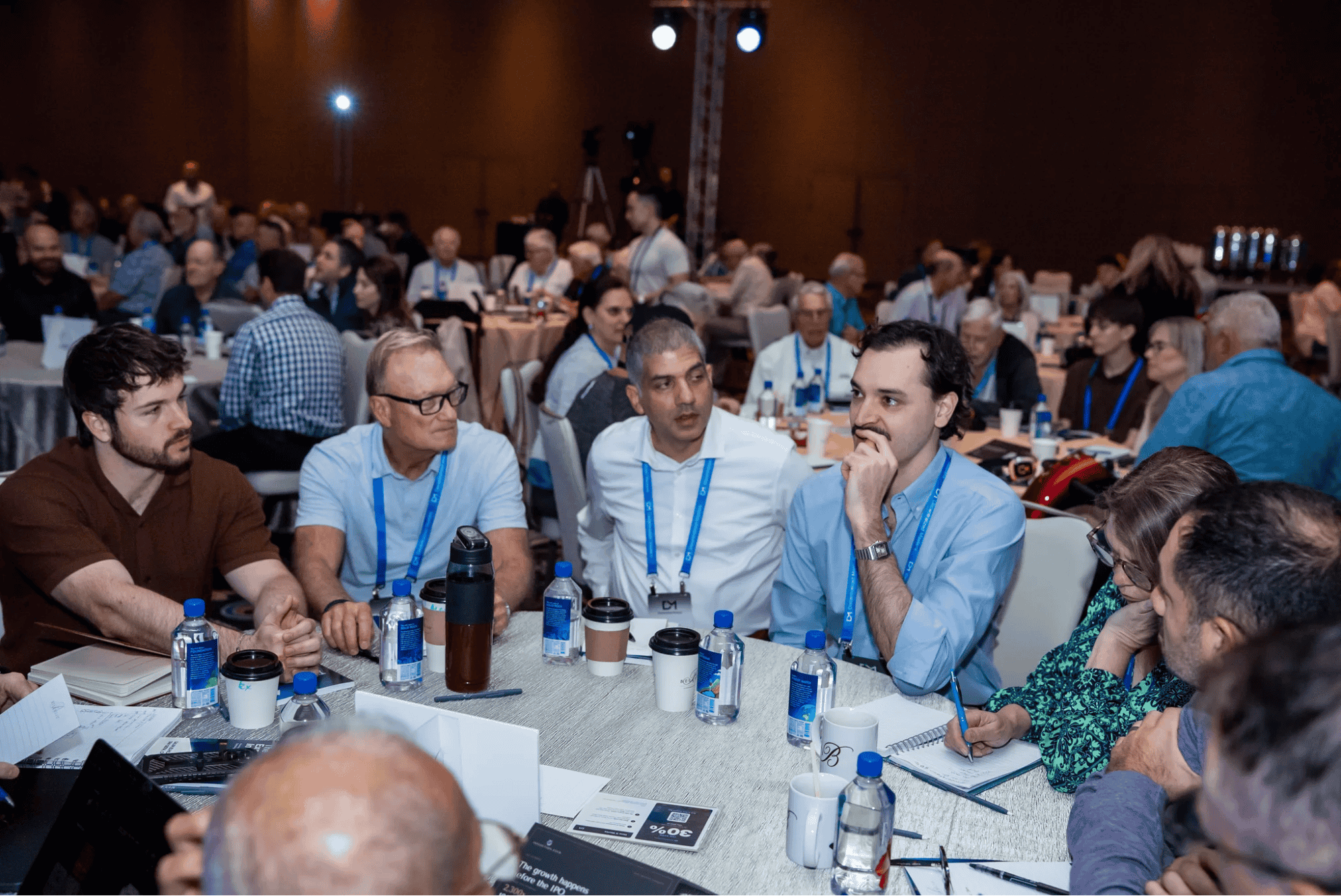
Every table was an investment committee with $10 million of pretend money to split across seven asset classes: digital assets, stocks, bonds, gold, real estate, private companies and cash.
Then we played four different versions of 2027.
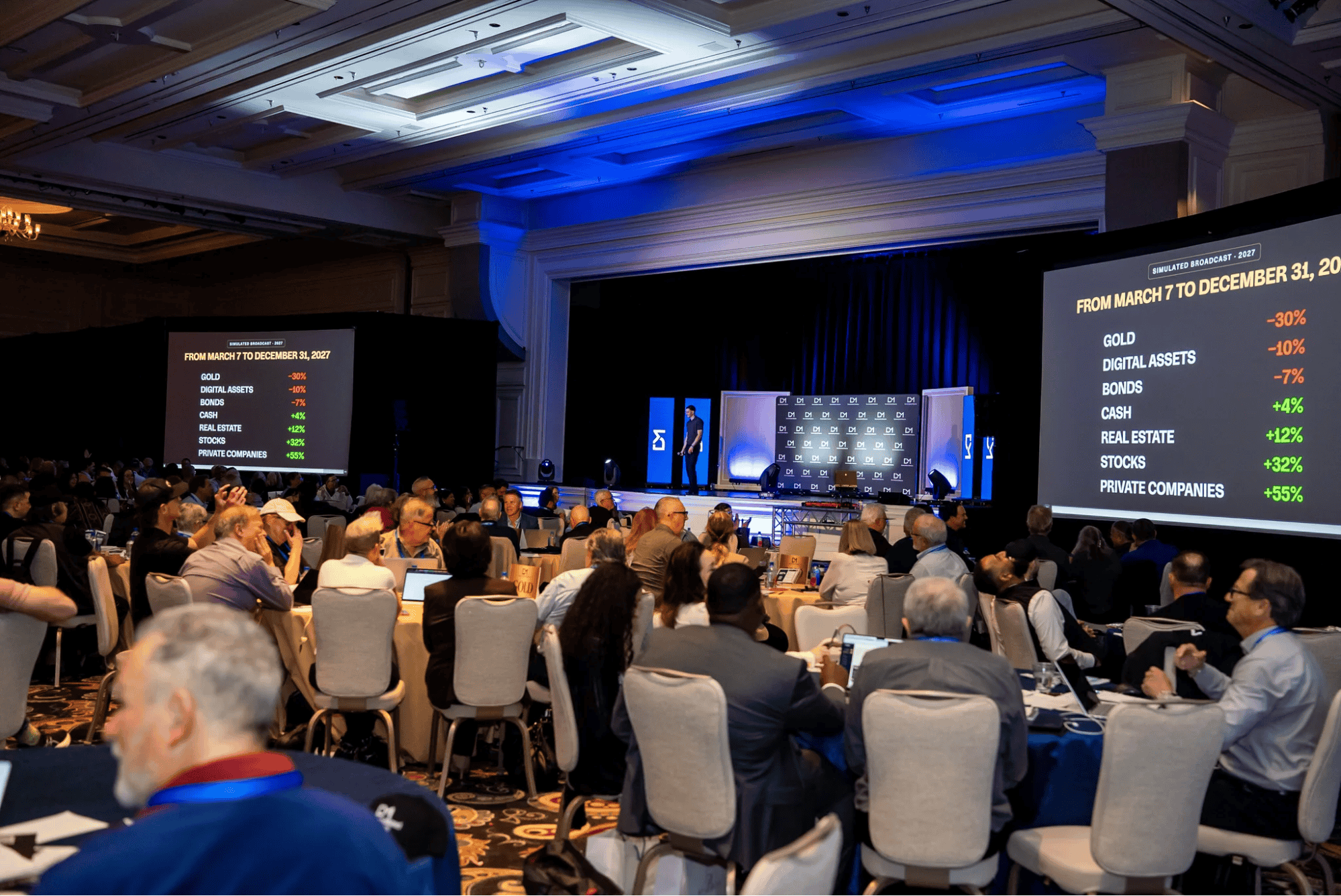
Each round opened with a short “broadcast from 2027,” a news report from a year that hasn’t happened yet. Each table had a few minutes to argue, agree and lock in its split.
Then came the second video: the reveal, showing how every asset class did in that version of the year.
That’s when you heard the room. The oohs and aahs every time a reveal landed are the sound I’ll remember most.
Everyone also saw, privately in Legacy, what that same year would have done to their own real portfolio. That made it personal fast.
And for a lot of people, the best part of the weekend was the arguing at their own table.
What won
No table could know which version of 2027 was coming next. That was the point.
At the end, we revealed one more split: a balanced mix, set once and never changed.
It was never the best answer in any single round.
Held through all four, it beat almost every round’s “perfect” answer. And the tables that kept chasing whatever had just won the round before lost ground.
Two tables finished on top, one for each ending of the final scenario. The ballroom settled it the only way it could, by chanting “Same team.”
The rest of the weekend
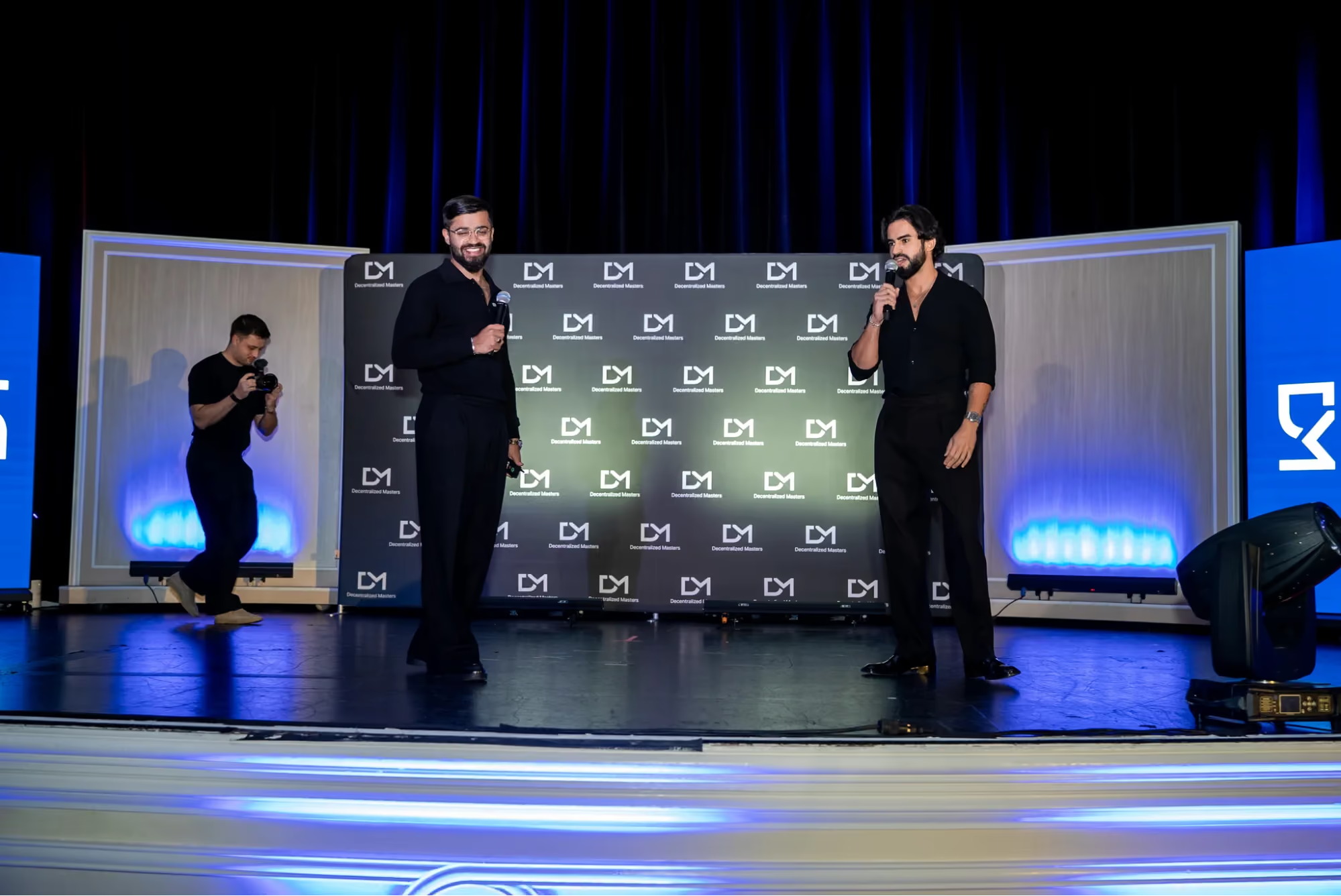
Tan Gera and Salim Elhila, who co-founded Decentralized Masters, opened Saturday. Tan followed with an investment training he gave on his own.
I walked everyone through how the game works, ran a Digital Assets 101 session at the end of Day 1, and on Day 2 led the workshop where members turned the weekend into their own plan for 2027.
I also had the best seat in the house as the MC.
Salim’s closing presentation on Day 2 was one of the highlights of the weekend.
In between, there was a Saturday night party at AREA15 and, on Sunday evening, our Platinum experience.
Behind all of it, Legacy, the app every table used to lock in its moves, ran smoothly from the first round to the last.
Play it at home
If you missed it, Maxwell Nee took you inside the Inflection Club’s two days at the same hotel last week. Here’s a version of our game you can play this weekend.
Write down how you’d split your money if you couldn’t touch it for a year.
Then ask how that split does in a boom, in a crash and in a year nobody saw coming.
If it only works in one of them, you’ve made a bet on the year.
Nobody in that room could pick the year. The plan that survived every version of it won.
Thank you to everyone who came. You made it the best weekend of our year.
Want a seat at the table next time?
Ocean’s DM was for Decentralized Masters members, and so is every live event we run.
If you’d like to be in the room next time, it starts with a short call with our team. We’ll walk you through how membership works and whether it’s a fit for you.
[[LINK TO ADD: Book a call with our team →]]
The game used hypothetical money and imagined scenarios, and its results aren’t a forecast or a track record. Everything DM teaches is education, and none of it is advice about your own money. Legacy is a separate product from an affiliated company.
Paid Advertisement
Silver: $60 Today. $500 Next?
Elon wants 1 million satellites in orbit. Every one runs on solar panels printed with silver.
At full scale, his plan needs nearly half the silver mined on Earth. Every year.
And on January 1st, a deadline Congress set squeezes Chinese suppliers out of America's solar factories.
Dylan's found one American company sitting on exactly what Elon needs.
Get the name before January 1st >>
Disclosure: Behind the Markets is a paid partner of Future Finance. The forecasts, track record and claims above are Dylan Jovine's and Behind the Markets', not Future Finance research or advice. As always, do your own diligence.
Final Thought
At 2 p.m. ET today, the Fed publishes the minutes of its October meeting.
That’s the meeting where it held rates at 3.75% to 4.00% by a 10–2 vote. Both dissenters, Governor Lisa Cook and Cleveland Fed President Beth Hammack, wanted a hike.
Kevin Warsh, who leads the Fed, called it “a heck of a family fight.”
Three things to look for:
- How many officials wanted to raise rates in December. Traders already see a hike as close to certain.
- Whether anyone floated a half-point move.
- What they said about stepping into the bond market if it strains, a theme Hammack has been pressing.
Whatever the minutes say, the lesson from Vegas holds.
You don’t have to guess the ending if your plan can live with all of them.
See you tomorrow.
Editor in Chief | Future Finance
Paid Advertisement
Chaikin: The AI Stock to Own by Dec. 5
Marc Chaikin's Power Gauge flashed bullish on Nvidia before its 50,000% run, he says. Now it's flashing on an off-the-radar AI company he expects to make a major announcement on or before December 5. Its "micro cluster" technology, Chaikin says, uses 99% less energy and water than today's data centers. He's giving away the name and ticker free.
See Chaikin's Dec. 5 stock here →
Disclosure: MarketWise is a paid partner of Future Finance. The forecasts, track record and claims above are those of Marc Chaikin, Chaikin Analytics and MarketWise, not Future Finance research or advice. As always, do your own diligence.
Disclaimer: This content is not financial advice, it is for informational purposes only. All investments involve inherent risk. Any financial decisions you make are solely your responsibility.
Latest



Editor's Picks

Become a sharper capital allocator in 5 minutes a day.
Institutional-grade research on where the smartest capital is positioning, across AI, energy, biotech, robotics, and digital assets. Distilled into a daily read you finish before your coffee does.
Join 45,000+ readers · No spam · Unsubscribe anytime · No card needed