
A promise just moved a trillion dollars.
No signature. No ink. Just an announcement, and markets erupted. What happens when the promise has to become real?
June 12, 2026
·
9 min read



The briefing serious investors read first.
Free analysis before markets open. Start thinking in decades, not days.
Join 45,000+ readers · No spam · Unsubscribe anytime
Before we begin: this report is for education, not financial advice. Nothing here is a recommendation to buy or sell any stock, company, or asset, and we make no price predictions. Investing carries risk, including loss. Please read the full disclaimer at the end.
📊 Today’s Big Picture
For two weeks, every market moved on one fear. The war pushing oil higher, and oil pushing inflation higher.
Yesterday, that fear ran in reverse.
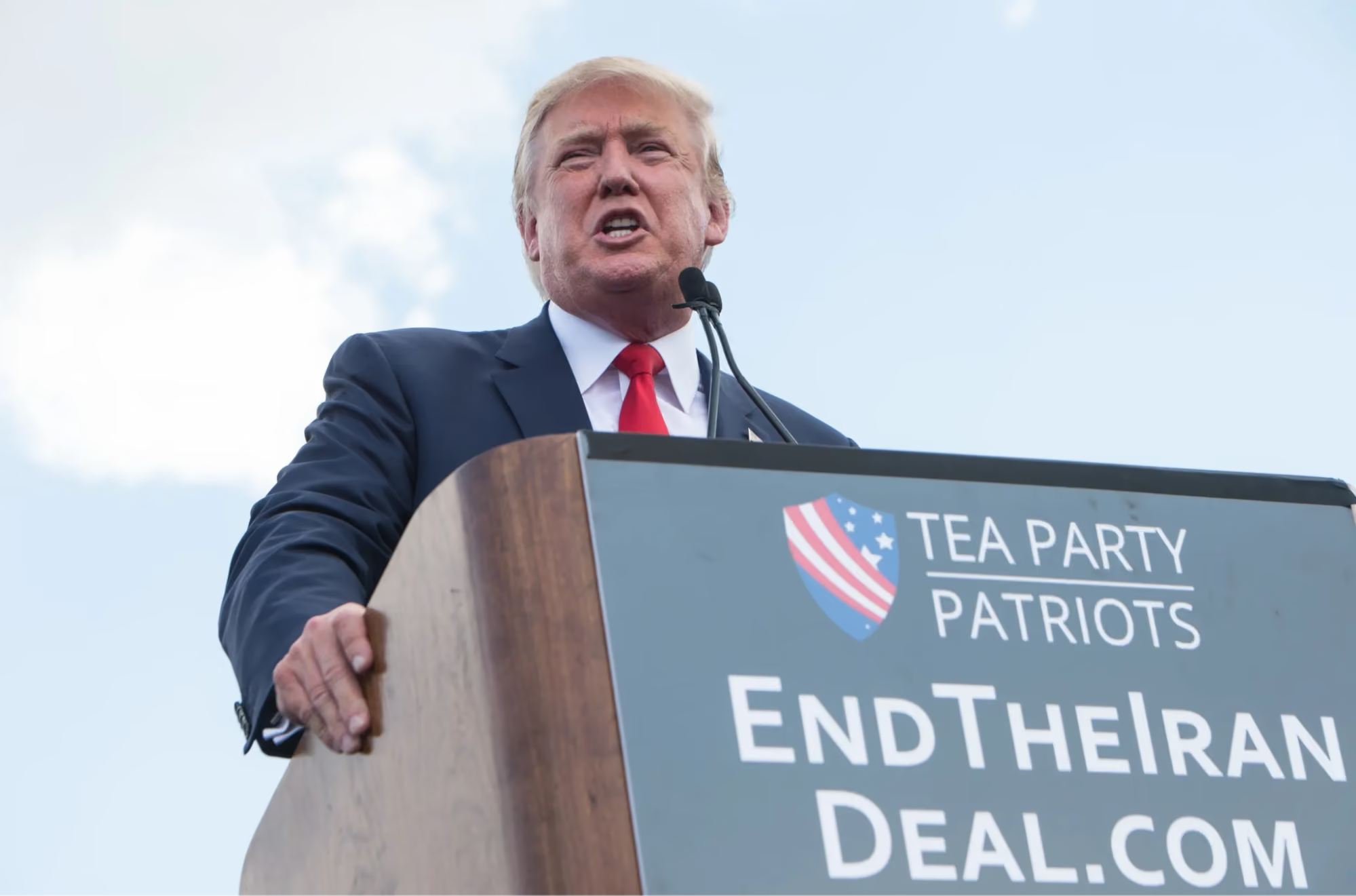
President Trump called off planned strikes on Iran and said a deal had been reached.
Oil tumbled to a two-month low. And everything that had fallen on the war bounced back.
Stocks rallied hard. The S&P 500 (INDEX: SP500) had its best day in two months. Gold steadied. Bitcoin (BTC) jumped back above $63,000.
For one day, the whole chain unwound.
But here is what the relief skips over.
The deal is not signed. It is a promise, and Iran already disputes parts of it.
And the inflation the war already created has not gone anywhere. Prices broke 4% this week. The fastest in three years.
That number lands on a new Fed chair's desk on Tuesday.
By the end of this issue, you will know what flipped the week, what the rally is ignoring, and what Tuesday decides.
🔍 Signal vs. Noise
Three Headlines, Three Realities

1. The first headline is that the war is over.
- What reality says: a deal was announced, not signed.
Trump canceled the strikes and said the conflict was settled. That is genuinely good news, and the markets treated it that way.
But what exists right now is a framework, not a signature. The two sides have agreed in principle to a 60-day pause.
Iran already disputes part of it, including who controls the Strait of Hormuz, the channel that carries a fifth of the world's oil.
And this is not the first time a deal has looked close. By one count, it has been called near roughly 40 times since the spring.
A promise moved the market. A signature has not arrived.
2. The second headline is that falling oil means inflation is solved.
- What the math says: the damage is already done.
Inflation rose to 4.2% over the past year. The first time above 4% since 2023.
Wholesale prices, the costs businesses pay before they reach you, rose at 6.5%. The fastest since 2022.
Lower oil from here helps the months ahead. It does not unwind the spike that already happened.
That inflation is baked in. And it arrives at the Fed's door next week, no matter what oil did yesterday.
The relief is about tomorrow. The inflation is about what already happened.
3. The third headline is that the bounce means the all-clear.
- What reality says: one good day is not a resolution.
Stocks, gold, and Bitcoin all rose together yesterday on the same headline. The same way they fell together on the war.
That tells you something. These markets are still being moved by a single story they cannot control.
When everything you own rises and falls on one man's next announcement, that is not safety. That is a coin flip you are not in charge of.
The noise says the war is done and the danger has passed.
The signal says a promise bought a rally, and the bill from this week is still due Tuesday.
Free Strategy Call
The Investors Who Bounced Yesterday Were Positioned Before The News
A single announcement, with no warning, sent oil down and stocks up in minutes. Nobody traded their way in fast enough to catch that. The move was over before most people read the headline. The investors who profited were the ones already positioned for a resolution before it came. They did not gues
The desk that built the framework four thousand investors now use spends its time on exactly this. Positioning before the catalyst, not after.🧠 Behind the Headlines
This week, Editor-in-Chief Rami Al-Sabeq and Head of Research Tyler Hubbard on the pillar of the ABN System that matters most right now.


Yesterday handed us a perfect lesson, so we want to slow down and name it.
The market did not reward the people who guessed right. It rewarded the people who were already there.
The Move Was Over Before You Could React
Trump's announcement came without warning. Oil dropped, stocks jumped, and Bitcoin ran, all in the same few minutes.
There was no time to react. By the time the headline hit your screen, the move had already happened.
This is the part most people get wrong about building wealth. They think the goal is to predict the news faster than everyone else.
It is not. Nobody can do that consistently, and the ones who try usually arrive late and pay the most.
What Native Markets Actually Means
The third pillar of our framework is the one we call Native Markets.
In plain terms, it means holding positions with asymmetric upside, in your own custody, that you control directly.
Not a bet you have to babysit. A position you own outright, that can multiply when the moment comes, while your downside stays defined.
The whole point is that you do not have to time the headline. You hold the position, your principal is protected, and when the catalyst finally arrives, you are already in it.
The upside finds you, because you were there before it showed up.
Why This Week Proved It
Tyler's research team tracks hundreds of these setups, and the pattern repeats.
The biggest moves almost never give you time to get in. They reward the position you already held, not the trade you scrambled to place.
Yesterday was that truth on fast-forward. One headline, one minute, and the people positioned beforehand captured a move nobody could have traded into.
You cannot predict the next surprise out of Washington or Tehran. You can decide, today, to be positioned before it lands.
That decision is the entire difference between watching the move and owning it.
📰 From Around the Market
Every issue, we bring you the most important stories from around the world and show you why they matter. Think of this as your shortcut through the noise - one click per story, and you’re caught up.
Trump called off the strikes and says the war is settled.
President Trump canceled planned strikes on Iran and announced a deal had been reached.
A signing could happen in Europe within days, he said. But nothing is signed yet, and Iran disputes part of it.
Here's what was actually agreed, and what was not.
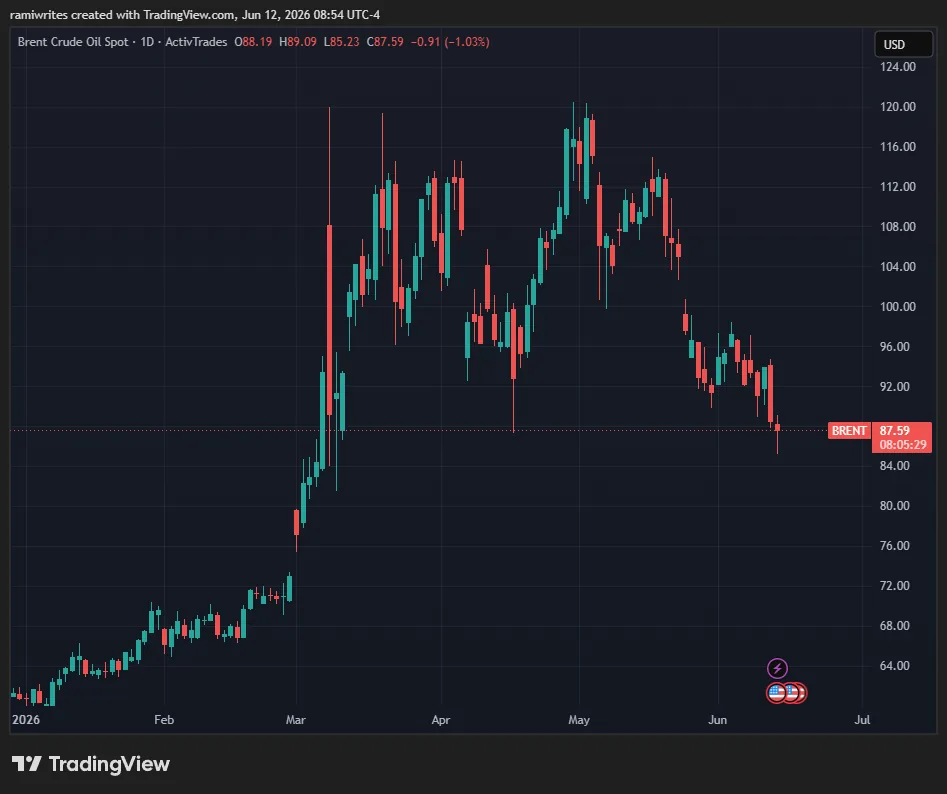
Oil just fell to its lowest level in two months.
On the news of a deal, oil tumbled. Brent crude dropped toward $89 a barrel.
It is down roughly 15% from where the war pushed it weeks ago.
Cheaper oil is the first thing that could finally cool inflation. Here's the catch.
Oracle had a record quarter, and the stock crashed anyway.
Oracle beat expectations and posted record sales, driven by AI demand.
Then the stock fell as much as 12%, because the company plans to spend enormous sums and borrow heavily to keep up.
It is the same fear that hit the chip giants last week. Here's why it keeps happening.
Bitcoin bounced back above $63,000 on the peace hopes.
Bitcoin rose with stocks on the news of a deal, clawing back above $63,000.
A week ago it had briefly broken under $60,000 for the first time since 2024.
For now it moves with the headlines, like a risky stock rather than a safe haven.
👀 What to Watch For

The Fed meets Tuesday and Wednesday. This is the week's main event.
The June 16 to 17 meeting is Kevin Warsh's first as Fed Chair. It is the most important event on the calendar.
Almost no one expects a rate change at this meeting. What matters is the signal.
With inflation above 4%, the debate has shifted from when the Fed will cut to whether it now has to hike. Watch his words closely.
Whether the Iran deal actually gets signed.
A framework was announced. A signed agreement is a different thing.
If it gets signed, oil likely falls further and the relief holds. If it falls apart, the war premium comes straight back.
Watch for a signing, or for the talks to break down.
Whether the AI selling returns.
Oracle and Adobe (NASDAQ: ADBE) both beat expectations this week and both fell. The same pattern that hit Broadcom (NASDAQ: AVGO).
The market is rewarding profits and punishing heavy AI spending. Watch whether that mood deepens or lifts.
The biggest IPO in history.
SpaceX is going public today in the largest stock-market debut ever, raising roughly $75 billion.
A raise that size pulls money out of other assets, including crypto. Watch how it trades, and what it drains.
💭 Today’s Final Thought
This week, the war that drove everything finally cracked open toward peace.
Oil fell. Stocks soared. The hedges bounced.
For one day, the fear that gripped two weeks of markets simply lifted.
And it would be a mistake to confuse that relief with resolution.
The deal is a promise, not a signature. The inflation is already here, not a forecast. And a new Fed chair has to weigh both on Tuesday.
Yesterday rewarded the investors who were positioned before the news, not the ones who chased it after.
That is the whole game. The biggest moves arrive without warning and reward whoever was already in place.
You cannot predict the next headline. You can decide whether it finds you ready or surprised.
The relief came yesterday. The bill is still due Tuesday. Position before it arrives, not after.
- Rami Al-Sabeq (Editor in Chief | Future Finance)
About Future Finance
Future Finance is written by Rami Al-Sabeq, Editor-in-Chief, and his research team. His macro-to-crypto work has been featured in Unchained and Cryptonary, and his independent essays appear at RamiWrites.Substack.com.
Behind every issue sits Head of Research Tyler Hubbard, whose track record across 590+ digital asset picks has produced an 85% directional accuracy rate and a 426% average peak return. That’s as of the third-party audit measuring performance through April 30th, 2026. Follow him on TradingView here.
Gems Uncovered
Go Deeper With Gems Uncovered
Most investors see one layer of the market. The opportunities that build real wealth live beneath it. Gems Uncovered is our monthly research briefing on early-stage assets, native market access, and high-conviction plays before they surface on mainst
Subscribe to Gems Uncovered →Disclaimer: This content is not financial advice, it is for informational purposes only. All investments involve inherent risk. Any financial decisions you make are solely your responsibility.
Latest


Editor's Picks

Become a sharper capital allocator in 5 minutes a day.
Institutional-grade research on where the smartest capital is positioning, across AI, energy, biotech, robotics, and digital assets. Distilled into a daily read you finish before your coffee does.
Join 45,000+ readers · No spam · Unsubscribe anytime