

3,000 banks, and the footnote nobody read…
Coinbase just got a path into 3,000 small banks. Doc on what that number means, plus Micron’s $32 billion in prepaid orders. →
October 2, 2026
·
5 Min Read




The briefing serious investors read first.
Free analysis before markets open. Start thinking in decades, not days.
Join 45,000+ readers · No spam · Unsubscribe anytime · No card needed
Today’s Big Picture
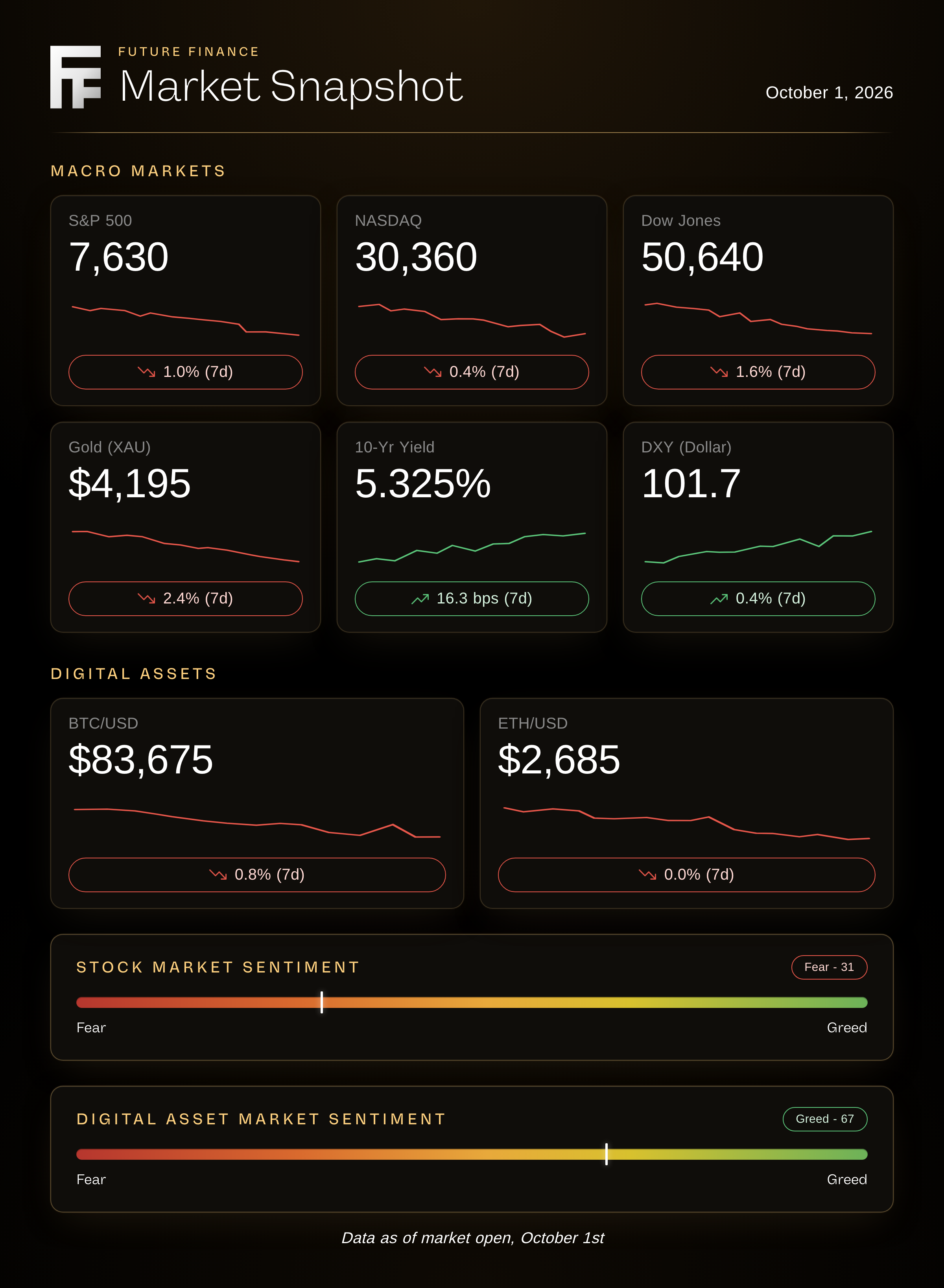
Yesterday I made five calls for the quarter, built on one idea: a guaranteed 5% pulls money out of the assets that pay nothing.
The quarter we just closed scored that idea both ways. Gold fell about 5% in September as yields climbed. Bitcoin rose more than 40% in the third quarter anyway, with funds still buying.
So the theory gets its test starting today, in public, which is the whole point of writing it down.
The 5% debate has a second front, though: where your cash sits. Roughly $300 billion now lives in stablecoins, digital dollars held outside any bank. Two weeks ago, Coinbase signed a deal to put crypto custody, trading and stablecoin payments inside the apps of small banks and credit unions.
Today The DeFi Doctor explains why the banks want it, and why the headline number, 3,000 banks, needs a footnote.
Every big number this week comes with a footnote, and the footnote is where the lesson lives.
Advertisement
The Next Crisis Won’t Destroy Wealth. It Will Simply Change Hands.
A severe financial crisis does not make the world’s real wealth disappear. The businesses, land, natural resources, commodities, and productive assets still exist. What changes is who owns them.
Doug Casey and David Stockman have released an urgent briefing on how to position before the transfer.
Disclosure: International Man is a paid partner of Future Finance. The forecasts, track record and claims above are the views of Doug Casey, David Stockman and International Man, and do not represent the view of Future Finance. As always, do your own diligence.
Signal vs. Noise
Micron’s Customers Prepaid $12 Billion More
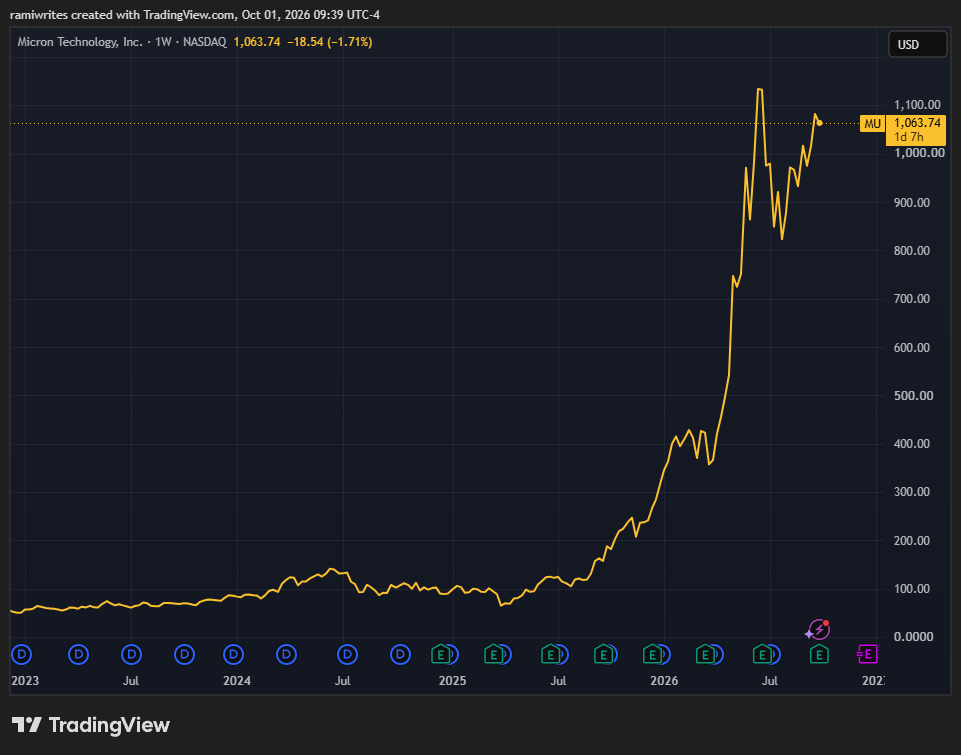
- The noise: record revenue of $54.23 billion, above the top of Micron’s own guidance.
- The signal: the money customers put down in advance. Commitments under its long-term supply deals rose to $32 billion from $22 billion, across 26 agreements instead of 16, and $12.3 billion in cash deposits came in during the quarter alone.
Micron now expects about $61.5 billion in sales next quarter, well above what Wall Street had penciled in.
Dylan Jovine told you that when the deposits stop growing, the old memory business is back. They grew by almost half.
The footnote: deposits are customer money Micron expects to hand back later in each deal, so they signal demand without counting as profit. And the stock barely moved after hours, which is what a blowout looks like once it is already priced in.
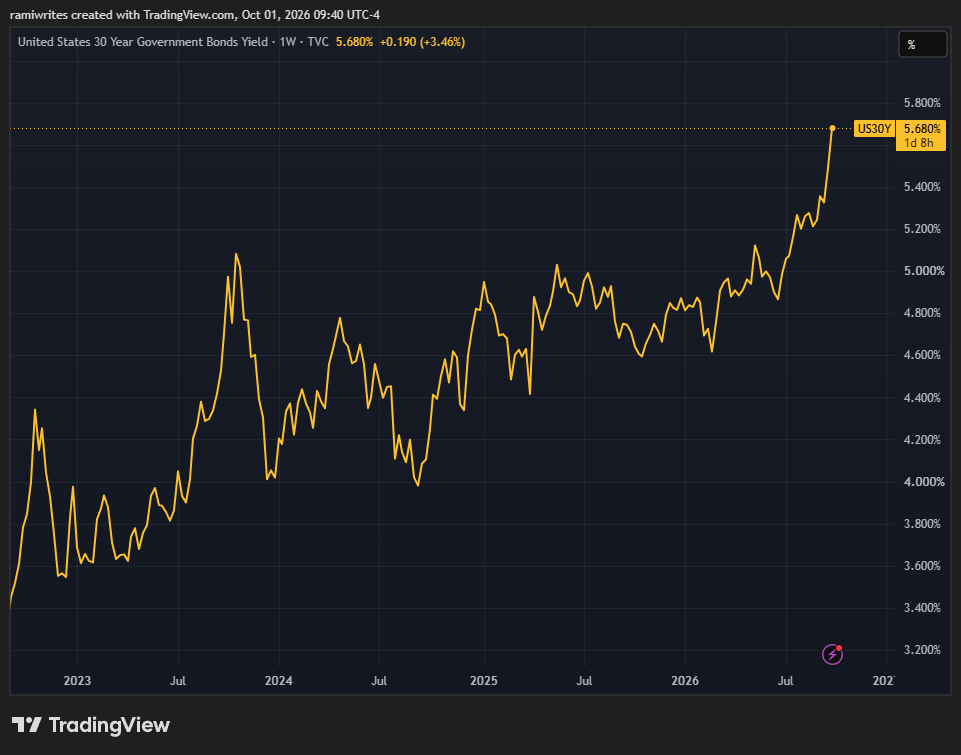
The Quarter Ended With the 30-Year Near 5.63%
- The noise: the S&P 500 slipped about half a percent in September.
- The signal: the quarter’s real mover was the price of money. The S&P still gained about 2% for the third quarter and the Nasdaq 2.5%, while the Dow, heavier in older industrial names, lost 4.3% in September alone. The 10-year Treasury yield finished near 5.29%, and the 30-year near 5.63%, around its highest since 2002.
After Wednesday’s softer inflation report, the odds of an October rate hike fell to somewhere between a third and a half, depending on the hour. The odds of at least one more hike by December 9 stayed near 90%, which is yesterday’s base case in market form.
The Bitcoin Funds Took a Day Off
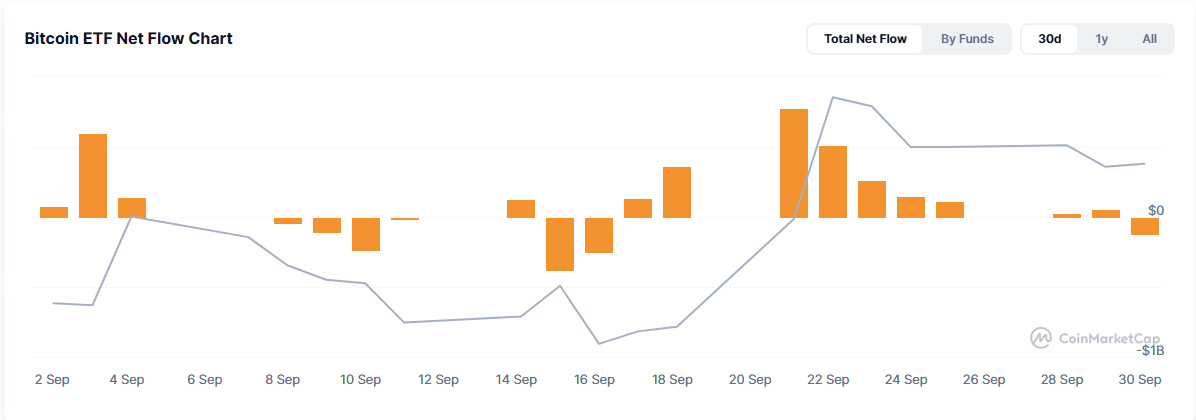
- The noise: the Bitcoin funds' nine-day buying streak ended Wednesday, with $148.7 million going out.
- The signal: the month around that day. Those funds still took in about $2.65 billion in September.
The last day of a quarter is when large holders rebalance their books, so one day of selling on September 30 says more about the calendar than about conviction.
This is the number to watch for yesterday's thesis. If a guaranteed 5% is going to pull money out of Bitcoin, it will show up here first, as weeks of outflows, long before it shows up in a headline.
Featured Contributor

Today’s guest is The DeFi Doctor, owner and author of Beat Banks, a twice-weekly intelligence briefing on where real yield opportunities exist in decentralized finance. Nothing here is a recommendation.
Coinbase Didn’t Build a New Product. It Bought Distribution to 3,000 Banks.
On September 16, a year-old Dallas fintech handed the largest US-based crypto exchange a plug-in path into community banks and credit unions that make up roughly a third of the country’s depository institutions.
Coinbase and Stablecore announced a partnership that lets community banks and credit unions offer digital asset custody, trading, staking, and stablecoin payments through their own banking apps, under their own brand, without building any of it themselves.
Coinbase supplies the regulated custody and exchange infrastructure.
Stablecore supplies the wiring: an integration layer already plugged into the core banking systems, digital banking platforms, and compliance tools these institutions run today.
Coinbase has had institutional custody and exchange infrastructure for years.
What it did not have was a way to reach thousands of small banks, each running a different core provider, each with an engineering team too small to build a digital asset integration from scratch. Stablecore already had that reach.
This deal is Coinbase renting it, from a company it already knows: Coinbase Ventures took part in Stablecore’s $20 million funding round last year.
The number that needs a footnote
The “3,000+ banks” figure is doing a lot of work in every headline about this deal. It does not mean 3,000 institutions have signed contracts with Coinbase this week, or that 3,000 banks are now live with digital asset trading. It means Stablecore’s white-label technology is already integrated with the core banking, digital banking, and compliance infrastructure that serves that many institutions.
The 3,000 is a reachable footprint, not a customer count.
Only one institution has been named publicly: Amarillo National Bank in Texas, described as among the first to pilot the offering. There is no public confirmation yet that its customers can buy, sell, stake, or send digital assets through their accounts today.
Treat the launch as a wedge, not a rollout.
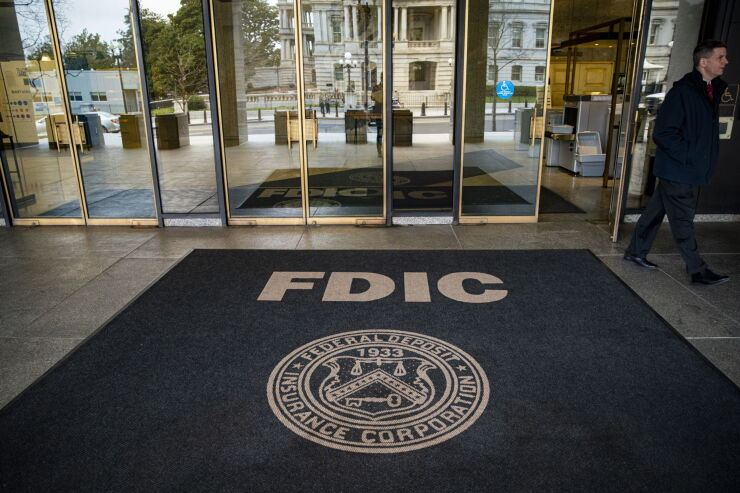
The FDIC counted 4,336 insured banks at the end of 2025, and the NCUA counted 4,287 federally insured credit unions, about 8,600 depository institutions in all. A footprint of 3,000-plus is roughly a third of the sector, reachable through one integration instead of thousands.
Why distribution beat infrastructure
Every large digital asset company has spent the past several years building the same thing: custody that satisfies examiners, exchange execution that satisfies compliance, and reporting that satisfies auditors.
Coinbase has that.
So do Fidelity Digital Assets, Anchorage, and a handful of others.
None of it matters to a small bank in Texas if connecting to it means a six-figure integration project and a new vendor relationship its risk committee has never reviewed. Stablecore’s pitch was a single integration that a bank’s existing core and digital banking vendors already recognize.
That is the trade community banks have been waiting for: adopt the service without adopting the vendor risk.
The regulatory runway that made this possible
This deal would have been a much harder sell eighteen months ago. On March 7, 2025, the OCC issued Interpretive Letter 1183, confirming that digital asset custody and certain stablecoin activities are permissible for national banks and rescinding the requirement to get a supervisory non-objection first.
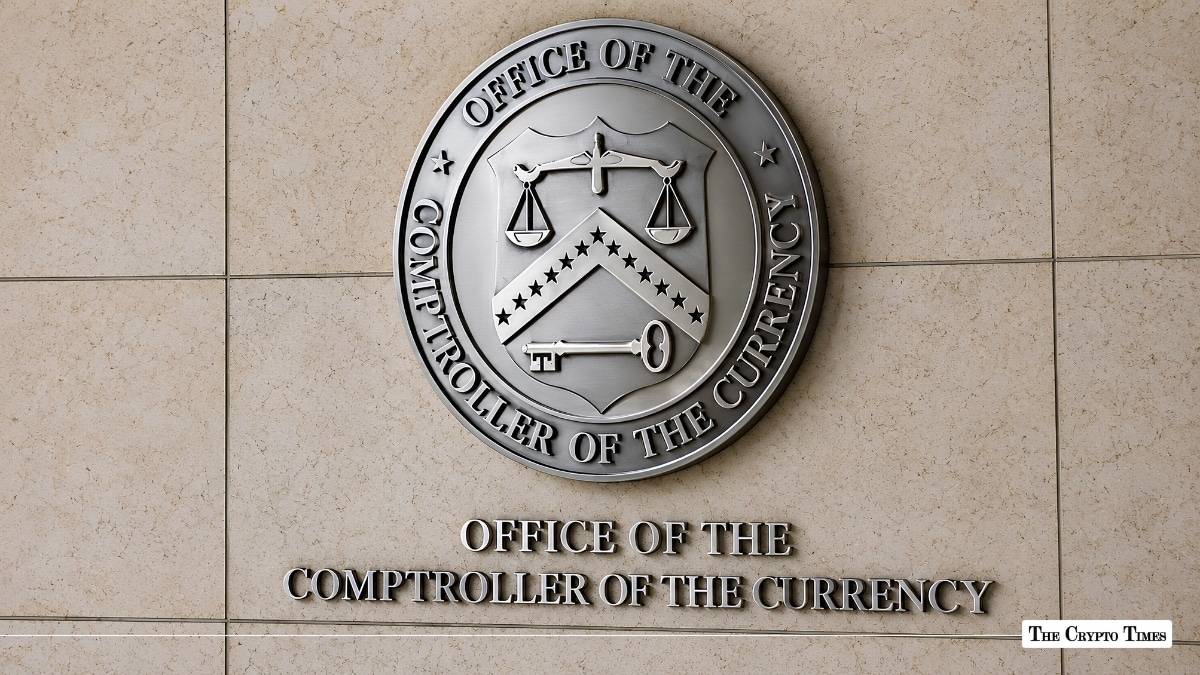
Two months later, Interpretive Letter 1184 confirmed that national banks and federal savings associations may buy and sell custodied digital assets at a customer’s direction, and may outsource digital asset activities to third parties under normal risk management standards.
Before those letters, a bank’s counsel had a real reason to say no.
After them, the question became which vendor to use.
One limit worth knowing: OCC letters govern national banks and federal savings associations. Most community banks are state-chartered and answer to state regulators and the FDIC or the Fed, and credit unions answer to the NCUA, so for much of that 3,000 the letters set the tone more than the rules.
Six days before the Stablecore deal, it announced a stablecoin payments partnership with Moov aimed at more than 1,000 community banks and credit unions. Stablecore is the largest answer so far for institutions too small to build their own.

The deposit math underneath
Community banks have a specific reason to move now. Stablecoins and big banks’ tokenized deposit products are both designed to hold customer balances outside the traditional deposit base, and every dollar that migrates there is a dollar a community bank no longer lends out.
A small institution that offers no digital asset product at all is the most exposed party in that fight, because its customers have the fewest reasons to stay. Offering custody and stablecoin payments under the bank’s own brand keeps the customer relationship, the data, and the deposit inside the institution.
That is the defensive logic underneath a deal that reads, on the surface, like an offensive land grab for Coinbase.
What’s not yet true
Fee splits, reserve mechanics, and which of the 3,000 institutions have signed onboarding agreements are all undisclosed.
Whether community bank customers want digital assets inside their checking app, rather than an exchange app they already use, is untested at scale.
And a white-label product still leaves the bank holding the reputational risk for something it did not build.
One more for anyone tempted to try it: digital assets held or staked through a bank app are not FDIC-insured deposits, staking rewards vary and are not guaranteed, and prices can fall sharply.
The bottom line
Coinbase did not need a better product to reach community banks. It needed a company that already sat inside the systems those banks run every day.
The infrastructure for bank-grade digital asset services has existed for years. What was missing was a distribution layer for the institutions too small to build their own front door, and that is a bigger story than the trading feature it will be sold as.
- The DeFi Doctor
Author, Beat Banks
If The Dollar Is Being Debased, Where Do You Put Your Money?
If governments keep spending and the dollar keeps losing value over time, holding all your savings in cash is a slow leak.
One answer is to earn a real return that outpaces the debasement, on your own terms, instead of letting a bank pay you next to nothing on your deposits.
That is the whole idea behind Beat Banks, the weekly research on becoming your own bank and taking control of your financial destiny.
The dollar is designed to lose value over time. This is about making your money do the opposite.
Final Thought
Three numbers crossed your screen today, and each one came with a footnote. The 3,000 banks are a reachable footprint. The $32 billion is customer money Micron expects to give back.
And the 5% is guaranteed only if you hold the bond until it matures.
Two weeks ago Doc asked who holds the keys when a brokerage sells you Bitcoin. The bank-app version of crypto raises the same question, with a friendlier logo on it.
Doc covers the other side of that question, earning a real return on money you control, in Beat Banks. There’s more on it at the bottom of this issue.
Tomorrow, the jobs report. See you then.
Editor in Chief | Future Finance
The Next IPOs Won’t Let You In Like SpaceX Did.

Anthropic and OpenAI are next, together worth close to $2 trillion. But by the time their shares reach you, the early run will already be over.
Gems Uncovered tracks the early-stage assets and native access plays that let you get positioned before the crowd shows up, and hold them yourself.
Disclaimer: This content is not financial advice, it is for informational purposes only. All investments involve inherent risk. Any financial decisions you make are solely your responsibility.
Latest




Editor's Picks



Become a sharper capital allocator in 5 minutes a day.
Institutional-grade research on where the smartest capital is positioning, across AI, energy, biotech, robotics, and digital assets. Distilled into a daily read you finish before your coffee does.
Join 45,000+ readers · No spam · Unsubscribe anytime · No card needed