

A 300-year-old exchange put its blue chips on-chain…
London’s exchange will issue its top 100 stocks as tokens, and UK investors are locked out. Doc on why that’s the story. →
September 23, 2026
·
5 Min Read



The briefing serious investors read first.
Free analysis before markets open. Start thinking in decades, not days.
Join 45,000+ readers · No spam · Unsubscribe anytime · No card needed
Today’s Big Picture
Yesterday the stock market did three things at once…
Which one you noticed depends on which index you own.
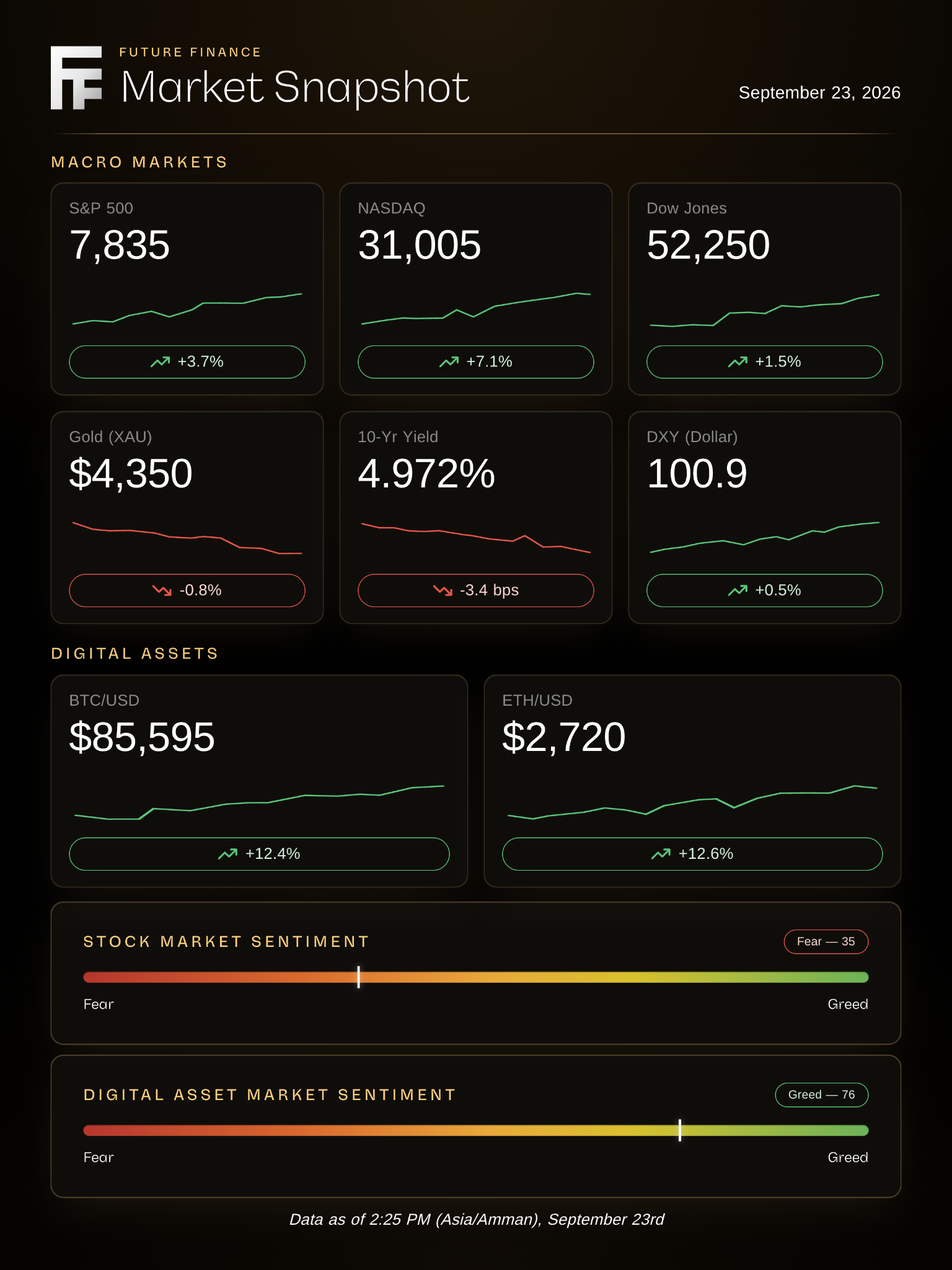
The Nasdaq closed at a record for a second day, up 0.45%. The S&P 500 finished flat to the hundredth of a point. The Dow fell 185 points, dragged by Cisco and JPMorgan.
That split is a lesson in what an index is.
The Nasdaq leans on the AI names that surged Monday; the Dow is 30 old-economy stocks weighted by price, so one bank’s bad day outweighs everyone else’s good one; the S&P sits between them.
Underneath, the week’s real story kept building. Bitcoin held near $86,000 after the funds took in nearly a billion dollars on Monday, the biggest day of the year.
Oil fell a fifth straight day, and Xi Jinping lands this afternoon.
Three indexes gave three answers because the market is voting on three questions…
- AI earnings
- The next Fed hike
- And Thursday’s truce
And in London, a 300-year-old exchange decided its blue chips belong in crypto wallets. Last week Doc showed you a brokerage that sells Bitcoin it won’t let you move. Today he shows you the mirror image: an incumbent handing its own shares to self-custody, with one catch for the people who live there.
Advertisement
Elon Filed Something With the FCC. You Have Until Friday.
There's an FCC filing from Elon Musk that lays out his next move, and he's working to keep it quiet. James Altucher has read it, and says what's inside could be bigger than PayPal, Tesla, and SpaceX combined, the biggest thing Musk has ever attempted.
Altucher's reason for the urgency is a single date his research keeps pointing to: September 25. After Friday, he says, the window to get positioned early could be gone.
He lays out the filing, the plan, and the tickers in a free presentation. No purchase, no card.
See what Elon filed before Friday →
Disclosure: Paradigm Press is a paid partner of Future Finance. The forecasts and claims above are James Altucher’s / Paradigm’s, not Future Finance research or advice. As always, do your own diligence.
Signal vs. Noise
The Lenders Answered: In Line, Not Enthusiastic
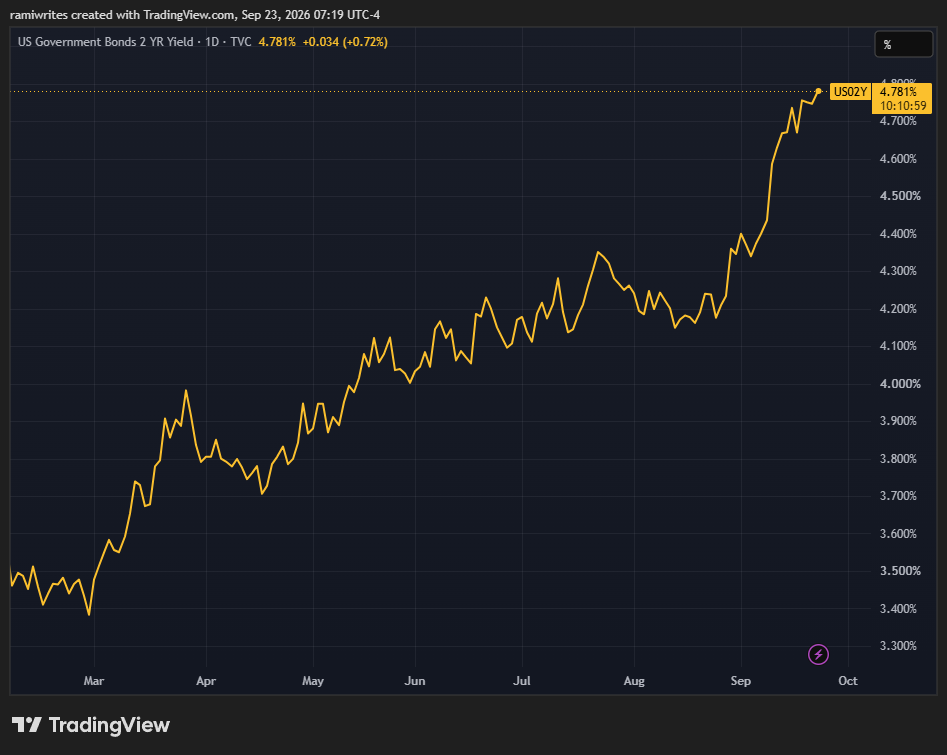
- The noise: “the 2-year auction tailed.”
- The signal: by two-tenths of a basis point, which is the market’s way of shrugging. The Treasury sold $69 billion of 2-year notes at 4.787%, the highest yield in two years, with demand right at its recent average. Buyers accepted the new price of money without lining up for it.
Richmond’s Thomas Barkin gave the reason in plain English: “The risks to inflation outweigh the risks to maximum employment. That’s why we raised rates.”
Asked about more hikes: “We’ll see.” Odds for October 28 sit near 55%.
The 5-year sells at 1 p.m. today, $70 billion against 4.39% last month. Same question, longer horizon.
$999 Million in a Day
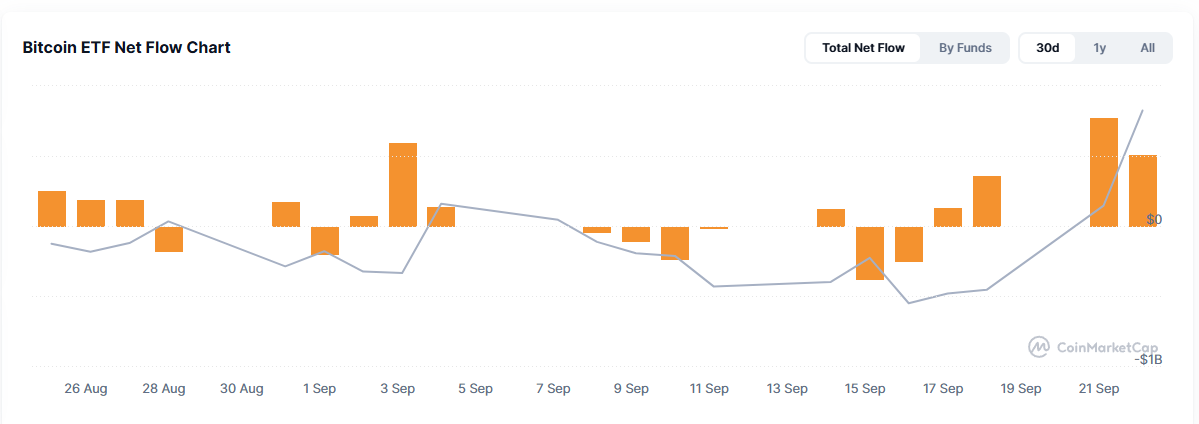
- The noise: “crypto winter is over,” a phrase now on three strategist notes.
- The signal: the money behind the phrase. U.S. Bitcoin funds took in $998.9 million on Monday, a record for 2026, with BlackRock’s fund alone at $381 million.
Ethereum funds added $270 million. Roughly $919 million of bets against Bitcoin were forced to close in the same move.
Price sits near $86,900 this morning, the highest since January, and about 31% below last year’s peak. Tan’s dominance signal, the third of his four, is the one to watch now: a run that broad usually pulls money into everything else before it’s done.
One caution for beginners: a record inflow day measures enthusiasm, not durability. The Robinhood Chain subsidy ends Monday, and the SEC’s tokenized-stock exemption still has no venue confirmed under it.
The rails are being built, and the traffic on them is still speculative.
Xi Lands Today. The Deal Is Thursday.

- The noise: the pageantry. A tarmac greeting, a B-2 flyover, a state dinner with the AI executives.
- The signal: the truce that expires November 10. Treasury’s Bessent met his counterpart in New York Saturday, and the reporting points to an extension, possibly a long one, plus agricultural and aircraft purchases.
Thursday’s bilateral tells you whether that holds. Analysts expect more ceremony than substance, which is itself the substance.
Oil keeps helping. WTI settled near $94.59, down a fifth straight session, after the President told the UN a deal with Iran would come after the midterms. The barrels are still slow; the fear is gone for now.
Tonight at 7 p.m. Eastern, Meta’s keynote. It won’t move the truce, but it’s why the Nasdaq is at a record.
Featured Contributor

Today’s guest is The DeFi Doctor, author of DM’s Beat Banks. owner and author of Beat Banks, a twice-weekly intelligence briefing on where real yield opportunities exist in decentralized finance.
The 300-Year-Old Exchange Just Handed Its Blue Chips to a Digital-Asset Exchange
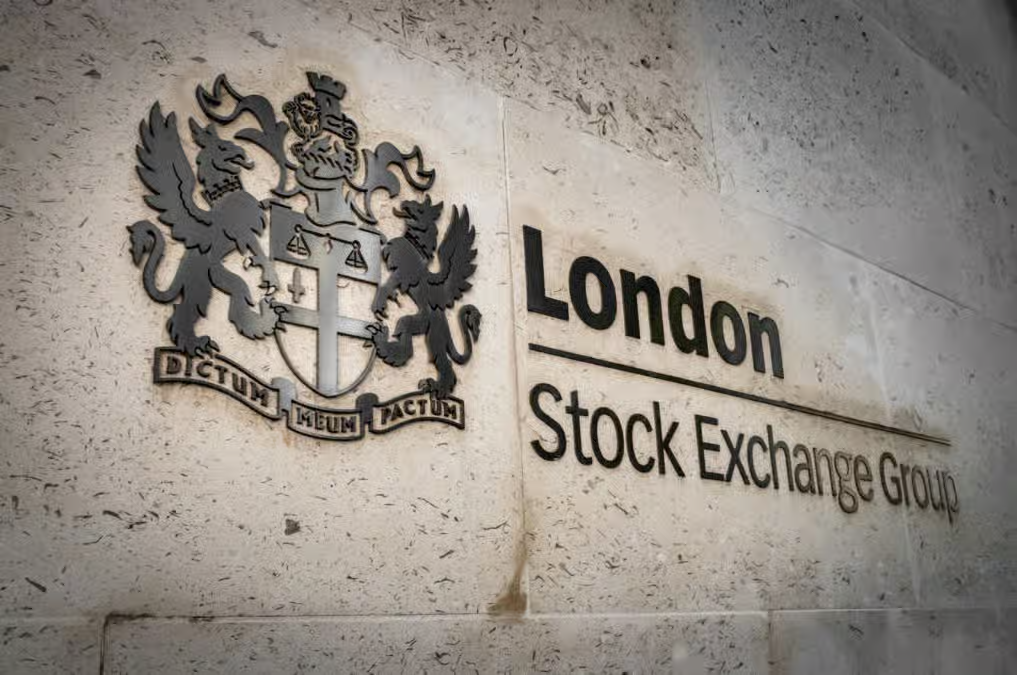
On September 1, the London Stock Exchange Group announced a strategic partnership with Payward, the parent company of digital-asset exchange Kraken, to bring the 100 largest UK-listed equities on-chain as tokenized shares called xStocks.
The plan: issue FTSE 100 constituents as tokens backed one-to-one by the underlying stock, trade them 24/7 in self-custody wallets across more than 110 jurisdictions, and eventually list them on LSEG’s own 24-hour venue, LSE 24, when it launches in 2027, pending regulatory approval. UK residents are excluded for now.
That single sentence contains the whole story of where finance is heading.
A tokenized equity is no longer something a blockchain startup invents to get around a listing requirement. It is now something the incumbent exchange issues, with its own brand attached.
What’s actually being issued
The tokens will be structured as tracker certificates, issued by Backed Assets (JE) Limited, a Jersey-domiciled entity approved by Jersey’s Financial Services Commission and licensed by Liechtenstein’s Financial Market Authority. The prospectus is passportable across the EEA.
Legally, a holder owns a bearer debt instrument that tracks the economic performance of the underlying share, not a share itself.
There is no binding shareholder vote attached.
A three-party account control agreement, tying the issuer, custodian, and an independent security agent together, governs the collateral.
This is the same structure Backed already uses for its existing xStocks product, which is why the deal moved as fast as it did: the legal and custody plumbing already existed. LSEG is not building a new asset class. It is pointing an existing one at its own index.
That existing product is not small anymore. xStocks crossed $25 billion in cumulative transaction volume by early 2026, and Kraken agreed to acquire Backed Finance outright in late 2025, collapsing the distance between the largest xStocks distributor and the entity that issues them. LSEG is now plugging directly into that stack.
The adoption curve underneath the headline
Tokenized equities are still a rounding error against the market they mirror. Total outstanding tokenized-stock market capitalization sat around $2.3 to $2.8 billion in mid-2026, spread across Ondo, Backed and xStocks, Robinhood, and Dinari-powered issuers.
The FTSE 100 alone carries a market capitalization of roughly £2.5 trillion, about $3.2 trillion. Set that against a tokenized-equity market still measured in the billions, and the headroom is the entire point. This deal is not tokenizing a niche. It is tokenizing the benchmark.
The broader tokenized real-world-asset market has grown faster than almost anything else in finance this cycle.
On-chain RWA value excluding stablecoins ran from roughly $6.4 billion in March 2025 to somewhere between $29 and $32 billion by mid-2026, a gain of well over 400% in about a year.
Add stablecoins, and the combined on-chain tokenized-asset market clears $300 billion.
That volatility is worth naming plainly.
Decentralized finance protocols lost more than a third of their locked value in ten weeks this spring. The rails tokenized equities are riding on are still young, still cyclical, and LSEG is choosing to issue blue-chip shares onto infrastructure that has not yet proven it can hold value steady through a full cycle.
Why the UK carve-out is the regulatory story, not the technical one
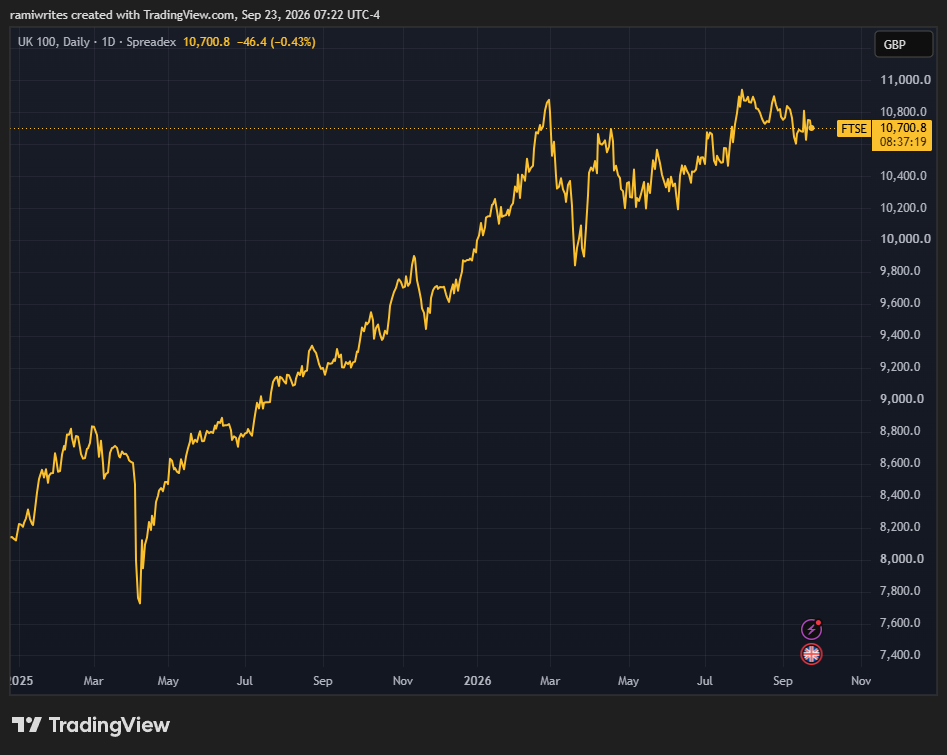
UK residents cannot buy the very shares LSEG is tokenizing, at least not yet, because the UK’s own cryptoasset regime is still being phased in. Parliament enacted the regulations in February. The FCA published the full framework on June 30. The authorization window opens September 30, firms have until February 28, 2027, to file, and the full regime only comes into force on October 25, 2027, the same rough window LSEG has targeted for LSE 24.
That is the detail worth sitting with. LSEG did not build a technical barrier that keeps its own home market out of its own tokenized shares. The barrier is a licensing calendar that has not finished running.
Every other constraint on this deal, custody structure, prospectus passporting, collateral governance, has already been solved and is already live. The UK gap will close on a regulatory timeline, not an engineering one.
The bottom line
A 300-year-old exchange just told the market that self-custody wallets are a distribution channel for its blue chips, not a threat to them.
The tokenized-equity market is still tiny next to the index it now tracks, the DeFi infrastructure underneath it is still volatile, and the UK’s own retail investors are locked out by paperwork rather than by the token’s design.
None of that changes the signal: when the incumbent becomes the issuer, tokenized equities stop being a story about crypto exchanges and start being a story about market structure.
Which is why I spend so much time every week teaching Beat Banks readers to use these exact rails, not to trade tokenized shares, but to hold their own assets and earn a yield on them without a bank in the middle.
Today the incumbents are adopting the plumbing we've been using all along. If this piece made the direction obvious, Beat Banks is where you learn to walk it.
- The DeFi Doctor
Author, Beat Banks
The deal terms and the UK regulatory dates were verified against LSEG, Reuters, and the FCA. Three updates since he wrote: xStocks trading volume has passed $40 billion since launch, the FCA lifted its ban on crypto exchange-traded notes in October 2025, and since August token holders can submit voting preferences through Broadridge, though not a binding vote. Nothing here is a recommendation.
Advertisement
Your Bank Earns a Yield on Your Cash. You Get a Sliver of It.
The dollars in your savings account don't sit still. Your bank lends them out, earns on them, and hands you a fraction of what they make. The gap is the whole business.
Beat Banks, written by the DeFi Doctor, shows you how to close that gap and earn the yield yourself, on the same on-chain rails the biggest institutions are now moving onto. Every issue is a step-by-step breakdown: the opportunity, the risks, and exactly how it works, in plain English.
The money was always yours. The yield should be too.
Become your own bank with Beat Banks →
Final Thought
When three indexes disagree, the disagreement is the information. Yesterday the market said it believes in AI earnings, doubts the banks, and hasn’t decided about the Fed.
Thursday settles one question, with a handshake or without one. The next Fed decision is five weeks out. AI earnings you’ll hear about next month.
And the quietest headline of the month may outlast all three: the exchange that has listed British companies since 1698 will issue them as tokens, to everyone except the British.
See you tomorrow.
Editor in Chief | Future Finance
The Institutions Are In. The Edge Is In What They Buy Next.
By the time a pension fund files a disclosure, the easy money has already been made.
The real edge is spotting where serious capital is heading before the paperwork catches up to it.
That’s the whole job of Gems Uncovered, our research on early, asymmetric plays before they reach the mainstream.
Follow the smart money early, not after it’s on the front page.
Disclaimer: This content is not financial advice, it is for informational purposes only. All investments involve inherent risk. Any financial decisions you make are solely your responsibility.
Latest


Editor's Picks


Become a sharper capital allocator in 5 minutes a day.
Institutional-grade research on where the smartest capital is positioning, across AI, energy, biotech, robotics, and digital assets. Distilled into a daily read you finish before your coffee does.
Join 45,000+ readers · No spam · Unsubscribe anytime · No card needed