

$100 of groceries, four years later…
The dollar didn’t die in 1977. It just bought a third less. Rickards’ math says that road is open again, and Friday tests it. →
August 31, 2026
·
8 Min Read




The briefing serious investors read first.
Free analysis before markets open. Start thinking in decades, not days.
Join 45,000+ readers · No spam · Unsubscribe anytime · No card needed
☀️ Today’s Big Picture
In 1977, a cart of groceries cost $100. By 1981, the same cart cost $150.
The dollar didn’t die in those four years. It didn’t collapse, and it never stopped being the currency the rest of the world saves in. It just bought a third less than it had.
Hold that picture.
It’s the danger nobody put on a headline last week.
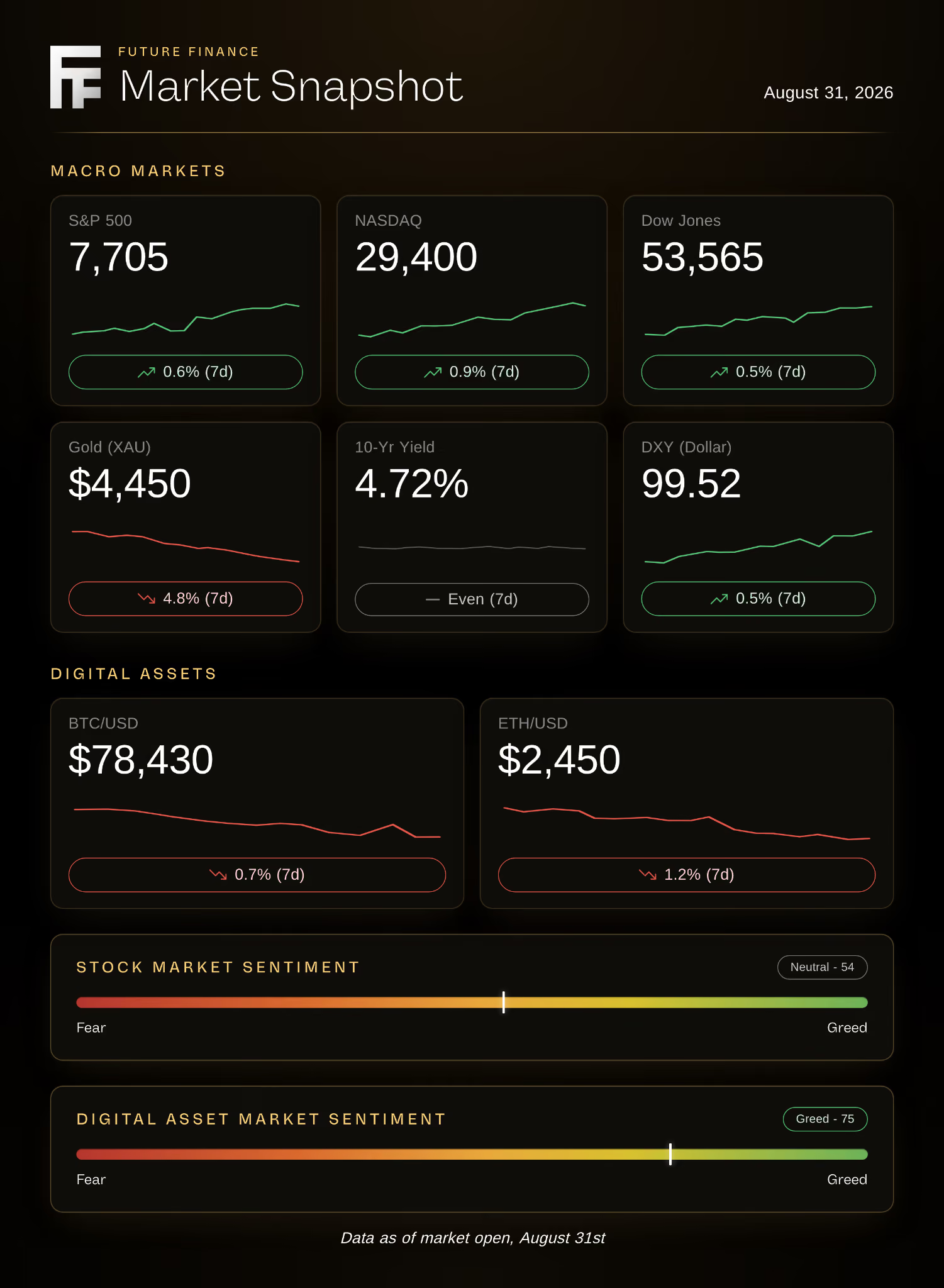
The headlines said the dollar was finished. “$40 trillion in debt.” “Doom loop.” Gold and Bitcoin rose on the fear, gold to a three-month high, Bitcoin to $81,455 by Friday morning.
Then the new Fed chairman gave his first major speech, and both fell hard before lunch.
If that left you unsure what to be afraid of, today’s issue is for you.
The dollar isn’t dying. Our guest, Jim Rickards, makes that case as well as anyone alive. But his own arithmetic points at the slower threat, the one from 1977: dilution.
Why a Tougher Fed Sank Gold and Bitcoin
Kevin Warsh said he would be “hard-pressed to describe broad financial conditions as restrictive.” Translated: borrowing isn’t yet expensive enough to hold prices down, and he knows it.
Traders took it as the hint it is. The odds of a rate hike next month jumped from one-in-three to 57%. Gold fell 2.9% by the close. Bitcoin slid to about $77,700 by Sunday.
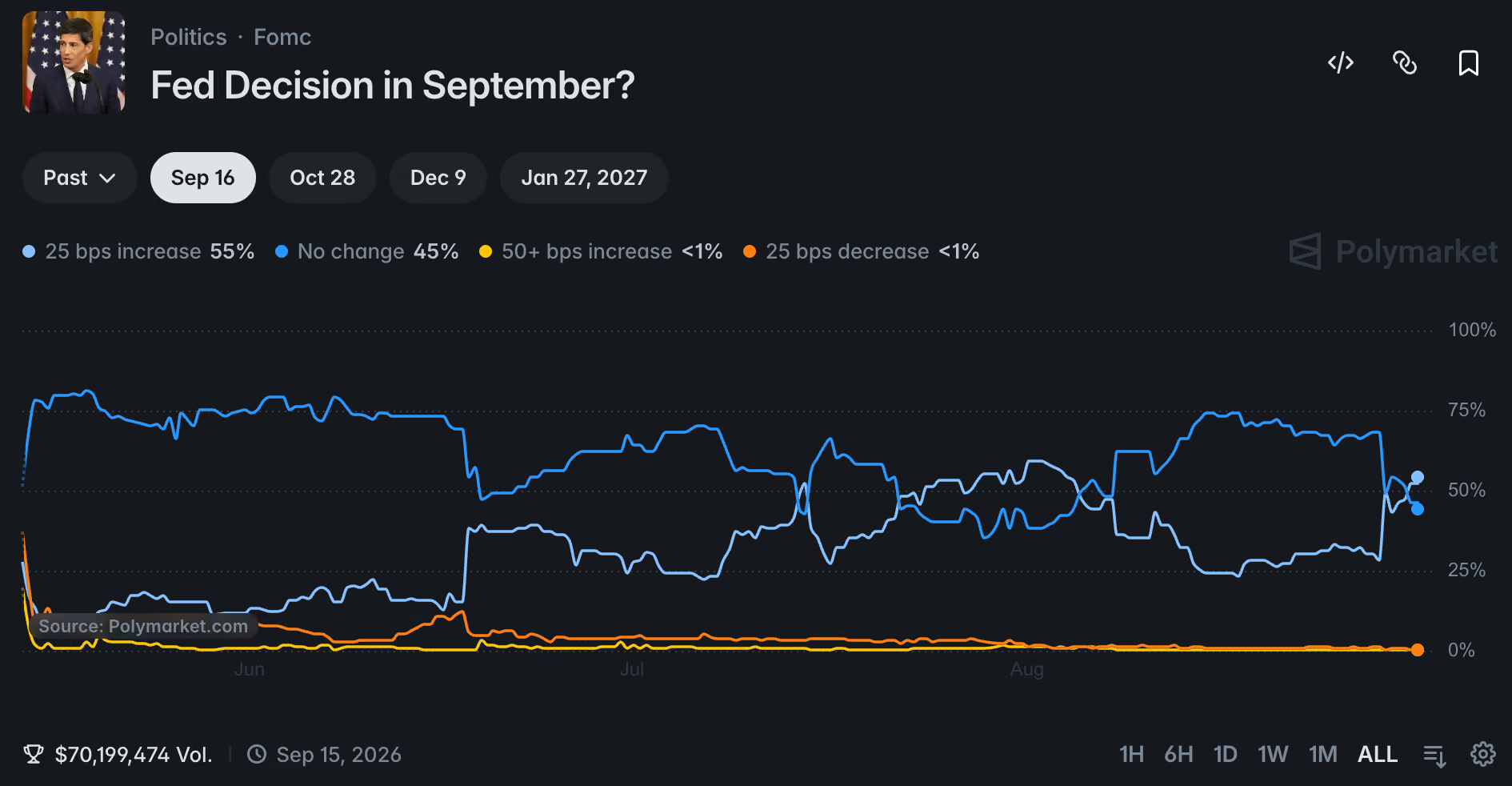
Notice the direction they went in. A Fed willing to raise rates is a Fed willing to defend what a dollar buys. Gold and Bitcoin had been rising as insurance against the opposite.
The market was betting on the dollar being diluted, not dying. Not yet. But these debasement hedges flinched the moment the man in charge suggested he might fight back.
123%, 2%, and the 4% in Between
Rickards’ case takes three steps, and you can check every number.
- Step one. The figure that matters isn’t $40 trillion. It’s the debt measured against the size of the economy, currently about 123%. Investor confidence survives as long as that ratio is falling.
- Step two. The ratio only falls when the economy grows faster than the debt, roughly 6% a year in dollar terms. Since 2008, real growth has averaged about 2%.
- Step three. The gap gets filled by inflation. Around 4% a year. Nobody signs a document saying so. The math signs it for them.
The precedent is the story from the top of this issue. Debt was 119% of the economy in 1946 and 31% by 1980, and prices rose 50% in the final four years of that run.
The dollar survived the whole way. Savers on fixed incomes paid for it.
And the world knows it. Foreign holdings of U.S. debt sit at a record $9.29 trillion. Japan, the largest holder, is borrowing dollars against its bonds rather than selling a single one.
As we said in our issue from August 12th:
Japan owns nearly $1.2 trillion of US government debt, more than any other country.
Washington moved to stop its biggest lender from becoming its biggest seller.
Nobody is leaving. They’re staying, and getting diluted together.
Not dying is not the same as not losing value. A rate hike slows the dilution. It cannot repeal the inevitable arithmetic.
Three tests are deciding how much dilution the people in charge will tolerate: Friday’s jobs report, the Treasury’s first enlarged bond buyback on September 9, and the Fed’s decision on the 16th.
I break it all down later in this issue, but first, here’s Jim Rickards on the state of the Dollar.
Note From the Editor-In-Chief:
Quick note before the snapshot: Tan's Macro Letter launched this morning. If the checkout page gave you trouble over the weekend, it's fixed, and the Founding Member offer now runs through Wednesday midnight Pacific.
Featured Contributor

Today’s guest is Jim Rickards. (edited for length) Rickards has contributed as an advisor on capital markets to the U.S. intelligence community and at the Office of the Secretary of Defense in the Pentagon.
He’s the author of four NYT Bestsellers.
The Dollar’s Not Dying
Last week’s financial media was full of apocalyptic headlines: “$40 trillion in national debt!” “U.S. debt in a doom loop!” “The end of the dollar is near!”
If you took the headlines at face value, you’d assume the dollar was already toast and U.S. Treasuries were worth no more than digital confetti.
The truth is that the dollar’s position as the leading reserve currency is not in jeopardy. There are few sovereign bond markets with the size, liquidity, and depth of the U.S. Treasury market. King dollar will remain king.
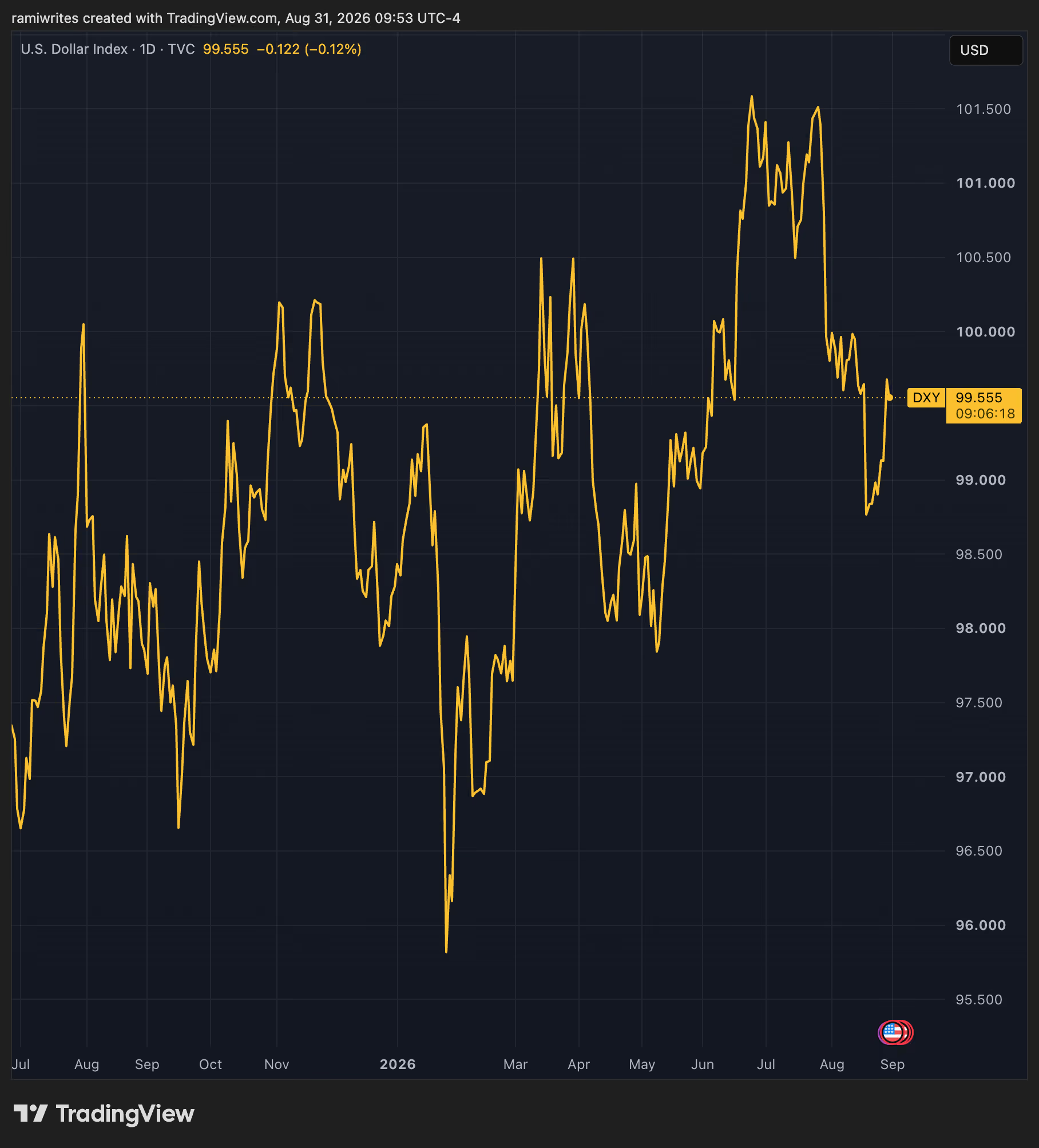
This does not mean interest rates won’t rise or inflation won’t increase. Both are likely. But neither means the end of the dollar. It just means the Treasury pays more to borrow and you pay more at the gas pump and grocery store.
Bessent’s 3-3-3 gambit. The longer-term plan is sometimes called the Three Arrows: keep annual deficits at 3% of GDP or less, achieve GDP growth of 3% or more, and increase U.S. energy production by the equivalent of 3 million barrels of oil a day.
The metric that matters for confidence in Treasuries is the debt-to-GDP ratio. Right now, gross federal debt is roughly 123% of GDP, near the highest level in U.S. history.
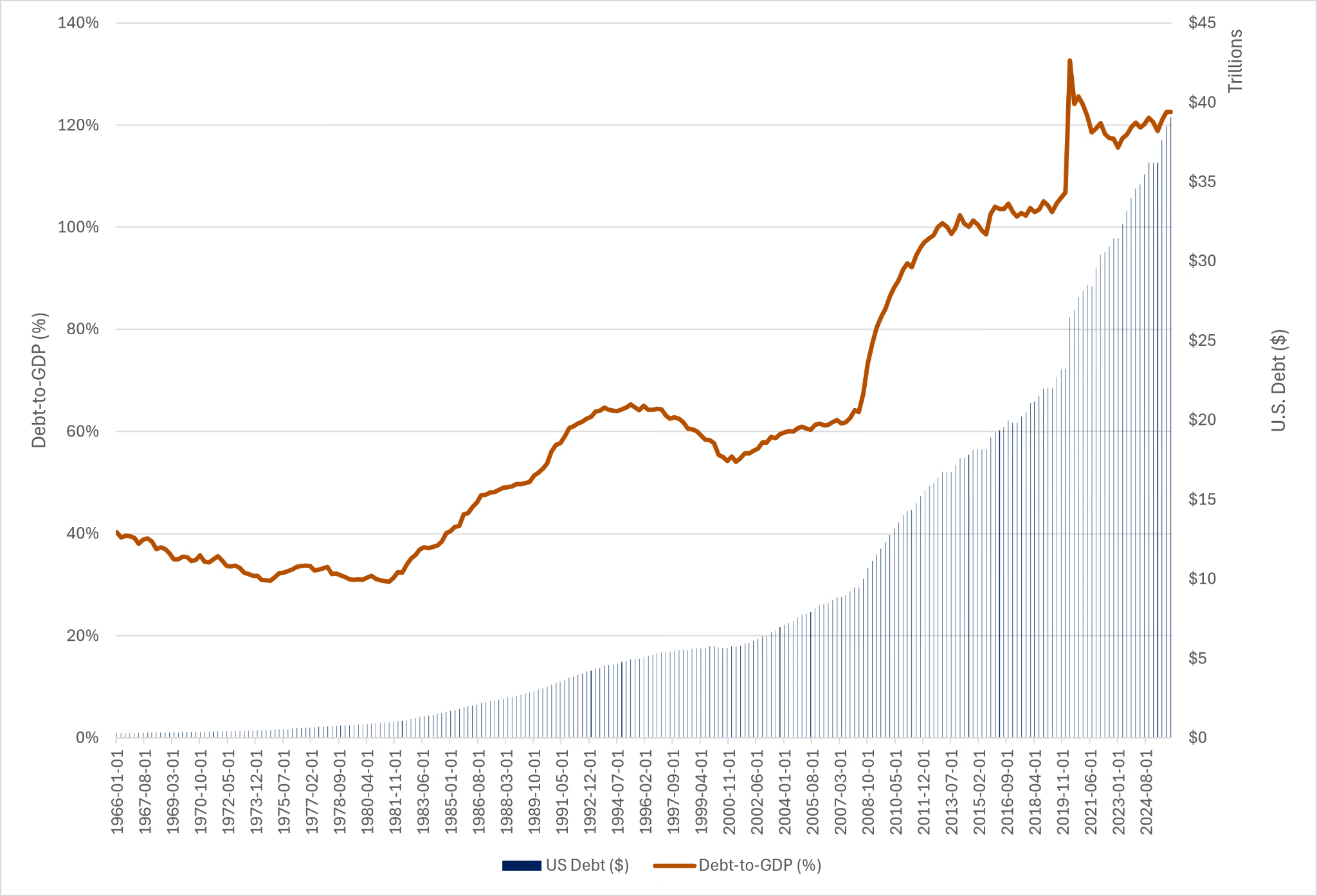
The annual deficit will not go to zero. The national debt will not go down. Neither matters. What matters is whether the ratio goes down, and the way to do that is to grow the economy faster than the debt.
Say deficits run $2 trillion, so the debt reaches $42 trillion next year, a 5% increase. If GDP grows from $32.5 trillion to $34.5 trillion, that’s 6.2%. The ratio drops from 123% to 121.7%. Still high, but lower. That’s all the bond market needs to see.
The U.S. has done this before. Gross debt reached roughly 119% of GDP in 1946 and was down to about 31% by 1980. The national debt rose substantially over those decades. GDP rose by more than 1,000%. That was the key.
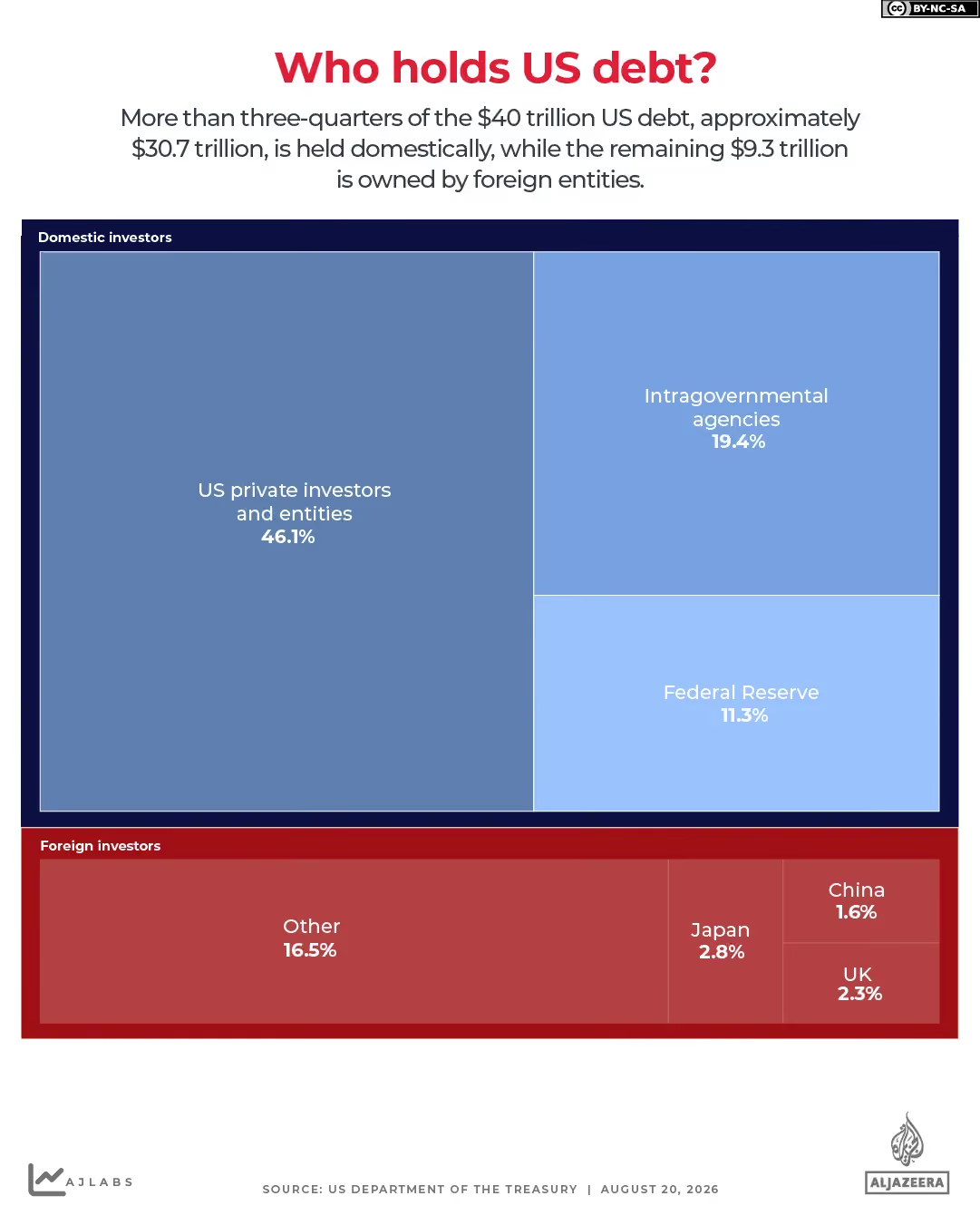
Here’s the dirty little secret. When the government computes debt-to-GDP, it uses nominal numbers, not inflation-adjusted ones.
That 6.2% nominal growth could be 4.2% real growth plus 2% inflation. Fairly healthy. Or it could be 2.2% real growth plus 4% inflation.
At 4% inflation, the dollar’s purchasing power is cut roughly in half in 18 years, and in half again over the next 18.
How much inflation is in the Bessent plan? The Secretary didn’t say. Investors should assume the worst.
The U.S. has struggled to sustain real growth above about 2% a year since the financial crisis. If we need 6% nominal growth to outrun the debt and can only produce 2% real, the difference has to come from inflation. That could mean 4%. It’s fifth-grade math.
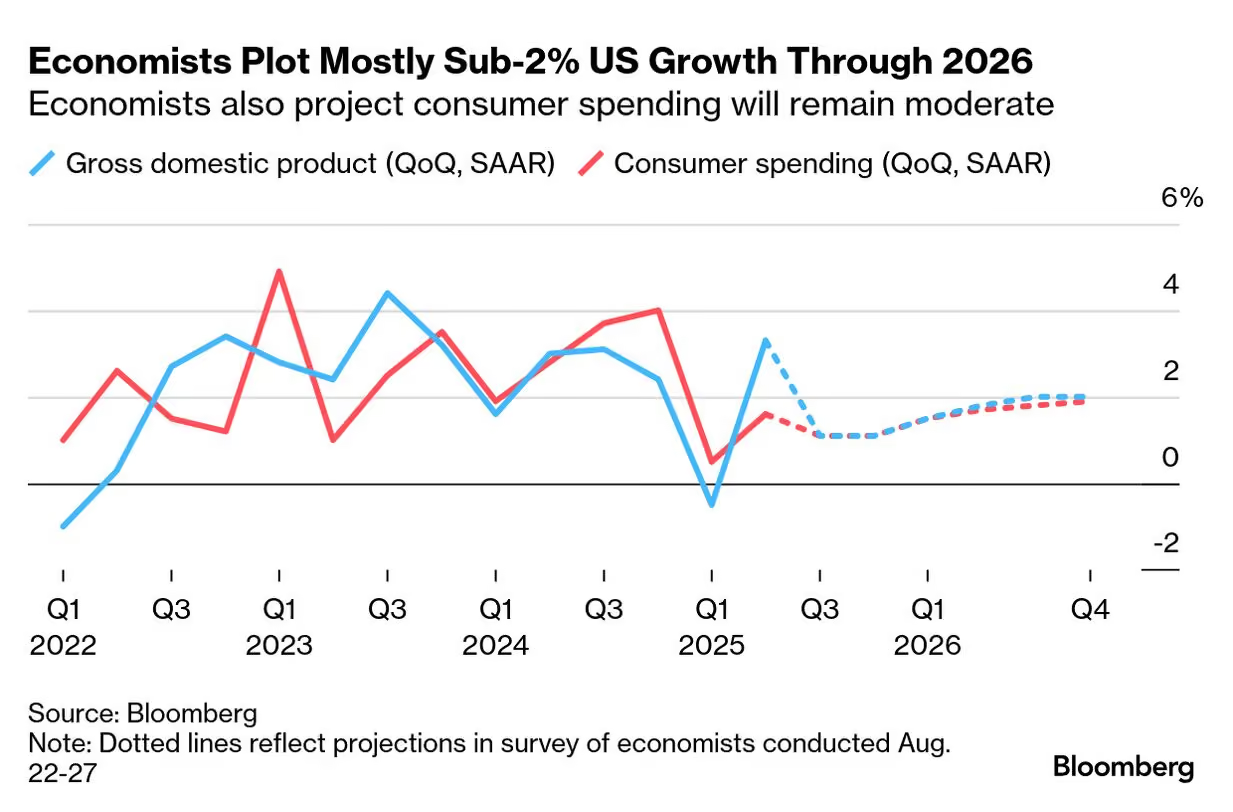
In describing how the U.S. cut its debt ratio between 1946 and 1980, I omitted one fact: consumer prices rose about 50% between 1977 and 1981. That’s one way the government took care of the problem.
I lived through that period. It was a fun time if you owned gold or real estate, if you used leverage, and if you had a job that gave you a raise every few months. It was not a fun time if you depended on fixed-income streams like annuities, pensions, or Social Security.
Which side of that trade are you on?

The $1 TRILLION Gold Shock Rickards Says Is Coming Sept. 30
Gold ran to a record earlier this year, then pulled back hard. Jim Rickards, who many call America's #1 gold expert, says the bigger move is still in front of us.
He points to September 30, 2026 as the date a major shock hits the gold market, tied to what he describes as a Trump-administration gold initiative he believes could unlock up to $1 trillion in gold over the coming year.
He's just released one of his favorite gold plays, a single ticker, 100% free.
See Rickards' free gold play here →
Paradigm Press is a paid partner of Future Finance. The forecasts and claims above are James Rickards' and Paradigm's, not Future Finance research or advice. As always, do your own diligence.
Signal vs. Noise
Bessent Promised a Major Bank. He Delivered Two Branches.
- The noise: last Monday, Treasury Secretary Bessent promised “at least one major financial institution” would be cut off for moving Iran’s money by the end of the week.
- The signal: what arrived Friday was the Dubai branches of an Egyptian bank, for processing about $1.8 billion across 103 companies linked to Iran. Bloomberg called it underwhelming. PBS pointed out that sparing the parent bank shows how reluctant Washington is to punish big trading partners, China and India included.
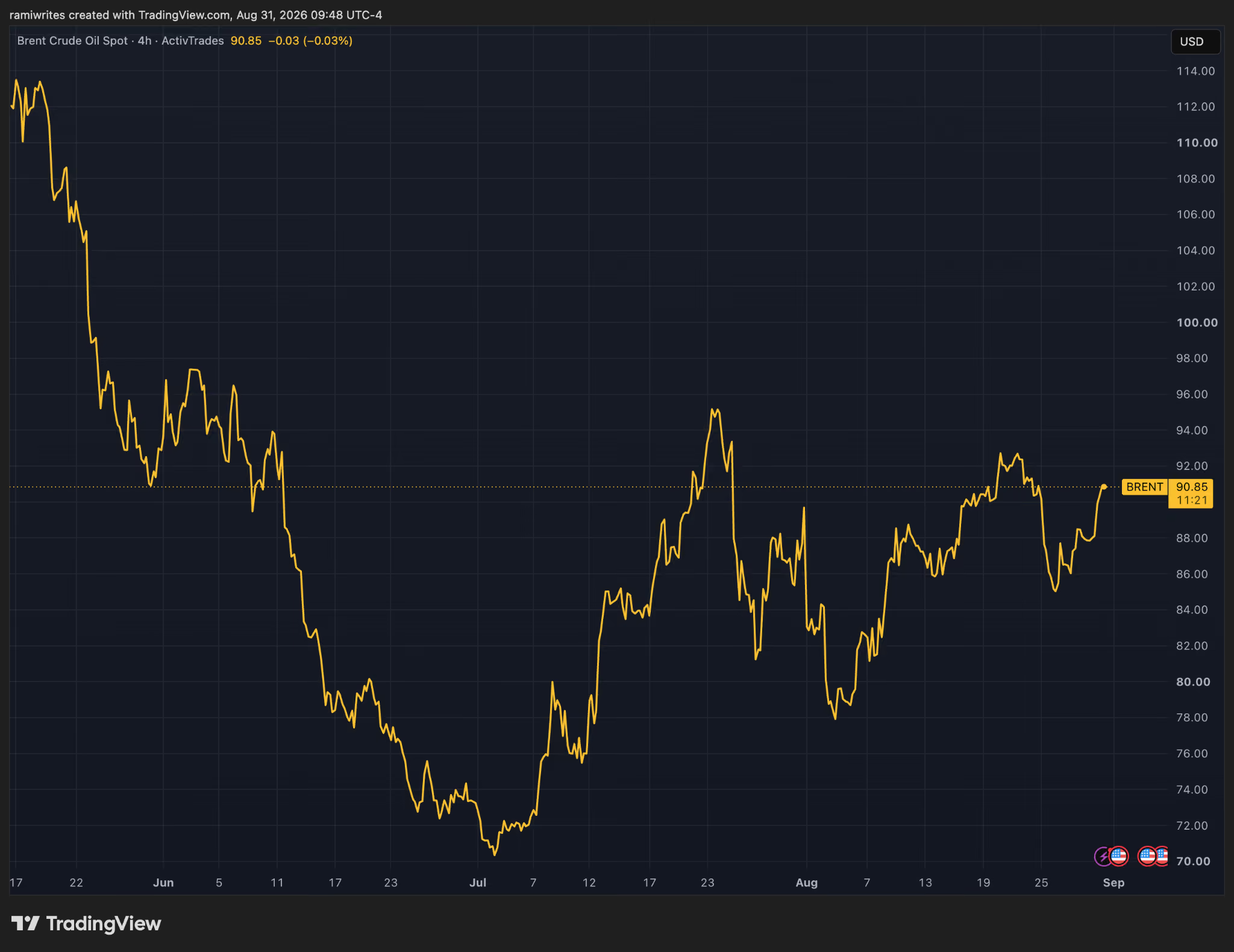
On Sunday, Bessent promised new sanctions every week. Watch the pattern, because it has held all month: large threats, smaller deliveries, and oil ignoring the podium. Brent’s climb back above $90 this morning came from a tanker incident near the Strait of Hormuz, not from anything Treasury did.
911,000 Ghost Jobs Last Year. 79,000 This Year.
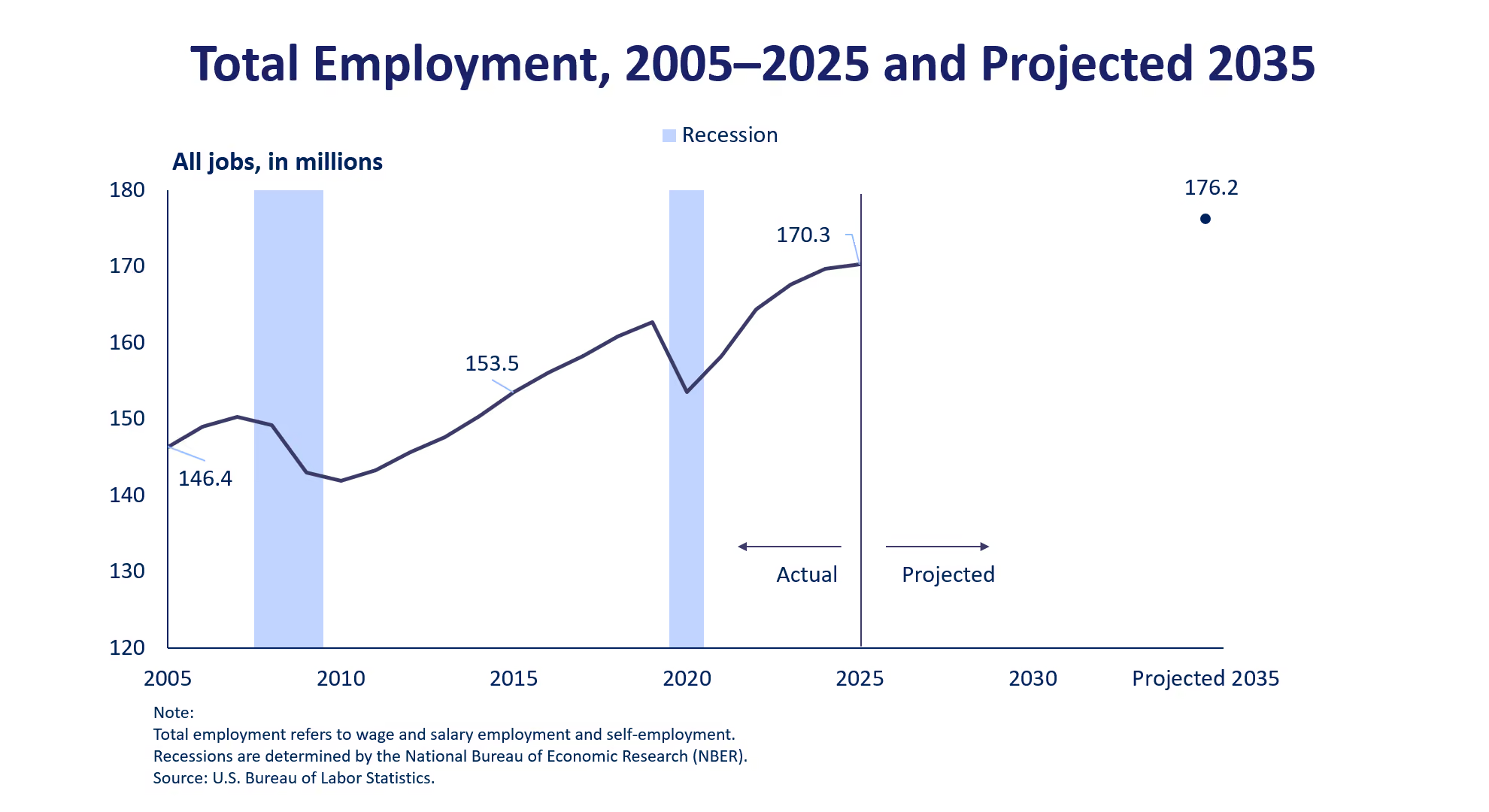
- The noise: a weekend argument over whether Friday’s annual rewrite of the jobs data was the first upward revision since 2022.
- The signal: the correction came in at 79,000 jobs lower, a rounding error next to last year’s 911,000. The “upward” talk refers to a final figure due next February, which Goldman expects to be barely positive.
Once a year, the government checks its monthly jobs surveys against real tax records. This year, for the first time in a long while, the surveys had been roughly telling the truth.
That makes this Friday’s August jobs report the cleanest labor reading the Fed will have before it decides on rates.
ABN Principle in Practice: All-Weather → Which Side of 1977 Are You On?
Go back to that grocery cart. The person pushing it in 1981 had lost a third of their purchasing power in four years.
Whether that hurt depended on what else they owned. Gold and property rose with prices. A pension, an annuity, or a bond paid the same fixed dollars it always had, and every one of those dollars bought less.
That’s the All-Weather principle in one sentence: dilution punishes fixed promises and rewards things that can’t be printed.
The “A” in ABN exists so you’re never standing entirely on the wrong side of that line, in any weather, without having to guess the next Fed meeting.
None of this is a call to buy anything. It’s the lens for reading every headline this week.
From Around the Market
Four stories worth a second look.
- The second-largest one-day gain in history lasted one day… Nvidia (NASDAQ: NVDA) added $442 billion Thursday, then gave back 4% Friday to close at $217.55. Marvell fell 10% on the week despite beating expectations. When perfection is already priced in, good news gets sold too.
- Japan spent a record ¥15 trillion defending the yen and barely moved it… The Ministry of Finance disclosed ¥15.39 trillion of intervention in a single month. The world’s largest holder of U.S. debt is spending heavily to hold its own currency together.
- One streak ended. One didn’t… Bitcoin ETFs lost $201.8 million Friday, snapping nine straight days of inflows. Ethereum ETFs extended theirs to ten. August still finished as the strongest ETF month of the year.
- Why 57% is not a done deal… A clear explainer on why a coin-flip September is being treated like a certainty, and what it takes to reach the 90% odds that usually come before a Fed move.
What to Watch For
- Today: Tim Cook’s last day as Apple (NASDAQ: AAPL) CEO, and a regional manufacturing survey from the Dallas Fed.
- Tuesday: the ISM manufacturing report and job openings data. Dell and Palo Alto report after the close.
- Wednesday: ADP’s private payroll estimate (consensus near +75,000) and the Fed’s Beige Book. Broadcom (NASDAQ: AVGO) reports after the close; its AI chip forecast is the number that matters.
- Thursday: jobless claims and the ISM services report. Lululemon reports, with a new CEO starting next week.
- Friday: the August jobs report. Consensus +110,000 jobs, unemployment 4.2%, wages up 0.3%. A strong number makes a September rate hike more likely. A weak one revives the case for patience.
- Circle: September 9, the first $4 billion long-bond buyback. September 15, the Senate crypto vote. September 16, the Fed’s decision.
Final Thought
Tan handed this newsletter back on Saturday. For a week I got to read it the way you do, and one thing stayed with me: he never predicted anything. He decided in advance what he’d do in each case.
Rickards does the same today. No forecast of 4% inflation, just the arithmetic that makes it the easiest road, and a question about which side of that road you’re standing on.
I can’t answer that for you. I can promise you’ll see the road more clearly here, three mornings a week.
Friday’s jobs report is the first mile marker. See you soon.
Editor in Chief | Future Finance
Tan's First Issue Is Out - Twice a Week, Every Week
(Founding Window Just Got Longer)

For five days last week, Tan Gera opened his ledger, his hardest call, his map, and his entire portfolio in this newsletter.
This morning, that work moved to its permanent home. The first issue of The Macro Letter is out, and it opens with what he's doing about a coin-flip September.
One housekeeping note. The checkout page had technical difficulties for part of the weekend, and some of you couldn't get through. That's on us, so the Founding Member offer now runs through Wednesday, September 2, at 11:59 p.m. Pacific.
Twice a week, every week: his liquidity reads, his levels, and every decision he makes with his own money, dated and graded in public.
Become a Founding Member before Wednesday midnight →
Disclaimer: This content is not financial advice, it is for informational purposes only. All investments involve inherent risk. Any financial decisions you make are solely your responsibility.
Latest




Editor's Picks


Become a sharper capital allocator in 5 minutes a day.
Institutional-grade research on where the smartest capital is positioning, across AI, energy, biotech, robotics, and digital assets. Distilled into a daily read you finish before your coffee does.
Join 45,000+ readers · No spam · Unsubscribe anytime · No card needed