

Your savings are losing 3.3% a year…
Same dollars, moving a lot faster. →
October 21, 2026
·
5 Min Read




The briefing serious investors read first.
Free analysis before markets open. Start thinking in decades, not days.
Join 45,000+ readers · No spam · Unsubscribe anytime · No card needed
Today’s Big Picture
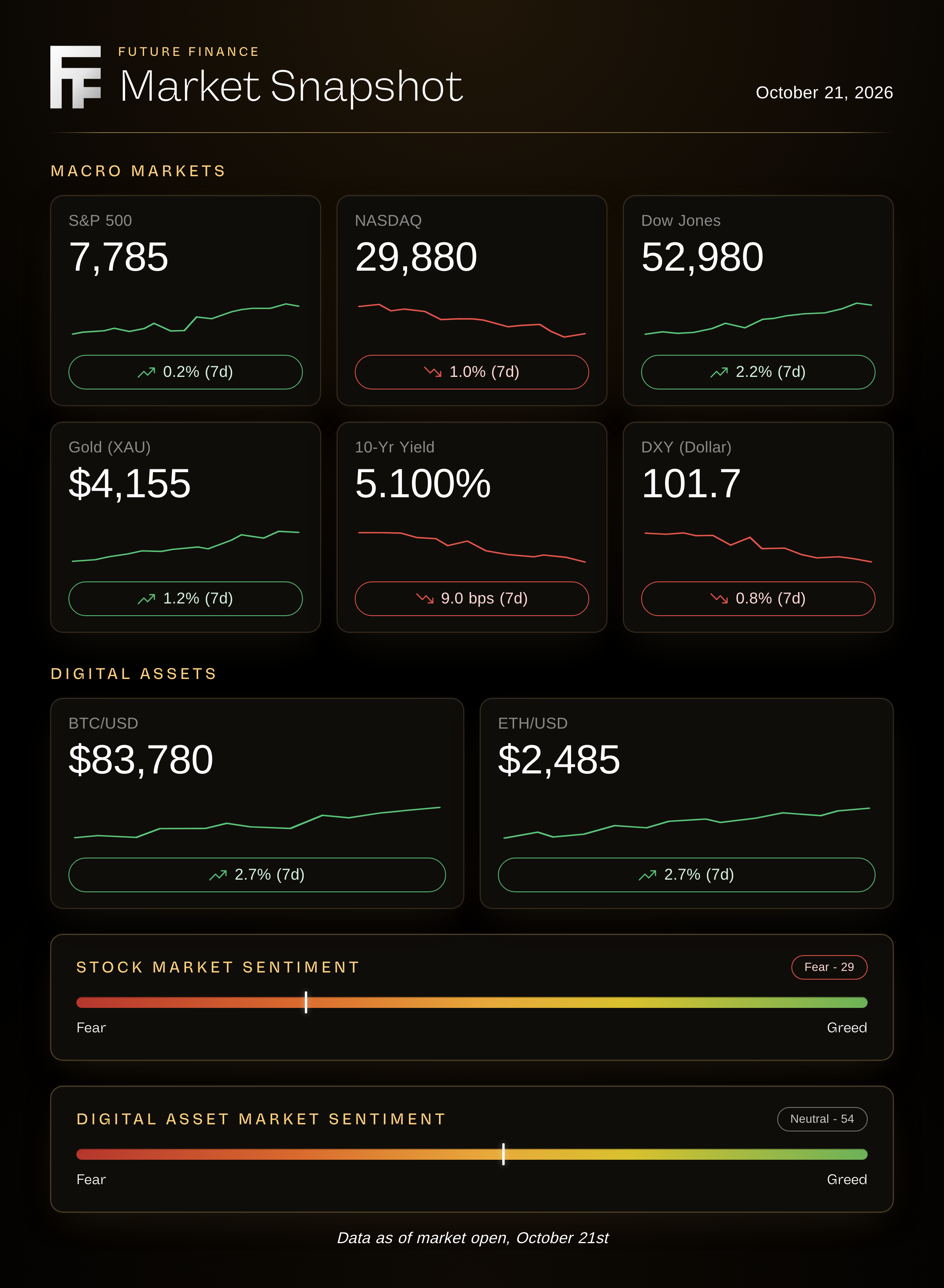
Fewer Americans signed a contract to buy a home in September than in any month since the record began in 2001.
Pending home sales fell 7.3% in a month, and housing starts came in about 80,000 homes short of forecasts. The National Association of Realtors’ Lawrence Yun blamed “fast-rising mortgage rates.”
That’s what a 10-year Treasury yield above 5% does when it sticks around. It closed Tuesday at 5.12%, and traders still expect the Fed to raise rates again by December.
While one market freezes, another is speeding up.
Stablecoins, the digital dollars that live on a blockchain, handled $482 billion in payments in the first nine months of the year, up 45% from a year earlier. Their total supply barely moved.
The same pile of digital dollars is changing hands faster every month.
Below, The DeFi Doctor gives stablecoins a checkup, and explains where those dollars can earn more than a bank pays.
Paid Advertisement
America Owes $40 Trillion. The Way Out Runs Through One Asset.
The U.S. now spends more than $1 trillion a year just on interest, and that bill reaches your savings before it reaches anything else.
Tan Gera, CFA, spent his Wall Street years studying moments exactly like this one. In a free briefing, he breaks down the AI-linked asset class the government has little choice but to fuel, and the 3-phase system he built around it, inspired by how firms like BlackRock position for shifts this size.
You don’t need to have invested outside a 401(k). You need to see what’s coming before the money moves.
Watch Tan’s free briefing here…
Disclosure: Educational content only. This briefing is not financial, investment, legal, or tax advice, and nothing in it is a recommendation to buy or sell any asset. Forecasts are the presenter’s opinions, not guarantees. All investing carries risk, including possible loss of principal. Do your own research.
Signal vs. Noise
Netflix and GM Beat. Both Stocks Fell.
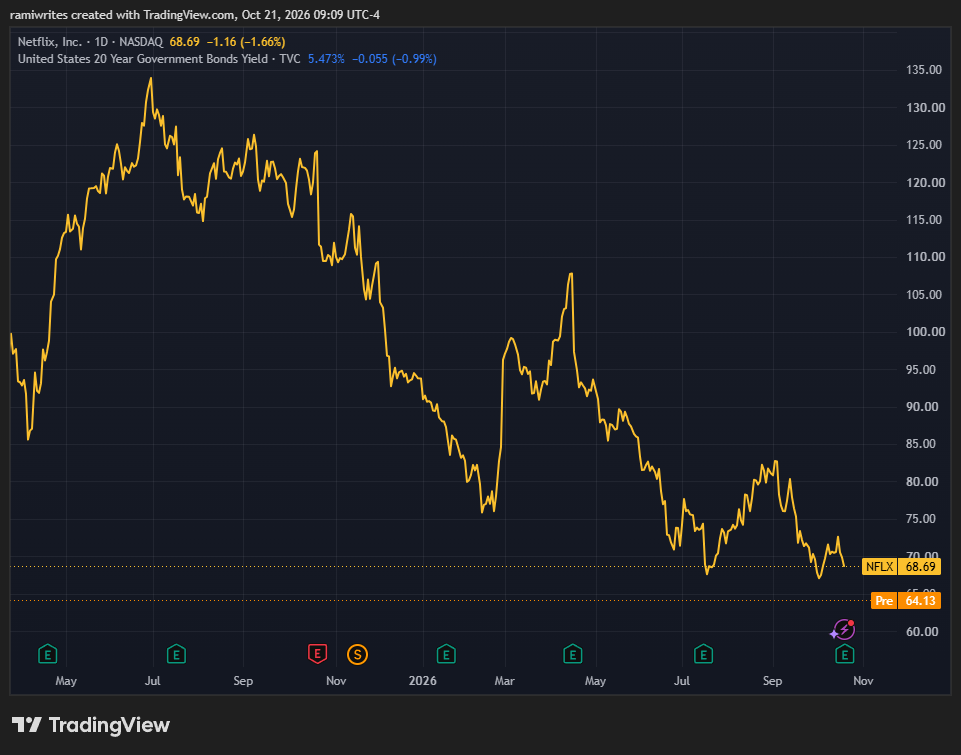
- The noise: both companies topped forecasts. Netflix earned 87 cents a share against 82 cents expected. GM beat too, and announced a $20 billion stock buyback.
- The signal: the outlooks. Netflix guided its next quarter below forecasts and cut this year’s ad revenue target to $2.7 billion from $3 billion. The stock fell nearly 6% after hours.
That came despite a record 34.6% operating margin for the quarter. Investors looked straight past it.
Yesterday we wondered whether “in line” would be enough for a bounce. It wasn’t, because the outlook slipped.
GM fell 6.8%, its worst day in about 15 months, after CEO Mary Barra pointed to “growing inflationary pressures.”
For beginners: a stock price is a bet on the future. Last quarter’s numbers are already known, so the guidance usually moves the stock.
The Dow Rose 1%. The Nasdaq Didn’t Budge.
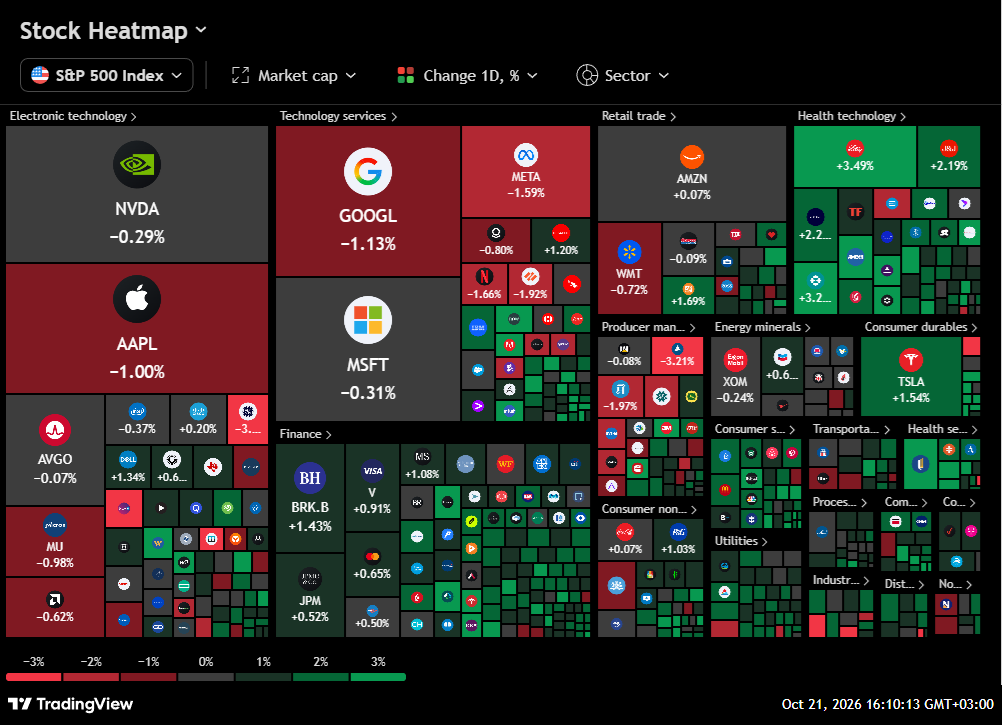
- The noise: the S&P 500 rose a modest 0.28% Tuesday.
- The signal: who did the lifting. Small companies in the Russell 2000 jumped 1.65%, the average S&P 500 stock rose more than 1%, and health care led every sector.
Chip stocks gave back part of Monday’s bounce, and Meta fell for a fifth straight day. The stocks most investors overlook keep having their moment.
For beginners: when the big names stall and everything else rises, money is spreading out. That’s usually healthier than a rally carried by a handful of giants.
Tonight, Meta’s Spending Plan Sets the AI Mood
- The noise: Meta’s five-day slide and Lam Research’s 3% drop Tuesday, ahead of their reports after the close.
- The signal: Meta’s spending guidance. Wall Street expects about $193 billion in capital spending next year, by one tally, and Bank of America is looking for $205 billion.
Last quarter, Meta’s free cash flow fell to $784 million and the stock dropped about 8%. Investors will want to see that the spending is turning into revenue.
Tesla reports too, with Wall Street expecting about 45 cents a share, down 10% from a year ago.
For beginners: “capex” is money spent on long-lived things like data centers and chips. It’s the fuel for the AI trade, and tonight shows whether the fuel bill is still worth paying.
Featured Contributor

Today’s guest is The DeFi Doctor, owner and author of Beat Banks, a twice-weekly intelligence briefing on where real yield opportunities exist in decentralized finance. Figures come from Allium’s “State of Stablecoins and Payments, Q3 2026” report, released Oct. 15, along with CoinDesk, Visa, DefiLlama and the FDIC. Nothing here is a recommendation.
The Stablecoin Pulse Just Jumped 45%
When a patient comes in, I check two things before anything else: their size and their pulse. Size tells you how much there is. Pulse tells you how hard the system is working.
Stablecoins just had their quarterly checkup, and the two readings disagree in a way I like.
Quick refresher first. A stablecoin is a digital dollar. Each one is backed by cash or short-term Treasurys and is meant to stay worth $1. You can send it anywhere in the world, any time, in seconds.
The size: flat
Total stablecoin supply ended September at $305 billion, according to the data firm Allium. That’s up 0.4% for the year. Basically unchanged.
The pulse: racing
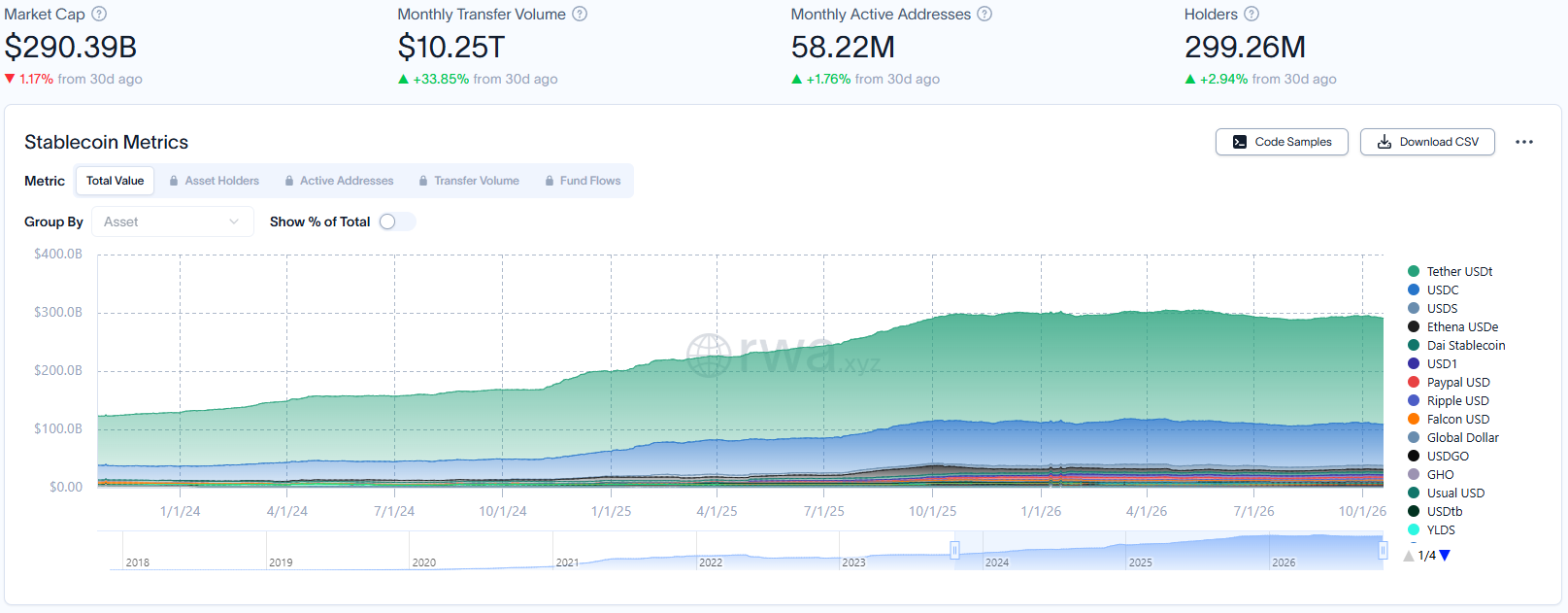
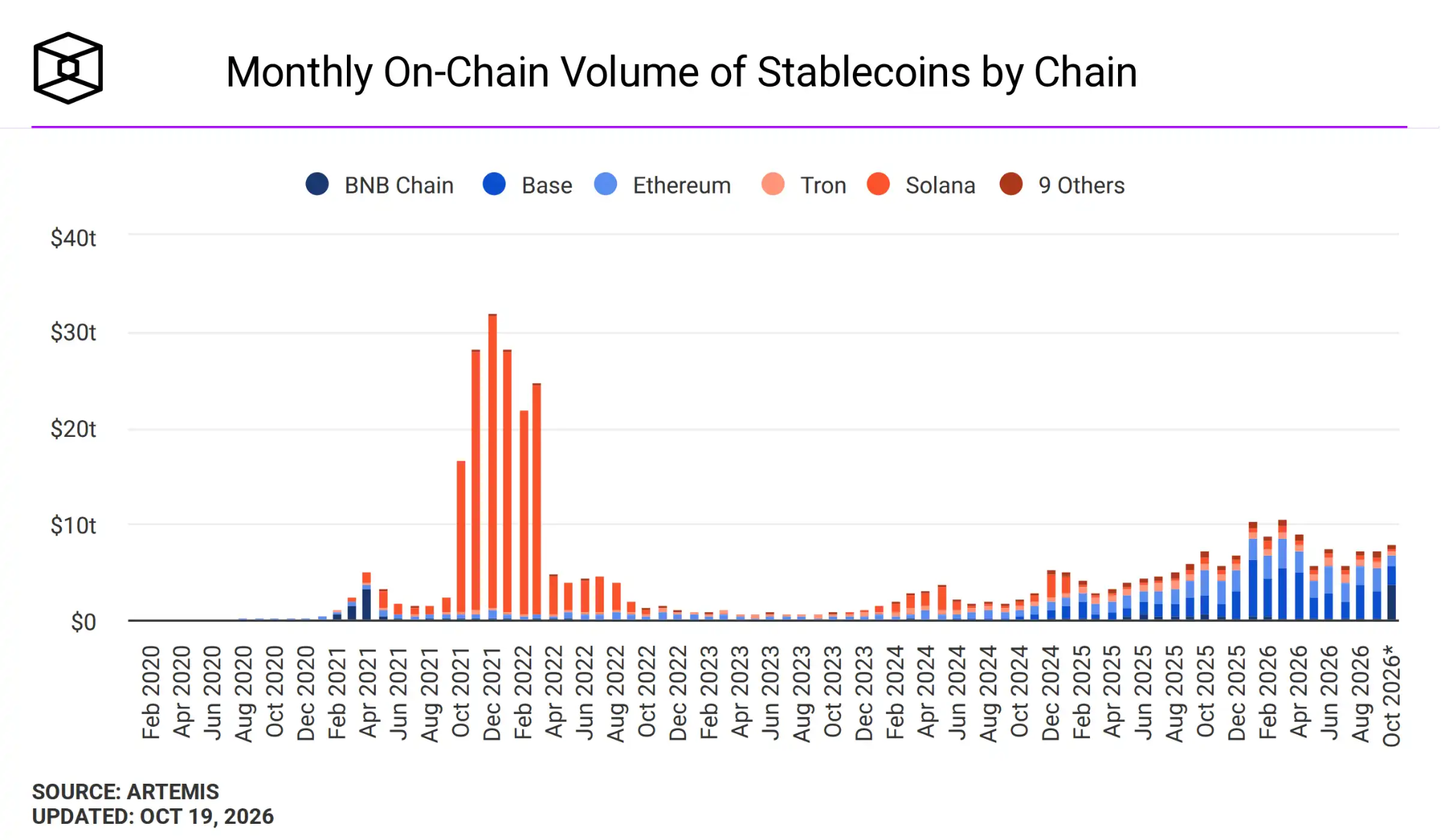
Stablecoin payments hit $482 billion in the first nine months of 2026, up 45% from the same stretch last year. The number of payments rose 71%, to 1.04 billion.
September alone set a monthly record of $72 billion.
Same amount of money in the system, moving much faster.
And Allium is strict about what counts. It threw out about 97.5% of all stablecoin transfers as trading, exchange shuffling, bots and other plumbing before it counted a single payment.
Smaller, and more often
The average payment shrank from $544 to $462. That’s what happens when people use something for ordinary things.
Card spending, people paying with a stablecoin-linked debit card, hit $3.9 billion through September, roughly 10 times a year earlier. Purchases under $50 made up 84% of the increase in card transactions, per CoinDesk’s read of the report.
Under $50 is coffee, groceries and gas.
The big networks see it too. Visa says its stablecoin settlement volume passed a $20 billion annual pace, up more than 15 times in a year, and more than 160 stablecoin-linked card programs now run on its network.
A second opinion
Before anyone gets carried away, some perspective. In the second quarter, stablecoin card spending was about 0.03% of Visa’s payment volume. Nine months of stablecoin payments add up to about 3% of what Visa handles in a year.
It’s also concentrated. Tether’s USDT carried 84% of payment value, and about two-thirds ran on a single blockchain, Tron.
And a card swipe doesn’t tell you who’s behind it. Many of these cards spend digital assets people already own, so the data shows more use. It can’t tell us how many of the spenders are new.
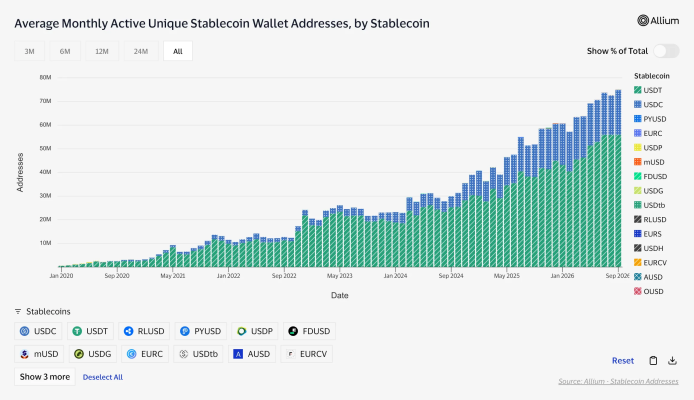
So here’s my diagnosis. The patient isn’t running marathons yet. But a pulse that climbs 45% while the body stays the same size tells me people are leaning on this system more, with the same money.
The prescription
Here’s the part I find most interesting. Under the GENIUS Act, the stablecoin law signed last year, issuers like Circle and Tether can’t pay you interest just for holding their coins. A stablecoin sitting in your wallet earns nothing.
Put the same dollars to work in a lending market and it’s a different story. Supplying USDC on Aave, one of the largest decentralized lending platforms, paid about 4.5% in early October. The average U.S. savings account pays 0.38%, per the FDIC.
That interest is paid by borrowers on the platform. The law’s ban covers the issuers.
It comes with risks a bank account doesn’t carry: software bugs, a coin slipping off its $1 peg, a platform changing its rules. And the best high-yield savings accounts pay close to 4.5% with FDIC insurance, so the extra return has to be worth it.
Weighing those trade-offs, one pool at a time, is what I do every week in Beat Banks.
Next time someone tells you stablecoins have stopped growing, ask them which number they’re looking at.
- The DeFi Doctor
Author, Beat Banks
Paid Advertisement
If The Dollar Is Being Debased, Where Do You Put Your Money?
If governments keep spending and the dollar keeps losing value over time, holding all your savings in cash is a slow leak.
One answer is to earn a real return that outpaces the debasement, on your own terms, instead of letting a bank pay you next to nothing on your deposits.
That is the whole idea behind Beat Banks, the weekly research on becoming your own bank and taking control of your financial destiny.
The dollar is designed to lose value over time. This is about making your money do the opposite.
Disclosure: Educational content only. Beat Banks is not financial, investment, legal, or tax advice, and nothing in it is a recommendation to buy or sell any asset. Forecasts are the presenter’s opinions, not guarantees. All investing carries risk, including possible loss of principal. Do your own research.
Final Thought
A 5% Treasury yield cuts both ways.
It makes borrowing hurt, which is why September’s home contracts fell to a record low.
It also makes idle cash expensive to keep idle. If your savings sit at the 0.38% national average while inflation runs at 3.7%, you’re losing about 3.3% a year in buying power.
You don’t have to chase anything exotic to fix that. Plenty of high-yield savings accounts and Treasury bills pay above 4% right now. The point is to notice where your money is sitting and what it’s earning.
Meta and Tesla report tonight. We’ll go through what they said, and what it means for the AI trade, tomorrow.
See you then.
Editor in Chief | Future Finance
Every Level. Every Move. Written Down Before It Happens.
Tan Gera, DM’s co-founder and a CFA, writes The Macro Letter for investors who would rather have a plan than a prediction.
Twice a week, he lays out what he’s watching across rates, oil, stocks and digital assets, the levels where he’d add or trim in his own portfolio, and how his past calls played out, misses included.
With the Fed deciding next Wednesday and the 10-year yield above 5%, it’s a good week to have your levels written down.
Positions described are Tan’s own portfolio, shared for transparency, and are not a recommendation to buy or sell any asset. Past performance is not indicative of future results.
Disclaimer: This content is not financial advice, it is for informational purposes only. All investments involve inherent risk. Any financial decisions you make are solely your responsibility.
Latest




Editor's Picks


Become a sharper capital allocator in 5 minutes a day.
Institutional-grade research on where the smartest capital is positioning, across AI, energy, biotech, robotics, and digital assets. Distilled into a daily read you finish before your coffee does.
Join 45,000+ readers · No spam · Unsubscribe anytime · No card needed