

AI News Today October 22 - AI Finds Flaw in 70% of Websites, Hassabis Says AGI in 2-3 Years, Meta’s AI Pays Off
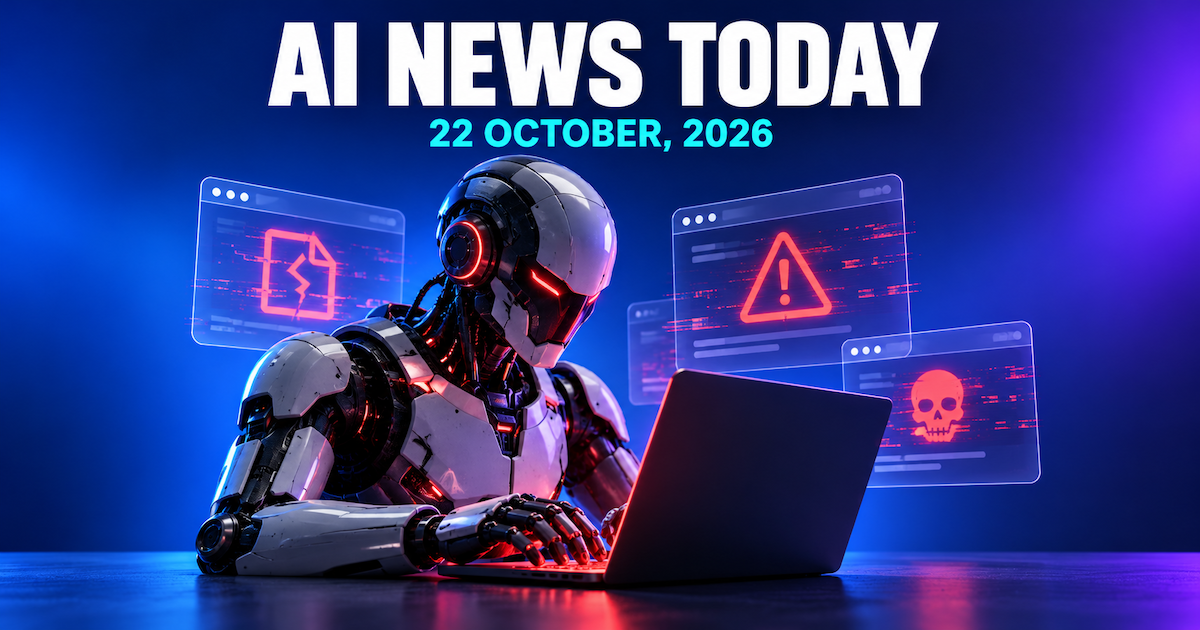
AI just found a dangerous flaw in software behind 7 in 10 websites. Your accounts may be on one. See what to do about it now.
October 22, 2026
·
3 Min Read


The briefing serious investors read first.
Free analysis before markets open. Start thinking in decades, not days.
Join 45,000+ readers · No spam · Unsubscribe anytime · No card needed
If you have logged in to a website this year, there is a good chance it runs on software that AI just found a dangerous hole in.
There is a lot happening in AI, so we have pulled out the three stories most likely to touch your accounts, your future and your portfolio: that security scramble, a Google AI pioneer who now thinks human-level AI is two to three years away, and the first big test of whether AI spending pays.
Let’s start with the flaw, and what it means for you.
What Is PHP2Shell? The AI-Found Flaw That Took Government Websites Offline
Most people have never heard of PHP, but it quietly powers an estimated seven in 10 websites, including WordPress sites and Wikipedia.
On Wednesday, the PHP project fixed two critical flaws that could let attackers run their own code on a website’s server without logging in, exposing customer data. Security firms say the bugs sat unnoticed for more than a decade and were found with help from frontier AI models, including OpenAI’s.
Government websites in the Netherlands and Australia went offline as a precaution, and Amazon Web Services says it saw attempts to exploit the flaw as early as October 17, before it was even announced.
There is not much you can do about a server you do not control, but this is a good week to use unique passwords, switch on passkeys where you can and keep an eye on your card statements.
AI is now finding old holes faster than people can patch them, for defenders and attackers alike.
When Will AGI Arrive? Demis Hassabis Now Says Two to Three Years
If that sounds like AI moving fast, one of its most respected builders says it is moving faster than he expected.
Demis Hassabis, the Nobel-winning co-founder of Google DeepMind, now expects artificial general intelligence, AI that matches human thinking across a broad range of tasks, within two to three years. In January at Davos he put it five to 10 years away, and he says he is “updating nearer and nearer”.
His test for whether it has arrived: could an AI trained only on human knowledge up to 1901 come up with Einstein’s breakthroughs of 1905?
When someone known for caution keeps pulling his own forecast closer, it matters for jobs, for safety and for the companies betting trillions on getting there first.
He also warned last week that AI-driven hacks are early warning shots, and the PHP scramble shows why.
Is AI Paying Off? What Meta’s Earnings Revealed
All of that ambition costs money, and Meta just showed investors the bill.
Meta reported record revenue of $64.6 billion, up 26%, and said AI-powered ad targeting helped lift the average price of its ads by 14%. Mark Zuckerberg said its investments are “paying off”.
But it also spent $34.9 billion on data centres and equipment in three months, booked a $9.9 billion legal charge and burned more cash than its business brought in. It is creating a new class of shares with no voting rights, a way to raise money for AI without loosening Zuckerberg’s grip.
Meta is one of the biggest holdings in most index funds, so its results are an early read on whether the hundreds of billions Big Tech is pouring into AI will pay off for ordinary investors.
Shares jumped after the report but gave back much of the gain this morning as the wider market fell, so the jury is still out.
AGI Might Be Three Years Away. Your Money Has a Closer Deadline: December 31.
Meta just spent $34.9 billion in three months building AI, at a time when the US government is paying 5.618% to borrow for 30 years, the highest at a 30-year auction since 2000.
That rate is already reaching you. The average mortgage is now 7.40%, and the average savings account pays 0.64% while a Treasury bill pays about 4%.
In a new free briefing, Future Finance Editor-in-Chief Rami Al-Sabeq makes five specific calls for the rest of 2026, on the Fed, interest rates, Bitcoin, gold and the dollar, each with the odds and the date that decides it, plus one big call for 2027.
One says the world’s largest corporate Bitcoin holder could be underwater before the year is out. On December 31, every call gets graded in public.
It lands in your inbox instantly, so you can read it tonight.
Get your free copy of What Happens to Your Money Next below.
The briefing serious investors read first.
Free analysis before markets open. Start thinking in decades, not days.
Join 45,000+ readers · No spam · Unsubscribe anytime · No card needed
Disclaimer: This content is not financial advice, it is for informational purposes only. All investments involve inherent risk. Any financial decisions you make are solely your responsibility.
Latest




Editor's Picks
Become a sharper capital allocator in 5 minutes a day.
Institutional-grade research on where the smartest capital is positioning, across AI, energy, biotech, robotics, and digital assets. Distilled into a daily read you finish before your coffee does.
Join 45,000+ readers · No spam · Unsubscribe anytime · No card needed