
I looked insane for 9 months…
November 20, start to finish: what I saw, what I sold, what it cost, and the list I kept while I waited →
August 25, 2026
·
7 Min Read




The briefing serious investors read first.
Free analysis before markets open. Start thinking in decades, not days.
Join 45,000+ readers · No spam · Unsubscribe anytime
✍️ In the Chair
Hey, Tan Gera here again for part 2 of my week-long Future Finance takeover.
Today, I’m sharing one of the most difficult lessons I’ve learned in my career.
It’s also one of the most important…
Selling while you’re winning is the hardest act in markets. I’ve bought falling markets with my hands shaking, and none of it compares.
- The chart is green.
- The room is celebrating.
- Every voice, outside your head and inside it, says just a little longer.
278 days ago, that was my screen.
Bitcoin above $90,000, the crowd calling for six figures, and my framework telling me to leave.
I sold.
Live, in front of more than 1,000 people, with an 8-figure portfolio moving as I spoke. Then I spent nine months finding out whether the market would grade that decision disciplined or delusional.
Today I’m taking you through: what I saw, what I said, what I got wrong inside the thing I got right, and what it costs to hold a public position while the market takes three seasons to hand down its verdict.
Yesterday's ledger showed you eleven calls in two lines each. This is what one line costs to live through.
Before we get to that, today’s market snapshot, and a reminder. I made a huge announcement yesterday and recorded a 4-minute video walking you through it.
If you missed it, check it out right here…
What the Screen Showed
November 2025.
The top was already in, $126,000, printed in October, though nobody knew it yet.
By November 20 Bitcoin sat above $90,000, and most of the room expected this dip to get bought like every dip before it.
My framework runs on a handful of slow instruments, and the loudest one that month was the 50-week moving average, a line that averages a full year of prices. Bitcoin had spent the whole bull market above it. Now price was fighting it.
I had watched that exact fight once before, in my first cycle, from the wrong side. That view cost me seven figures.
The Call
On November 20, I opened the twice-monthly Market Intelligence Summit I host, shared my screen with more than 1,000 members live, and said…
I was selling into strength and going defensive.
The recording and the memo went out the same day to the rest of Decentralized Masters, the education community I co-founded. All 4,500 members, on the record, within hours.
I did it in public on purpose. A private decision can be reversed and forgotten by lunch. A public one owns you.
“Nobody enjoys stepping out of a market that made them money,” I told the room. We did it anyway.
Yesterday, I Made a Massive Announcement.
And I recorded a quick 4-minute video walking you through exactly what it is. Whatever you’re doing, stop and watch this. Yes, it’s that big of a deal.
The Part the Legend Leaves Out
I did not sell the top. The top was $126,000, a level that was already in the rear-view mirror by then.
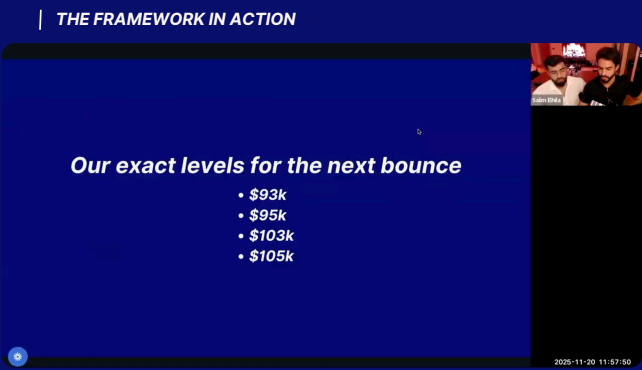
I set six exit levels into the bounces: $88,000, $93,000, $95,000, then $98,000, $103,000, $105,000. The market filled the first three. It never came back for the other three.
I never sold the December low at $81,000 either, because the plan said sell bounces, and I sold bounces.
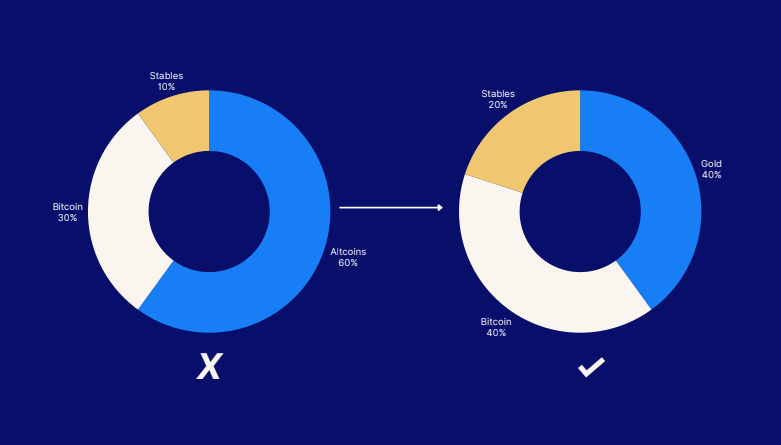
By early in the new year, more than half the portfolio was liquidated, and the proceeds had built a shape I’ll walk you through properly on Thursday: 40% tokenized gold, 40% stablecoins earning yield, 20% Bitcoin. Defense that earned while it waited.
Imperfect, executed, done. That’s what a real exit looks like. The clean ones only exist in stories.
And here’s what the imperfect version was worth. My three filled exits average out to $92,000. On July 1, Bitcoin traded at $57,700.
Run the arithmetic on the half I liquidated: those exits stepped over a 37% drop. Even after this month’s launch back above $80,000, they still stand about 15% above where Bitcoin trades today.
But my favorite version of this math is the one we ran for our members, twice, in February and again in April: three identical $100,000 portfolios starting the day before the November call:
- One held through.
- One shifted to defense on the spot.
- One walked the exit ladder you just read about.
This is the slide I showed on that February live session.
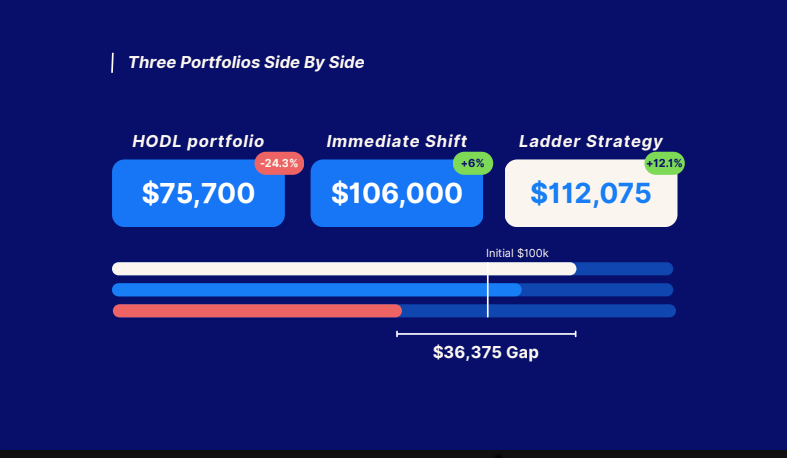
Updated at today’s prices, nine months on: the portfolio that held sits near $76,000, still needing a one-third rally just to break even. The immediate shift sits near $95,000. The ladder sits near $103,000.
Above water, in a market still underwater, with its dry powder already spent at July’s prices. Same market, same starting dollar, one decision separating them.
We publish every line of that simulation to members when we update it. Measure gaps like these against an eight-figure base, and you’ll understand why nine months of looking foolish never once tempted me to undo it.
The Nine Months
Now the cost, which is the reason I’m telling you this at all.
For nine months the tide went out. When price bounced, I looked early. When it fell, the people who had called me insane went silent, and new ones arrived to say I hadn’t sold enough.
Every week, someone asked if I regretted it.
There is no version of defensive that feels smart while you’re holding it. You’re either early or you’re wrong, and the market takes its time telling you which.
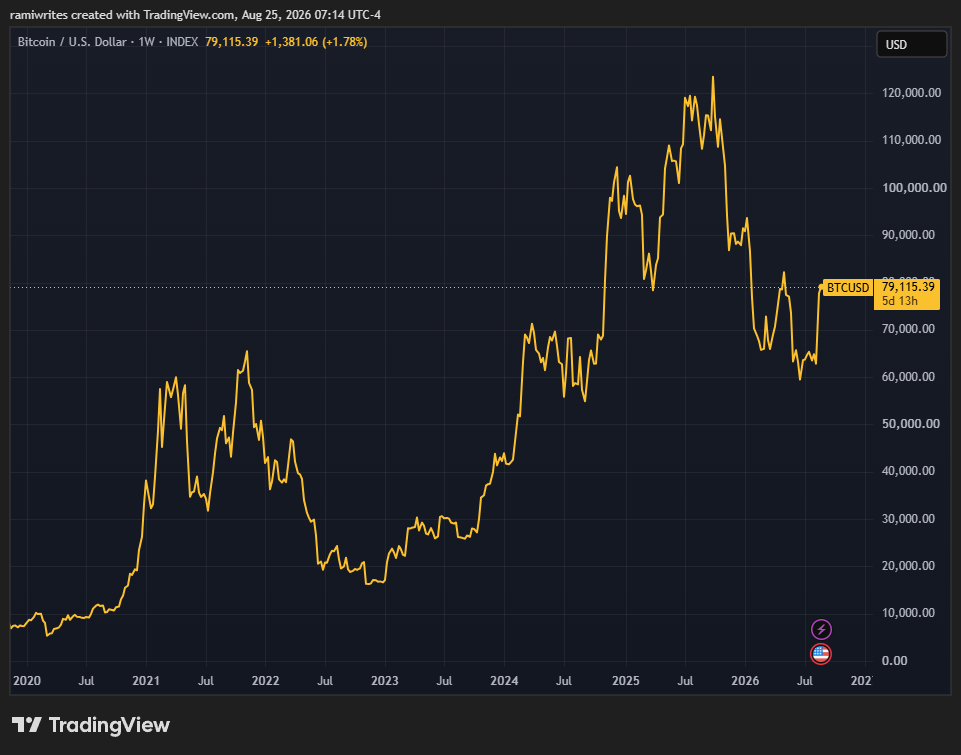
What the defense did while it looked foolish: it earned yield every week. And it held a shopping list written in advance, exact prices where I would buy, chosen back when nobody was afraid.
The rest of the market spent those months arguing about the bottom. I spent them waiting for my list.
On July 1, Bitcoin bottomed at $57,700. Two weeks later, on the same weekly call, I set a test in front of the members: a pullback holding above that low means the turn is real; a steady fall back through it means the bounce is a trap.
This month answered. The launch came from $64,000, thousands above the low.
The test held. The list is why I could wait for it.
Where the Nerve Came From
People ask how I pressed sell with the crowd calling for higher.
It came from not pressing it once. In my first cycle I rode seven figures up and all the way back down. “Diamond hands,” they called it.
I have a shorter word for it now, and I built the framework so I’d never need the word again.
I’m describing what I did with my own money. That’s all this is, and it’s enough.
📊 Today’s Tape
Three items, then back to the story tomorrow.
Yesterday I told you to grade the “economic D-Day” by the oil price, not the podium. The price answered before the podium even started. Brent fell 2.5% through Monday’s session, settling near $92 after two straight weeks of 5% gains, and it’s pressing $88 this morning.
Sellers showed up for the loudest sanctions speech in years.
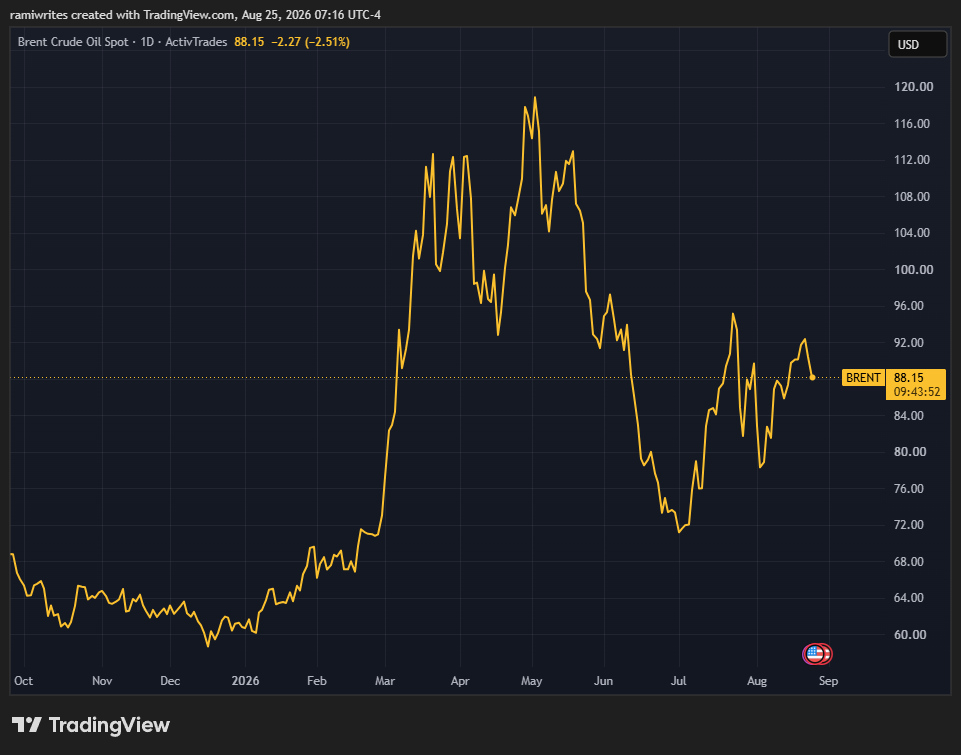
The package itself named more than 60 sanctions targets across five sectors of Iran’s economy, including dozens of Chinese and Hong Kong firms. The measure with real teeth, cutting a major Chinese bank out of dollar clearing, was threatened for later this week and not delivered, with Xi expected in Washington next month.
Until that lands, the same rule holds. Barrels talk. Podiums perform.
And one marker for the story you just read: Bitcoin crossed $80,000 this morning for the first time since May, about 40% above the July low.
Tomorrow after the close, Nvidia (NASDAQ: NVDA) reports, and the bar interests me more than the beat. Wall Street expects about $91.9 billion in revenue against the company’s own $91 billion guide.
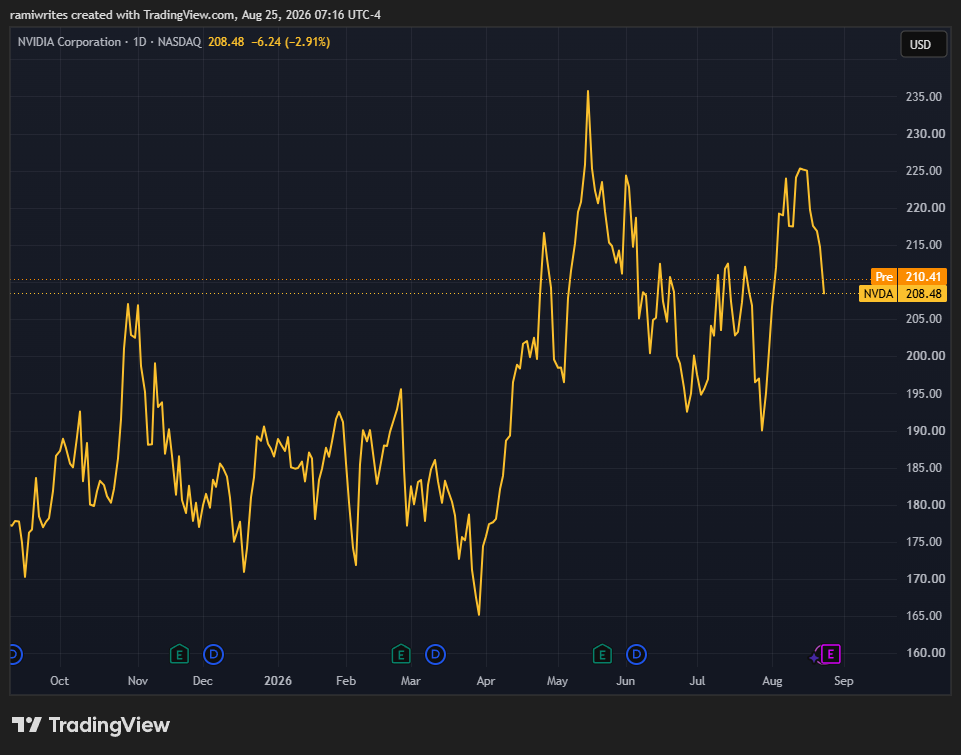
Nvidia has beaten estimates nearly every quarter for years. The stock still fell 4.6% last week walking into this one.
When a market demands perfection from its most important company, results stop mattering and expectations take over. I structure for weeks like this rather than predict them. Thursday I’ll show you exactly how.
- Watch Nvidia against its own guide tomorrow, plus the July inflation report the same morning.
- Circle Friday: Chair Warsh’s first Jackson Hole speech at 10 a.m., and a one-time government rewrite of the jobs numbers.
- Count 21 days to September 15-16: a Fed decision and a Senate crypto vote on the same calendar square.
Get the Routine Behind the November Call - Twice a Week, Every Week

The November call was one Tuesday's work inside a routine. Starting Monday, that routine becomes something you can read.
Yesterday I announced my first-ever newsletter. Today you've seen what the work inside it looks like, and I want you to be a Founding Member.
Starting Monday, August 31, I'm publishing my liquidity reads, my levels, and every decision I make with my own money, twice a week, every week.
It's called The Macro Letter: my read on the whole board, currencies, metals, bonds, crypto, dated and graded the same way you just watched me grade the November call.
On the page below, I've laid out everything Founding Members get and how to lock in access before anyone else.
💭 Final Thought
People ask what the November call cost. Nine months of looking wrong is the visible price.
The full price was paid years earlier, in my first cycle, when I had the numbers and lacked the list. Everything since has been cheaper.
Tomorrow: the fork in front of us right now. Two doors, one window, and the reason autumn is circled on my calendar.
- Tan Gera
Co-Founder, Decentralized Masters
None of this is advice. It is a record of what I did with my own money, shown to you so you can think more clearly about yours.
Disclaimer: This content is not financial advice, it is for informational purposes only. All investments involve inherent risk. Any financial decisions you make are solely your responsibility.
Latest



Editor's Picks


Become a sharper capital allocator in 5 minutes a day.
Institutional-grade research on where the smartest capital is positioning, across AI, energy, biotech, robotics, and digital assets. Distilled into a daily read you finish before your coffee does.
Join 45,000+ readers · No spam · Unsubscribe anytime