

ALTUCHER: “The stupidest idea I ever heard…”
AI is running out of electricity. Elon’s answer is to leave the planet. James Altucher on why “stupid” is the tell. →
September 1, 2026
·
7 Min Read



The briefing serious investors read first.
Free analysis before markets open. Start thinking in decades, not days.
Join 45,000+ readers · No spam · Unsubscribe anytime · No card needed
Today’s Big Picture
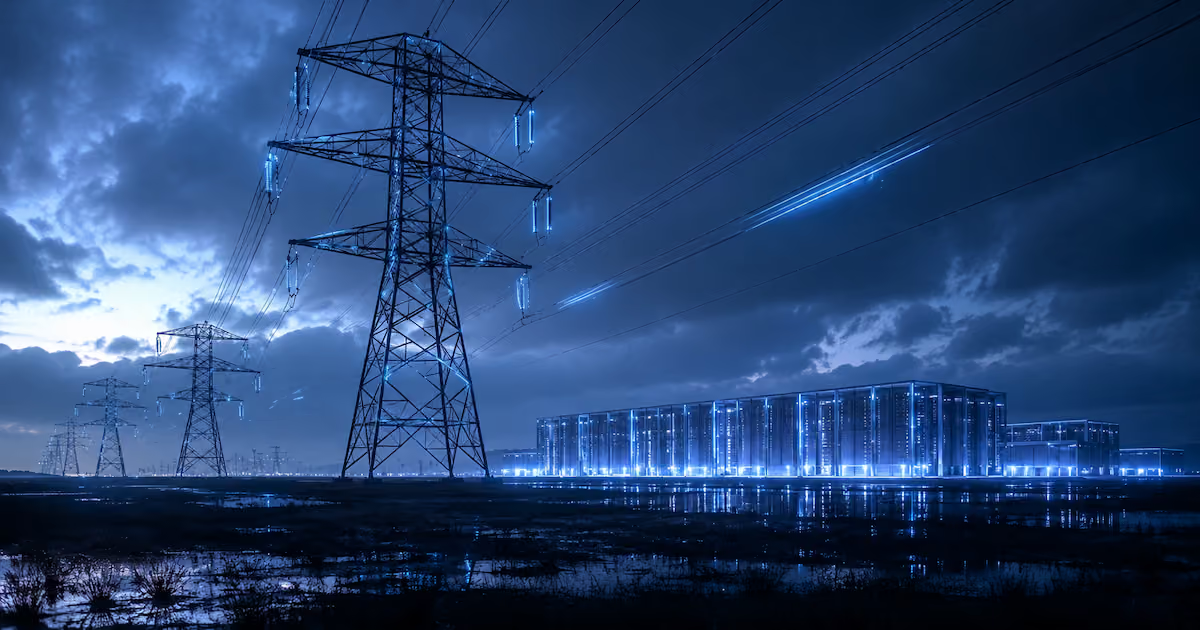
In northern Virginia, one out of every four units of electricity now goes to a data center.
Not to homes. Not to hospitals.
To rooms full of servers, most of them built in the last three years, most of them for AI.
Here’s what that number implies about the biggest trade in the world. The chips exist: Nvidia has committed $279 billion to keep building them.
The buildings exist: the five largest tech companies will spend close to $1.3 trillion on them next year.
What’s running out is the power to turn them on.
The scarce input in AI has shifted from chips to electricity.
Every serious player knows it, and the most audacious answer so far came from the one person who could think of it…
Elon Musk wants to put the computers in orbit.
Today’s issue looks at what that plan says, what it would take, and why James Altucher, who laughed at Musk’s rockets in 2001, refuses to laugh this time. His free masterclass makes his case; his story is below.
Featured Contributor

Today’s guest is James Altucher of Altucher Confidential. James is the hedge fund manager turned bestselling author of Choose Yourself, who has built and sold companies, hosted one of the most popular business podcasts in the world, and made, by his own admission, one legendary mistake. You can see his full bio here…
2001: The Year I Blew It On SpaceX
In 2001, I had a chance to get in on the ground floor of SpaceX.
I laughed at it.
I rarely tell this story. It involves me, a phone call, and the worst seven words I ever said out loud.
But you should hear it. Because I’m about to watch a few million people make the same exact mistake.
Here’s what happened.
My friend had just sold his company, a deal I helped put together, to the same buyer that took my first company, Reset. Life was good for him. He had money, options, and time.
He called me up. “You should come out to Silicon Valley. I’m moving there. My old college roommate is starting a company. He wants to build rockets to send people to Mars.”
I remember my exact words.
“That’s the stupidest idea I ever heard.”
Why would anyone want to go to Mars?
Understand the moment. The dot-com crash had just vaporized trillions. Rockets meant NASA and only NASA. Mars meant science fiction. Every smart person I knew would have said the same thing I said.
That was exactly the problem. Every smart person agreed with me.
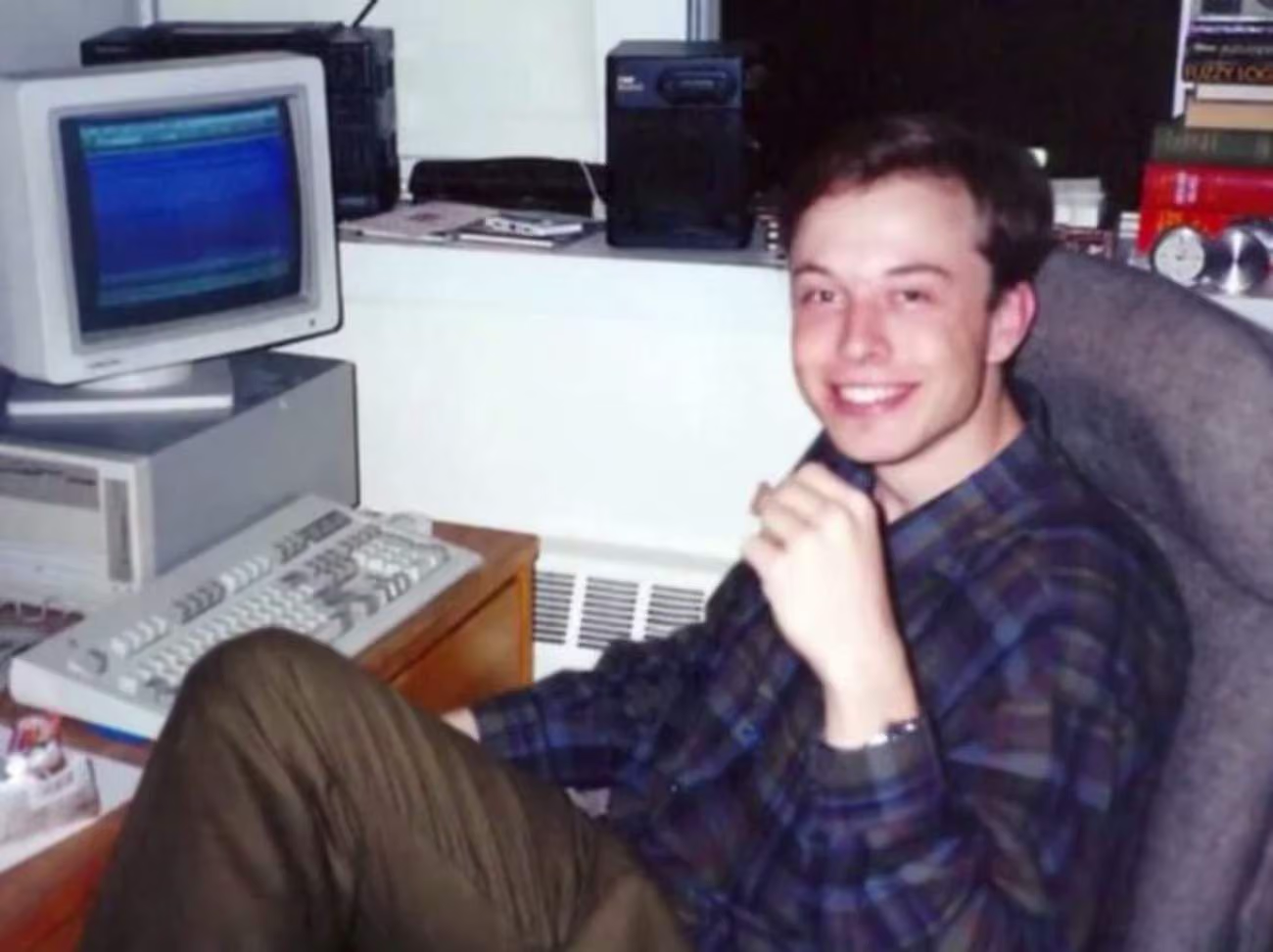
My friend’s roommate, of course, was Elon Musk.
The sting faded, but the lesson didn’t.
In 2012, while everyone was still skeptical, I published my case for how SpaceX would turn a profit. In 2015, I wrote how it would change the economics of space. And years before a single share traded, I predicted Elon would pull off the biggest IPO the world had ever seen.
I could have been in the building. I wasn’t. But here’s what I learned: when a plan sounds stupid, especially coming from Elon Musk, look closer.
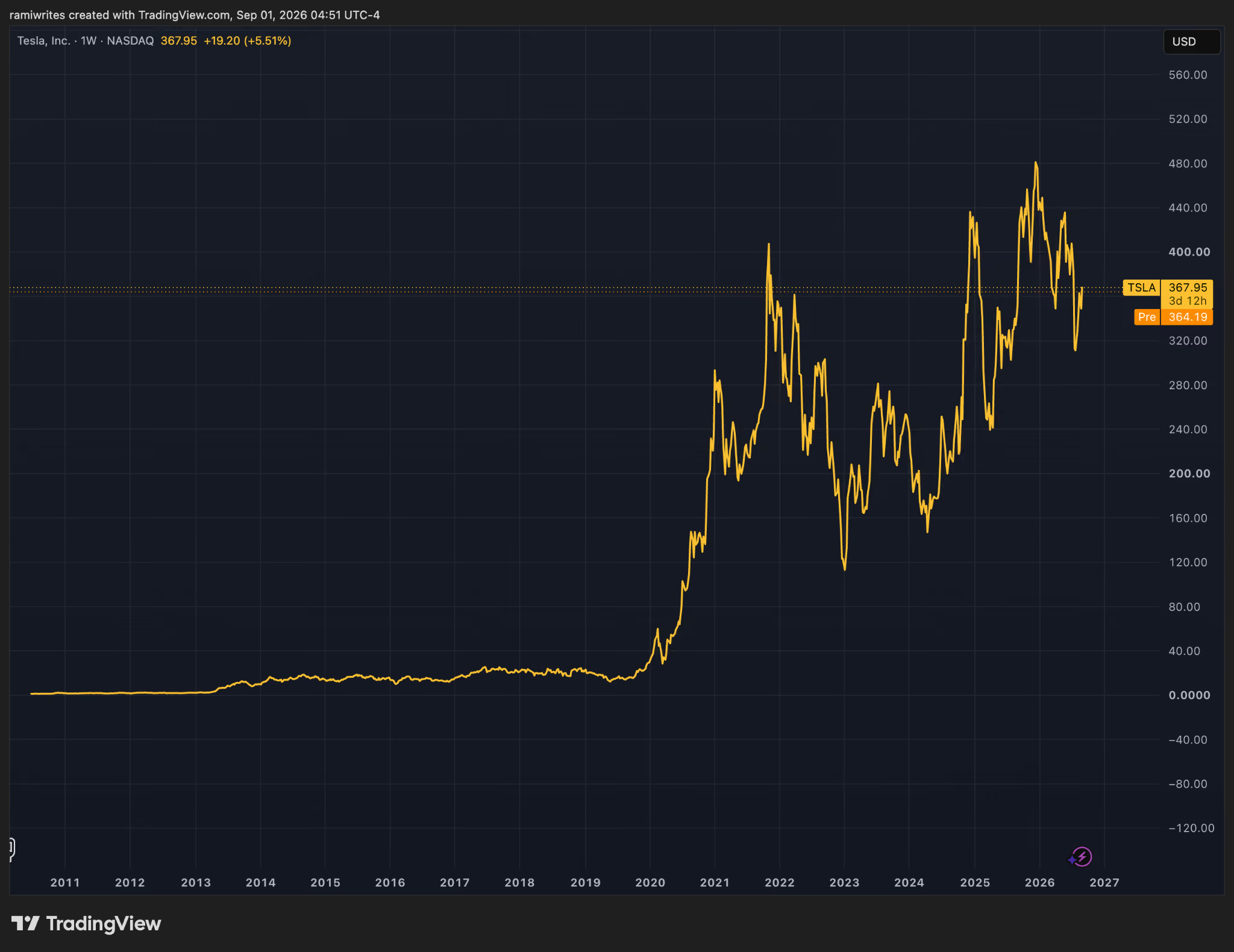
Electric cars sounded stupid. Tesla is worth $1.5 trillion. Landing a rocket on its tail sounded stupid. SpaceX owns 80% of everything America launches. Beaming internet from space? Stupid. Starlink covers the planet.
And there’s a reason you need to hear this now.
Earlier this year, Elon quietly filed a document with the FCC. No announcement. No tweet. Nothing. From a guy who sells flamethrowers for fun, silence is a signal.
I’ve read the filing. What’s inside is bigger than Tesla, SpaceX, and X combined. It solves the single biggest problem in the $25 trillion AI race. And it does it in a place none of his rivals can follow him.
I’ve put all the details together in my free Millionaire Maker Masterclass.
But before you check it out, I’ll tell you this. The moment you hear what Elon is actually planning, your first reaction will be word for word what mine was in 2001:
“That is the stupidest idea I ever heard.”
Good. Now you know exactly what that means.
Tesla minted the Teslanaires. The SpaceX IPO minted thousands more: welders, machinists, cafeteria workers. This wave dwarfs them all. By my math, he’ll make over a million new millionaires.
So now I’ve done something I’ve never done before. I’ve created a blueprint on EXACTLY how to play it.
I put the entire story, the filing, the plan, the missing piece, the crucial suppliers, and the tickers, into our free Millionaire Maker Masterclass.
You don’t need experience in the markets. And the research speaks for itself.
One warning: this all kicks off September 25th. After that date, I expect the headlines to catch up… and the window with them.
Twenty-five years ago, I hung up the phone. This time, I’m going all-in.
CHECK OUT THE FREE MASTERCLASS NOW
Best,
James Altucher
Partner content: his figures and forecasts are his own, and Future Finance does not endorse any product, security, or forecast mentioned.
Elon's next move has a date on it: SEPTEMBER 25
Altucher's free Masterclass walks through the filing, the plan, and the specific tickers he's watching.
The date matters: it's when Altucher expects the news cycle to catch up to what's already sitting on file at the FCC.
Watch it while the story is still under the radar.
Signal vs. Noise
One Million Satellites Where the Sun Never Sets
- The noise: the promotional version of this story says Musk filed something in secret that dwarfs Tesla, SpaceX, and X combined.
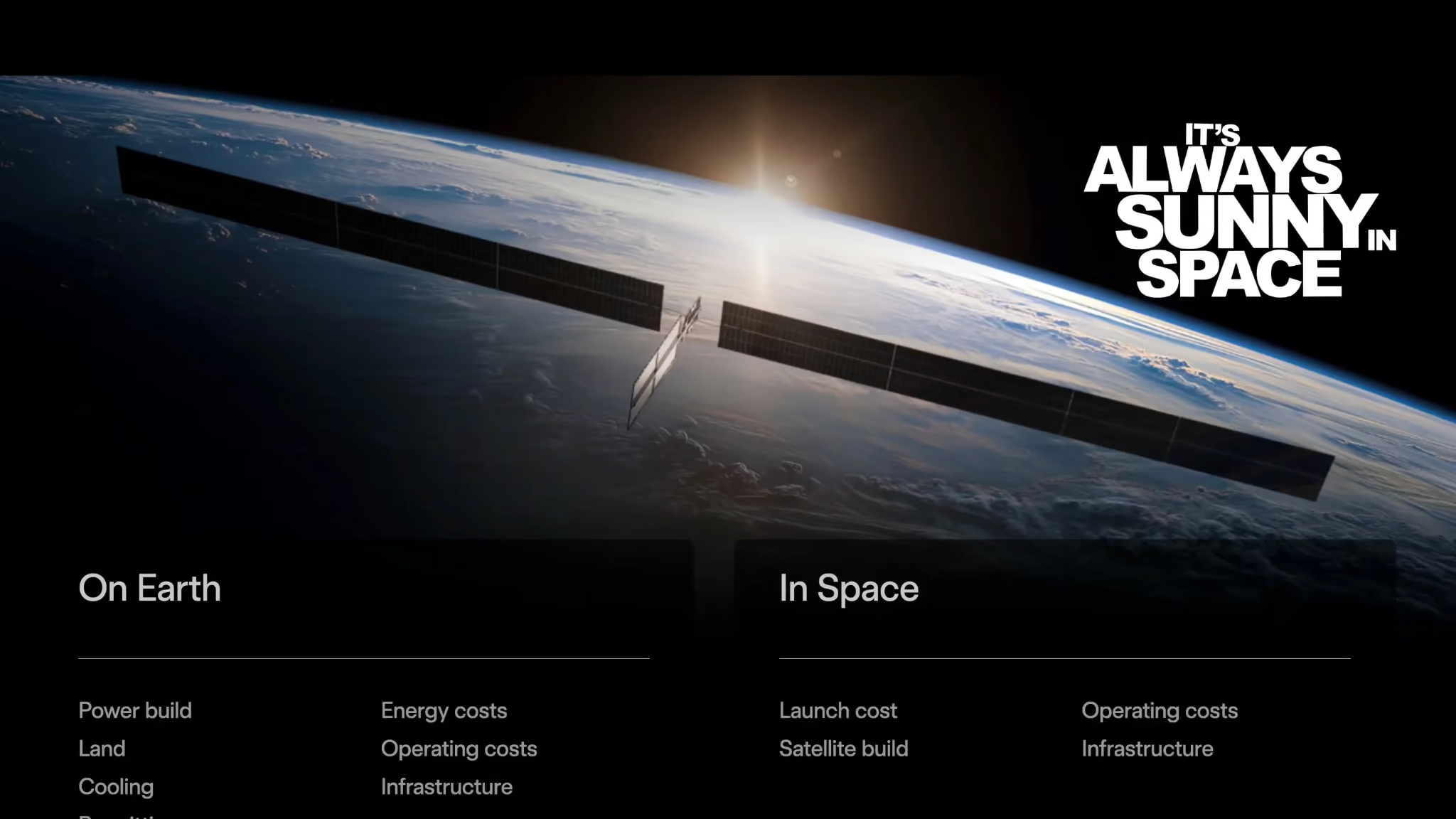
- The signal: the filing is public, and it’s specific. On January 30, SpaceX asked the FCC to approve an Orbital Data Center System of up to one million satellites, orbiting 500 to 2,000 kilometers up, positioned to sit in near-constant sunlight.
The logic is simple once you see it. In orbit there is no grid to wait for, no utility, no neighbor filing a complaint. The sun does the work around the clock.
The International Energy Agency expects data-center electricity use to roughly double by 2030, with AI demand quadrupling, and warns that up to one in five planned data centers risks delay because the grid can’t get there in time. Virginia already sends 25% of its power to servers. That’s the problem the filing is aimed at.
Now the skeptics, because they’re serious people with math on their side. Google’s own researchers studied the idea and put a price on it: launch costs must fall below $200 per kilogram before space computing competes with the ground, against roughly $1,500 to $3,600 today. Their estimate for when that closes: the mid-2030s.
Then there’s heat. In a vacuum there is no air to carry it away, so a one-megawatt data center in orbit would need about 1,600 square meters of radiators. Musk (NASDAQ: SPCX) says the first satellites will fly around the end of 2027 regardless.
None of that makes the idea wrong. It makes it early, and early is the whole subject of today’s guest piece.
From Coin Flip to 66% in One Trading Day
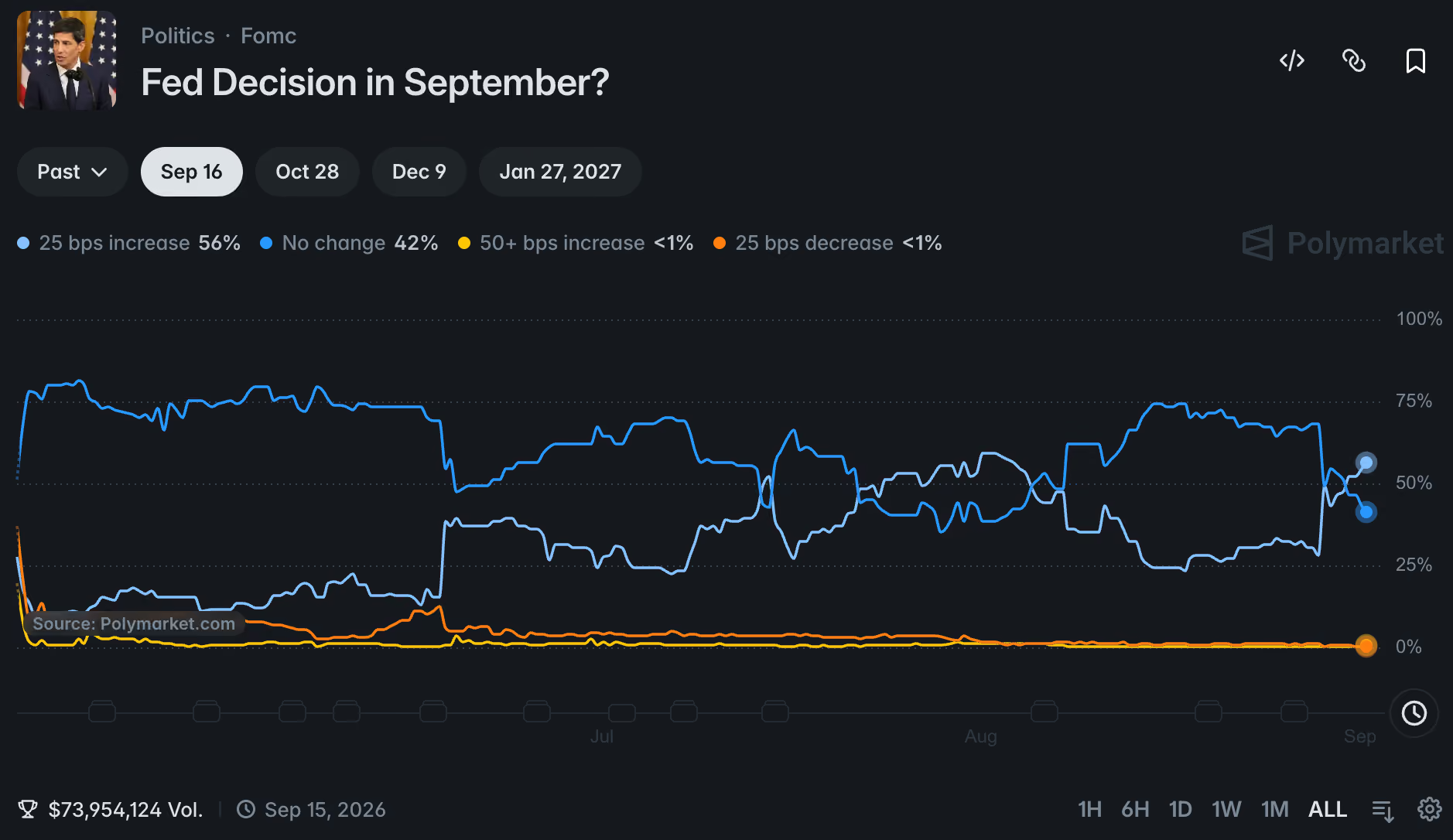
- The noise: Friday’s headlines called September’s Fed decision a coin flip after Chairman Warsh’s first big speech.
- The signal: by Monday, traders had the odds of a rate hike at 66%. The hike is now the base case, and the reason is on your gas receipt: U.S. strikes on Iranian launch sites and a tanker incident near Hormuz sent Brent back above $90 and WTI up 2.8% in a day.
Higher oil is the one thing that can make a hawkish Fed chairman more hawkish. Fifteen days to the decision.
The Biggest IPO Ever Is 36% Off Its High
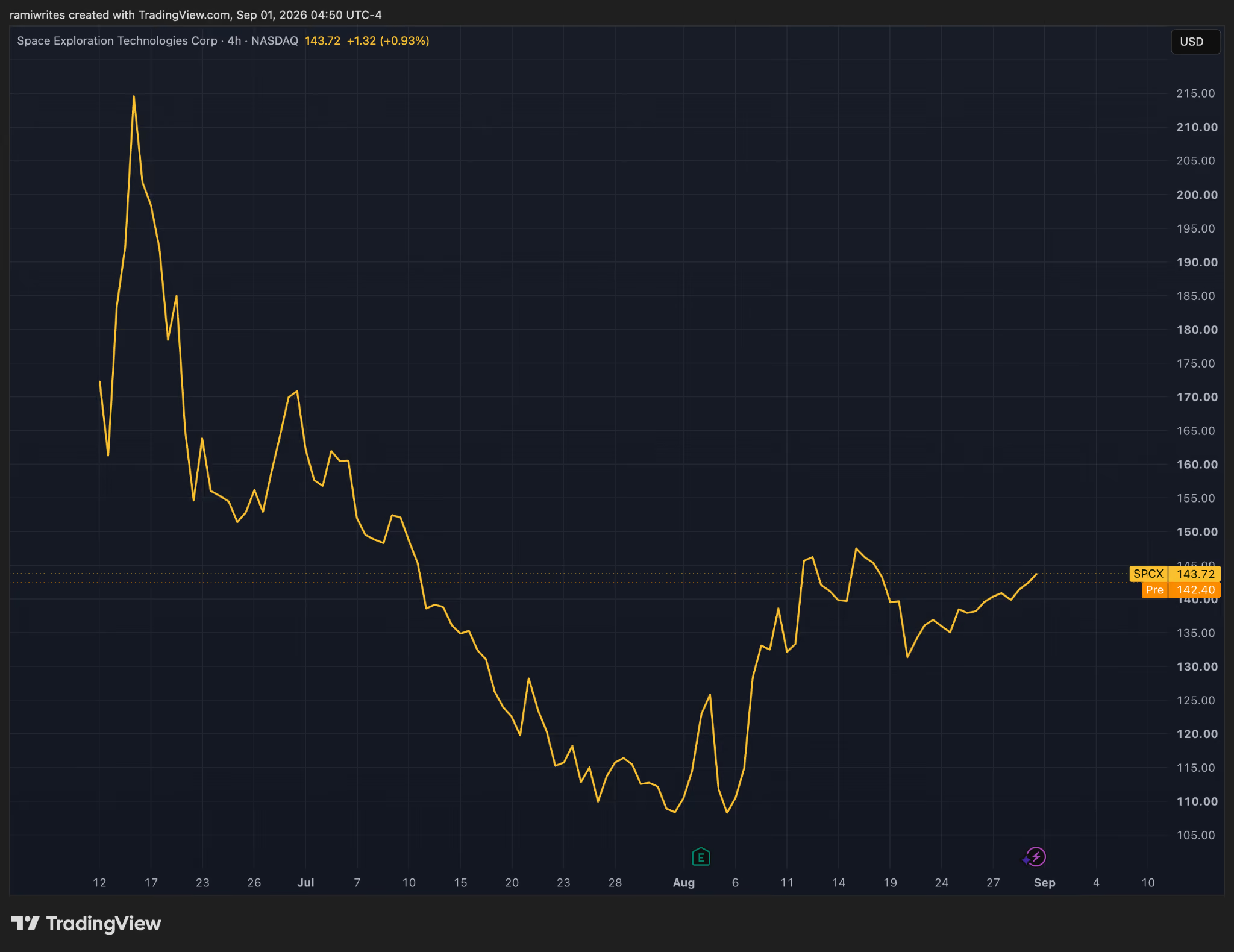
- The noise: SpaceX raised $75 billion in June, the largest public offering in history, and every headline about orbital data centers carries that glow.
- The signal: the stock closed Monday at $143.69, just above its $135 offer price and 36% below the peak it hit four days after listing. Morningstar puts fair value near $780 billion, against a market cap around $1.9 trillion.
Read that carefully. The market is already paying for rockets and Starlink. It’s treating the space-computing business as an expensive maybe, which is precisely what a real frontier looks like from the outside.
Twenty-five years ago, one investor looked at a different Musk idea from the outside and hung up the phone. Here’s what that cost him.
What to Watch For
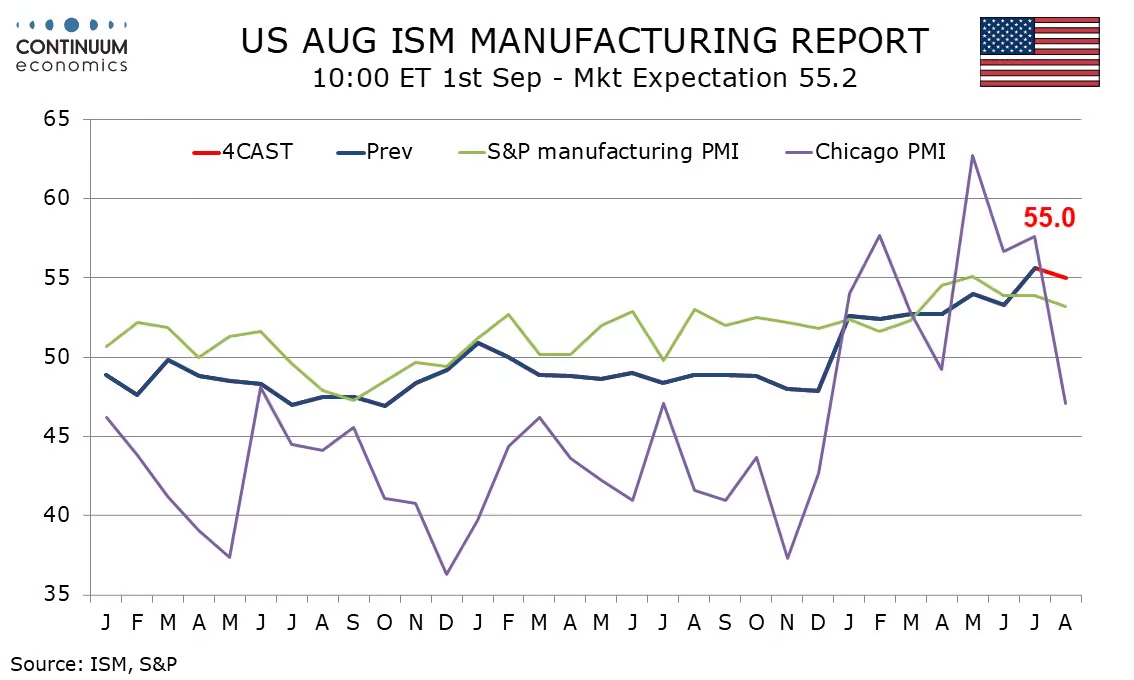
Back to the week in front of us. The Fed decides in 15 days, and most of what moves the odds lands before Friday.
- Today, 10 a.m.: the ISM manufacturing report and July job openings, the first labor data since Friday’s rewrite. Dell and Palo Alto Networks report after the close; Dell’s AI-server orders are the read-through.
- Wednesday: ADP’s private payroll estimate, the Fed’s Beige Book, and Broadcom (NASDAQ: AVGO) after the close, where the AI chip forecast is the number that matters.
- Thursday: jobless claims, ISM services, Lululemon.
- Friday: the August jobs report. Consensus +110,000, unemployment 4.2%. The last big number before the Fed decides.
- September 16: the decision, with a hike now priced at two-in-three.
Final Thought
I can’t tell you whether a million solar-powered computers in orbit will work. Google’s engineers think the math closes sometime next decade.
Musk says the first ones fly next year. Both could turn out to be right.
What I can tell you is that the power problem is real today, and every serious plan to solve it will sound ridiculous the first time you hear it. That’s the cue to keep reading.
And if you decide to look closer, remember the one thing Altucher’s story leaves out: being early only pays if you’re sized to survive being wrong.
One deadline of our own: Tan’s Founding Member window for The Macro Letter closes tomorrow night, midnight Pacific. If you’ve been meaning to take a look, look today.
Friday’s jobs report is still the week’s main event. See you soon.
Editor in Chief | Future Finance
Tan's First Issue Is Out - Twice a Week, Every Week
(Founding Window Just Got Longer)
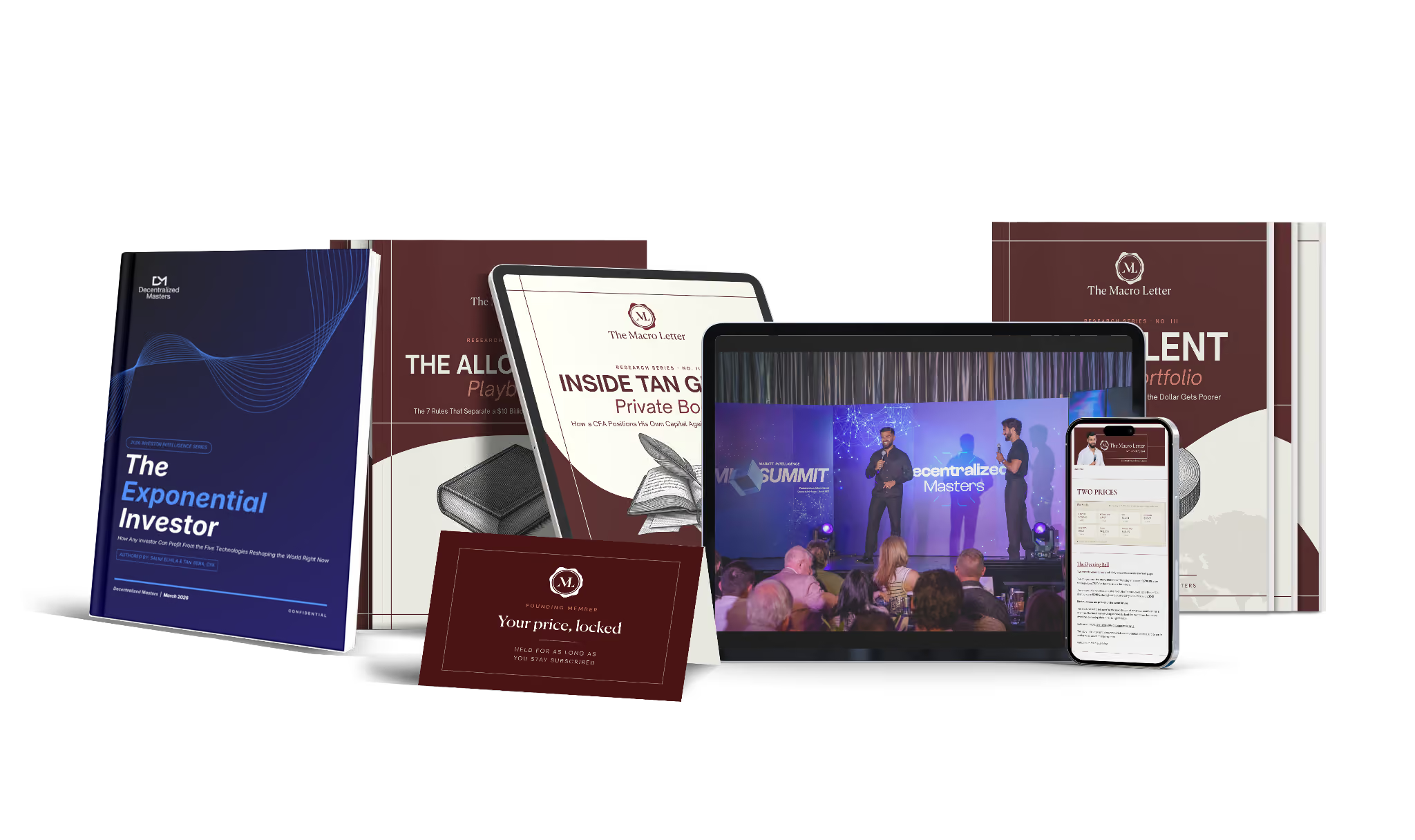
For five days last week, Tan Gera opened his ledger, his hardest call, his map, and his entire portfolio in this newsletter.
This morning, that work moved to its permanent home. The first issue of The Macro Letter is out, and it opens with what he's doing about a coin-flip September.
One housekeeping note. The checkout page had technical difficulties for part of the weekend, and some of you couldn't get through. That's on us, so the Founding Member offer now runs through Wednesday, September 2, at 11:59 p.m. Pacific.
Twice a week, every week: his liquidity reads, his levels, and every decision he makes with his own money, dated and graded in public.
Become a Founding Member before Wednesday midnight →
Disclaimer: This content is not financial advice, it is for informational purposes only. All investments involve inherent risk. Any financial decisions you make are solely your responsibility.
Latest



Editor's Picks

Become a sharper capital allocator in 5 minutes a day.
Institutional-grade research on where the smartest capital is positioning, across AI, energy, biotech, robotics, and digital assets. Distilled into a daily read you finish before your coffee does.
Join 45,000+ readers · No spam · Unsubscribe anytime · No card needed