

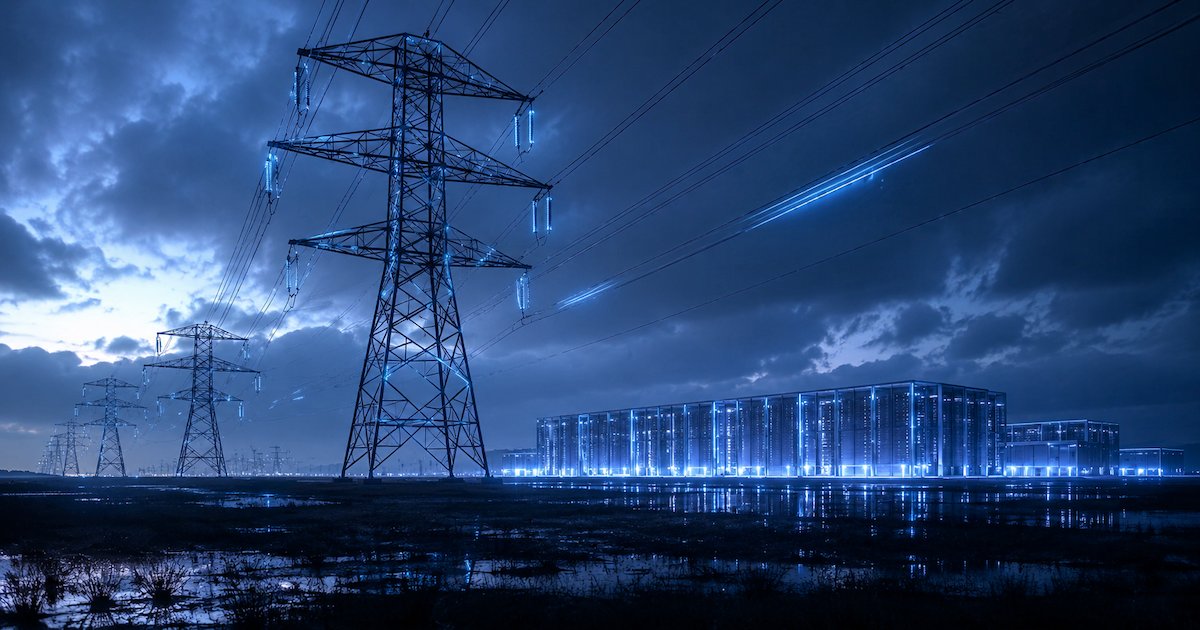
A turbine ordered today arrives in 2031…
The grid can’t keep up with AI, and the companies paid to fix it are the ones nobody talks about. Frank Curzio’s two-year trade. →
September 2, 2026
·
8 Min Read



The briefing serious investors read first.
Free analysis before markets open. Start thinking in decades, not days.
Join 45,000+ readers · No spam · Unsubscribe anytime
Today’s Big Picture
Last night, Dell booked $60.9 billion of AI-server orders in a single quarter and finished it with a $95 billion backlog.
Every one of those servers is a promise to plug something into a wall.
Yesterday I showed you that the wall is the problem. Data centers already take a quarter of Virginia’s electricity, the grid needs years to reach a new campus, and Elon Musk’s answer is to put the computers in orbit.
Today, the answer that gets built first, back on Earth.
The AI trade’s binding constraint is now measured in gigawatts.
Someone has to generate them, someone has to carry them across the country, and someone has to keep $40 million racks of chips from melting. Those are three separate businesses, and none of them is a chatbot.
Frank Curzio has been on that trade for two years. His piece is below…
Stop Lending Your Bank Money For Free
Your bank pays you close to nothing, then lends that money out at several times the rate and keeps the difference.
Battle Bank’s High Yield Cash Account pays 3.35% on cash you can still spend and move. FDIC insured to $250,000 per account holder.
The money was always yours. The yield should be too.
Open a High Yield Cash Account →
Disclosure: Battle Bank is a paid partner of Future Finance. We may receive compensation from Battle Bank if you click on our links and open an account or use certain banking products. This compensation comes at no additional cost to you.
Battle Bank, N.A., Member FDIC. APYs as of 6/16/2026, using ZIP code 32224, and subject to change. Rate comparison as published by Battle Bank.
Signal vs. Noise
41 Gigawatts to 66 in Two Years
- The noise: every week brings a new headline about which AI model is winning.
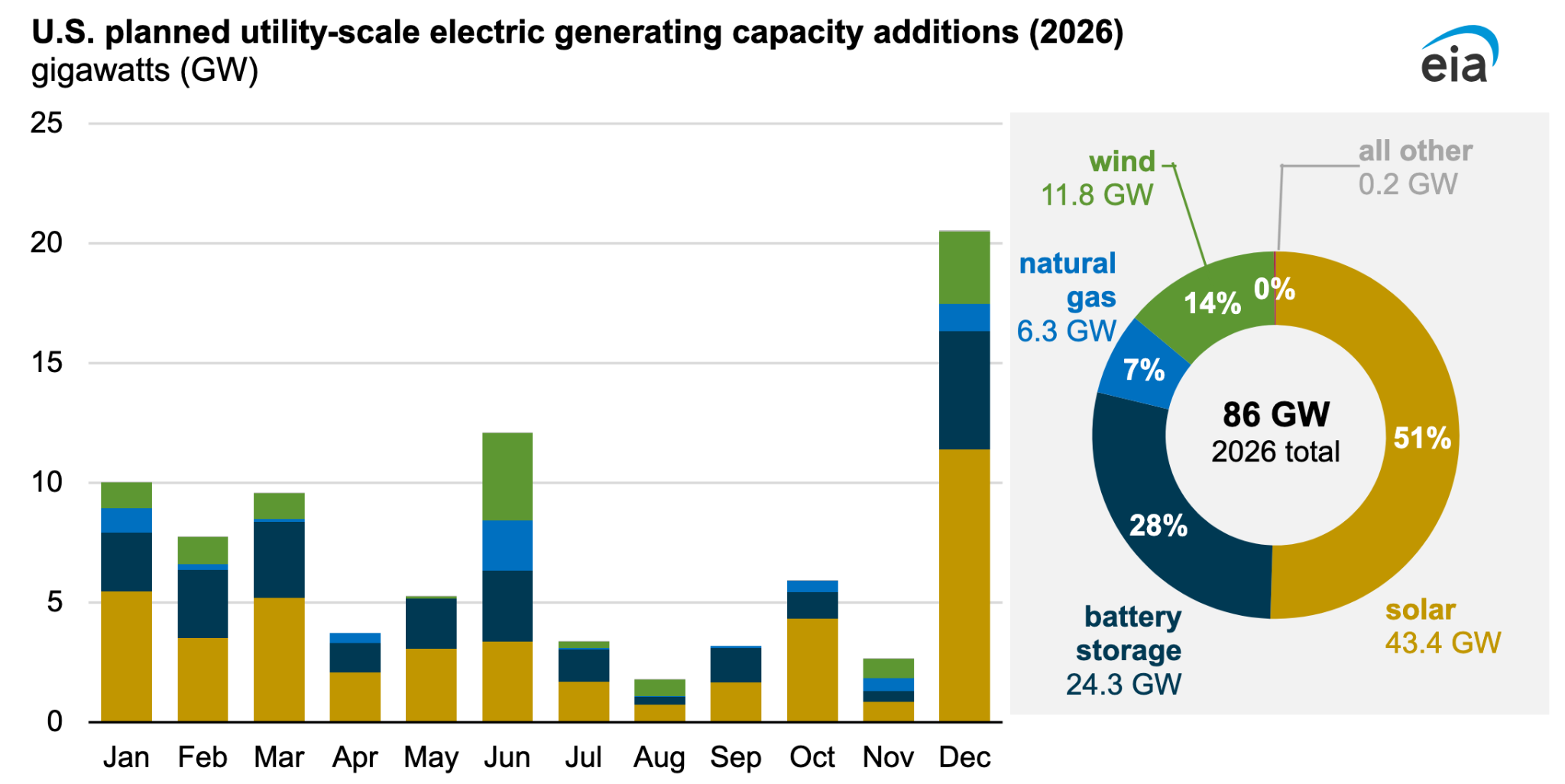
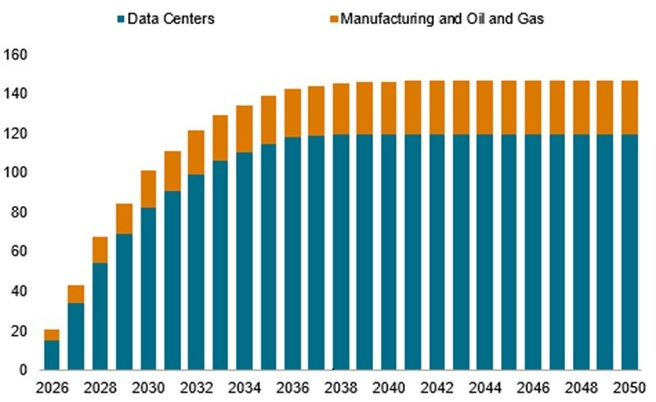
- The signal: Goldman Sachs expects U.S. data centers to need 41 gigawatts of power this year and 66 gigawatts next year, up from 31 in 2025. That’s a near-doubling in two years, and the grid was built for a world where demand grew 1% a year.
You can see the strain in the price of keeping the lights on. In the biggest U.S. grid, stretching from Chicago to Washington, the auction that pays power plants to be available cleared at a record $333 per megawatt-day for 2027, and for the first time ever it came up short: 6,625 megawatts below what reliability requires.
Data centers accounted for about 40% of that auction’s $16.4 billion cost. Meanwhile, 1,312 gigawatts of new generation sit in line waiting to connect, and the median project waits more than five years.
Texas just ordered an audit of its own 474-gigawatt queue before approving new connections. Virginia now taxes data-center electricity. The bottleneck has moved from the lab to the statehouse.
A Turbine Ordered Today Arrives in 2031
- The noise: “Just build more power plants.”
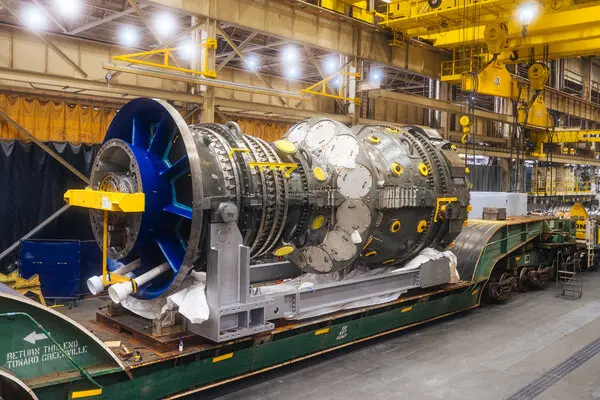
- The signal: the machines that make electricity are sold out. GE Vernova’s gas-turbine backlog reached 116 gigawatts last quarter, and a large turbine ordered now won’t be delivered until 2031. Siemens Energy holds another 69 gigawatts of firm orders and a record €51 billion backlog for grid equipment.
Transformers, the unglamorous boxes that step power up and down, went from months of lead time to years after 2021. Nuclear is the long-term hope, and the deals are real, but no advanced reactor in America is producing commercial power yet.
So the companies getting paid right now are the ones that work around the wait: the crews that string the transmission lines, the engineers who cool the racks, and the fuel cells that make power in the parking lot without asking the grid’s permission.
That’s the trade Curzio lays out below, name by name.
Oil Back Above $90, and a Hike Is the Base Case
- The noise: the “coin flip” framing of September’s Fed decision is still circulating.
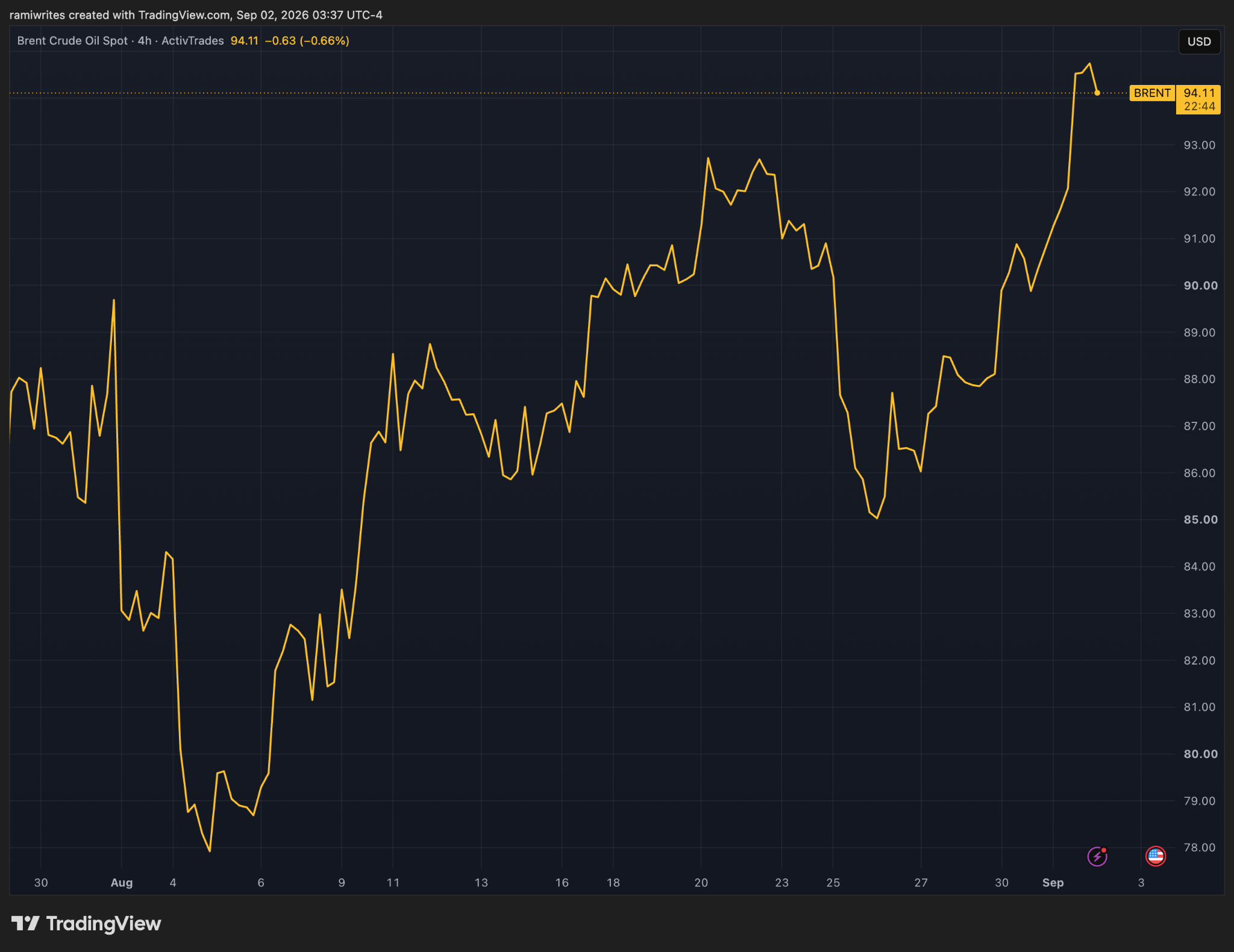
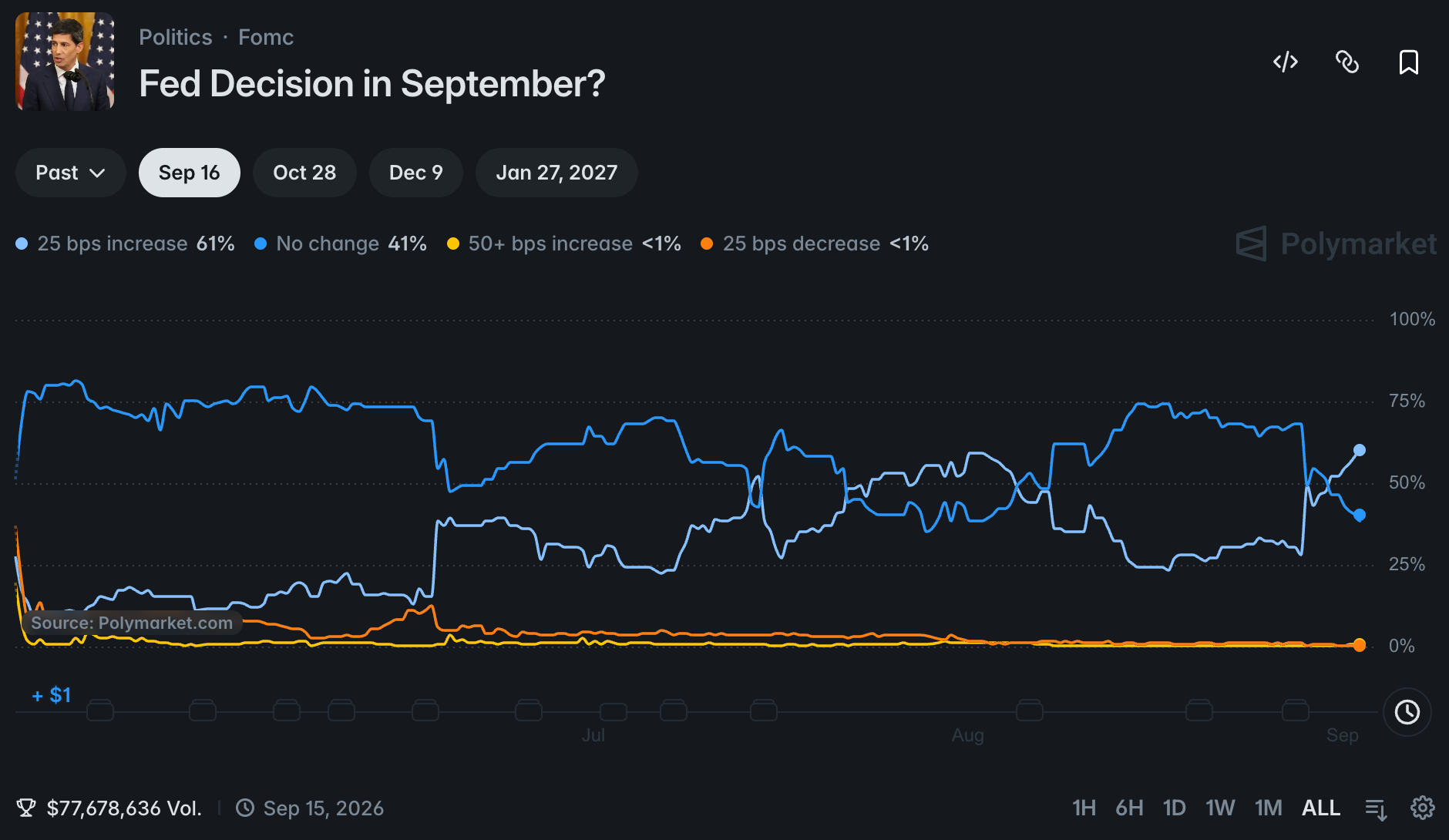
- The signal: the odds of a rate hike sit at 66%. Oil jumped 5.2% in a day to $90.22 after U.S. strikes on Iranian launch sites and two tankers hit near Hormuz. The 10-year Treasury yield reached 4.81%, its highest since January 2025.
Yesterday’s factory report added fuel: activity is fine at 54.6, but the prices manufacturers pay came in at 71.1, a reading you only see when costs are running hot. Job openings slipped to 7.27 million.
Higher oil, hotter input costs, and a firm labor market are the three ingredients of a hike. All three showed up on the same day. Stocks fell, gold fell 1.9%, and Bitcoin held near $78,000, still inside the band we’ve been tracking.

Featured Contributor
Today’s guest is Frank Curzio of Curzio Research. Frank spent five years helping CNBC’s Jim Cramer find ideas for Mad Money and the Action Alerts Plus portfolio, launched two newsletters at Stansberry Research, and hosts Wall Street Unplugged, ranked the No. 1 “most listened-to” financial podcast on iTunes.
Nobody’s Asking the Most Important AI Question
Every week, we see another headline about which AI model is winning.
Gemini vs. ChatGPT. Anthropic vs. Grok. The model war dominates the conversation, the coverage, and most investors’ portfolios.
For two years now, we’ve been focused on a different question: who keeps the lights on?
Because it doesn’t matter which model wins; they all need power to run. And right now, the U.S. grid is nowhere near ready to deliver it.
U.S. data center power demand is expected to climb from 41 gigawatts in 2026 to 66 gigawatts by 2027, according to Goldman Sachs Research. That’s a near-doubling in roughly two years. The grid can’t keep up.
That gap is where the real investment opportunity lives.
1. The transmission play
Everybody’s fighting over who generates the power. Almost nobody’s asking how it gets from the source to the data center.
You can build all the plants you want. But without transmission lines, the data center stays dark.
That’s where Quanta Services (NYSE: PWR) comes in. The company builds and maintains the electric transmission and distribution infrastructure that connects power generation to end users. No other company in the country does this at Quanta’s scale.
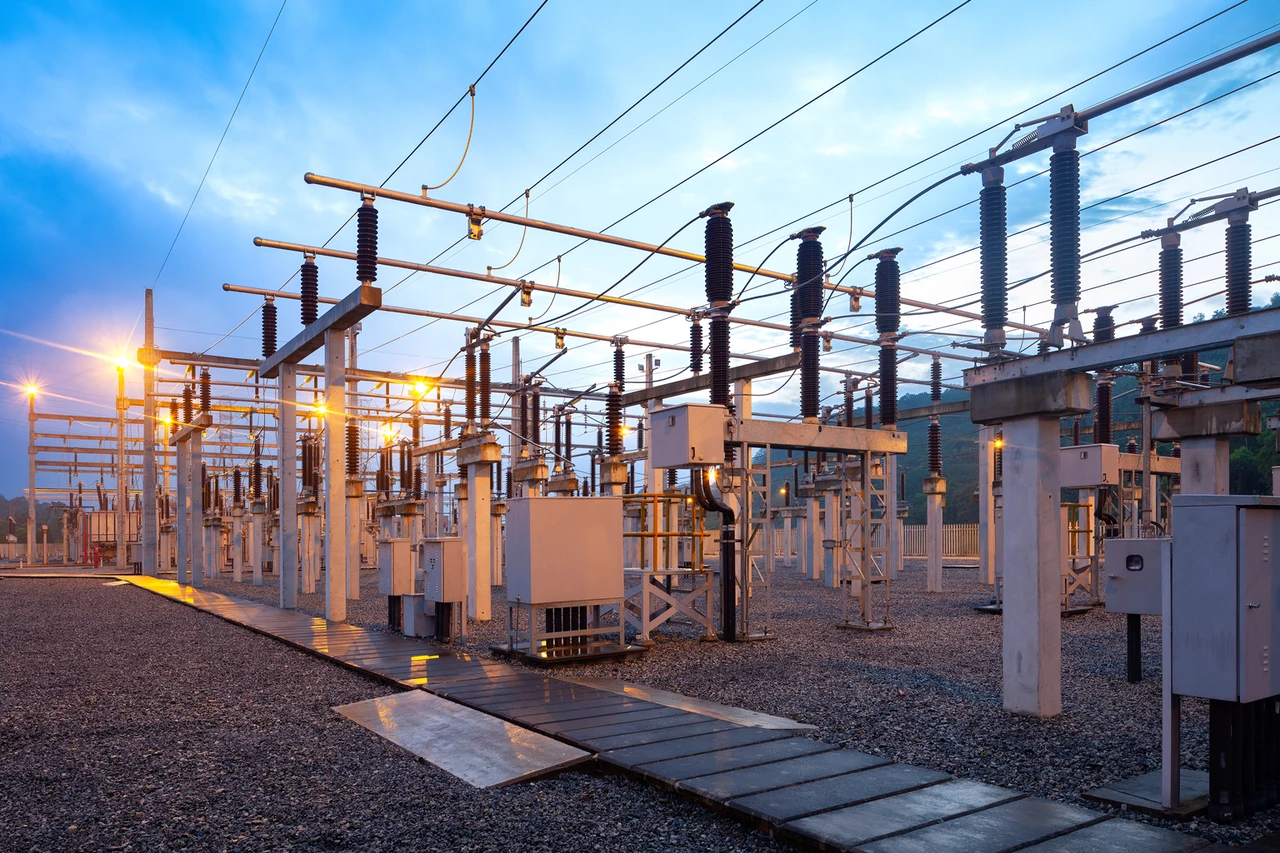
Quanta raised its 2026 revenue guidance, implying roughly 40% growth, and lifted its diluted EPS guidance to a midpoint around $11.66. The backlog is enormous, and the pipeline keeps growing as utilities scramble to keep pace with data center load requests.
If you want a second way to play this same trade, MasTec (NYSE: MTZ) does similar transmission and power delivery work, albeit at a smaller scale. MasTec reported Q2 2026 revenue of $4.37 billion, up 23% year over year, with its Power Delivery segment delivering over $1.25 billion in quarterly revenue alone.
Both companies win as long as AI demand keeps growing.
2. The cooling play
Getting power to the data center is step one. Keeping $40 million worth of graphics processing chips (GPUs) from melting is step two.
AI chips run hot, and the denser the workload, the more heat they generate. Cooling is what keeps the whole system from shutting down.
That’s Vertiv’s (NYSE: VRT) job. The company makes the cooling systems, power distribution units, and equipment racks that go inside data centers.
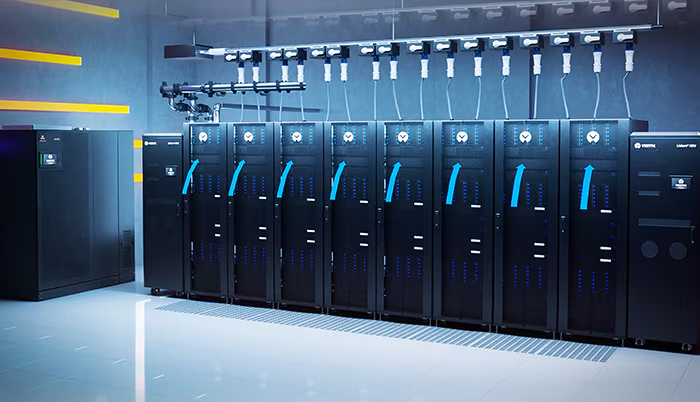
Last month in the Curzio Alpha portfolio, we locked in a gain of ~200% on Vertiv. But the growth story is far from over. The company reported Q1 2026 revenue of $2.65 billion, up 30% year over year, with Americas growth up 53%.
And as data center density increases, and it will, because each new generation of AI chips draws more power per rack, Vertiv’s products will become even more critical.
3. The generation play
Bloom Energy (NYSE: BE) makes fuel cells: power generation units that run on natural gas or hydrogen and produce electricity on-site, without connecting to the broader grid. That’s important because grid interconnection can take years. A data center that needs power now can’t wait.
Bloom Energy guided for 2026 revenue of $3.1 to $3.3 billion, representing roughly 58% growth at the midpoint.
We got into Bloom early and ultimately locked in gains of ~1,000% in under two years… while most investors were still arguing about chatbots.
The stock has pulled back from its June highs. Shares closed around $204 in late August, down roughly 40% from a June peak near $351, but the underlying demand story hasn’t changed. AI data centers need power that can come online fast. Bloom’s fuel cells can make that happen. The grid, in most cases, cannot.
The bigger picture
Every dollar that Big Tech pours into AI training and inference has to flow through physical infrastructure first: transmission lines, cooling systems, on-site power generation. That’s not changing. If anything, it accelerates as the models get bigger and the data centers get denser.
The average investor’s instinct is to buy the “winning AI.” The smarter trade, one we’ve been making for over two years, is to buy the companies that every model depends on, regardless of who comes out on top.
Power isn’t a supporting character in the AI story. It’s the foundation everything else is built on.
For more analysis on where the real AI infrastructure opportunities are, and which names are best positioned right now, tune in to Wall Street Unplugged each week.
Guest content: the opinions, securities, and performance figures above are Frank Curzio's and Curzio Research's own, not Future Finance research, advice, or a recommendation to buy or sell any security. Past performance does not guarantee future results. Always do your own research.
The "2026 AI Gold Rush": America's Only Way Out of $40 Trillion in Debt
America owes more than $40 trillion, and interest now tops $1 trillion a year, more than the entire military.
There's one way out of math like that: grow faster than the debt, and Washington's engine of choice is AI.
The free presentation below lays out the AI-linked asset class Gartner, Goldman Sachs, and BlackRock are all pointing to, echoing a past boom that ran as high as 12,480%, plus a simple three-phase system, built to turn the $40 trillion problem into your opportunity, even if you've never invested outside a 401(k).
Watch the free presentation here →
What to Watch For
- Today: ADP’s private payroll estimate at 8:15 a.m. (consensus near +45,000), factory orders, and the Fed’s Beige Book at 2 p.m.
- Tonight: Broadcom (NASDAQ: AVGO) reports after the close. Expectations are about $29.5 billion in revenue, with roughly $16 billion of it AI chips. The question that moves the stock is whether it raises next year’s AI target above $100 billion.
- Thursday: jobless claims, the ISM services report, and Lululemon.
- Friday: the August jobs report. Consensus +110,000, unemployment 4.2%. The last big number before the Fed decides.
- Circle: September 8, Canada’s retaliatory tariffs take effect. September 15, the Senate’s procedural vote on the crypto bill. September 16, the Fed, with a hike priced at two-in-three.
Final Thought
Two days, one problem. Yesterday’s answer was a million satellites. Today’s is a lineman, a cooling rack, and a fuel cell in a parking lot.
In my experience, the boring answer gets built first, and the people who build it get paid while the exciting one is still a filing.
Broadcom reports tonight, and its AI number will make headlines. Read it with today’s issue in mind: every chip it sells is another promise to plug something into a wall.
Friday’s jobs report is still the week’s main event. See you soon.
Editor in Chief | Future Finance
Founding Member Access Closes Tonight - Twice a Week, Every Week
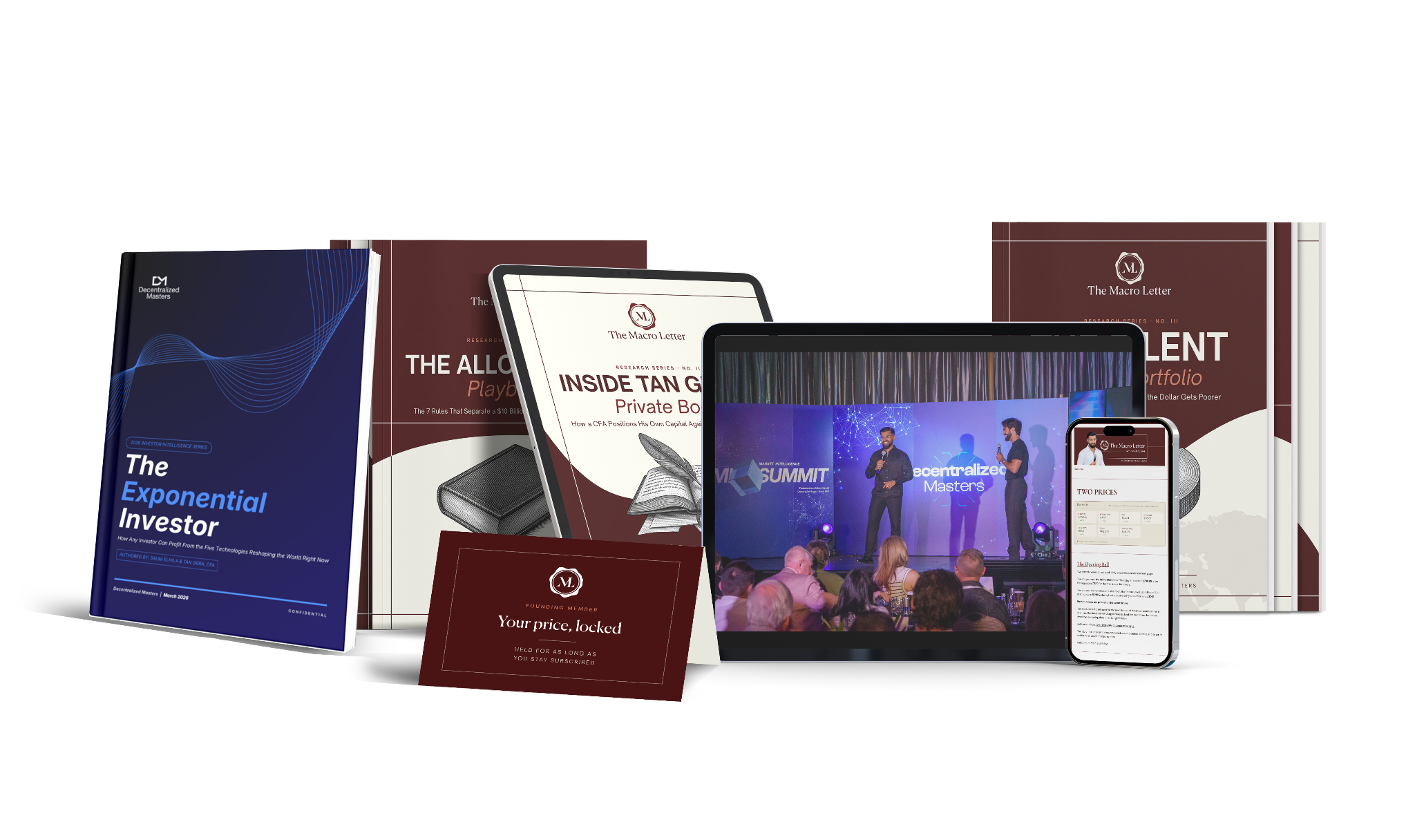
Tan Gera spent a week in this newsletter opening his ledger, his hardest call, his map, and his entire portfolio. On Monday that work moved to The Macro Letter, and the first two issues are already out.
The Founding Member window, extended after last weekend’s checkout trouble, closes tonight at 11:59 p.m. Pacific. After that, the founding terms are gone.
Twice a week, every week: his liquidity reads, his levels, and every decision he makes with his own money, dated and graded in public.
Become a Founding Member before midnight →
Disclaimer: This content is not financial advice, it is for informational purposes only. All investments involve inherent risk. Any financial decisions you make are solely your responsibility.
Latest

Editor's Picks

Become a sharper capital allocator in 5 minutes a day.
Institutional-grade research on where the smartest capital is positioning, across AI, energy, biotech, robotics, and digital assets. Distilled into a daily read you finish before your coffee does.
Join 45,000+ readers · No spam · Unsubscribe anytime