

BofA and Citi are building a new dollar
21 of the world's biggest banks. One dollar that pays you zero. Doc on what it means for your money. →
September 9, 2026
·
8 Min Read



The briefing serious investors read first.
Free analysis before markets open. Start thinking in decades, not days.
Join 45,000+ readers · No spam · Unsubscribe anytime
Today’s Big Picture
When you deposit $100 at a bank, roughly $90 of it leaves the building the same week, lent out as a mortgage or a car loan.
No scandal there. It’s what a bank is.
On September 1, 21 of the world’s largest banks agreed to build a dollar that works the opposite way. A stablecoin, backed one-for-one by Treasury bills sitting in a vault, that by law can’t be lent out and can’t pay you interest.
Bank of America. Citi. Goldman Sachs. Wells Fargo. Deutsche Bank. UBS.
The balance sheets that clear the world’s money, agreeing to issue money that doesn’t live on their balance sheets.
The banks just admitted deposits can leave. Our regular contributor, The DeFi Doctor, calls it the day they conceded the argument, and his piece below explains why the launch date is the least interesting part.
Last Friday it was Japan’s central bank. Last month, the DTCC and the ECB. Same story, now told by the institutions with the most to lose.
First, three stories: what the interest ban means for your savings, why $100 oil sank stocks, and a borrower buying its own bonds this afternoon. Then Doc.
Signal vs. Noise
Three stories that belong next to Doc’s piece, starting with the one that touches your savings account.
The Dollar That Pays You Nothing, by Law
- The noise: “A bank-issued stablecoin is just a digital dollar. What’s the difference?”
- The signal: the difference is the interest. The GENIUS Act bars stablecoin issuers from paying holders any yield at all.
The best money-market funds paid about 4% this month. A stablecoin in your wallet pays zero, carries no deposit insurance, and is redeemable at par from the issuer rather than a bank.
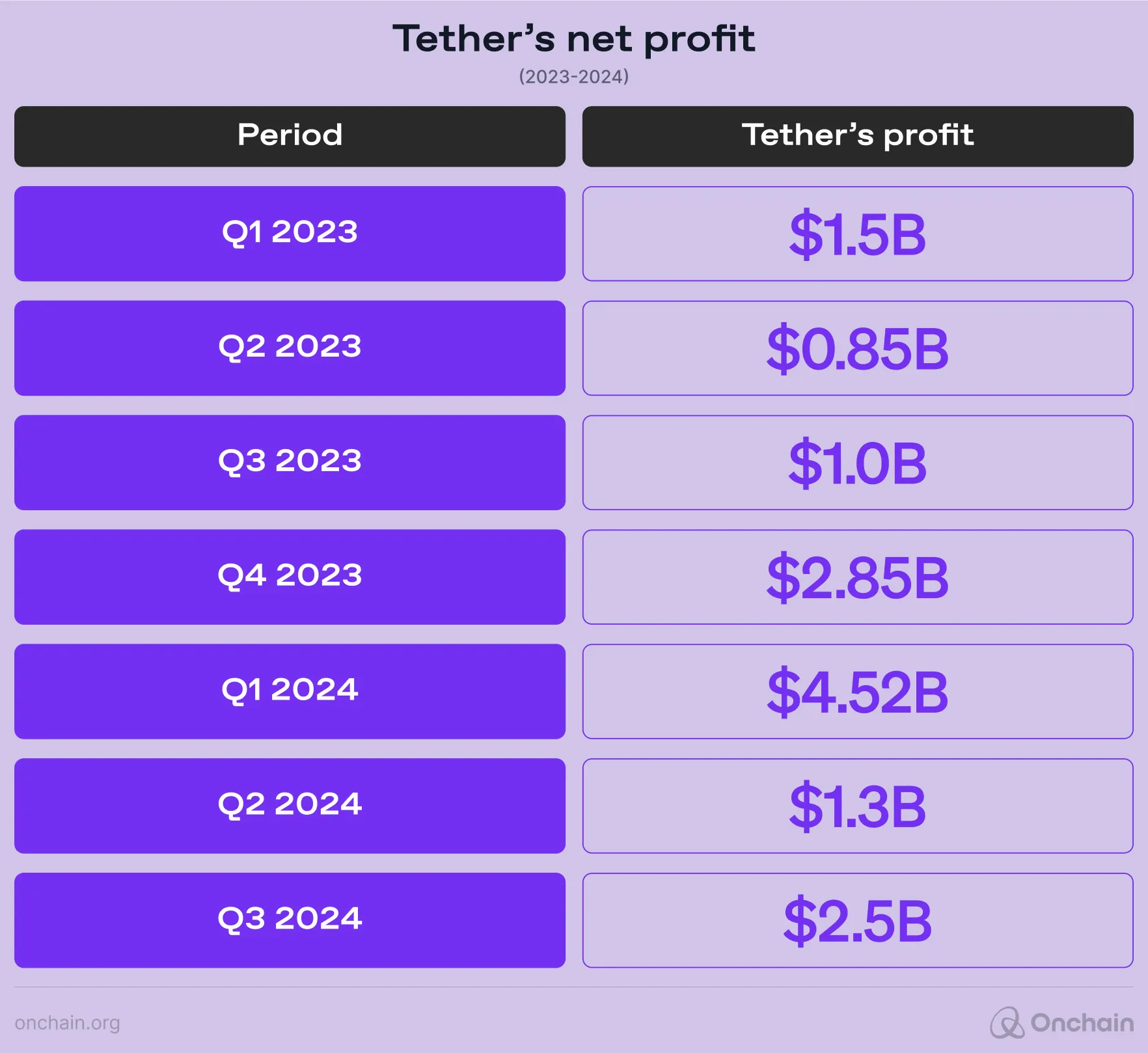
The reserves still earn, though. Tether made more than $10 billion in profit last year on the Treasury bills behind its token. Under this structure, that spread goes to the issuer.
The White House’s own economists estimated the yield ban lifts bank lending by about $2 billion, a rounding error, while costing savers roughly $800 million. So the question for anyone holding digital dollars is where the return comes from if the token can’t provide it. That’s the question Doc spends every week on in Beat Banks.
Oil Touched $100 and Took the Dow With It
- The noise: a post-holiday hangover.
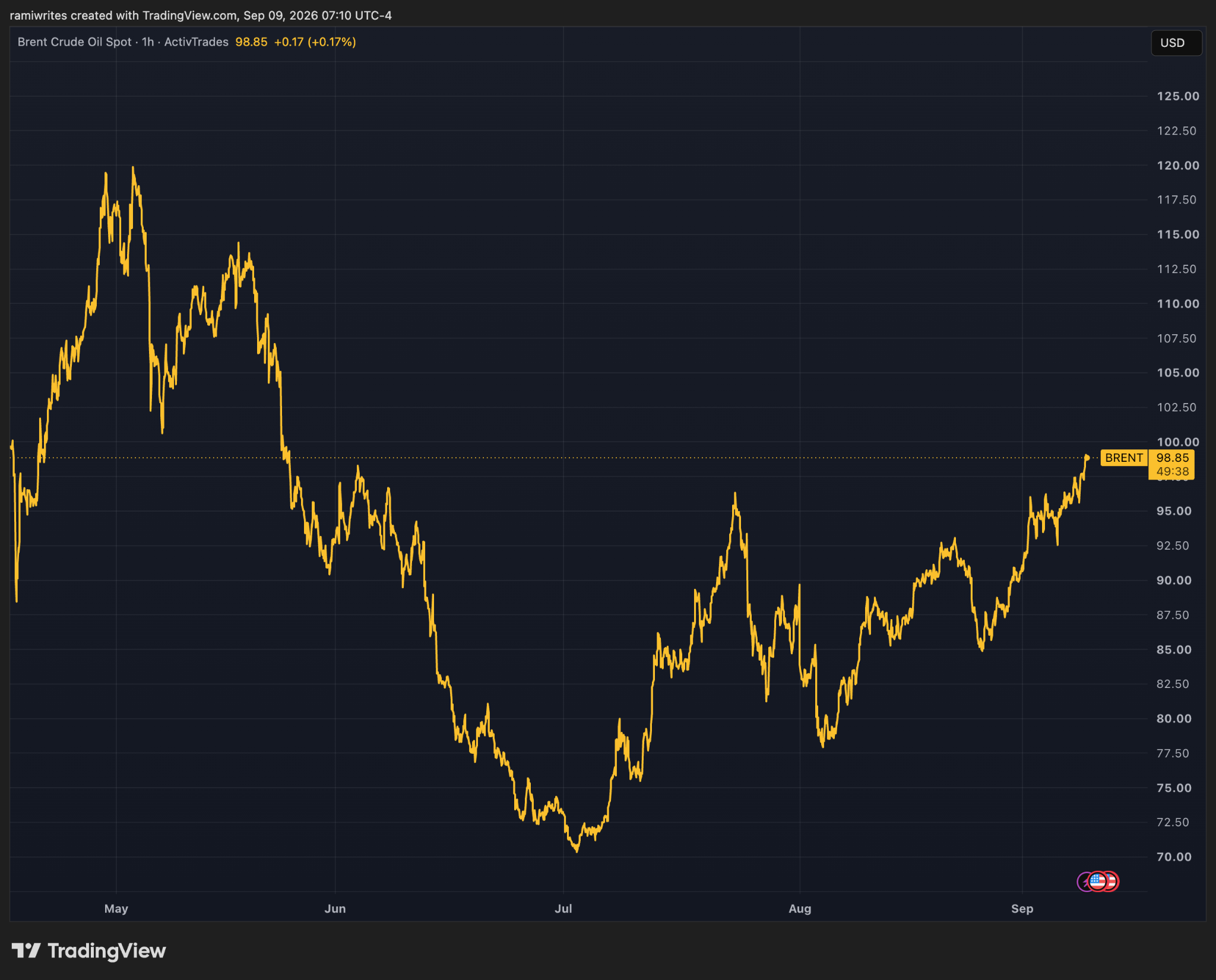
- The signal: Brent traded within reach of $100 yesterday and settled near $98 after Houthi strikes on Saudi facilities and fresh threats to Iranian export terminals. WTI closed near $93, its highest since June.
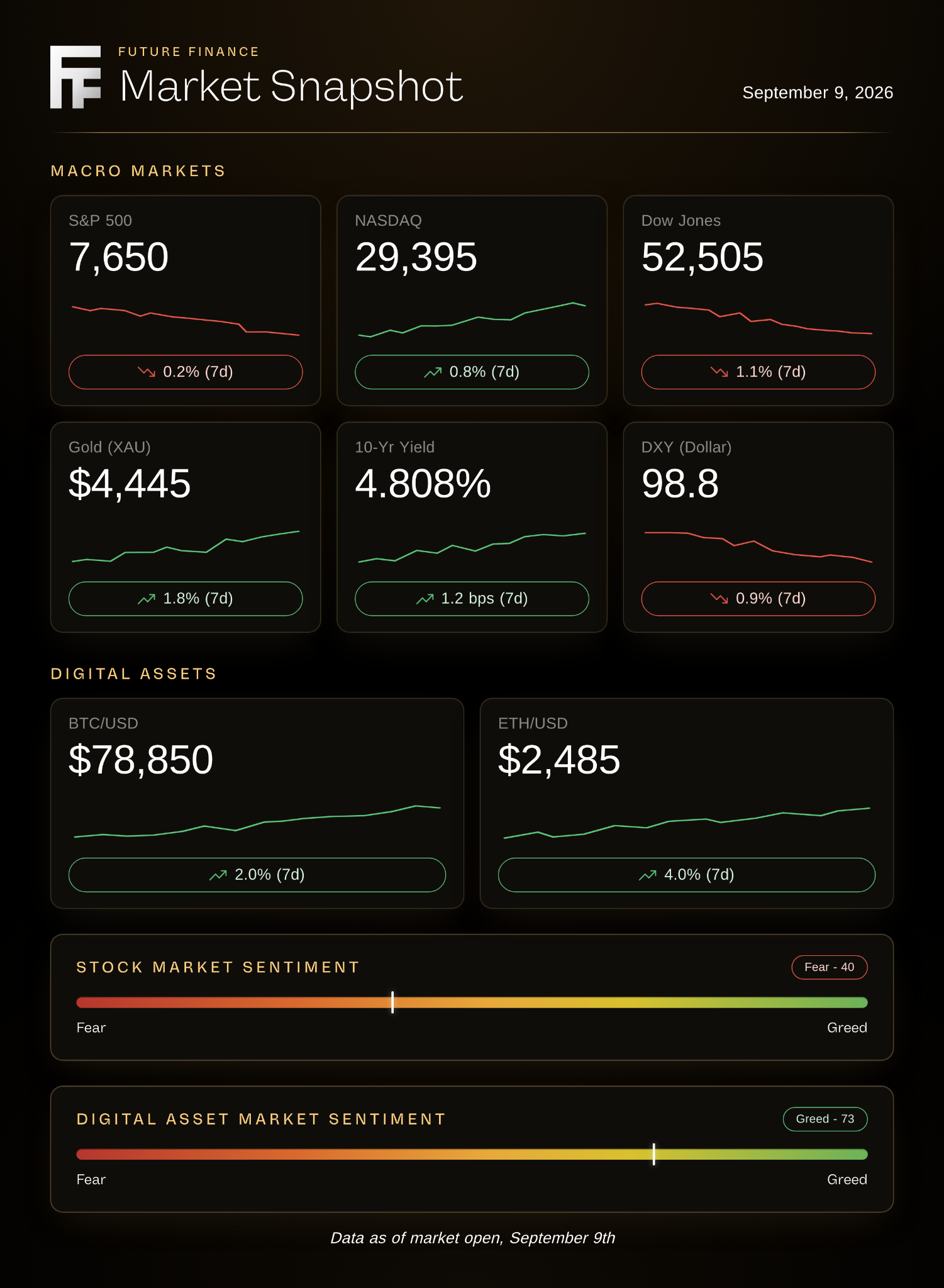
Stocks paid for it. The Dow fell 628 points, the S&P lost 0.6%, and the 10-year Treasury yield touched 4.80%, its highest since October 2023.
Gold gave up 1.7%. Rate traders hold the odds of a hike next Wednesday near 60%.
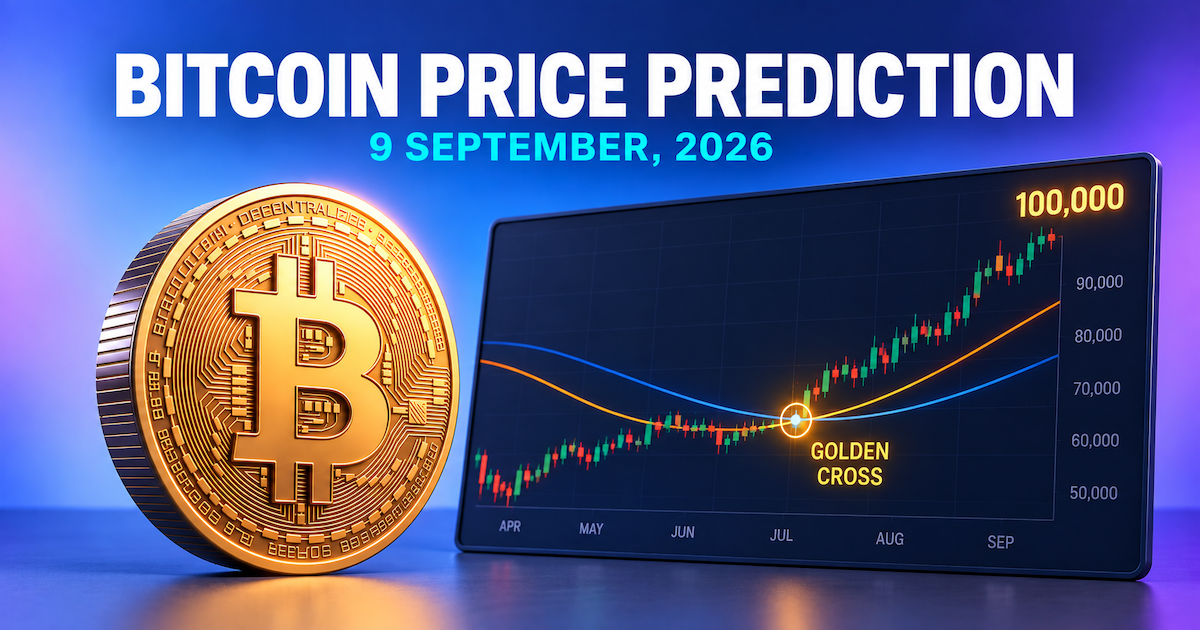
Bitcoin confirmed its golden cross on the same day and traded near $78,500, with the funds posting their first outflow in weeks. Price down, oil up, Fed silent: the mix that makes Friday’s inflation report the only number that can change the mood.
A Borrower Buys Its Own Bonds This Afternoon
- The noise: Apple’s iPhone event at 1 p.m., the first under CEO John Ternus, with a foldable expected. It will get the headlines.
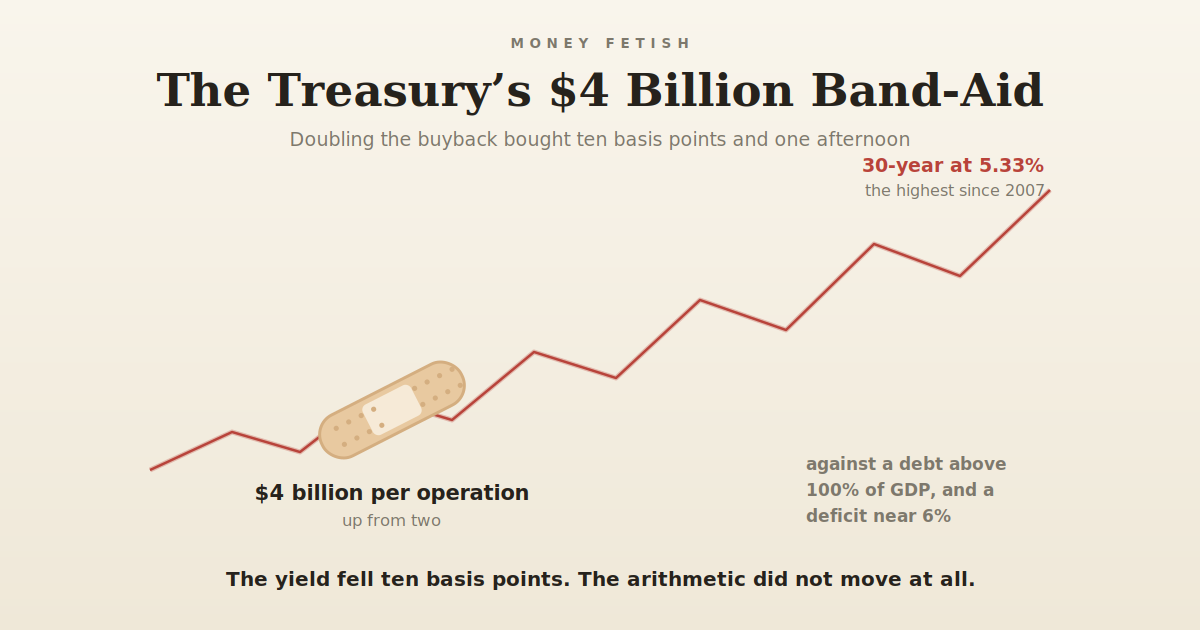
- The signal: at the same hour, the Treasury runs its first enlarged buyback of its own long-term debt, at least $4 billion, double the old cap, while auctioning new 10-year notes on the same day. A borrower buying old paper with one hand and selling new paper with the other.
Watch how much it accepts against the $4 billion floor, and how the market absorbs the new 10-year at a yield near 4.8%. Thursday brings producer prices, the 30-year auction, and Oracle and Adobe after the close. Friday, the inflation report the Fed reads last.
Paid Advertisement
Tilson: My Favorite New Retirement Stock?

For years, Whitney Tilson has told his readers to put a big chunk of their retirement money into Berkshire Hathaway. He says anyone who followed that recommendation has had the chance to do very well.
He now believes he may have found an even better retirement stock for the years to come.
His case: it is a company few have heard of, yet it sits at the epicenter of America's two most important industries right now. One of them is AI. The dividends are large, and he thinks the next few years could be more lucrative for the stock than the past, because the assets the company owns are critical to both industries.
He is giving away the name and ticker free. No credit card, no email required.
Disclosure: Stansberry Research is a paid partner of Future Finance. The forecasts, track record and claims above are those of Whitney Tilson's and Stansberry Research and not represent the views of Future Finance. As always, do your own diligence.
Featured Contributor

Today’s guest is The DeFi Doctor, who leads the Beat Banks editorial - a twice-weekly intelligence briefing on where real yield opportunities exist in decentralized finance.
Twenty One Banks Just Conceded the Argument
They spent a decade calling this technology a solution in search of a problem. On September 1 they announced they would build it.
Bank of America. Citi. Goldman Sachs. Wells Fargo. Deutsche Bank. UBS. Santander. MUFG.
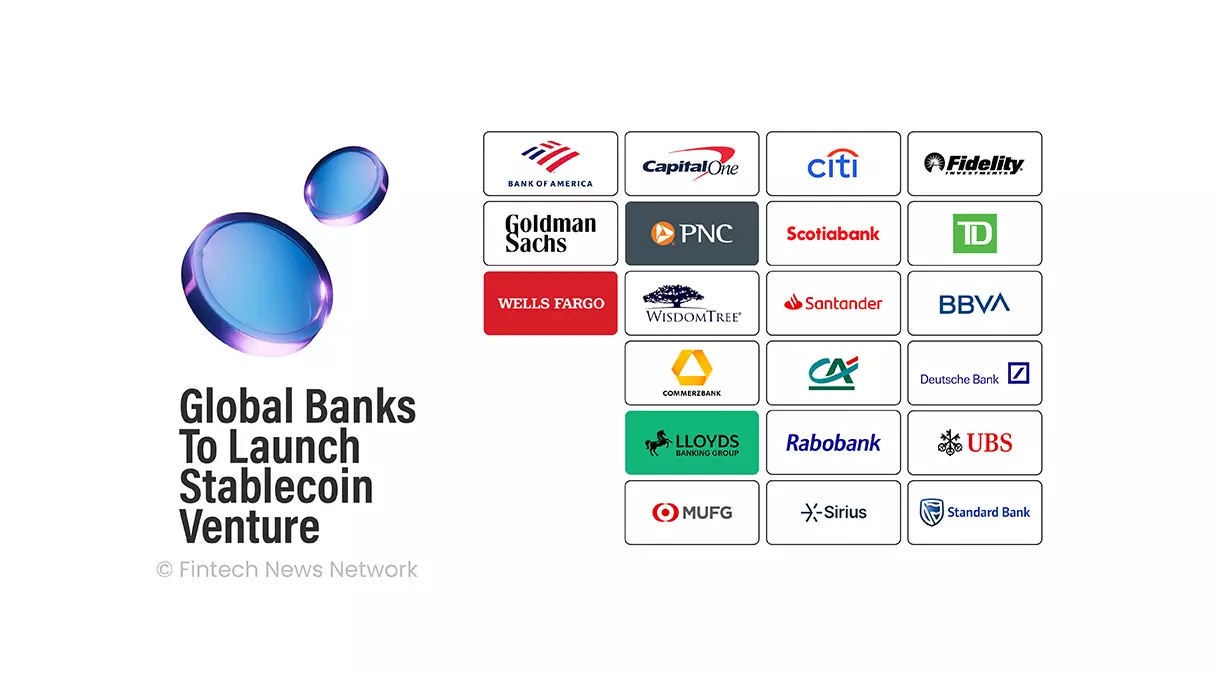
Twenty one institutions, spanning four continents, have committed to forming a single new company that will issue a dollar backed stablecoin. The entity gets incorporated in the back half of this year. The token goes live in the first half of 2027. A euro version is queued behind it.
Read the list again. This is not a fintech consortium. These are the balance sheets that clear the world’s money, agreeing to issue a dollar that does not live on their own ledgers.
That is the story. Not the launch date.
What actually got announced
The group has grown from ten banks last October to twenty one now, with eight of the original ten carrying over. The confirmed roster runs from Capital One, Fidelity and TD in North America to BBVA, Lloyds and Rabobank in Europe, and Standard Bank in Africa.
The token is designed for three jobs: wholesale settlement, institutional payments, and retail. That third one matters. A shared retail capable dollar issued by a syndicate of competitors has never existed.
The company is unnamed. Nobody has published reserve mechanics, redemption terms, or which chains it settles on. Treat the announcement as a commitment, not a product.
Why now, and not in 2021
One reason: the GENIUS Act. Before it, a regulated US bank issuing a payment token was a legal question nobody wanted to answer in front of a supervisor. Now there is a federal framework, and an FDIC rulemaking on the table. The question changed from may we to how.
The second reason is less flattering. The market moved without them.
Stablecoin supply sits near $302 billion, with Tether at roughly $183 billion and USDC at $74 billion. Two companies control about 83% of the float, and built the settlement layer the global banking system now has to interoperate with.
The Treasury’s own advisory work flags $6.6 trillion of deposits as exposed to substitution. Citi’s research sees stablecoins displacing $182 billion to $908 billion of bank deposits by 2030.
Banks did not join because they fell in love with distributed ledgers. They joined because the alternative is watching their funding base migrate to somebody else’s token.
The part nobody is saying out loud
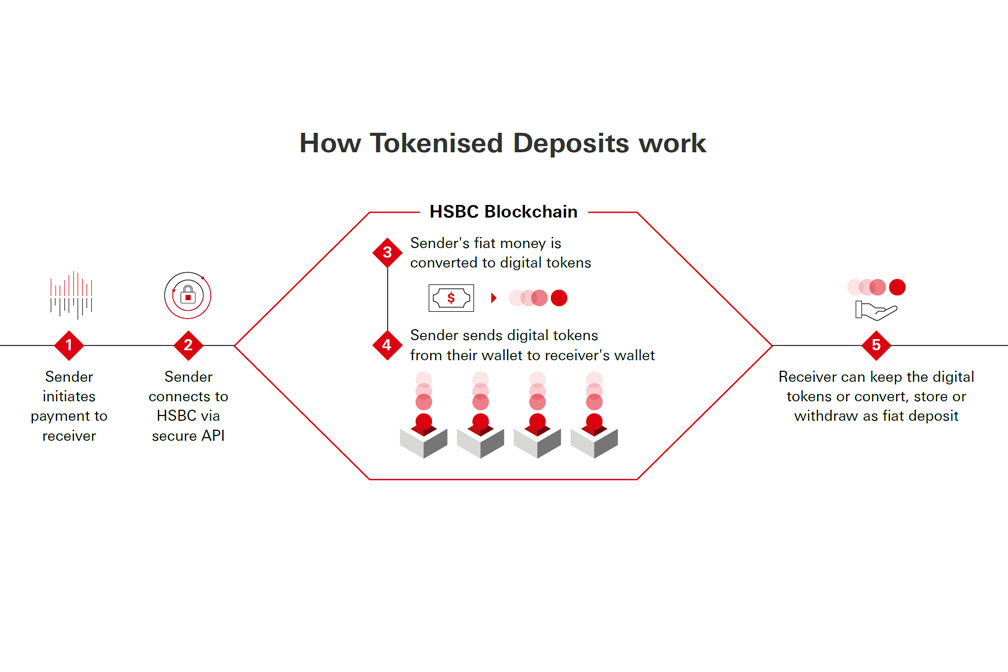
Several of these same banks, including Citi, Bank of America and Wells Fargo, are simultaneously building a Tokenized Deposit Network through The Clearing House, also targeting the first half of 2027. JPMorgan, absent from the twenty one, is central to that effort.
So the industry is running two strategies in parallel.
Tokenized deposits keep the money on the bank’s balance sheet. The token is a claim on your bank, and it preserves the lending engine.
Stablecoins move the money into a bankruptcy remote pool of Treasuries, where it funds the US government instead of a mortgage book.
One protects the existing business model. The other admits it might not survive.
Twenty one banks just hedged. That is a more honest signal about the next decade of finance than any white paper.
The questions that should keep you up
Who controls redemption? Twenty one competing institutions must agree on reserve composition, who holds the assets, and who eats the loss when something breaks. Consortium governance is where good ideas go to die slowly.
If it cannot pay yield, why hold it? GENIUS bars issuers from paying interest. Tether earns billions on its reserves. Under this structure that spread goes somewhere, and it is not to the holder. The token wins on utility or it does not win at all.
Can a syndicate of incumbents ship? The last industry consortium to announce a global digital currency was Libra. Ask how that went.
The bottom line
The interesting question stopped being whether tokenized money becomes the settlement layer for global finance. Twenty one of the world’s largest banks just answered it.
The interesting question is who owns the rails when it does, and what the institutions built for the old system do when settlement is no longer something they get paid for.
One more thing, because this announcement leaves a question in your lap.
21 banks just built a dollar designed to pay you nothing. The reserves behind it will earn billions. You'll see none of it.
So the question that matters for your own money is the one the token can't answer: where does your yield come from now?
That's the whole subject of Beat Banks, my weekly research on becoming your own bank. It's where I show you how to earn the return these institutions are building a brand-new dollar to keep for themselves, on your terms and with your own keys.
The banks just conceded the rails. Beat Banks is where you take back the yield.
Come see what we're building inside Beat Banks…
- The DeFi Doctor
If The Dollar Is Being Debased, Where Do You Put Your Money?
If governments keep spending and the dollar keeps losing value over time, holding all your savings in cash is a slow leak.
One answer is to earn a real return that outpaces the debasement, on your own terms, instead of letting a bank pay you next to nothing on your deposits.
That is the whole idea behind Beat Banks, the weekly research on becoming your own bank and taking control of your financial destiny.
The dollar is designed to lose value over time. This is about making your money do the opposite.
Final Thought
Doc’s best line today is the quietest one: twenty-one banks just hedged.
When the people who run the old system start building the new one with their own names attached, the debate is over. What’s left is the question they can’t answer for you: if the new dollar pays nothing, where does your return come from?
That question gets more urgent Friday morning, when the inflation number lands and the Fed decides five days later whether money gets more expensive.
See you soon.
Editor in Chief | Future Finance
The Institutions Are In. The Edge Is In What They Buy Next.
By the time a pension fund files a disclosure, the easy money has already been made.
The real edge is spotting where serious capital is heading before the paperwork catches up to it.
That’s the whole job of Gems Uncovered, our research on early, asymmetric plays before they reach the mainstream.
Follow the smart money early, not after it’s on the front page.
Disclaimer: This content is not financial advice, it is for informational purposes only. All investments involve inherent risk. Any financial decisions you make are solely your responsibility.
Latest



Editor's Picks

Become a sharper capital allocator in 5 minutes a day.
Institutional-grade research on where the smartest capital is positioning, across AI, energy, biotech, robotics, and digital assets. Distilled into a daily read you finish before your coffee does.
Join 45,000+ readers · No spam · Unsubscribe anytime