

$40 trillion and counting
Everyone is watching the war. The bigger story is the one nobody is talking about. →
July 10, 2026
·
8 min read



The briefing serious investors read first.
Free analysis before markets open. Start thinking in decades, not days.
Join 45,000+ readers · No spam · Unsubscribe anytime · No card needed
📊 Today’s Big Picture
Some numbers are so big they lose all meaning. Here’s one we can’t ignore.
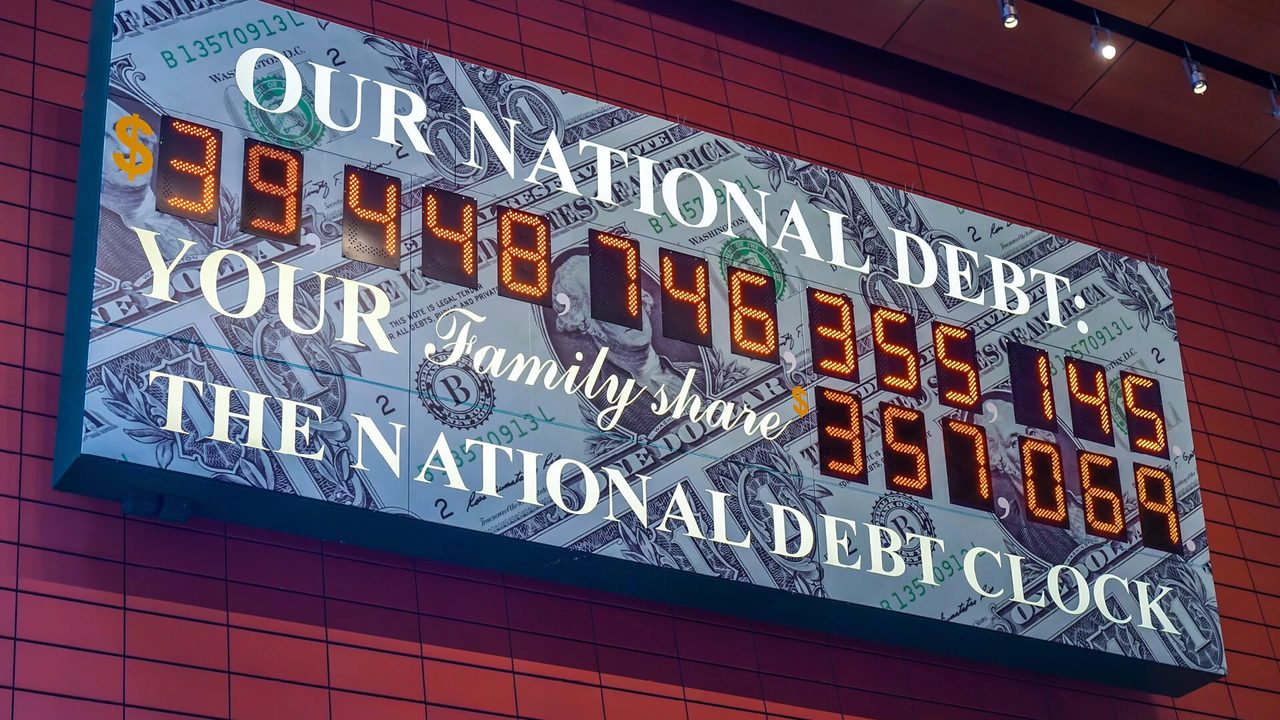
The US national debt is closing in on $40 trillion.
It sits near $39.3 trillion today, and it has nearly doubled in under a decade. It’s expected to top $40 trillion as early as September 23rd.
The government now spends more than $1 trillion a year on interest alone. That’s more than it spends on the military.
This week, almost no one is talking about that.
The headlines are all war. The Iran conflict flared back up, oil jumped, the dollar rallied, and gold sold off midweek before studying near $4,110.
That is the noise. Loud, fast, and gone in a news cycle.
Underneath it runs a slower current that does not care who wins the day. A government this deep in debt has one time-tested way out. Let the currency lose value over the years, so the debt is repaid in cheaper dollars.
The world's biggest institutions are already positioned for it.
For the first time in about 30 years, central banks now hold more of their reserves in gold than in US Treasuries.
Today, I'm going to show you what debasement really is, why this week's war is a distraction from the bigger story, and how to hold your money so it does not slowly melt.

🔍 Signal vs. Noise
Three Headlines, Three Realities

- The first headline is that Washington can borrow forever with no consequences.
- What reality says: the bill already arrived, it just has not been felt yet.
For years the debt has been a number politicians argue about and nobody feels. The government keeps spending, and the sky does not fall.
But the bill is here now. Interest on the debt has crossed $1 trillion a year, more than the entire military budget.
Every dollar going to interest is a dollar not going to anything else, and that number climbs as old, cheaper debt gets refinanced at today's higher rates.
The total is closing in on $40 trillion, larger than the entire US economy.
The debt stopped being a someday problem. It shows up in the budget today.

- The second headline is that the dollar is stronger than ever, so debasement is a myth.
- What reality says: even with the dollar rallying, the world is trading it for gold.
This week, the dollar jumped as the war sent money looking for safety. Short term, king dollar looks untouchable.
Step back from the week, though, and the picture flips.
For the first time in a generation, gold now makes up about 27% of the world's official reserves, ahead of the 22% held in US Treasuries.
The most conservative buyers on earth, central banks, have been net buyers of gold for years. And as its price soared, gold climbed past Treasuries in their reserves. China just posted its biggest monthly gold purchase in over two years.
One strong-dollar week does not undo a decade-long shift.
The tape moves on the war. The reserves move on the debt.
- The third headline is that Bitcoin is just a risky tech bet.
- What reality says: it is bought for the same reason as gold, an asset no one can print.
For most people, Bitcoin still lives in the "risky gamble" box, and this week rising yields are pushing it around like any other risk asset.
But step back, and a different story shows up. Its supply is capped, and no government can print more of it.
That is the same quality driving central banks into gold: an asset that cannot be debased on command.
Gold is the old version of that idea. Bitcoin is the young, volatile one. Both answer the same question.
Two very different assets, bought as insurance against the same thing.
The noise says the debt is harmless, the strong dollar proves it, and Bitcoin is just a gamble.
The signal says the interest bill is here, the world's reserves are shifting into gold underneath a noisy week, and the assets no government can print are where the cautious money is heading.

Featured Contributor
This week, the DeFi Doctor, Aleksander Grandwilewski, on the oldest trick in finance for draining your savings without you ever seeing it happen.
The whole market spent this week staring at the war.
Let me point you at the condition it is ignoring.
In medicine, the dangerous problems are rarely the loud ones.
The heart attack gets the ambulance. What kills more people is the slow disease that shows no symptoms until the damage is done. High blood pressure does its work for years while you feel fine.
Currency debasement is the high blood pressure of your finances.
A Disease As Old As Money

Let me take you back almost 2,000 years.
Rome's main coin, the denarius, started out nearly pure silver. Then the emperors promised more than they could pay for.
- Armies.
- Monuments.
- Bread for the citizens.
So they did something invisible. They melted the coins down and reminted them with a little less silver each time.
By the year 270, the denarius held under 5% silver. Same coin on the outside. A fraction of the value inside.
Nobody felt the exact day it happened. That is the point. The disease does its work while you feel fine.
Every Empire Catches It
The Dutch guilder ran the world in the 1600s, until the Dutch printed to fund their wars.
Then the British pound, until Britain spent itself out through two world wars.
Then the dollar. Same chart every time. Rise on discipline, decline on debt.
This is the through-line of the book we teach from. Empires do not die in a crash. They erode, one watered-down coin at a time.
The US is not exempt. A debt near $40 trillion is the diagnosis.
Here’s The Treatment
You cannot cure the government's condition…
But you don’t have to catch it either.
In my role as Head of Education at Decentralized Masters, I advocate for Becoming Your Own Bank.
In the old system, you hand your savings to a bank. It pays you almost nothing while the dollar underneath slowly loses value. You are the patient, and the debasement is draining you one year at a time.
There is another side of that table.
You can hold assets no government can print. You can put your savings to work earning a real yield that outruns the erosion, in a system where you are the bank, not the customer.
The central banks moving their reserves into gold are doing a version of this. They stopped being patients and started treating themselves.
The denarius lesson has not aged in 2,000 years. Governments in debt always reach for the invisible tool.
Do not be the one left holding the watered-down coin.
Learn how to become your own bank right here…
💭 What To Watch For

The war, and what it does to oil.
The Iran conflict is loud again, and it is dragging oil and the dollar around day to day. Treat those swings as noise. The signal is whether higher oil feeds inflation, because that only deepens the debt problem underneath.
Next week's inflation report (July 14).
Inflation is debasement you can measure month to month. The Consumer Price Index on July 14 shows how fast prices, and your dollars, are moving.
The $40 trillion milestone.
The debt could cross $40 trillion before the fiscal year ends on September 30. Watch for the round number that forces the conversation Washington keeps avoiding.
The Fed on July 29.
Rates sit at 3.50% to 3.75%. Watch whether the Fed keeps real returns on cash positive, or lets inflation do the government's work for it.
💭 Today’s Final Thought
This week, the world watched a war restart.
- Oil jumped…
- The dollar rallied…
- Gold slipped…
- And the headlines moved on by the hour.
That is what noise looks like. Urgent, loud, and moving day-to-day.
Now the current underneath it.
A debt closing in on $40 trillion. Interest bigger than the military budget. And the most cautious institutions on earth moving their reserves out of dollars and into gold, one quarter at a time.
Rome did it with silver coins. Every empire since has done it with paper. The dollar is walking the same road, one watered-down year at a time.
You cannot stop a government from debasing its currency. Nobody can.
What you can do is decide what you hold while it happens, and refuse to be distracted by the noise while the tide keeps rising.
The war will fade from the front page. The debt will still be there.
Own what they cannot print, and let the melt work against someone else.
- Rami Al-Sabeq (Editor in Chief | Future Finance)
Latest




Editor's Picks

Become a sharper capital allocator in 5 minutes a day.
Institutional-grade research on where the smartest capital is positioning, across AI, energy, biotech, robotics, and digital assets. Distilled into a daily read you finish before your coffee does.
Join 45,000+ readers · No spam · Unsubscribe anytime · No card needed